
As Vancouver’s dynamic real estate market continues its relentless ascent, the dream of homeownership has become an increasingly distant reality for many, particularly for younger generations such as Generation Z and, soon, Generation Alpha. This challenging landscape has spurred a significant and strategic trend among their predecessors, Generation X and Millennial parents: proactively investing in real estate with their children’s future housing needs in mind.
Recent insights from Statistics Canada paint a clear picture of this emerging reality. Data reveals that a striking one in five homeowners in British Columbia, born in the 1990s, have achieved homeownership through co-ownership with their parents. This statistic powerfully underscores the pressing urgency and the strategic imperative for families to act now, securing a foothold in a market that shows no signs of decelerating.
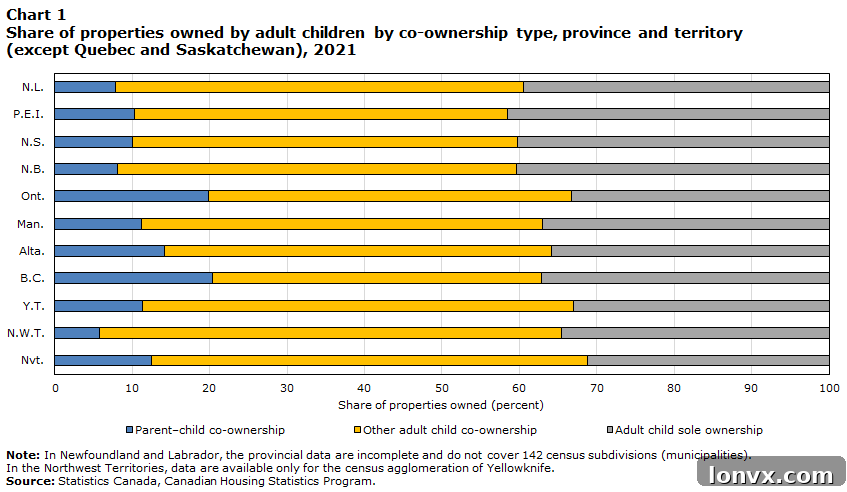
Source: Statistics Canada
This innovative and collaborative approach allows parents to achieve a dual objective. Firstly, they secure valuable property in an increasingly competitive market, potentially hedging against future price hikes and ensuring long-term asset growth. Secondly, and perhaps more importantly, they proactively ensure that their children will not be left behind in the fervent race for homeownership, providing them with a tangible asset and a significant head start in navigating Vancouver’s formidable housing landscape.
The Indispensable Role of the ‘Bank of Mom and Dad’ in Vancouver Real Estate
The concept of the “bank of mom and dad” has evolved dramatically from being a supplemental source of financial aid to an indispensable, foundational pillar for young homebuyers grappling with Vancouver’s steep property prices. What was once an occasional gesture of support has transformed into a strategic necessity, with parents and grandparents stepping beyond mere monetary gifts to become active co-investors, co-signers, and even direct landlords to facilitate their children’s entry into the property market.
This generational collaboration takes various forms, each tailored to the specific needs and financial capabilities of the family. For some, it involves a substantial gift towards a down payment, enabling a child to meet the stringent requirements of mortgage lenders and bypass years of arduous savings. For others, it escalates to co-ownership, where parents might take on a percentage of the property’s equity or co-sign a mortgage, leveraging their stronger financial standing and credit history to secure favorable lending terms. In an increasing number of cases, parents are making direct real estate investments, purchasing properties outright with the explicit intention of providing them to their children in the future, either as a primary residence or a stepping stone to greater financial independence.
My personal journey into this strategy began in 2013, when my spouse and I recognized a pivotal opportunity to invest in Vancouver’s burgeoning real estate market. With our children then aged eight and four, we saw the writing on the wall: the housing market was on an upward trajectory, and proactive measures would be essential to secure their future. We made a strategic decision to purchase a pre-sale property, not just as a conventional investment, but as a tangible asset earmarked for future generations. Our hope was that by the time our children reached adulthood, this property would have appreciated significantly, offering them valuable options – either a place to call home in a highly desirable city or a substantial asset to leverage for their own property aspirations.
The property, acquired for just over $300,000 back then, represented more than just a financial transaction; it was a long-term vision rooted in foresight and strategic planning. We understood that success in Vancouver’s competitive real estate requires not just immediate capital, but profound foresight and a well-defined strategy that anticipates future market conditions. This early investment, regardless of short-term market fluctuations, was positioned for substantial growth, designed to provide a critical advantage when our children would eventually navigate the daunting housing market themselves. This foresight allowed us to secure a future asset at a price point that is now virtually unheard of in Vancouver, illustrating the profound benefits of early and strategic intervention.
Strategic Investment Properties: Laying Foundations for Generational Wealth Transfer
Throughout my nearly 25-year career in real estate, I have witnessed firsthand the exponential rise in families adopting the strategy of purchasing investment properties specifically for future generations. These aren’t merely speculative ventures; they are carefully calculated investments serving multiple vital purposes. While such properties might not always generate substantial rental income in the immediate short term, they are frequently structured to largely cover mortgage payments and strata fees, effectively becoming self-sustaining assets. Crucially, their primary function extends beyond financial returns: they are future residences for the next generation, providing stability and security in an otherwise volatile market.
By strategically acquiring properties now, parents are not just making a financial investment; they are actively shaping their children’s futures and securing their place within the community. This ensures that their children can afford to live in the highly sought-after areas of Vancouver, close to family, established communities, and essential amenities without being priced out. More broadly, this practice is a potent mechanism for generational wealth transfer, allowing families to circumvent the prohibitive entry costs of the modern market and pass down valuable assets that would otherwise be unattainable for younger individuals acting alone. This proactive approach helps to mitigate the widening wealth gap and promotes intergenerational equity within families.
Pre-sale properties, in particular, present an especially enticing investment opportunity within this framework. They allow parents to secure homeownership at an earlier stage, often at a lower initial price point, and crucially, benefit from a longer payment period until completion. This extended timeline offers significant financial flexibility, enabling families to better plan and manage their finances, often aligning payments with their long-term financial goals. Furthermore, this strategy is a powerful safeguard against the relentless upward climb of market prices, effectively locking in a purchase price years before completion. Over the holding period, the property naturally capitalizes on market appreciation, significantly amplifying the financial advantage and solidifying the asset’s value for the future generation.
Navigating Vancouver’s Unrelenting Market: Rising Prices and Severe Rental Pressures
The Vancouver housing market has been characterized by an extraordinary and consistent pattern of price increases over the past decade, creating an environment of intense upward pressure on both purchase prices and rental rates. This relentless escalation poses unprecedented challenges for aspiring homeowners, particularly the younger demographic who often find themselves at a disadvantage in a competitive landscape.
According to a recent liv.rent report, the financial burden on young people in Vancouver is staggering: many are now spending over 50 percent of their monthly income on rent. This exorbitant expenditure leaves little to no room for savings, making the accumulation of a sufficient down payment an almost insurmountable hurdle. The ripple effects of this financial strain are profound, influencing crucial life decisions and societal trends. A growing number of young adults are choosing to live at home longer with parents or relatives, delaying independence and major life milestones such as marriage, family formation, and career advancement. Others are forced to opt for smaller rental spaces, often sharing with multiple roommates, compromising privacy and quality of life in pursuit of basic affordability.
The economic forces driving these trends are multifaceted and deeply entrenched. A combination of limited housing supply due to geographical constraints and slow development, robust population growth driven by both international and interprovincial immigration, persistently low interest rates (until recent adjustments which only slightly eased the pressure), and a long-standing reputation as a global investment hub have converged to create an exceptionally competitive and expensive market. This makes the strategic intervention of the “bank of mom and dad” not just a luxury, but often a stark necessity for those hoping to gain entry into Vancouver’s property ladder.
Developers Responding to the Rise of Multigenerational Buyers
Recognizing this fundamental shift in market dynamics and buyer demographics, real estate developers across Vancouver are increasingly adapting their strategies to cater specifically to the evolving needs of multigenerational buyers. The focus has decisively shifted towards designing and marketing properties that not only promise significant value appreciation but also offer practical, adaptable living solutions for extended families seeking to cohabitate or live in close proximity.
Developers are meticulously prioritizing prime locations that offer unparalleled access to essential services and amenities crucial for family living across all ages. This includes proximity to reputable schools for children, efficient public transit networks for commuting, state-of-the-art healthcare facilities for all family members, and vibrant community services and recreational spaces. The emphasis is on creating environments where multiple generations can thrive together, enjoying convenience, connectivity, and a high quality of life within well-planned communities.
Projects such as FRAME by Peterson Group exemplify this forward-thinking approach. Situated strategically between the bustling heart of downtown Vancouver and the vibrant hub of Metrotown, FRAME offers a diverse range of unit sizes and price points designed to accommodate various family configurations and needs. Such developments are meticulously planned to foster community while providing flexible living spaces, showcasing a broader industry trend where builders are innovating to meet the evolving preferences of families seeking cohesive and sustainable housing solutions. These modern developments often feature adaptable floor plans, common areas for family gatherings, and amenities that cater to a wide age range, from playgrounds for children to accessible features for older adults, reflecting a holistic approach to family living.
The Broader Societal Implications of Generational Housing Solutions
The evolving landscape of Vancouver’s real estate market, characterized by steadily rising prices and the growing imperative for parental financial support, signifies a pivotal and enduring shift in how families approach the fundamental goal of homeownership. The “bank of mom and dad” has undeniably transitioned from being a mere supplementary aid to a truly foundational strategy, enabling younger generations to secure their much-needed place in the fiercely competitive market. My own experience corroborates this; my parents provided crucial assistance when my spouse and I made the significant leap to secure our first condominium investment in 2013, demonstrating the long-standing nature and critical importance of this support system.
Through these strategic and often collaborative investments in properties, particularly pre-sale units, families are not merely navigating the inherent complexities of the housing market. They are, in essence, laying down the vital groundwork for a more profound and lasting generational wealth transfer. This trend, while offering a pragmatic solution to the immediate challenges faced by younger buyers, simultaneously reflects a proactive, unified, and intergenerational family approach aimed at ensuring long-term financial security and stability for future generations. It underscores a deep commitment to family legacy and collective well-being in the face of daunting economic realities, fostering a sense of solidarity across generations.
However, it is critically important to acknowledge a significant and often overlooked caveat: this collaborative generational support, while effective for some, is unequivocally not a possibility for everyone. As the real estate market continues its rapid and often unpredictable evolution in Vancouver and other major Canadian cities, countless potential buyers without access to substantial financial assistance from family face increasingly insurmountable barriers to achieving the dream of homeownership. This creates a deeply concerning discrepancy, where access to housing becomes less about individual merit or savings, and more about inherited advantage, exacerbating social inequality.
This widening gap raises profound societal questions and underscores the growing concern that homeownership may progressively become an exclusive privilege rather than an attainable goal for a broad cross-section of society. It reinforces a concerning trend where only those with substantial family support, exceptionally high incomes, or a combination of both can successfully secure a place in the housing market. This stark reality further emphasizes the urgent and pressing need for innovative, inclusive, and equitable housing solutions that genuinely serve all segments of a healthy, diverse, and thriving society, moving beyond reliance on private family support towards broader systemic reforms and public policies that address the root causes of housing unaffordability.