GTA Real Estate Market: Navigating Underbidding and Overbidding Trends in Autumn 2023
As the crisp air of autumn settles across the Greater Toronto Area (GTA), a similar chill has permeated the region’s dynamic real estate market. While property prices have demonstrated a remarkable degree of stability, a discernible shift in buyer interest has intensified competition among sellers. This evolving landscape signals a pivotal moment for both potential homeowners and investors, demanding a nuanced understanding of current market dynamics.
Insights from Wahi’s comprehensive September 2023 Market Pulse Report reveal a significant trend: approximately 74% of GTA neighborhoods are currently experiencing underbidding. This means a substantial majority of homes are now selling for less than their original list price. The report highlights that 209 neighborhoods fell into underbidding territory, a stark contrast to just 67 neighborhoods where overbidding occurred, and a mere eight where homes sold precisely at their asking price. This data underscores a critical power shift from sellers to buyers in many segments of the market.
Understanding the Shift: Why Underbidding Dominates
Benjy Katchen, CEO of Wahi, observed a clear pattern linked to property values: “The top underbidding neighborhoods this year have typically been more expensive, while the top overbidding neighborhoods have tended to be neighborhoods with lower home prices. This trend continued in September.” This correlation suggests that higher interest rates are having a more pronounced impact on the affordability of luxury homes, leading to increased caution and negotiation power among buyers in premium markets. The pool of buyers capable of affording multi-million dollar properties with higher financing costs has shrunk, resulting in longer selling times and a greater likelihood of transactions closing below initial asking prices.
The implications for sellers in these high-value areas are significant. They must now approach the market with realistic expectations, potentially adjusting their pricing strategies to reflect the new buyer sentiment. For buyers, these conditions present unique opportunities, allowing for greater negotiation leverage and the potential to acquire properties at more favorable prices than seen in recent years. This strategic advantage is particularly notable in traditionally competitive luxury markets.
GTA’s Top Underbidding Neighborhoods: September 2023
September’s most underbid GTA neighborhoods are predominantly known for their luxurious, multi-million-dollar residences. These areas are fairly distributed between Oakville and Toronto proper, with one prominent Markham neighborhood also featuring in the top five:
| Neighbourhood | Underbid % | Median Sold Price |
| Southwest Oakville | -6% | $3,362,494 |
| Eastlake, Oakville | -5% | $4,800,000 |
| Cachet, Markham | -4% | $2,168,000 |
| Lawrence Park, Toronto | -3% | $4,080,000 |
| Ledbury Park, Toronto | -3% | $2,700,000 |
While the overall share of neighborhoods experiencing underbidding has been steadily increasing since June, there are initial signs that this trend might be stabilizing. For example, the jump in underbidding neighborhoods from 57% in July to 71% in August was followed by a comparatively smaller month-over-month increase in September. This suggests the market might be finding a new equilibrium, though it remains a buyer-favorable environment in many high-end segments.
The Enduring Demand: Where Overbidding Continues
Despite the widespread underbidding activity across the GTA, several neighborhoods continue to defy the trend, with homebuyers consistently paying above the asking price. Wahi’s report highlighted three areas experiencing double-digit increases between median list and sold prices. This phenomenon is often influenced by strategic pricing on the part of sellers, who may list their homes slightly below market value to generate intense interest and ignite bidding wars.
The persistence of overbidding in certain areas can be attributed to several factors. These neighborhoods often feature more affordable price points relative to the broader GTA market, making them attractive to first-time homebuyers or those with tighter budgets. Even with higher interest rates, the absolute mortgage amount remains more manageable, sustaining robust demand. Additionally, localized scarcity of inventory, unique community features, or excellent access to amenities and transit can contribute to heightened competition, pushing sale prices above list.
GTA’s Top Overbidding Neighborhoods: September 2023
These neighborhoods demonstrate continued strong buyer appetite, reflecting specific market niches where demand still outstrips supply:
| Neighbourhood | Overbid% | Median Sold Price |
| Little Portugal-Brockton Village, Toronto | +17% | $1,195,100 |
| Bathurst Park, Toronto | +12% | $1,395,000 |
| Milliken Mills West, Markham | +10% | $1,380,000 |
| Bayview Woods, Toronto | +9% | $1,456,000 |
| Berczy Village, Markham | +8% | $1,773,000 |
The contrast between these overbidding hot spots and the widespread underbidding areas paints a clear picture of a bifurcated market. Affordability, relative to the overall GTA price spectrum, appears to be a key driver for sustained demand and competitive bidding in these neighborhoods, even as the luxury segment experiences a cooling period.
List Price vs. Sale Price: A Deeper Dive into Regional Disparities
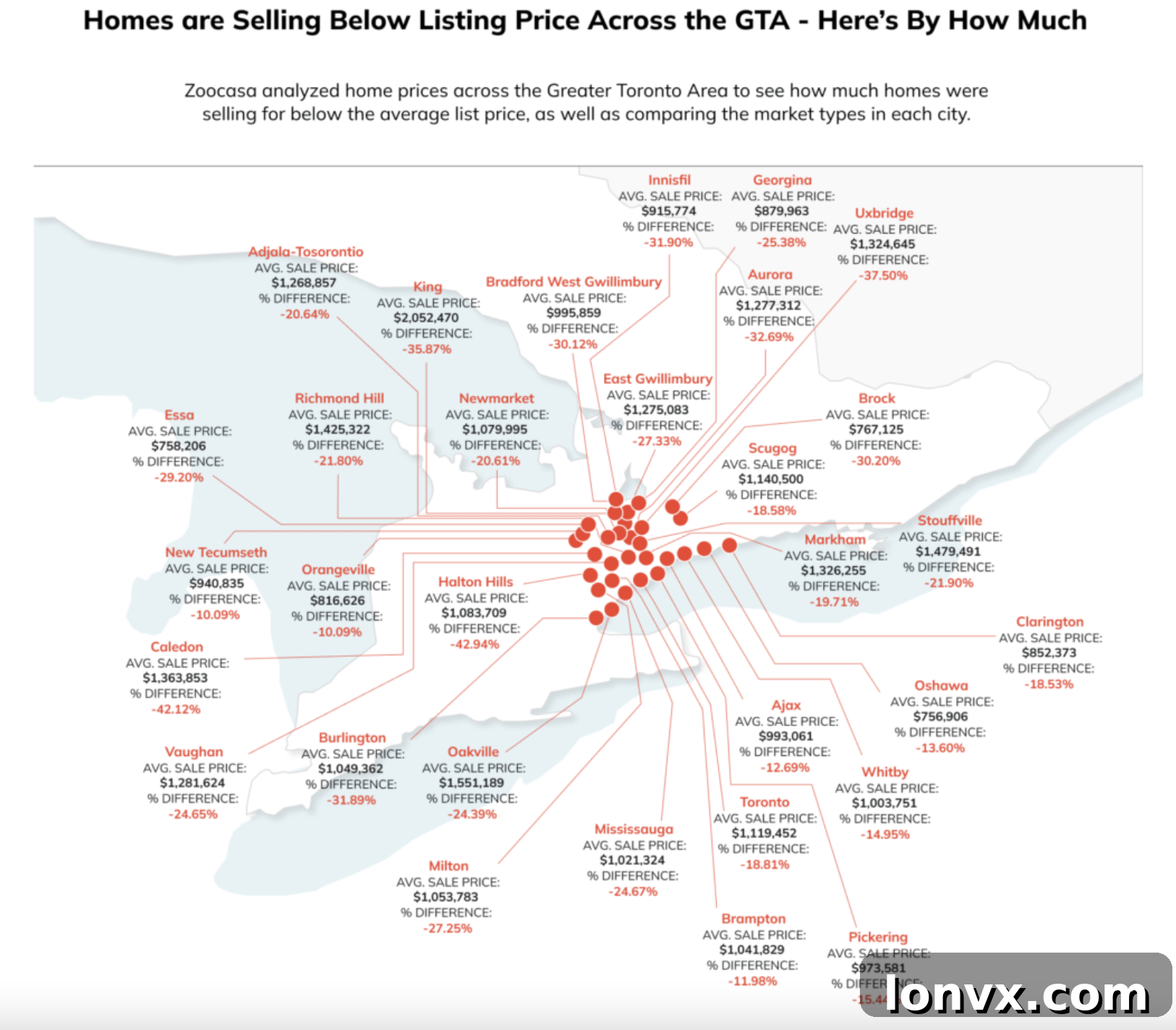
Further solidifying these trends, Zoocasa’s recent analysis offers a deeper look into the gap between average list prices and actual sale prices across major GTA cities in September. This data provides invaluable insights for understanding regional market strength and buyer expectations.
King, Ontario, traditionally one of the most expensive areas within the GTA, showcased a significant disparity. Homes in King sold at an average 36% discount from their average listing price of $3.2 million, with an average sale price settling at $2.05 million. This substantial reduction underscores the impact of buyer hesitation and increased negotiation power in the ultra-luxury segment.
Halton Hills recorded the most significant difference, with homes selling for an astonishing 43% below their list price. An average sale price of $1.08 million was observed against an average list price of $1.9 million. This considerable gap suggests either ambitious initial listing prices or a particularly cautious buyer base in the area. Caledon followed closely, with homes selling for 42% less than their average list price of $2.36 million, resulting in an average sale price of $1.37 million. These large percentage drops highlight areas where sellers have had to make substantial concessions to close deals.
Conversely, Orangeville presented the smallest gap between listing and selling prices, with homes selling for only 10% less than the average list price of $908,000, achieving an average sale price of $817,000. This relatively small discount indicates a more balanced market or consistent demand in Orangeville. Meanwhile, Oshawa emerged as the most affordable city on the list, with an average price of $757,000, which is 14% less than its average listing price of $876,000. These figures demonstrate that while the overall market has softened, the degree of adjustment varies significantly by region, often correlating with the initial price point of homes.
Navigating the Current GTA Real Estate Landscape
The GTA real estate market in September 2023 clearly illustrates a period of recalibration. High interest rates have undeniably influenced buyer behavior, particularly in the luxury segment, leading to widespread underbidding. This shift offers significant opportunities for savvy buyers who are well-prepared and have access to financing, enabling them to negotiate more effectively and potentially secure properties at better value.
For sellers, understanding their specific neighborhood’s dynamics — whether it’s an underbidding or overbidding territory — is crucial. In underbidding markets, realistic pricing from the outset, combined with strategic marketing and impeccable property presentation, will be key to attracting serious offers. In overbidding markets, careful consideration of listing strategy, potentially pricing slightly below perceived market value, can still generate multiple offers and drive up the final sale price.
The resilience of more affordable neighborhoods, where overbidding persists, highlights the enduring demand for entry-level and mid-range homes in the GTA. This segment of the market continues to be competitive, often driven by a combination of relative affordability and limited inventory.
Future Outlook and Key Considerations
Looking ahead, the GTA real estate market will likely remain sensitive to interest rate decisions by the Bank of Canada, inflation trends, and overall economic stability. Inventory levels will also play a crucial role; an increase in listings could further empower buyers, while a tightening supply in specific segments could reignite competition.
Both buyers and sellers should consult with experienced real estate professionals who possess an in-depth understanding of local market nuances. Leveraging detailed market reports, like those from Wahi and Zoocasa, can provide critical data to inform strategic decisions. Whether you are aiming to buy your dream home or sell your property, a well-informed approach, coupled with adaptability to evolving market conditions, will be paramount to success in the dynamic Greater Toronto Area real estate market.