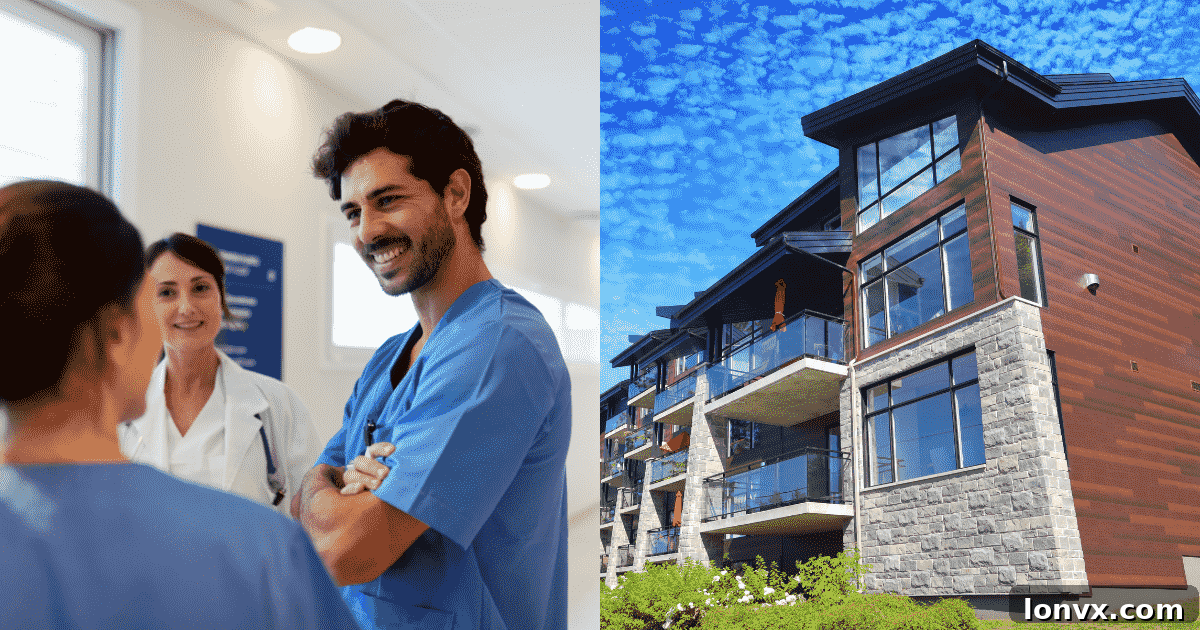
The Growing Appeal: How Healthcare Workers are Reshaping Real Estate Demands
In the vibrant tapestry of real estate advertising, familiar refrains echo through property listings: “Just minutes away from local schools, shopping centers, and recreation facilities…” These phrases highlight convenience and lifestyle, drawing in families and active individuals alike. Yet, one critical amenity often receives less prominence than its counterparts: “close proximity to hospitals.” While traditionally not a top-tier selling point for the general public, a significant shift is underway. For astute real estate builders and developers, especially those embarking on projects near burgeoning healthcare facilities, it’s becoming unmistakably clear: local healthcare professionals are emerging as a vital and rapidly growing segment of future homebuyers.
This evolving dynamic presents both unique opportunities and challenges for the real estate industry. Understanding the specific needs, preferences, and economic realities of doctors, nurses, allied health professionals, and support staff is no longer a niche consideration but a strategic imperative. As healthcare infrastructure expands to meet the demands of an aging population and evolving medical needs, the communities surrounding these hubs naturally become prime locations for those who dedicate their lives to care. The imperative to live closer to work is increasingly influencing housing choices, transforming urban planning and property development strategies across various regions.
Healthcare Professionals: A Strong Preference for Proximity to Work
The notion that healthcare workers prefer to live near their workplaces is not surprising, given the demanding nature of their professions. Long shifts, unpredictable emergencies, and the emotional toll of their work make minimizing commute times a high priority. Barrett Sprowson, vice president of sales and project marketing at Peterson Real Estate in Vancouver, sheds light on this trend. His firm’s current development, Ashleigh, is strategically located in Vancouver’s Oakridge area – a neighborhood historically recognized for its significant medical presence.
“We didn’t particularly think about healthcare workers specifically as a segment early on,” Sprowson admits. However, the sheer concentration of medical facilities in the vicinity, including the prominent BC Children’s Hospital and BC Women’s Hospital & Health Centre, quickly revealed a distinct interest. The idea of reducing daily travel and being readily available for work, or simply having more personal time, holds immense appeal for those deeply embedded in the healthcare sector. This desire for proximity is driven by practical considerations: easier access to shifts, reduced fatigue from long commutes, and the ability to respond swiftly to on-call duties or emergencies, all contributing to a better quality of life and professional effectiveness.
Sprowson observes a tangible shift in their presentation center: “Now we have lots of people coming into our presentation centre who are in the medical field in some form: doctors, dentists, registered nurses, physiotherapists, and even administrative staff.” This direct engagement underscores a growing recognition among developers that this demographic represents a significant, if previously underestimated, market segment. The benefits of living close to work for healthcare professionals extend beyond mere convenience; it can significantly impact work-life balance, reduce stress from traffic, and allow for quicker response times in urgent situations, enhancing both professional efficacy and personal well-being. For medical residents or those on call, a short commute can mean precious extra minutes of sleep or family time, which are invaluable in their demanding schedules.
This demographic’s unique requirements are becoming a focal point for urban planners and developers. Creating residential zones that cater specifically to the needs of hospital staff, lab technicians, and other essential service providers fosters stronger communities and ensures critical services are well-staffed and efficiently run.
Navigating Affordability: A Key Hurdle for Many Healthcare Workers
Despite the clear desire to reside near their workplaces, a substantial hurdle remains: affordability. The healthcare sector, while vital, exhibits a wide disparity in income levels. As Sprowson highlights, a physician in British Columbia might earn upwards of $335,000 annually, a salary that comfortably places them within reach of higher-priced properties. However, a medical office assistant, a crucial part of the healthcare ecosystem, might earn as little as $17.40 an hour. This vast income gap means that the aspirational goal of living close to work can remain out of reach for a significant portion of the healthcare workforce, particularly in competitive and expensive housing markets like Vancouver.
“It is a slightly higher price point,” Sprowson acknowledges regarding the Oakridge neighborhood, implying that such premium locations inherently limit accessibility. “So it has a slightly skinnier appeal in those terms,” he concludes, indicating that while demand is high, the financial realities dictate who can ultimately convert interest into a purchase. This economic divide forces many dedicated professionals to commute from more affordable areas, sacrificing the precious time and convenience they crave. The ripple effect of this challenge is felt across the healthcare system, as it can impact staff retention and recruitment, especially for critical support roles.
The affordability crisis is not unique to Vancouver but is a widespread issue in many urban centers experiencing rapid development and population growth. For healthcare systems to thrive, they need a stable and accessible workforce. This necessitates innovative housing solutions that cater to a broader range of income brackets within the medical community, potentially including subsidized housing initiatives, employer-assisted programs, or a greater emphasis on developing diverse housing types at various price points within close proximity to medical hubs. Addressing this gap is crucial for maintaining a robust and resilient healthcare workforce.
“Building for Humans”: Prioritizing Diverse Needs Amidst Challenges
The challenge of affordability, while significant, hasn’t deterred forward-thinking developers from adhering to a philosophy of “building for humans.” Peterson Real Estate, for instance, strives to design homes that accommodate a diverse population, even within higher-priced developments. Celina Villarroel Whiting, a practicing kinesiologist and healthcare worker in Vancouver, provides a real-world perspective on this struggle. Despite her preference, she and her husband chose to live in nearby Burnaby, a decision driven primarily by cost.
“I think if we had the choice, I would have preferred to be closer to work,” Whiting shares, echoing the sentiment of many colleagues. “In my department specifically, everyone is commuting from somewhere else.” This anecdote underscores the systemic issue: even those who value proximity often cannot afford it, pushing them to longer commutes and impacting their overall quality of life. This situation highlights the importance of developers considering a broad spectrum of potential buyers, rather than a narrow segment.
Recognizing this, Peterson’s team thoughtfully considers the suite mix for projects like Ashleigh. Their goal is to maximize appeal to a wide array of residents. “We want to fit the widest range of humans possible,” Sprowson asserts. This involves careful planning: “What we’ve seen in the past, we think ‘Maybe we need this percentage of one, two or three-bedroom homes in our suite mix,’ or ‘What kind of amenities would support the type of lifestyle that people might want to have?’” These fundamental questions guide their design process, aiming to create versatile living spaces that can adapt to different family sizes, life stages, and professional needs within the healthcare sector and beyond. Thoughtful design extends to offering diverse floor plans, shared common spaces that foster community, and access to essential services within the development or immediate vicinity. For a sector known for high-stress environments, providing a sanctuary at home becomes paramount, emphasizing wellness and convenience.
Developers who truly “build for humans” look beyond square footage, focusing on how a space functions for its occupants, considering factors like natural light, flexible layouts, and access to green spaces—all of which contribute to the well-being of residents, especially those with demanding careers.
The Hospital as a Cornerstone: Influencing Major Development Decisions
Beyond individual developer insights, the presence of a major healthcare facility can fundamentally reshape a region’s real estate trajectory. Arvind Grewal, CEO of Meritus Group, a developer primarily focused on British Columbia’s rapidly expanding Fraser Valley, exemplifies this. One of their upcoming residential projects is strategically located near Mission Memorial Hospital. When Meritus Group acquired the property in 2021, the hospital’s proximity was not merely a benefit but a central tenet of their investment decision.
“We were lucky enough that it was a big chunk of land that we could build our desired community within close proximity to all of that,” Grewal explains. This highlights a growing trend where healthcare institutions act as anchors for new community development. The reliable employment base, consistent demand for local services, and potential for future expansion make areas surrounding hospitals incredibly attractive for long-term real estate investments. This foresight allows developers like Meritus Group to envision integrated communities where residents not only live but also find work and access essential services within a compact geographical footprint, thereby reducing reliance on extensive commutes and fostering a sense of local community.
For developers, a hospital signifies more than just a building; it represents a stable economic driver, a source of predictable housing demand, and a hub for complementary businesses. This strategic approach ensures that new developments are not just aesthetically pleasing but are also functionally integrated into the existing urban fabric, providing mutual benefits to residents, local businesses, and the broader healthcare ecosystem. The long-term stability offered by a major hospital also de-risks developments, making them attractive for both investors and future homeowners.
Fostering Integrated Communities: Complementary Commercial Tenants are Key
Meritus Group’s commitment to the healthcare ecosystem extends beyond residential development. The company previously demonstrated its dedication by donating over $500,000 to Mission Memorial Hospital for a new CT scanner in 2022. Grewal hopes to leverage and build upon this philanthropic relationship as they plan their future project, aiming for a symbiotic relationship between the residential and commercial components. This integrated approach is crucial for creating truly self-sufficient and vibrant communities that serve their inhabitants comprehensively.
The current landscape around Mission Memorial Hospital is predominantly characterized by single-detached homes. However, Meritus Group’s initial two phases will introduce multi-family residential units combined with ground-floor commercial spaces. A “key priority” for Grewal and his team is to curate a mix of commercial tenants that perfectly complement the existing hospital and its infrastructure. “For a developer, it’s very significant whether a physician or a pharmacist comes into those commercial spaces,” he emphasizes. This deliberate approach ensures that the new commercial offerings directly serve the needs of the healthcare community and the wider neighborhood. Imagine a diagnostic lab, a specialized pharmacy, a medical supply store, or even a wellness clinic – these types of tenants add immense value, creating a self-sustaining ecosystem around the hospital, benefiting both the staff and the broader public.
Grewal stresses the importance of a thoughtful selection process: “But I think that’s something where we need to step in and have more of a careful approach into who we bring into those tenanted spaces.” This careful curation prevents generic retail and instead fosters a dedicated medical and wellness hub, benefiting both the hospital staff and the local community. It creates a seamless transition from work to daily life, offering convenience and specialized services right at their doorstep, reinforcing the community’s identity as a healthcare-centric hub.
Homes as Sanctuaries: Promoting Health and Well-being Beyond the Clinic
For healthcare workers, whose daily lives are often spent within the sterile and demanding environments of clinics and hospitals, the concept of a “healthy home” takes on an even deeper meaning. Barrett Sprowson believes that these professionals deserve homes that promote well-being, albeit in a different, more natural way than a medical facility. The design of residential spaces can play a critical role in offering a restorative environment.
The Ashleigh project incorporates unique landscaping elements designed to enhance residents’ connection to nature. Edible plants, diverse garden flora, and a conscious effort toward tree retention are central to this vision. Sprowson recounts an anecdote from his upbringing in Malawi, southeastern Africa, where his mother, a horticulturist, instilled in him a profound appreciation for natural environments.
“She would tell you a healthy building is one that has lots of greenery and plants,” he shares. This philosophy underpins Ashleigh’s design principles. The emphasis is on foundational elements that contribute to human health and happiness: ample natural light, fresh air circulation, and accessible connections to nature. “Light, air, access to nature… That, to my mind, is the foundation for a healthy building,” Sprowson concludes. These elements are crucial for creating restorative spaces where healthcare workers can decompress, recover, and rejuvenate after intense shifts. A home that offers a peaceful green outlook, opportunities for outdoor relaxation, and an abundance of natural light can significantly counteract the stresses of their profession, fostering mental clarity and physical vitality. Developers who integrate such thoughtful design elements are not just building houses; they are crafting sanctuaries for the heroes of our healthcare system, recognizing their need for holistic well-being.
The growing recognition of healthcare workers as a distinct and valuable demographic in the real estate market marks a pivotal shift. As developers increasingly align their projects with the unique needs for proximity, affordability, and well-being, we can expect to see more integrated communities that support these essential professionals, ultimately strengthening both our healthcare systems and our neighborhoods, fostering a future where work-life balance for our caregivers is not just a dream, but a tangible reality.
Enjoying this article?
Get the latest real estate insights delivered to your inbox three times a week.