
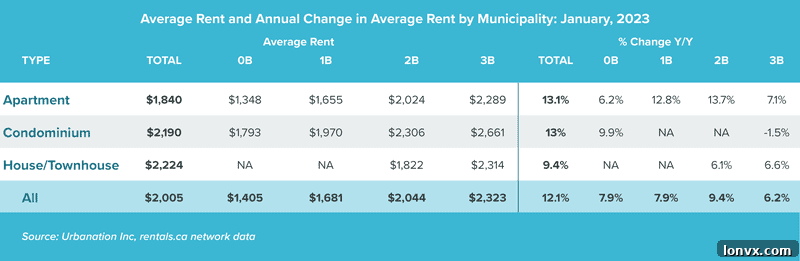
The Canadian rental market closed out the year 2022 with remarkable intensity, marking the eighth consecutive month of double-digit rent inflation. This persistent upward trend, detailed in the latest comprehensive rent report from industry leaders Rentals.ca and Urbanation, paints a vivid picture of a dynamic and challenging housing landscape across the nation. As of December, the average listed rent for all property types soared to an unprecedented $2,005, reflecting a significant 12.2 percent year-over-year increase. This figure represents a substantial jump of $217 from the December 2021 average of $1,788, underscoring the rapid escalation of rental costs that many Canadians have experienced.
While the annual figures highlight a robust inflationary period, a closer look at month-over-month trends reveals a slight tempering of growth. Average rents experienced a modest one percent decrease from November to December, a pattern that Rentals.ca identifies as typical for this particular time of year. Historically, colder months and the holiday season often see a dip in rental market activity, leading to minor price adjustments as demand temporarily cools. Nevertheless, despite this seasonal fluctuation, the average monthly rent has now consistently surpassed the $2,000 threshold for the second consecutive month, solidifying a new baseline for rental expenditures in many parts of the country. This sustained high average underscores the systemic pressures within the Canadian rental housing sector, impacting individuals and families nationwide and raising critical questions about housing affordability.
A Deep Dive into Canada’s 2022 Rental Market Performance
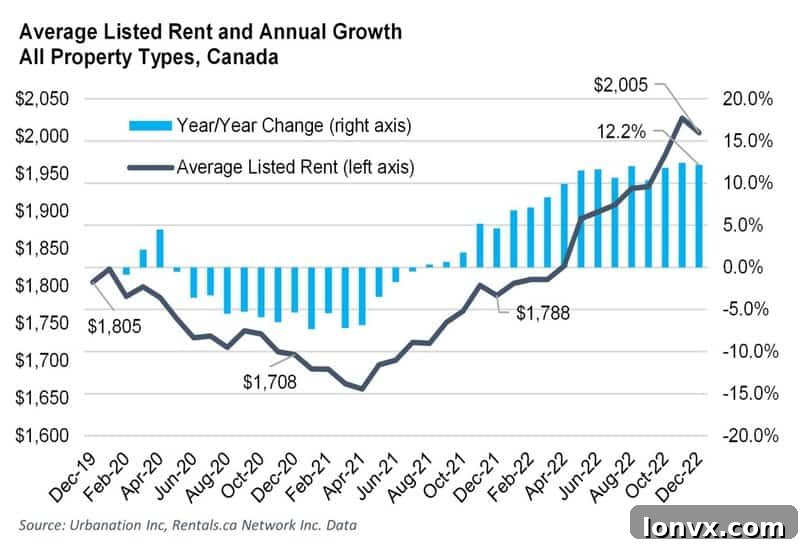
The year 2022 stands out as a pivotal period for the Canadian rental market, characterized by an aggressive resurgence in rental demand and prices. According to Rentals.ca, the average rate of annual rent increase across Canada reached a substantial 10.9 percent for the entirety of 2022. This figure is particularly striking when juxtaposed against the preceding two years, 2020 and 2021, both of which saw average rent declines of 1.6 percent. These earlier declines were largely attributed to the initial phases of the COVID-19 pandemic, which disrupted traditional housing patterns, particularly in major urban centers as remote work became prevalent and many residents opted for more space outside city cores, temporarily reducing demand in downtown areas.
Analyzing the longer-term trajectory, the three-year average rent increase (2020-2022) settles at a more modest 2.6 percent. This rate, while positive, actually falls below the general inflation rate observed in the broader Canadian economy over the same period. This indicates that while 2022 was an exceptional year for rent growth, the cumulative effect over the pandemic era still lags behind the overall cost of living increases. This context is crucial for understanding the current pressures on renters, as their housing costs are now catching up rapidly after a period of relative stagnation or even decline. The market is effectively trying to correct for lost ground while simultaneously reacting to new, intensifying demand factors that are pushing rental prices to unprecedented levels.
The exceptional rent growth witnessed in 2022 can be attributed to a confluence of powerful socio-economic forces. Firstly, a robust recovery from the pandemic-induced declines played a significant role. As cities reopened, universities resumed in-person learning, and many employees returned to offices—albeit often in hybrid models—the demand for urban rental units surged. This influx of returning and new residents quickly absorbed available inventory. This was further compounded by Canada’s record-high population growth, driven primarily by ambitious immigration targets set by the federal government. A booming population inevitably translates into increased demand for all types of housing, both ownership and rental, putting immense pressure on existing inventory and exacerbating competition.
Secondly, a substantial pullback in home buying activities further channeled demand towards the rental market. As interest rates steadily climbed throughout 2022, in response to rising inflation, the dream of homeownership became increasingly elusive for many, particularly first-time buyers and those with limited down payments. Higher mortgage costs, stricter lending conditions, and diminished purchasing power meant that a significant portion of the population who might otherwise have entered the ownership market remained in or re-entered the rental pool. This shift intensified competition for available rental units, pushing up prices across the board. Finally, structurally low vacancy rates across much of the country continued to exacerbate the supply-demand imbalance. Years of underbuilding relative to population growth have created a persistent deficit of rental housing, making it exceedingly difficult for the market to absorb new demand without significant price increases.
Intriguingly, Rentals.ca highlights that this strong rental growth occurred despite a record high for total apartment completions last year. While new construction is undeniably vital for addressing supply shortages in the long term, the sheer scale of demand in 2022, fueled by unprecedented immigration, a rebounding economy, and shifts away from homeownership, appears to have outpaced even significant new supply. This suggests that the underlying structural issues in Canada’s housing supply are deep-seated and require sustained, large-scale intervention to bring balance back to the market. The robust absorption of newly completed units, often at higher price points, signals a persistent and acute need for housing across various demographics, emphasizing that current construction levels, while record-breaking, are still not enough to meet the escalating demand.
Provincial Rental Market Dynamics: A Regional Breakdown of Rent Inflation
The national rental trends, while informative for a broad overview, often mask significant regional disparities that characterize Canada’s diverse housing markets. The Rentals.ca and Urbanation report effectively correlates rent growth with population dynamics across Canada’s provinces, revealing distinct patterns of escalation. Unsurprisingly, provinces experiencing the most rapid population expansion also recorded the most dramatic increases in rental costs, emphasizing the direct link between demographic shifts and intensifying housing market pressures. Understanding these provincial nuances is crucial for grasping the full scope of Canada’s rental crisis.
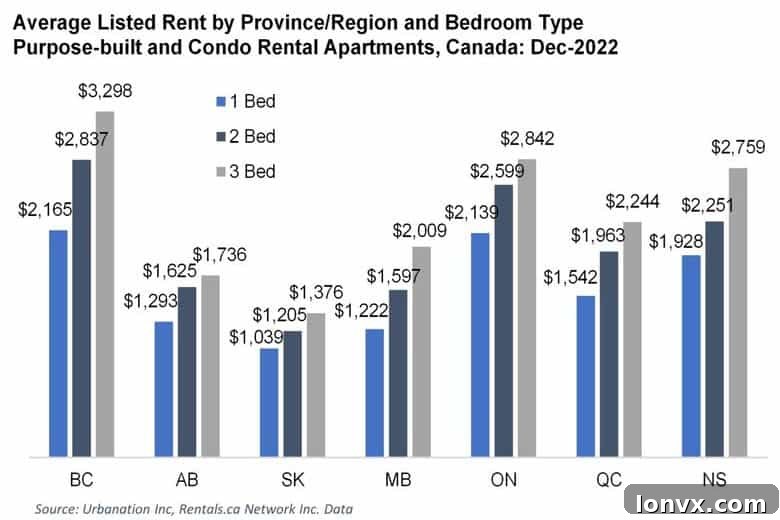
Leading the charge in 2022 was Nova Scotia, alongside other Atlantic provinces such as New Brunswick and Prince Edward Island, which collectively experienced some of the fastest growing populations in the country. This surge in residents, often drawn by relatively lower living costs, a slower pace of life, and emerging economic opportunities compared to larger metropolitan areas, sent average rents for apartments skyward. In December, Nova Scotia alone saw an astounding 31 percent year-over-year increase in average rents, pushing them to $2,182. This unprecedented growth in Atlantic Canada reflects a broader trend of interprovincial migration, with many Canadians seeking more affordable lifestyles, and a burgeoning appeal of the region, which has traditionally offered more accessible housing. The infrastructure and existing housing supply in these provinces are now struggling immensely to keep pace with this accelerated demand, leading to intense competition and often multiple applications for available units.
Beyond Atlantic Canada, British Columbia and Alberta emerged as significant hotspots for population growth, consequently experiencing the second and third fastest annual rent increases in December. British Columbia, a perennial leader in high housing costs due to its desirable climate, robust economy, and geographical constraints, recorded an 18.5 percent increase, bringing its average rent to a staggering $2,535. This reflects not only sustained population influx but also severe supply constraints and consistently high demand for its coveted urban centers like Vancouver and Victoria. Alberta, on the other hand, saw a robust 16.8 percent annual increase, pushing its average to $1,463. Alberta’s relatively more affordable baseline compared to its western counterpart, coupled with a resurgent energy sector and diverse job market, has attracted new residents, particularly from other provinces, fueling its rental market growth. The significant economic momentum in cities like Calgary has contributed substantially to this uptick, as new job seekers enter the market.
Ontario, Canada’s most populous province and economic engine, also posted above-average population growth and, consequently, significant rent growth in 2022. December rents in Ontario were up a substantial 15.5 percent annually, reaching an average of $2,358. The Greater Toronto Area, in particular, remained a central driver of this provincial increase, with intense competition for limited available units and significant demand from both domestic and international migrants. Despite ongoing new construction efforts, the sheer scale of population and economic activity in Ontario ensures that demand consistently outstrips supply, maintaining relentless upward pressure on rental rates across its diverse urban and suburban markets, from Ottawa to Kitchener-Waterloo and beyond.
In contrast, Quebec recorded the slowest growth among the major provinces for both population and rents in 2022. Its annual rent increase in December 2022 stood at 6.9 percent, bringing the average rent to $1,776. While still a notable increase that impacts renters, it is considerably milder compared to the frenetic pace seen in other regions. Several factors could contribute to this trend, including different immigration patterns (with a greater focus on French-speaking immigrants), unique economic drivers, and perhaps a slightly more balanced supply-demand dynamic in certain parts of the province, particularly outside of Montreal. Montreal, while a vibrant urban center and a major draw for students and professionals, has historically maintained more accessible rental prices than its counterparts in Toronto or Vancouver, although this affordability gap is slowly but steadily narrowing.
Municipal Rental Rates: Hotspots and Emerging Markets Across Canada’s Cities
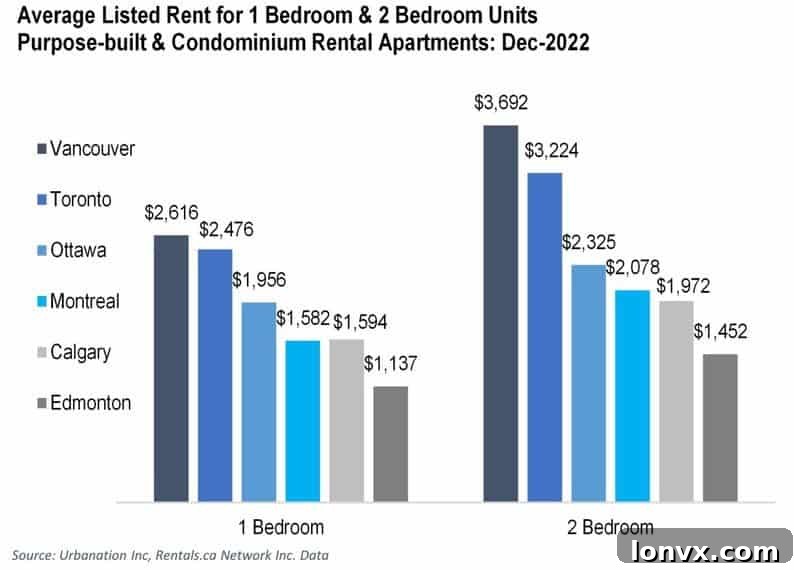
Delving into Canada’s major municipalities reveals an even more granular picture of the nation’s rental market, highlighting specific hotspots and emerging markets where rental prices are soaring. The most expensive and competitive markets, Toronto and Vancouver, continued their upward trajectory, demonstrating sustained demand and persistently limited supply. In December, annual rent increases for apartments remained exceptionally strong, with Toronto experiencing a 22.7 percent surge to an average of $2,775, and Vancouver close behind with a 21.2 percent increase, pushing its average rents to an astonishing $3,080. These figures cement their status as Canada’s two priciest rental markets, where high-income job opportunities, world-class cultural attractions, and desirable urban lifestyles consistently draw tenants, despite the formidable cost of living. Competition for any available unit in these cities is fierce, with multiple applicants often vying for the same property, leading to elevated prices and challenging conditions for renters.
Beyond these perennial leaders, Calgary emerged as a significant player in the latter half of 2022, demonstrating remarkable acceleration in rents. The report attributes this rapid growth to strong economic momentum within the city, particularly benefiting from a booming energy sector, diversified tech growth, and its increasing attractiveness for interprovincial migration. This economic vitality propelled Calgary into the second spot for rent growth in December, recording an impressive 22.6 percent increase that brought its average rents to $1,816. This growth underscores Calgary’s increasing attractiveness as a relatively more affordable alternative to Vancouver or Toronto, particularly for those seeking employment in its thriving industries and a better quality of life. The city’s robust job market has translated directly into higher demand for rental housing.
Other major cities also showcased significant, albeit less dramatic, increases, reflecting varied local market conditions. The Ottawa and Edmonton markets ranked fourth and fifth for rent growth in December. Ottawa, the nation’s capital, saw annual increases of 14.5 percent, reflecting its stable public sector employment, growing tech hub, and increasing population. This steady demand, coupled with limited new supply in certain areas, has kept rental prices on an upward trend. Edmonton, benefiting from its provincial economic tailwinds and a comparatively lower baseline for rents, experienced an 11.7 percent annual increase. While more affordable than Calgary, Edmonton’s rental market is also tightening, driven by internal migration and a recovering economy. These cities represent important regional markets with their own unique drivers of demand, from student populations to government employees and resource sector workers.
In contrast to the rapid increases seen elsewhere, Montreal represented the slowest growing market amongst Canada’s largest cities, with a 6.6 percent annual growth in December. While still a positive increase that presents challenges for many residents, it highlights a more tempered rental environment compared to the frenetic pace in other major Canadian urban centers. Montreal’s distinct cultural landscape, unique economic structure, a potentially more robust rental housing stock, and differing immigration patterns may contribute to its relatively slower appreciation, offering a degree of relief to renters compared to other high-demand markets. This indicates that while the entire country is feeling rental pressures, the intensity varies significantly by municipality, demonstrating the localized nature of housing market dynamics.
Canada’s Rental Market Outlook for 2023: Moderation Amidst Persistent Demand
Looking ahead, Rentals.ca projects that the Canadian rental market will retain much of its underlying strength throughout 2023, albeit with an anticipated moderation in the rate of growth. This continued robustness is primarily underpinned by several key factors that show no immediate signs of abating. Foremost among these are prevailing labor market conditions, which, despite some economic headwinds and fears of recession, have remained relatively strong, providing individuals with the financial capacity to seek and secure rental housing. The record-high population growth, predominantly driven by sustained federal immigration targets, will continue to inject fresh demand into the housing ecosystem, ensuring a consistent influx of new renters. Furthermore, the persistent challenge of poor affordability in the homeownership market, exacerbated by high interest rates, will continue to funnel potential buyers into the rental sector, maintaining competitive pressure and preventing a significant easing of demand.
However, the pace of rent growth is expected to decelerate from the intense double-digit figures seen in 2022. This moderation is anticipated as the broader economy and employment markets begin to soften, a likely outcome of continued interest rate hikes designed to curb inflation. A cooling economy typically translates into slower job creation and potentially higher unemployment, which can reduce the number of households able to afford rapidly escalating rents. Additionally, renters themselves are increasingly facing significant affordability constraints. With persistent inflation impacting nearly all aspects of daily life—from groceries to utilities—many households are reaching the limits of what they can comfortably allocate to housing, potentially forcing them to seek more affordable alternatives, shared accommodations, or even to delay independent living. This natural ceiling on affordability will inherently dampen the ability of landlords to push rents up at the same aggressive pace, as fewer renters will be able to bear the increased costs.
Specifically, Rentals.ca forecasts that average rents across Canada will increase by approximately five percent in 2023. This projection is seen as more sustainable and aligns more closely with current income growth levels and historical averages for rental appreciation. While still a significant increase for many households, particularly those on fixed incomes or lower wages, it represents a notable slowdown compared to the previous year’s blistering pace. This moderated growth rate could offer a semblance of relief to renters, even as the overall market remains tight and competitive, allowing incomes to catch up somewhat with housing costs.
The report further identifies specific market segments and regions that are likely to experience the most pronounced rent inflation, even within this moderated national outlook. Markets characterized by continued high population growth, coupled with persistently low vacancy rates and limited new rental construction, are expected to lead the country in rent growth. Based on these criteria, Atlantic Canada, Ontario, and British Columbia are projected to continue exhibiting the strongest upward pressure on rental prices. These regions face a perfect storm of strong demand and insufficient supply, making them particularly vulnerable to ongoing rent escalations. Addressing these regional disparities will require targeted policy interventions, streamlined approval processes for new developments, and a significant boost in housing supply to truly stabilize the market and improve long-term affordability.
The Canadian rental market in 2023 is thus expected to navigate a complex environment: one of enduring demand driven by demographic shifts and persistent affordability challenges in homeownership, balanced against an economy that is likely to cool and renters who are already stretching their budgets to the limit. Understanding these intricate dynamics is crucial for both renters navigating their housing choices and policymakers alike as they prepare for another year of evolving housing costs and work towards sustainable housing solutions for all Canadians.
For a comprehensive understanding of the Canadian rental landscape, including detailed regional breakdowns and further insights into market drivers and forecasts, readers are encouraged to consult the full, in-depth report available here.