Canada’s Recreational Property Market: A Resurgent Outlook for 2024
The highly anticipated Royal LePage 2024 Spring Recreational Property Report has just been released, offering crucial insights into Canada’s dynamic cottage and cabin country markets. This comprehensive report compiles essential price data from 50 distinct regions across the nation, providing a detailed snapshot of current trends and future projections for one of Canada’s most cherished real estate sectors.
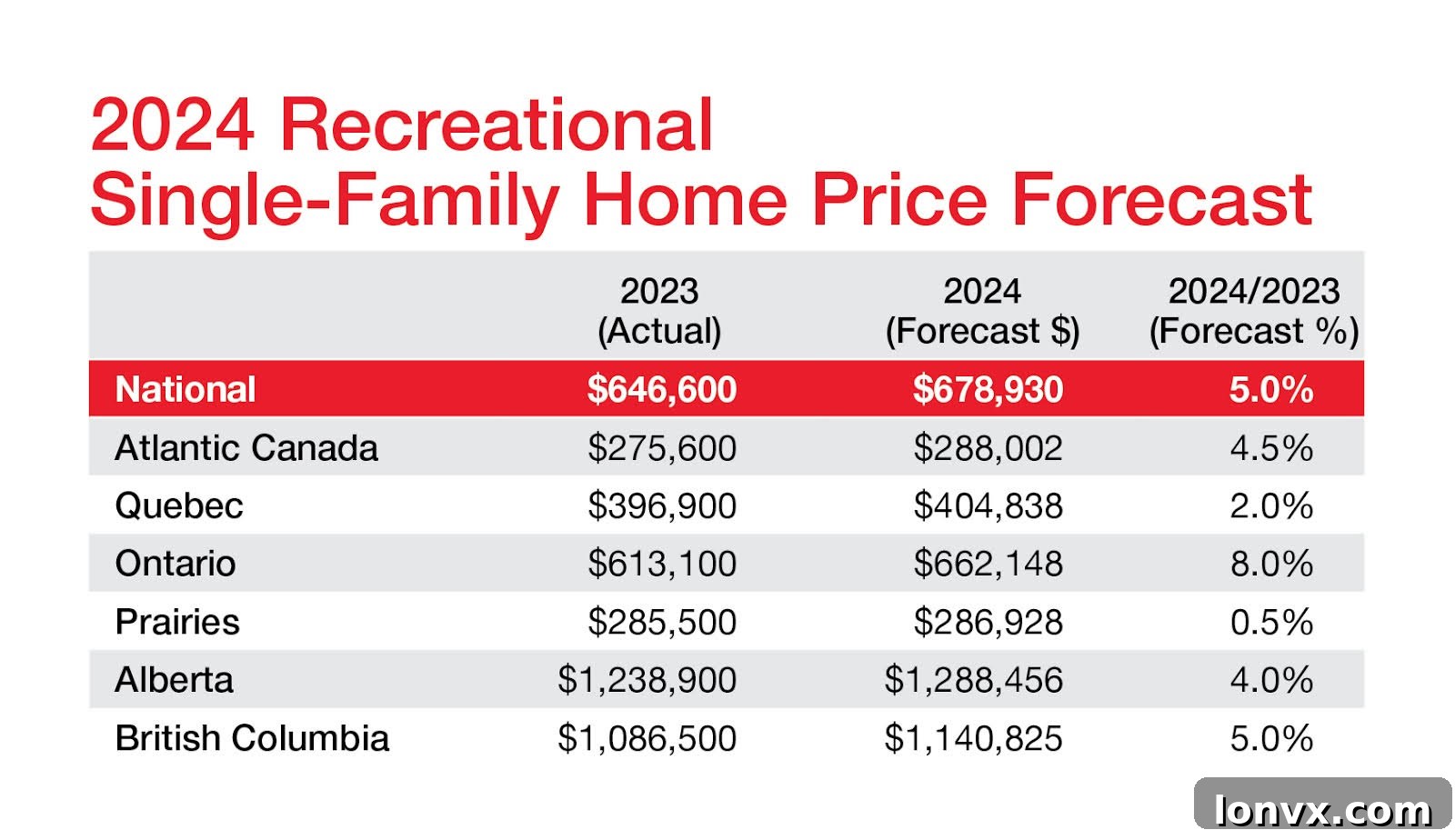
According to the report’s findings, the median price of a single-family home within Canada’s recreational regions is projected to experience a robust increase of 5 percent this year, reaching an average of $678,930. This upward trend, when compared to 2023 figures, is largely attributed to a significant boost in consumer confidence, which is actively drawing previously sidelined buyers back into the market. This renewed optimism suggests a vibrant spring and summer for recreational property sales across the country.
Furthermore, the forecast indicates widespread growth, with all of Canada’s provincial recreational markets expected to see appreciation in single-family home prices. Ontario is poised to lead this national surge, with the greatest predicted price appreciation at an impressive 8 percent, reflecting strong demand and potentially tighter inventory in the province’s popular vacation destinations.
The Pandemic’s Unprecedented “Gold Rush” and Its Enduring Legacy
Reflecting on recent market history, Phil Soper, president and CEO of Royal LePage, eloquently captures the extraordinary period of the pandemic: “Across the nation, there was a sizable rise in demand for all types of housing during the pandemic, but nothing could match the ‘gold rush fever’ that occurred in recreational property markets.” This period marked a profound shift in lifestyle priorities for many Canadians, as the traditional boundaries between work and leisure blurred considerably.
Soper further elaborates on the catalysts behind this historic surge: “With city offices closed and the wide availability of high-speed internet allowing people to take video meetings on lakefronts and mountain tops, excess demand pushed recreational property prices to unprecedented heights.” The ability to work remotely transformed the perception of recreational properties from seasonal retreats to potential year-round residences or extended havens, accessible from anywhere with a reliable internet connection. This fundamental change in how and where Canadians could live and work ignited an unparalleled boom, reshaping the landscape of secondary property markets.
“Demand has been building quietly on the sidelines” – A Market Poised for Resurgence
Despite the initial euphoria of the pandemic era, the market experienced a subsequent adjustment. Soper acknowledges this phase, stating: “Inflation reared its ugly head, interest rates soared and the economic downturn that followed pushed cottage, cabin and chalet prices off those pandemic peaks, yet the fundamental demand for recreational living has not abated. We believe that this market segment will see a resurgence of activity in 2024.” This perspective underscores the resilience and deep-rooted appeal of recreational properties, suggesting that while external economic pressures caused a temporary cooling, the intrinsic desire for these homes remains robust.
Indeed, 2023 saw the median price of single-family homes in Canada’s recreational regions register a modest dip of 1 percent year-over-year, following a more significant 11.7 percent decrease in the prior year. However, it is crucial to place these adjustments in context: the national median price still stands remarkably high, a significant 59 percent above pre-pandemic levels. This sustained elevation clearly indicates that despite recent pullbacks, the market has not relinquished the substantial gains made during the boom, signifying strong underlying demand and long-term value appreciation.
The quiet buildup of demand observed by Royal LePage experts is now gaining momentum. “Our regional experts tell us that buyer interest is steadily ramping up as the spring market approaches,” Soper explains. He connects this growing interest to ongoing societal shifts: “With hybrid office and work-from-home business models being the norm now, many working people see the opportunity to make much better use of country properties.” This integration of professional and personal life, facilitated by flexible work arrangements, continues to drive a desire for properties that offer both escape and functionality.
Low Inventory & Sustained Demand to Bring Higher Prices
One of the defining characteristics of the recreational real estate market since the pandemic has been the critical imbalance between supply and demand. During the peak of the COVID-19 pandemic, buying activity surged dramatically, leading to a sharp decline in available home supply. Although the frantic pace of demand has since stabilized, many markets continue to grapple with persistently low inventory levels. This scarcity of listings, coupled with a steady and sustained underlying demand from buyers, is expected to exert significant upward pressure on prices throughout the current year.
To quantify these market dynamics, Royal LePage conducted a comprehensive survey of 150 recreational real estate market professionals. The findings were telling: a significant portion, 41 percent, reported less inventory available compared to the previous year. Simultaneously, buyer demand remained robust, with 64 percent of experts indicating that demand either held steady or increased. This stark discrepancy between limited supply and persistent, even growing, buyer interest creates a powerful environment for price appreciation, reinforcing the seller’s market conditions in many regions.
Source: Royal LePage
Revived Market Expected Once Interest Rates Are Cut
The influence of interest rates on property markets is undeniable, yet the Royal LePage survey shed light on a nuanced distinction within the real estate landscape. It highlighted that recreational property purchases are not as heavily impacted by fluctuating mortgage rates as those in the primary residential market. While a considerable 78 percent of experts reported that recreational buyers in their areas typically finance their purchases through a mortgage or other loan, the sensitivity to rate changes appears somewhat tempered compared to homeowners acquiring their principal residence.
Nevertheless, a forthcoming adjustment to monetary policy is widely anticipated to significantly energize the market. A cut to the Bank of Canada’s key lending rate, expected later this year, is projected to deliver a substantial boost to overall consumer confidence and subsequently invigorate activity within the recreational property sector. The optimism among industry professionals is high, with a remarkable 83 percent of Royal LePage’s recreational property advisors anticipating that market activity will increase at least slightly in their region once these interest rate reductions materialize.
Phil Soper reiterates this sentiment, noting: “Recreational property purchases are not as heavily impacted by mortgage rates as those in the residential market. That said, consumer confidence in general will get a boost when we see a cut to the Bank of Canada’s key lending rate, expected later this year. This lift in activity will put upward pressure on prices. And, if this coincides with an influx of inventory, we should see a boost in sales as well.” This suggests a dual benefit: not only will lower borrowing costs make properties more accessible, but the psychological impact of a rate cut could also unleash pent-up demand, leading to both price appreciation and an increase in transaction volumes, particularly if new listings come online.
The Recreational Lifestyle: Enduringly Attractive to Canadians Year-Round
Beyond economic indicators and market trends, the enduring appeal of the recreational lifestyle forms the bedrock of this market segment’s strength. Despite regional variations and economic fluctuations, a considerable percentage of Canadians continue to own recreational properties for personal use. This fact alone underscores the deep-seated cultural value and profound personal importance Canadians place on accessing cottage, cabin, and chalet country. These properties represent more than just real estate; they embody cherished traditions, provide spaces for relaxation and connection, and offer a vital escape from the demands of urban living.
While the pandemic prompted some homeowners to relocate full-time to recreational regions, transforming their vacation homes into primary residences, the majority of these individuals are likely to remain, indicating a sustained and evolving interest in recreational living. This shift highlights a growing desire for a lifestyle that prioritizes well-being, proximity to nature, and the flexibility to blend work with leisure. Whether it’s for peaceful retirement, cherished family vacations, or simply a sanctuary for mental rejuvenation, the allure of Canada’s natural landscapes and the unique sense of community found in these regions continues to captivate a broad spectrum of buyers.
Concluding his remarks, Soper forecasts a promising year for aspiring recreational property owners: “Whether it’s for retirement or a summer vacation destination, we anticipate that more Canadians will look to embrace recreational living this year as lower borrowing costs bring their recreational home aspirations closer within their reach.” The prospect of reduced borrowing costs acts as a powerful enabler, turning long-held dreams of cottage ownership into tangible realities for many Canadians, further solidifying the market’s positive trajectory.
For a deeper dive into the specific dynamics across Canada’s diverse regions, including detailed summaries and forecasts, you can review the full report here.