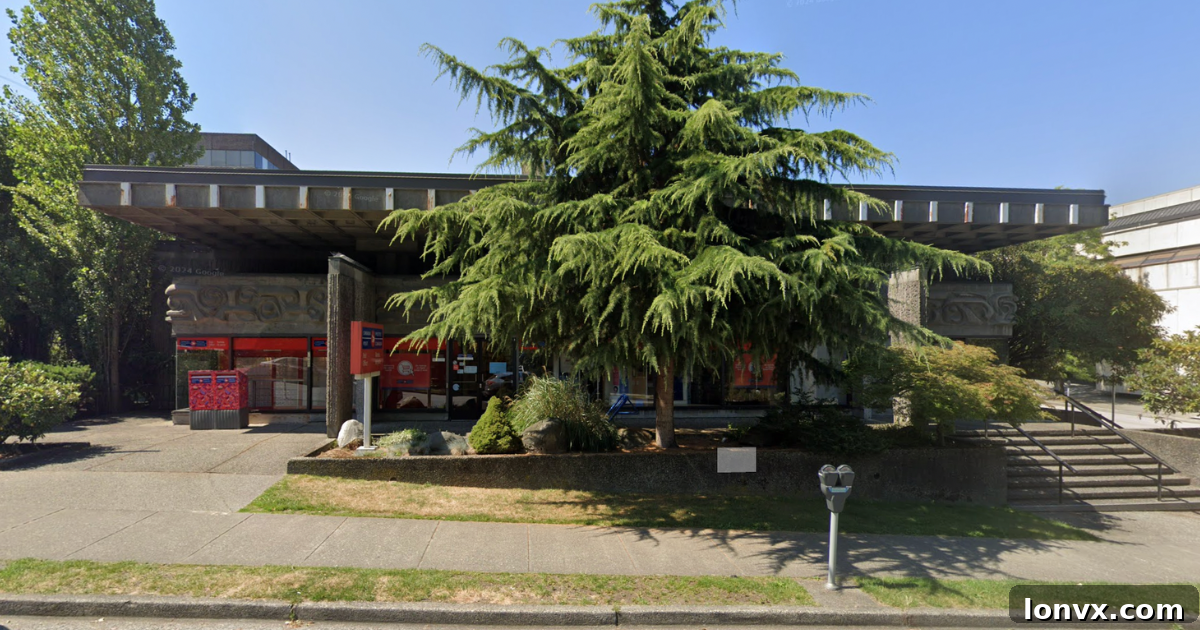
2405 Pine St., Vancouver, B.C./ Google Maps August 2024
Unlocking Canada’s Housing Potential: Repurposing Public Lands for Over a Million Homes
Canada is currently facing an unprecedented affordable housing crisis, a complex challenge that affects urban centers and rural communities nationwide. The scarcity of accessible and affordable housing options has become a critical concern, impacting economic stability, social equity, and the overall well-being of millions of Canadians. In a significant step towards identifying viable solutions, new research from the University of British Columbia (UBC) presents a compelling argument for leveraging the country’s underutilized, government-owned land to address this pressing issue head-on.
This comprehensive study underscores the pivotal role that public lands, held by federal, provincial, and municipal governments, could play in mitigating Canada’s persistent housing shortage. By meticulously examining various parcels of land across the Greater Toronto Area (including Hamilton), Ottawa, Calgary, and several other key Canadian cities, the research reveals a staggering potential: these strategically located, publicly owned sites could be redeveloped to create housing for over one million Canadians. This approach not only offers a tangible pathway to increasing housing supply but also redefines the paradigm of urban development by prioritizing public good.
The UBC study, aptly titled “More Housing Here,” provides vivid examples to illustrate this untapped potential. A notable case in point is the post office building situated at 2405 Pine Street in Vancouver. Currently, this site houses a modest three-story structure. However, the study draws a stark comparison to neighboring areas, noting that similar land parcels along Vancouver’s rapidly developing Broadway corridor are being transformed into high-density, 30-story residential buildings. This contrast powerfully demonstrates the enormous opportunity to maximize the utility and housing capacity of publicly owned properties that are currently underperforming or underutilized.
A Strategic Blueprint for Sustainable and Affordable Housing Development
The strategic advantages of repurposing government-owned land for housing development extend far beyond simply increasing land availability; many of these sites boast inherent characteristics that make them exceptionally suitable for such projects. Crucially, these lands are often ideally integrated within existing urban infrastructure. They benefit from immediate access to established public transit networks, reputable educational institutions, well-maintained public parks, and a comprehensive array of local services. This pre-existing connectivity is a game-changer, as it eliminates the need for extensive, costly, and time-consuming infrastructure extensions typically required for developments on greenfield sites at the urban periphery.
A central economic benefit highlighted by the UBC researchers is the potential for a dramatic reduction in overall construction costs. Land acquisition notoriously represents a significant portion—often as much as 30 percent—of the total expenditure involved in any housing development project. By removing this substantial financial burden from the equation, projects undertaken on public land can inherently be developed at a much lower cost. As the researchers emphasize, “By using public land for housing development, parcels already in the public trust could remove nearly one-third of housing construction costs from the equation entirely.” This considerable cost saving can then be directly translated into more affordable housing prices or reduced rental rates, directly contributing to the overarching goal of addressing the affordable housing crisis.
Moreover, leveraging public land can significantly streamline and accelerate the often-cumbersome processes of zoning and planning approvals. Governments, acting as both landowner and regulator, can navigate bureaucratic complexities with greater efficiency, potentially fast-tracking project initiation and construction timelines. This heightened efficiency is absolutely critical in responding to a housing crisis that demands urgent and decisive action, enabling the rapid delivery of new housing units far quicker than through traditional private sector development avenues. This mechanism not only reduces costs but also significantly decreases the time-to-market for desperately needed homes.
Unlocking National Potential: Regional Insights and Strategic Development
The “More Housing Here” study offers granular insights into the housing capacity across Canada’s most densely populated regions, providing a comprehensive national overview of where the greatest potential lies. The Greater Toronto Area, encompassing the fast-growing city of Hamilton, emerges as a region with unparalleled capacity, estimated to accommodate approximately 587,000 new residents. This projection underscores the immense opportunity within Canada’s largest metropolitan area to make a substantial dent in its severe housing shortage.
Beyond Toronto, other major Canadian cities also demonstrate considerable potential. Ottawa, the nation’s capital, could provide housing for an estimated 200,000 additional people through the strategic redevelopment of its public lands. Calgary, a dynamic economic hub in Western Canada experiencing robust population growth, is projected to house 89,000 new residents. When combined, the redevelopment of these identified public lands across these critical urban centers could collectively provide housing for over one million Canadians, representing a truly transformative step in the country’s comprehensive housing strategy.
However, the study thoughtfully cautions that not all publicly owned land is equally viable or suitable for development. It strongly advocates for prioritizing larger, well-connected sites that are already integrated into the existing urban fabric. The researchers articulate this distinction clearly: “While cities like Ottawa, Hamilton, and Calgary have a large number of sites, most of these are not feasible for development, as they are located outside the core of the city and would largely involve greenfield developments. In contrast, Toronto has the highest number of developable sites, highlighting its potential to help address housing shortages.” This crucial distinction emphasizes the importance of infill development—building within existing urban areas—to leverage current infrastructure and minimize urban sprawl, thereby promoting more sustainable growth.
Despite possessing fewer developable sites within their immediate core areas, cities such as Ottawa and Hamilton still present significant housing potential due to the sheer size of the available public parcels. With careful urban planning and strategic investments, particularly in enhancing transit connectivity and community services to these larger, albeit sometimes more peripheral, public lands, these cities could unlock substantial housing benefits, contributing meaningfully to the national housing supply.
A Proven Strategy: Learning from Success and Charting Future Pathways
The concept of governments actively utilizing their land resources for housing initiatives is not entirely new, and the UBC report effectively highlights the efficacy of existing programs. It specifically underscores the success of the federal government’s land initiative, which has demonstrated its capacity to provide land at no cost to various non-profit organizations and private developers dedicated to building affordable housing. This program serves as a powerful, tangible example of how strategic public land allocation can directly facilitate the creation of desperately needed affordable homes, demonstrating both viability and positive impact.
The urgency of adopting and expanding this strategy is further accentuated by the alarming trends observed in land values across Canada. Researchers point out that in bustling cities like Vancouver, for instance, the cost of land has surged almost three times faster than construction costs. This rapid and often speculative escalation in land prices is not an isolated phenomenon; many communities nationwide are grappling with land prices that are significantly higher than they were merely a decade ago, rendering housing increasingly out of reach for average Canadian families. By deliberately removing land from the speculative market and dedicating it to public good, governments possess a powerful tool to mitigate these inflationary pressures and stabilize housing costs, thereby making homeownership or affordable rental options a reality for more citizens.
The UBC study culminates in a clear, actionable, and forward-looking conclusion: “The study highlights the untapped housing potential of government-owned lands, focusing on areas already well-served by existing infrastructure for more efficient and cost-effective development. This approach helps address a significant portion of Canada’s housing shortage while minimizing the need for extensive public investment in new infrastructure.” This perspective represents a fundamental shift in how public land is perceived—moving beyond viewing it merely as a disposable asset or a revenue source, to recognizing it as a foundational resource for social betterment, urban resilience, and long-term community prosperity.
Implementing these critical recommendations will require strong political will, collaborative governance across all three levels of government—federal, provincial, and municipal—and robust, inclusive community engagement. By strategically leveraging the vast potential of public land, Canada possesses an unprecedented opportunity to not only build a greater quantity of homes but to foster the creation of more equitable, sustainable, and vibrant communities for all its citizens. This transformative strategy holds the key to moving beyond the current housing crisis and forging a more secure and affordable housing future for generations of Canadians.
Enjoying this article?
Get the latest REM articles in your inbox 3x week so you stay up to date on the latest in the Canadian real estate industry