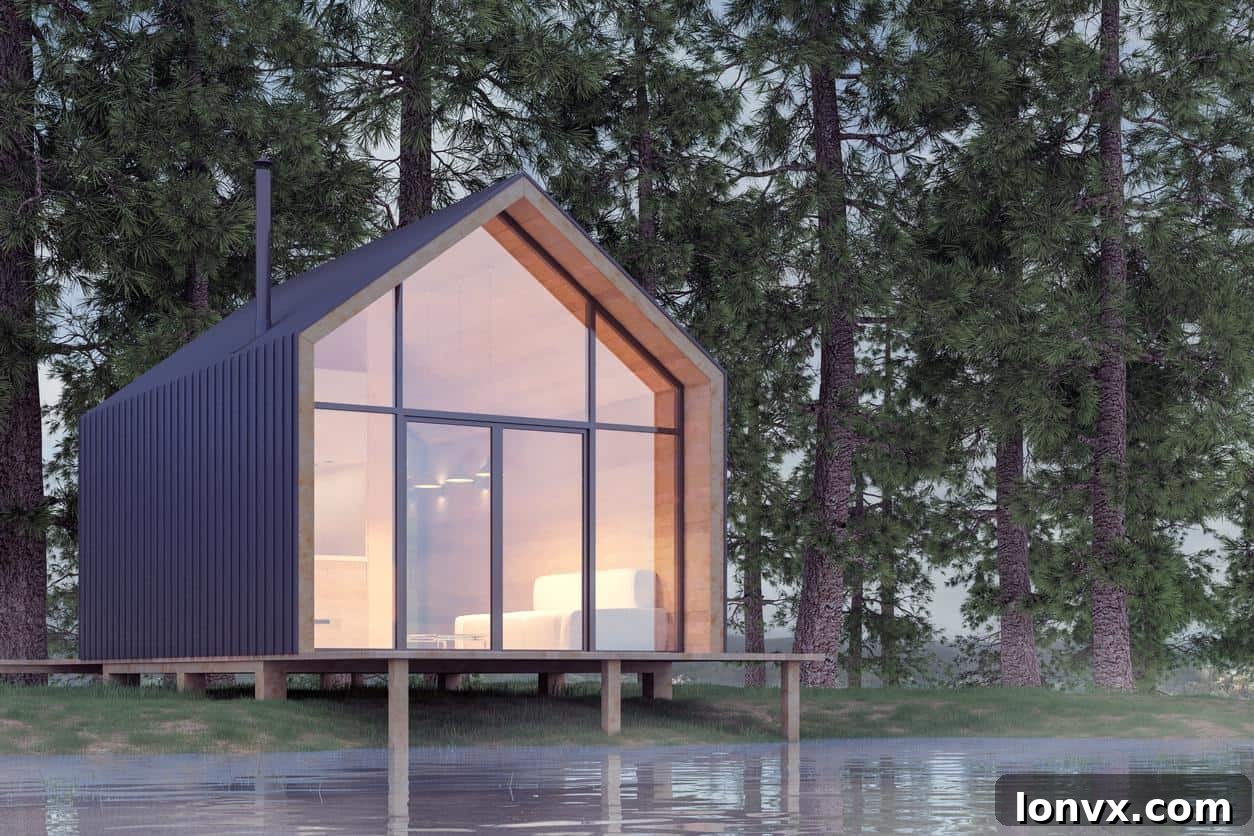
Tiny Homes in Canada: Redefining Affordable and Sustainable Living
Canadians hold a deep, nostalgic reverence for the iconic one-room log cabin. This rustic dwelling is more than just a structure; it’s a powerful symbol woven into the fabric of the nation’s history. From Indigenous First Nations people who perfected resilient living, to the intrepid fur trappers, early pioneers, and resilient settlers, the log cabin represents courage, fierce independence, and unwavering self-sufficiency. For generations, this singular space served every essential need – cooking, cleaning, and sleeping – all under one roof. The hardy pioneer families of the 18th century, shoulder to shoulder, endured many long, unforgiving Canadian winters within these tiny, square log cabins, often without the luxury of windows or running water. Their sacrifices were immense, yet driven by the profound opportunity for a better life and the dream of stewarding their own piece of land.
More than 150 years later, this fundamental quest for a small, self-sustainable dwelling nestled on a quiet piece of land remains one of the most sought-after dream lifestyles for Canadians. The spirit of the pioneer, though adapted for the modern age, endures.
The Modern Housing Landscape and the Rise of Micro-Living
In today’s challenging real estate market, where the purchase price of a detached home often feels unattainable, a significant shift is occurring. Canadians are increasingly turning their attention towards smaller, more affordable, and innovatively designed living options. This pivot is not merely a trend; it’s a response to urgent economic realities. The renovation and conversion of unconventional spaces into habitable dwellings have become a pressing necessity for many who have faced financial instability, job loss, or the acute scarcity of affordable rental housing across the country. The desire to live comfortably without being burdened by crippling debt has ignited a creative revolution in housing.
While precise figures for Canadians currently residing in unconventional homes are elusive, it is clear that they represent far more than a fringe minority. A diverse range of creative housing solutions are now providing comfortable living spaces for thousands. These include laneway houses, charming cottages, practical granny flats (or accessory dwelling units), traditional cabins, robust diesel pushers, versatile RVs, and, of course, the increasingly popular “tiny homes.” These smaller footprints are proving that comfort and functionality are not solely tied to expansive square footage.
The social acceptability of small-space living is hardly a hurdle for many Canadians. Urban dwellers, for instance, have comfortably inhabited one-room, 500-square-foot bachelor suite apartments for decades. The real challenge lies in evolving the public’s perception of what constitutes a detached, permanent residence. Owning a tiny dwelling can serve as an invaluable stepping stone to traditional homeownership, offering a tangible path to live debt-free, retire within a pension budget, and maintain crucial financial independence. It represents a strategic choice for a secure future rather than a concession.
Government Initiatives and Policy Advancements in Micro-Housing
The federal government, through its ambitious National Housing Strategy, has championed sustainable development via multi-unit and micro-housing as a critical way forward. This 10-year initiative, backed by a substantial $72 billion investment, was specifically designed to make housing more affordable and accessible for all Canadians. Urgent requests for proposals were dispatched nationwide, inviting developers and communities to submit creative ideas for the rapid construction and renovation of housing projects.
The impact of these initiatives is already evident. To date, thousands of previously unused hotel rooms in urban Ontario have been thoughtfully renovated and transformed into micro-units through the rapid housing initiative. Concurrently, new construction of multi-unit subsidized and community housing renovation projects are underway in every province, addressing diverse housing needs. A shining example of this innovation is Calgary, Alberta’s “Homes for Heroes” village. This fantastic community comprises 15 meticulously designed 300-square-foot tiny homes, purpose-built for former members of the Canadian Armed Forces. Each micro-home is fully equipped with essential amenities, including cable and internet access, fully functioning kitchens, and private outdoor deck spaces, providing dignity and comfort to those who have served.
Navigating Regulations: The Path to Legalizing Tiny Homes
Progress in establishing clear regulatory frameworks for tiny homes is gaining momentum across North America. Quebec, Ontario, and numerous U.S. states have successfully established specific tiny home regulations, bylaws, and even dedicated villages. British Columbia, a province known for its forward-thinking approach, is also making significant strides in addressing the feasibility, land use zoning regulations, and building codes pertinent to tiny homes and their communities. Importantly, the British Columbia Building Code does not inherently prohibit tiny homes. A dwelling, regardless of its size, is permissible provided it rigorously meets the code objectives related to safety, public health, accessibility, fire and structural protection, and both energy and water efficiency. These fundamental requirements ensure that all residents, regardless of home size, are protected.
Specifically, a micro-housing unit in British Columbia, defined as being under 400 square feet and designed for year-round living, qualifies as a dwelling under the BC Housing Code. This crucial classification means that if a tiny home includes dedicated spaces for cooking, eating, sleeping, living, and washing, it is recognized as a legitimate residential structure, paving the way for wider acceptance and integration into communities.
Understanding Mobile Tiny Homes: Insurance and Financing
Tiny homes, in their most traditional and often perceived form, are built on a trailer chassis, granting them mobility. These “tiny houses on wheels” are subject to specific considerations regarding insurance and financing. Yes, certain specialized insurance companies offer coverage for tiny houses on wheels, particularly those manufactured by a certified RV builder and bearing the Recreation Vehicle Industry Association (RVIA) seal. While technically RVs are not considered permanent dwellings in the traditional sense, many insurance providers offer a comprehensive “full-time RV option” that is remarkably similar to a standard homeowners’ policy, providing essential protection for owners.
It is worth noting that many campgrounds and tiny home villages across the country enforce strict policies, only permitting tiny houses on wheels to park on their premises if they possess the recognized RVIA Seal. This certification serves as a stamp of quality and safety, ensuring compliance with industry standards. Furthermore, the financing for these types of tiny homes is typically transacted through banks that specialize in offering RV loans, specifically for CSA (Canadian Standards Association) or RVIA certified homes. This distinction highlights the importance of professional certification in legitimizing tiny homes within existing financial and regulatory structures.
BC Housing’s Landmark Report: Paving the Way for the Future
In a significant development for the tiny home movement, BC Housing released a pivotal report in 2021 titled: Tiny Homes: An Alternative to Conventional Housing? This comprehensive report delved into detailed case studies conducted in various British Columbia communities, including Prince George, Nanaimo, Tofino, Squamish, and Victoria. Through its extensive research, the report meticulously identified and outlined both the challenges and the innovative solutions associated with tiny homes in each community, providing invaluable insights for future planning.
The report’s conclusions were particularly impactful, asserting that “Tiny homes can be a viable typology for the ‘missing middle,’ and for individuals who aspire to attain detached single-family homeownership.” The concept of the “missing middle” refers to the lack of diverse, affordable housing options between single-family homes and large apartment buildings, making tiny homes a perfect fit. The report emphasized that further work is essential to ensure tiny homes become a safe and compliant housing form. Consequently, local and provincial governments were strongly encouraged to take proactive steps:
- **Recognize Tiny Homes as a Viable Dwelling:** Consider tiny homes as an allowable dwelling unit and a viable typology to effectively address the ‘missing middle,’ thereby assisting in delivering affordable homeownership and increasing crucial rental options across British Columbia.
- **Integrate into Planning & Codes:** Reassess existing affordable housing strategies and proactively include tiny homes within provincial building codes and official community plans, ensuring their seamless integration into future development.
- **Explore Emergency Shelter Potential:** Investigate the potential of tiny homes as a form of emergency shelter, particularly in response to natural disasters and homelessness crises, where housing needs are most immediate and critical.
- **Regulate and Legalize the Industry:** Actively investigate innovative ways to regulate and legalize this evolving housing form and its associated industry. This will empower those who choose to live tiny to champion safety, quality, and continuous innovation within the sector.
The published findings and progressive recommendations from BC Housing represent a monumental leap forward for the tiny home movement. They instill much-needed investment confidence in the planning and development of larger, often rural, tiny home villages, signaling a promising future for this alternative housing solution.
Investment Potential and Expanding Tiny Home Communities
The timeless adage, “if you build it, they will come,” profoundly resonates with the tiny home movement. A clear demand exists; if more suitable and legally compliant locations were available for tiny homes to be placed, there would undoubtedly be a surge in orders from certified builders. British Columbia alone possesses thousands of acres of land with appropriate zoning and immense potential for share sale lots, ripe for the development of integrated tiny home and RV villages. Commercial tourism properties, such as established RV park resorts, and large rural development acreages that already have access to essential grid services, present ideal opportunities. These locations are perfectly positioned to undertake the necessary subdividing and creation of code-compliant lots for either share sale or long-term tiny home rental pads, fostering vibrant new communities.
For those interested in acquiring a tiny home, various models are readily available for purchase, or can be custom-ordered from certified local companies. Notable builders in British Columbia include Rewild Homes on Vancouver Island and Hummingbird Micro Homes in Fernie, both renowned for their craftsmanship and adherence to quality standards. Prospective buyers can expect to pay a minimum of $30,000 for a well-finished, approximately 300-square-foot home. Larger or more opulent models, featuring enhanced amenities and bespoke designs, can range upwards of $50,000 to $80,000. Importantly, an all-seasons certified tiny home can appreciate in value over time, much like a traditional home, and many are thoughtfully designed to comfortably sleep up to four people. With manageable loan payments combined with typical pad rental fees averaging around $600 per month, a tiny home often still comes in significantly below the cost of conventional rent in many Canadian communities, offering substantial financial relief.
British Columbia is already home to several established and highly successful tiny home villages, demonstrating the viability and desirability of this lifestyle. These include:
- **Big Calm Tiny Homesteads:** A premium tiny home community located in the heart of the Kootenays, specifically designed for permaculture-inspired remote digital workers seeking a blend of nature and modern connectivity.
- **Wheatgrass Tiny House Community:** Situated in Mt. Baldy, this pioneering community holds the distinction of being the first Okanagan off-grid tiny home community, emphasizing self-sufficiency and sustainable living.
- **Bluegrass Meadows Micro Village:** Conveniently located approximately 10 minutes from downtown Terrace, B.C., offering a balance of peaceful living with accessibility to urban amenities.
The Future of Homeownership: Living Large, Living Tiny
Once you begin to explore the diverse landscape of unconventional homeownership, a profound realization emerges: there are genuinely comfortable, fully compliant, and remarkably affordable options available. The notion of “living large” becomes relative, redefined by the richness of one’s lifestyle rather than the sheer size of their dwelling. The tiny home movement offers tangible, real-world solutions to the pervasive challenge of housing affordability. Moreover, it actively champions the maximization of land use efficiency and promotes a greater sense of environmental responsibility, aligning perfectly with contemporary values of sustainability.
As home prices continue their upward trajectory, particularly heading into the spring market, the future of independent homeownership increasingly hinges on accessible entry-level purchases. Today’s tiny home pioneers, much like their historical counterparts, are seeking self-sufficiency and independence, but within the context of their modern one-room cabins. By embracing this alternative path, they are not only securing their own financial future but also courageously carving out a viable and inspiring route for countless others to follow, reshaping the very definition of the Canadian dream.