Mastering Real Estate Referrals: Build a Predictable & Profitable System
In the dynamic world of real estate, the word “referral” often conjures feelings of safety, warmth, and authenticity. Many agents instinctively agree that building a business through referrals is the “right way” to achieve sustainable success. Yet, there’s a significant disconnect: while most agents *rely* on referrals, very few possess a structured, repeatable referral *system*.
This critical gap is precisely where potential earnings leak away. Without a deliberate strategy, referrals remain sporadic, leaving agents constantly chasing unpredictable leads. To truly thrive, real estate professionals must transition from merely *hoping* for referrals to actively *engineering* them.
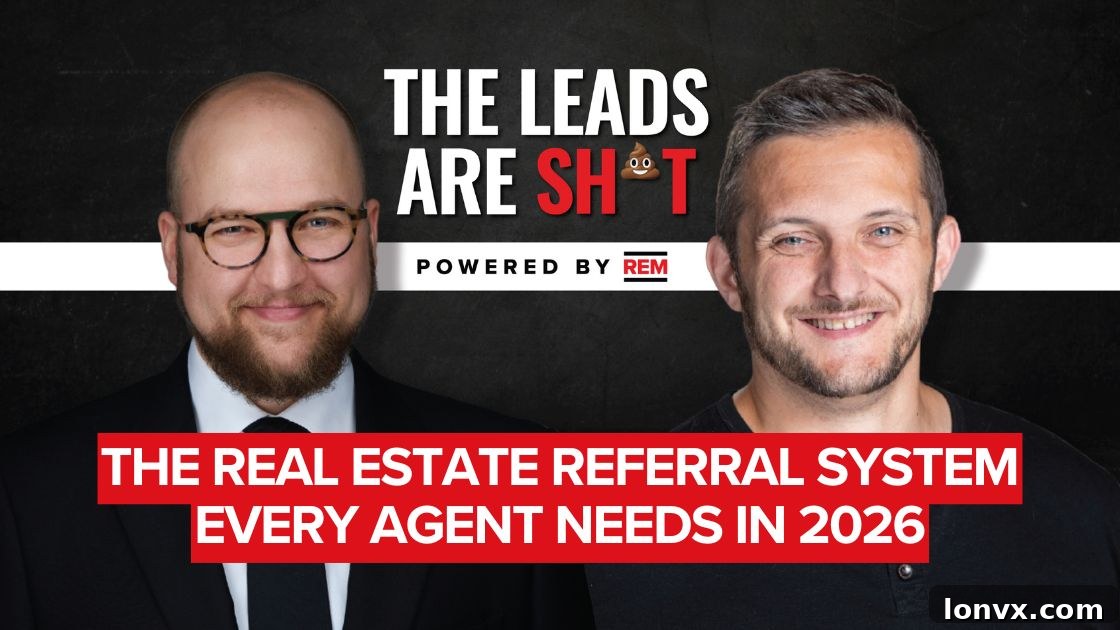
In a recent insightful discussion featured on Leads Are Shit, industry experts Andrew Fogliato and Taylor Hack meticulously dissected the core mechanics of a modern referral engine. They explored what truly works, what pitfalls to avoid, and the innovative strategies top-performing agents will leverage to dominate the market by 2026. This comprehensive guide distills their most impactful lessons, actionable frameworks, and practical tactics, empowering you to transform your referral pipeline into a consistent, high-value asset.
Understanding the Two Forms of Real Estate Referrals
A fundamental error many agents make is conflating two distinct types of referrals, which can inadvertently sabotage their growth. Recognizing and differentiating between these forms is the first step toward building a robust system:
1. Passive Referrals: The “Hope and Wait” Approach
These are the spontaneous endorsements that agents describe as, “I don’t know, people just call me.” While certainly welcome, passive referrals are inherently unpredictable, unscalable, and largely uncontrollable. They occur when a client happens to think of you at the right moment, often based on a single positive past experience, but without any systematic prompting or nurturing. Relying solely on passive referrals creates a feast-or-famine cycle, making business forecasting nearly impossible and leaving agents vulnerable to market fluctuations.
2. Orchestrated Referrals: The Intentional Strategy
In stark contrast, orchestrated referrals are intentional, systemic, and meticulously engineered. They don’t happen by chance; they are the direct result of structured touchpoints, consistent, value-driven communication, and providing compelling reasons for people to advocate for your services. This approach involves proactive engagement, fostering deeper relationships, and embedding yourself as the go-to real estate expert within your network. Orchestrated referrals offer predictability, scalability, and control, forming the bedrock of a truly sustainable real estate business.
The Essential Three-Part Referral Stack for Real Estate Agents
Building an unshakeable referral engine requires a multi-faceted approach. Think of it as a three-part stack, where each component builds upon the last, culminating in a powerful system designed to generate consistent, high-quality leads.
1. Deliver a Five-Star Service Experience: The Non-Negotiable Foundation
Before any other strategy can take root, an agent must first provide an absolutely exceptional service experience. This is the bedrock upon which all referrals are built. If a client isn’t genuinely excited and eager to tell others about their experience with you, then no amount of marketing or outreach will truly matter. A five-star service experience encompasses:
- Crystal-Clear Communication: Proactive, timely, and transparent updates throughout the entire process, setting realistic expectations from the outset.
- Proactive Problem-Solving: Anticipating potential issues and addressing them before they escalate, demonstrating expertise and foresight.
- Frictionless Process Management: Streamlining every step of the transaction, making it as smooth and stress-free as possible for the client.
- Post-Close Support and Value: Staying in touch after the deal closes, offering resources, and continuing to provide value (e.g., vendor recommendations, home maintenance tips).
- Personalized Attention: Treating each client as an individual with unique needs and preferences, not just another transaction.
When clients feel genuinely cared for and their expectations are exceeded, they become enthusiastic advocates, naturally inclined to share their positive experience with friends and family.
2. Host Community-Building Events: Your Reputation Engine
Forget the old notion of “client appreciation” events as mere thank-you gestures. Modern real estate events are far more strategic: they are face-to-face trust accelerators designed to build genuine community and solidify your reputation as a local authority and valuable resource. Done correctly, these events transform into your primary reputation engine.
Effective event ideas are varied and can be scaled to suit your budget and target audience:
- Family-Focused Gatherings: Events at local attractions like pumpkin patches, trampoline parks, or outdoor movie nights create relaxed environments where parents can connect while their children are entertained. These foster natural conversation and relationship building.
- Intimate Dinners for Top Referrers: Showing exclusive appreciation to your most loyal advocates through smaller, more personal events.
- Casual Social Mixers: Hosting meet-ups at local breweries, coffee shops, or parks can be low-cost ways to bring clients and prospects together in a relaxed setting.
- Educational Workshops: Offering free workshops on relevant topics like property tax updates, home renovation ROI, or basic real estate investment strategies positions you as an expert and provides tangible value.
- Cost-Effective Micro-Events: For newer agents or those with limited budgets, “drop-in” events at a local cafe or a brief open house social can serve as excellent, low-pressure touchpoints.
The goal is to create memorable experiences that reinforce your brand and encourage positive word-of-mouth without overtly “selling.”
3. Develop a Premier VIP Program: Justify Ongoing Value
Consider this perspective: every client, throughout their period of homeownership, effectively pays you a significant annual sum (e.g., $5,000, based on spreading your average commission over several years). What ongoing value are you providing to justify that continuous perceived investment? A robust VIP program transforms this hypothetical value into tangible benefits, ensuring clients remain engaged and loyal.
Ideas for a compelling VIP program include:
- Annual Home Valuation Updates: Proactively providing clients with a personalized, professional assessment of their property’s current market value, demonstrating your continued market expertise.
- Exclusive Access to Vetted Professionals: Curating a trusted network of contractors, designers, lawyers, accountants, and other home service providers. This positions you as an invaluable resource for all things home-related.
- Members-Only Educational Workshops: Beyond general community events, offer exclusive, in-depth sessions on advanced topics like tax implications of property ownership, smart renovation insights, or basic investment portfolio strategies tailored for homeowners.
- Private Q&A Sessions: Host regular “ask-me-anything” virtual or in-person sessions, allowing VIP clients direct access to your expertise and a platform to address their specific real estate questions.
- Preferred Partner Perks: Partner with local businesses to offer exclusive discounts or special services to your VIP clients (ensure these are ethical and legal, focusing on genuine value rather than sketchy reciprocation).
A well-executed VIP program keeps you top-of-mind, reinforces your value proposition, and transforms clients into long-term advocates and recurring referral sources.
Identify and Nurture Your Referral “Whales”
Not all contacts in your database are created equal. A crucial strategy for maximizing referral output is to recognize and prioritize your “whales”—the approximately five percent of your database responsible for generating the majority of your referrals. Stop treating your entire database as a flat, undifferentiated list. Instead, view it as a hierarchy, with your whales at the pinnacle.
To identify these high-impact individuals:
- Track Every Referral Source: Implement a system to meticulously record who referred each new client. This data is invaluable.
- Analyze Frequency and Quality: Beyond just the number of referrals, assess the quality of leads they send. Are they pre-qualified? Do they convert easily?
- Look for Wide Social Circles: Proactively seek out individuals in professions that naturally connect them with many people. Think hairdressers, barbers, mechanics, fitness instructors, teachers, financial advisors, and small business owners. These individuals are natural connectors.
Once identified, elevate your engagement with these VIPs. This might include:
- One-on-One Meals: Invite them for coffee or lunch to simply check in and strengthen your personal connection, without a direct ask for business.
- Early Event Invites: Give them first access or special seating at your client events.
- Personalized Gifts: Offer thoughtful, non-transactional gifts that show you genuinely appreciate them.
- Regular, Proactive Check-ins: Maintain consistent, casual communication, demonstrating that you value the relationship beyond just the referrals they send.
Nurturing your whales ensures a continuous flow of high-quality leads from your most effective advocates.
Leverage the Power of Micro-Moments
One of the most underrated yet highly effective tools for building referrals lies in the strategic use of “micro-moments.” These are short, personal, and genuinely thoughtful “thought of you” messages. When used sparingly—perhaps one to three times per year—these subtle interactions plant powerful seeds that can yield referrals for months to come.
The key is authenticity. These messages are never pushy, salesy, or transactional. They simply demonstrate that you care and are thinking about your connection. Examples include:
- Sharing an article you know they’d find interesting.
- Sending a quick message to congratulate them on a personal or professional achievement you noticed.
- A brief text referencing something you discussed previously, like “Saw that new restaurant opened, reminded me of our chat about trying new places!”
These small, consistent gestures subtly shift people into a referral-ready mindset by reinforcing your genuine relationship and positioning you as a helpful, considerate professional.
Client Events: Strategy Over Wishful Thinking
Many agents host client events hoping for a good turnout and some referrals, but without a clear strategy, these efforts often fall flat. Shift from hope to deliberate planning. A highly effective strategy focuses on two main, family-friendly events per year, choosing venues designed for engagement.
Consider locations like:
- Trampoline Parks: Kids burn energy, parents relax and socialize.
- Corn Mazes or Pumpkin Patches: Seasonal, family-oriented fun that encourages interaction.
- Community Festivals or Outdoor Concerts: Partnering with existing events can reduce your workload while still offering a great experience.
The magic happens when kids are occupied and happy, allowing parents to unwind and engage in natural conversation. This relaxed atmosphere is ideal for fostering deeper connections, allowing you to strengthen relationships with existing clients and meet potential new ones in a low-pressure environment.
Gifting That Generates Buzz
When it comes to client gifts, steer clear of generic swag emblazoned with your logo. While well-intentioned, these items often end up in a drawer. Instead, focus on gifts that are personalized, high-quality, and designed to be displayed or used frequently. The goal is to give something that sparks conversation among your clients’ friends and family.
Impactful gift ideas include:
- Engraved Whiskey Bottles: A high-end bottle of spirits, elegantly engraved with the client’s name or a significant date, is often displayed proudly.
- Personalized Cutco Knives: Renowned for their quality, a set of personalized kitchen knives is both practical and a conversation starter.
- Custom Artwork or Home Decor: A piece of local art or a decorative item that complements their home’s style.
- High-Quality Custom Goods: Think bespoke charcuterie boards, premium gardening tools, or a personalized luxury throw blanket.
When a friend visits and asks about the unique, displayed item, your client will naturally share the story of their exceptional real estate agent, leading directly to organic referrals.
High-ROI Email Tactics: Simple, Yet Powerful
Email remains an incredibly potent tool for nurturing relationships and generating leads, especially when executed with precision. Implement this simple, high-impact format for your market update emails:
- Sentence 1: A concise, insightful statement about the current overall market trend. (e.g., “The local market is showing signs of stabilizing after a period of rapid growth.”)
- Sentence 2: Highlight three recent, relevant sales in their specific neighborhood. (e.g., “In your area, 123 Main St. sold for $X, 456 Oak Ave. for $Y, and 789 Pine Ln. for $Z.”)
- Sentence 3: Feature the highest recent sale in their broader area, providing context and often sparking curiosity. (e.g., “Notably, the highest sale nearby was 101 Elm Blvd. at a stunning $W.”)
This format consistently drives replies such as: “What happened with the Blue House on Main Street?” or “I can’t believe 101 Elm went for that much!” These replies are golden. They transform a passive email into an active conversation, which yields valuable market intelligence, deepens client relationships, and invariably leads to new opportunities. Consistency is key here—send these valuable insights regularly to stay top-of-mind.
Hot Take: Should Real Estate Agents Charge for Showings?
The debate around charging clients for property showings periodically resurfaces. Our short answer is unequivocally: No. The longer answer reveals that the impulse to charge for showings typically stems from a skill issue on the agent’s part, rather than a problem with the consumer.
Consider the implications of charging for showings:
- Signals Inability to Qualify: It suggests an agent struggles to effectively pre-qualify buyers, leading to time-wasting viewings. A skilled agent knows how to identify serious buyers upfront.
- Undermines Value Proposition: It implies you cannot create sufficient value to justify your upfront time investment. Real estate is a service industry where initial consultation and groundwork are part of the value provided.
- Degrades Consumer Experience: It creates an immediate barrier and a transactional tone, negatively impacting the client relationship before it even truly begins.
- Sets the Wrong Tone: It establishes a relationship based on fees for access, rather than trust and partnership, which is detrimental to long-term client loyalty and referrals.
If you’re encountering too many “time-wasting” clients, the solution isn’t to charge them. Instead, focus on refining your process:
- Improve Pre-Qualification: Develop robust intake questions and consultations to gauge buyer seriousness and needs effectively.
- Set Clear Expectations: Be transparent about the process, your role, and what you expect from clients.
- Build Value Quickly: Demonstrate your expertise and dedication early in the relationship, proving your worth before significant time investments are made.
The core issue isn’t typically the clients themselves; it’s often a need to optimize the agent’s qualification and value-building processes.
The Bottom Line: Engineer Your Real Estate Referral Success
The most crucial takeaway is this: valuable real estate referrals do not “just happen.” They are systematically engineered, cultivated through a combination of exceptional service, strategic engagement, and consistent value delivery. If your current business feels safe because of sporadic referrals, that’s precisely the moment to critically examine and consciously rebuild your entire referral generation strategy. Transition from passive hope to active, intelligent design.
To dive deeper into these strategies and see them in action, watch the replay of this insightful discussion:
Join the Conversation Live
Each week, The Leads Are Sh*t podcast brings together working agents to dissect what’s actually driving success in real estate right now. Be an active participant in the live recording, get your most pressing questions answered, and join the exclusive after-show conversation.
Register for the next live session and transform your approach to lead generation.
Related Posts
- How to Optimize Your Real Estate CRM for Maximum ROI
- The Future of Real Estate Marketing: Trends for 2024 and Beyond
- Mastering the Art of Client Follow-Up in a Digital Age
View All Related Content