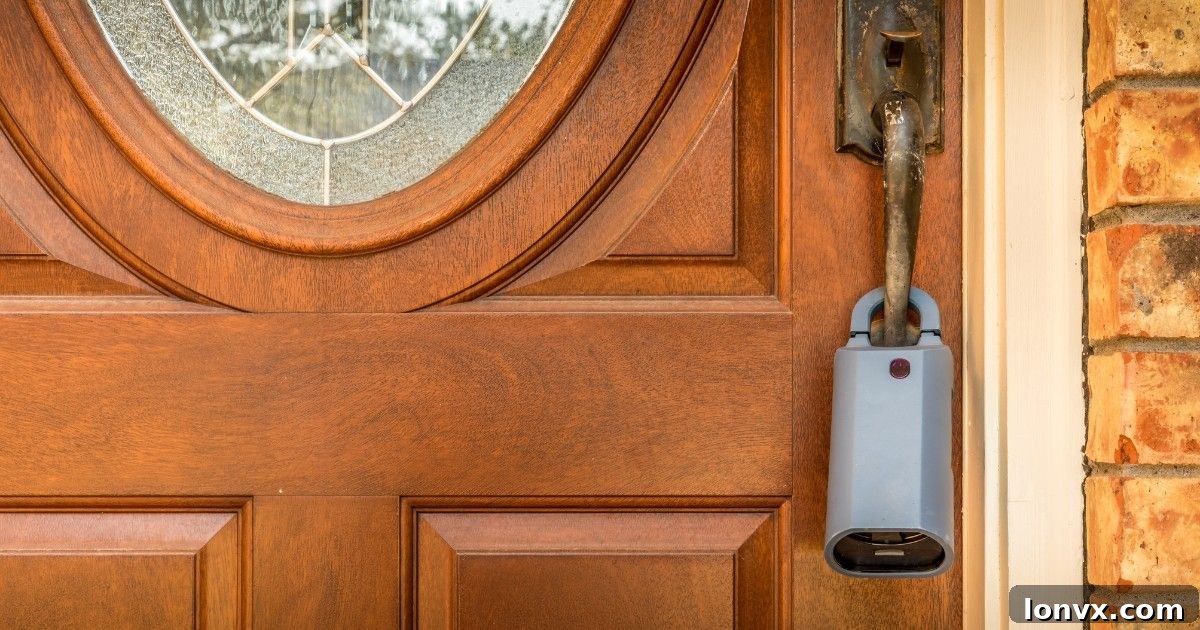
Unauthorized access to real estate lockboxes has emerged as a critical concern within the real estate industry, prompting regulators, brokerage firms, and real estate boards across North America to intensify their efforts against agents who facilitate unsupervised entry into listed properties. While lockboxes are designed as indispensable tools for securely storing keys and streamlining property showings, their misuse poses significant risks, compromising seller security, privacy, and property integrity.
The core of the problem lies in the unauthorized sharing of lockbox access codes with clients, contractors, or other third parties who are not licensed real estate professionals. This practice directly contravenes established professional rules and ethics, exposing sellers to a myriad of dangers including theft, invasion of privacy, and potential property damage. Such breaches not only undermine the trust foundational to the client-agent relationship but also carry severe professional and legal ramifications for those involved.
This isn’t merely an anecdotal issue; it’s a pervasive problem with documented consequences. In Ontario, Canada, the Real Estate Council of Ontario (RECO), the province’s regulatory body for real estate, has consistently reported a high volume of complaints related to unauthorized property access. Over the past five years, RECO has received between 20 to 40 such complaints annually, indicating a persistent pattern of non-compliance among some agents.
Joe Richer, RECO’s registrar, highlighted the seriousness with which these complaints are addressed. He noted that nearly all substantiated complaints have led to stringent disciplinary actions, with financial penalties ranging from $5,500 for initial offenses to as much as $9,500 for repeat violators or those who contest the findings. “When you provide someone with a key and have no idea what they intend to do with it, it represents a profound breach of trust,” Richer emphasized, underscoring the gravity of such actions.
The Far-Reaching Consequences of Lockbox Misuse
Beyond the immediate financial penalties imposed by regulatory bodies, the ramifications for real estate professionals extend significantly. Industry leaders consistently warn that the misuse of lockboxes severely erodes public confidence in the real estate profession as a whole. Each incident of unauthorized access tarnishes the industry’s reputation, making consumers more hesitant to trust agents with the security of their most valuable asset – their home. Furthermore, agents and their brokerages face substantial legal liability, including potential lawsuits for negligence, property damage, or theft that occurs due to a lapse in secure access protocols.
In a proactive response to these escalating concerns, many brokerages and real estate boards are championing the adoption of electronic lockbox systems. These advanced solutions offer enhanced security features such as time-restricted access codes and real-time tracking of property entries and exits. Despite these technological advancements and the clear benefits they offer, the problem of misuse persists. A segment of agents continues to bypass established protocols, often prioritizing speed or perceived convenience over client safety and professional integrity.
Prominent Toronto Realtor Frank Leo, a vocal advocate for secure property access, recounted his own experiences that led him to completely abandon traditional lockboxes years ago. “It’s not just wrong; it’s dangerous,” Leo stated, recalling incidents involving unauthorized re-entry into client homes. His experience highlights a critical flaw in older systems and underscores the imperative for robust security measures in property access.
The Listing Agent’s Paramount Responsibility in Property Security
Joe Richer reiterated that while lockboxes serve as a convenient tool to streamline the showing process, minimizing intrusion for sellers, their implementation must always be predicated on the seller’s comfort and their full understanding of associated risks. The ultimate responsibility for safeguarding a listed property rests squarely with the seller’s representative.
The listing agent has a primary and non-negotiable duty to protect the property on the seller’s behalf. This includes ensuring that the agent is physically present during all showings, unless the seller has explicitly provided written instruction waiving this requirement. This stipulation is not merely a guideline; it’s a fundamental obligation designed to protect the seller’s interests.
Real estate agents are bound by legal and ethical duties to prevent property damage, guard against theft, and uphold the seller’s privacy at all times. Richer emphasized that lockbox access should be exclusively limited to licensed agents, unless the seller has provided explicit, written consent for others to gain entry. This strict adherence to protocol is vital for maintaining security and accountability.
“This is a profoundly serious issue for us,” Richer affirmed, referencing the ongoing volume of complaints. “Virtually every agent against whom we receive a complaint, if supported by evidence of providing unauthorized access to a property, has been referred for disciplinary action. There are no exceptions.” This firm stance underscores the regulatory commitment to enforcing strict compliance and protecting public trust.
The Undeniable Case for Electronic Lockboxes: Enhancing Security and Accountability
The evolution of technology has profoundly transformed real estate security, with electronic lockboxes now representing a vastly superior alternative to their traditional counterparts. As Richer explained, modern electronic systems offer sophisticated features that significantly enhance security and accountability. The most advanced systems generate access codes that are only valid for a specific, pre-determined time slot, often even restricting entry a few minutes prior to the scheduled appointment. Other systems leverage Bluetooth technology and mobile applications, linking access directly to an agent’s registered device, thereby eliminating the possibility of sharing easily transmissible codes.
The benefits of this technological shift are immense and multifaceted:
- Precise Tracking: Listing agents gain precise knowledge of who enters a property and when, including the exact duration of their visit. This detailed audit trail is invaluable for accountability.
- Preventing Overlapping Showings: Digital scheduling and access control help avoid simultaneous showings, ensuring a smoother and more secure experience for all parties.
- Eliminating Unauthorized Re-entry: Once an access period expires, the code becomes invalid, preventing unauthorized re-entry without the issuance of a new, specific code.
- Enhanced Data Security: Electronic systems often encrypt access data, making it harder to intercept or compromise.
Richer clarified that the choice of lockbox system is not mandated by provincial law but is typically determined by local real estate boards. Consequently, members of each board are required to utilize the systems authorized and adopted by that specific board. This localized approach allows for regional adaptation while maintaining a consistent standard within a given market.
“The positive development is that the profession as a whole is recognizing the critical importance of this issue and is growing increasingly intolerant of those who disregard the rules,” Richer added. “This collective frustration is translating into more complaints being filed, which in turn helps us enforce compliance more effectively.”
Frank Leo, from Frank Leo & Associates, a leading Re/Max team serving Toronto and the Greater Toronto Area, remains deeply concerned about the security vulnerabilities inherent in traditional lockboxes. He emphasized that the fundamental difference between old and new systems lies in control and accountability. Leo stated that client safety has always been his highest priority.
“As soon as this technology became available, I made it an unequivocal policy within my business to discontinue the use of traditional lockboxes. We now exclusively utilize electronic lockboxes,” he affirmed, highlighting his firm’s commitment to cutting-edge security practices.
TRREB’s Proactive Stance: New Electronic Lockbox Solution Coming This Fall
The Toronto Regional Real Estate Board (TRREB), one of North America’s largest real estate boards, is at the forefront of implementing advanced security solutions. In an official statement, John DiMichele, CEO of TRREB, articulated the board’s commitment to innovation: “As the real estate profession continues to evolve, so too must the tools and technologies we rely upon to serve our clients and uphold professional standards. At TRREB, we are dedicated to leading this evolution, and this fall, we will be launching a comprehensive new electronic lockbox solution for our members designed to significantly enhance both security and accountability.”
DiMichele elaborated on the key features of this impending system:
- Individual Access Credentials: Each Realtor will be provided with unique, traceable access credentials.
- Real-Time Visit Tracking: The system will enable precise, real-time monitoring of property visits, creating an indisputable audit trail.
- Appointment-Based Access: Entry will be restricted exclusively to scheduled appointment times, preventing unauthorized early or late access.
- Integrated Management: The new solution will seamlessly integrate with TRREB’s existing showing management system, creating a cohesive and efficient operational framework.
“This initiative is a clear reflection of our broader commitment to delivering innovative solutions that not only support our members’ professional success but, critically, also protect the interests and security of their clients,” DiMichele explained. He further underscored that every Realtor bears a solemn legal and ethical obligation to strictly adhere to all rules, particularly those pertaining to property access and security.
DiMichele reiterated that sharing lockbox codes is an absolute prohibition. Furthermore, no buyer, appraiser, inspector, or any other service provider is permitted to enter a property without being accompanied by a Realtor or possessing explicit, written consent from the seller. TRREB’s Multiple Listing Service (MLS) rules unequivocally state that a Realtor must be physically present for the entire duration of any property visit.
“Breaches of these stringent rules are treated with the utmost seriousness,” DiMichele warned. “Complaints submitted to TRREB undergo a thorough review by our Professional Standards Hearing Panel. Verified violations can lead to significant penalties, including substantial fines and mandatory professional training. Members are also strongly encouraged to report any serious infractions directly to RECO, the primary regulator responsible for enforcing the profession’s comprehensive Code of Ethics.”
“At TRREB, we view our role in supporting member professionalism as paramount. We consistently communicate with our members about their responsibilities, providing clear guidelines and best practices for managing property access and ensuring the absolute safety and security of both clients and their homes,” DiMichele concluded, affirming the board’s dedication to maintaining high professional standards.
Calgary’s Experience: Clear Protocols and Strong Compliance
While unauthorized lockbox access has been a persistent challenge in some regions, other markets report a strong adherence to established protocols. Alan Tennant, CEO of the Calgary Real Estate Board (CREB), shared insights into their operational framework. He stated that CREB’s guidelines regarding lockbox usage are exceptionally clear and explicit. “The purpose of property access is strictly for scheduled showings,” Tennant emphasized. “It’s designed to be a Realtor-to-Realtor environment, meaning access is intended exclusively for licensed agents. Any exceptions to this rule must receive prior approval from the listing agent.”
Tennant highlighted the profound level of trust consumers place in real estate professionals. “It’s a major demonstration of consumers’ trust,” he noted. “They are essentially entrusting us with the keys to their home, with the clear expectation that these keys will be used solely for the purpose of facilitating the sale of their property. Therefore, access is specifically intended for Realtors and regulated accordingly.”
Encouragingly, Tennant reported that CREB has received no significant reports or documented issues concerning the abuse of the lockbox access process. This suggests that clear guidelines, effective communication, and strong professional compliance can effectively mitigate many of the risks associated with property access, serving as a positive example for other real estate markets.