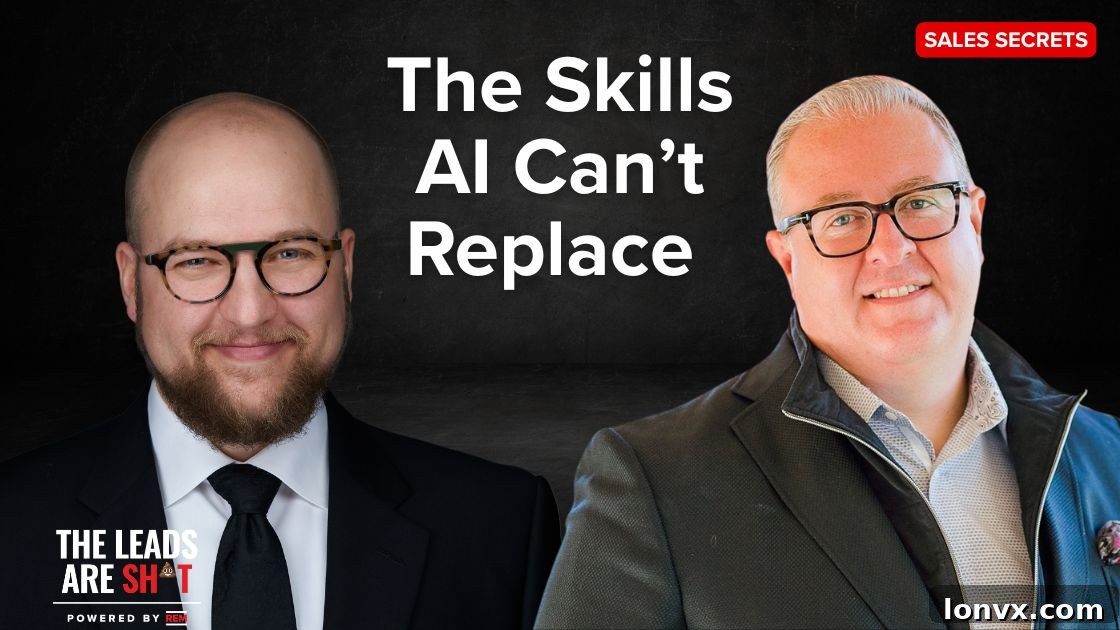
Beyond Transactions: Why Consultative Real Estate Skills Are Your AI-Proof Advantage with Chuck Charlton
In the rapidly evolving world of real estate, technology continues to reshape how agents operate. Yet, amidst the rise of artificial intelligence and automated processes, a profound truth remains: the human element, particularly genuine consultative skills, is irreplaceable. Chuck Charlton, a respected figure in the real estate industry since 2003, embodies this philosophy. Starting his journey as a licensed assistant in Toronto and later building a highly successful practice in Milton, Ontario, Charlton’s business, Charlton Advantage (affiliated with Royal LePage), is founded on a powerful principle learned from the By Referral Only coaching organization: always lead with a giving hand. This ethos underpins every interaction and strategy, setting a benchmark for what truly transformative real estate service looks like.
In a compelling recent discussion with Taylor Hack on their weekly sales and marketing show, Chuck Charlton delved into the critical consultative skills many agents overlook. He articulated precisely why these nuanced abilities are the only aspects of the job that AI simply cannot replicate, and vividly demonstrated what it means to connect with a client on a truly profound level – going “seven layers deep.” This insightful conversation serves as a masterclass for agents looking to future-proof their careers and cultivate deeper, more meaningful client relationships.
Your Digital Reputation: Why Google Reviews Are Your New Resume
In today’s digital age, the traditional resume has been largely supplanted by online reputation. As Chuck Charlton sagely points out, before a prospective client even considers contacting you, they’ve already conducted their due diligence. “I would say your resume now is your Google reviews,” Charlton states emphatically. This isn’t mere conjecture; it’s a fundamental shift in consumer behavior. People scrutinize reviews for everything from a minor Amazon trinket to life-altering investments like real estate. The power of reviews lies in their source: they are not self-promotion but endorsements from impartial third parties. This authentic feedback carries immense weight, drawing directly on Robert Cialdini’s timeless principle of social proof, where individuals are influenced by the actions and opinions of others.
Charlton Advantage is meticulously structured to generate this invaluable social proof consistently. Through diverse initiatives such as buyer, seller, and investor classes, a comprehensive MarketWatch newsletter, a wealth of website resources, and active participation in charitable endeavors, Charlton’s team creates numerous touchpoints for prospective clients to engage and build trust long before a sales conversation ever begins. By the time someone picks up the phone, they already have a clear understanding of Charlton’s expertise, values, and client-centric approach. This strategic upstream engagement positions Charlton’s team distinctly apart from the “crowd of agents ready to help you if you want to buy next week.” By investing in relationships and providing value upfront, they cultivate a loyal client base who seek out their unique service, rather than just the next available agent. This proactive cultivation of reputation and community engagement ensures a steady flow of high-quality leads who are already predisposed to trust and appreciate their distinctive approach.
Unearthing True Desires: The “Seven Layers Deep” Client Conversation
One of the most transformative concepts discussed in the episode, stemming from the By Referral Only coaching methodology, is the idea of “going seven layers deep” in client conversations. This technique aims to uncover what a client genuinely desires, moving far beyond their initial, often superficial, stated wants. The surface-level answer to a question like, “What do you want in a home?” rarely reveals the true underlying motivation. Charlton’s masterful approach involves persistent, empathetic inquiry, continually asking “What is important about that?” until the dialogue transitions from mere features to deeply held values.
He illustrates this with a compelling example: A client initially states they want an “affordable” home. Instead of simply searching for low-priced properties, Charlton probes further. “What’s important about affordability?” he might ask. The client responds, “I don’t want to be house poor.” Pushing deeper, Charlton then asks, “And what’s important about not being house poor?” This line of questioning eventually reveals a profound life aspiration: “My father worked until he was 70 and just withered away. I don’t want that life.” At this juncture, the conversation transcends bricks and mortar. It becomes about safeguarding a future, pursuing financial freedom, and building a life dramatically different from previous generations. “When your values are clear, your decisions are easier,” Charlton emphasizes. This is the heart of consultative real estate—it’s not about merely locating a property; it’s about helping clients construct a life that aligns with their most cherished values and aspirations. This deep understanding fundamentally reframes every subsequent interaction and decision, transforming the agent from a property finder into a life consultant.
Mastering Emotional Intelligence: The Low Offer Reframe That Disarms Sellers
The real estate journey is often fraught with emotional challenges, and few moments are as charged as a seller receiving a low offer. The natural instinct is often anger, directed at the seemingly disrespectful buyer. Chuck Charlton, however, employs an immediate and disarming reframe. Instead of allowing anger to fester, he poses a simple yet profound question: “Why don’t we get mad at all the other people that didn’t bring you an offer? This guy is the only guy at the moment that’s trying to sell your house.” This powerful shift in perspective immediately de-personalizes the offer, transforming the buyer from an adversary into a potential solution.
From this reframed vantage point, Charlton guides the seller back to their fundamental motivation for moving in the first place—whether it’s to be closer to grandchildren, secure more space, or pursue a new life chapter. The low offer is no longer perceived as a personal insult but merely an obstacle standing between the seller and their deeply cherished goal. This strategic reframe skillfully aligns the agent and seller as a cohesive team, united against the challenge. Charlton extends this collaborative philosophy when interacting with opposing agents. Rather than adopting an adversarial stance, he proactively seeks common ground, asking, “What can we do together to make this deal work?” He thinks several steps ahead, anticipating potential hurdles and formulating solutions before making a call. This approach fosters a “you and me versus the world” mentality, ensuring both parties are on the same page, working towards a mutually beneficial outcome. This highly collaborative and emotionally intelligent negotiation strategy not only smooths the transaction process but also builds stronger professional relationships across the industry.
The Art of Influence: Employing the “But Flip” and NLP Toolkit Ethically
Chuck Charlton’s mastery of client communication extends to the strategic use of neuro-linguistic programming (NLP) techniques, which have become an intuitive part of his daily interactions. One specific NLP tool he highlights is the “but flip.” Clients often express a mixed sentiment, like, “I like the home, but I haven’t seen enough.” In this construction, the positive sentiment is buried and diminished by the subsequent objection. The “but flip” reverses this order, subtly yet powerfully altering the emotional weight: “You haven’t seen enough, but you love the home.” This reordering immediately emphasizes the positive aspect, shifting the client’s internal focus and fostering a more constructive mindset.
Charlton is meticulous in framing the ethical application of these techniques. He emphatically states that these are not tools for manipulation, but rather powerful reframing instruments designed to help clients navigate genuine emotional blockages or cognitive biases that might otherwise prevent them from making decisions that are truly in their best interest. As Taylor Hack aptly observed during their conversation, “All of this influence is a martial art. You can use it to help people or you can use it to rob them. That’s a statement about you.” This underscores the critical importance of integrity and a client-first mindset when employing such influential communication strategies. Used responsibly, NLP techniques empower agents to guide clients through complex decisions with greater clarity and confidence, ultimately enhancing the client experience and fostering trust.
Strategic Marketing: The “Super Signature” Advantage in Every Email
On the marketing front, Chuck Charlton champions a brilliant concept borrowed from Dean Jackson: the “super signature.” This concise, action-oriented block of text appears consistently at the bottom of every email sent by the Charlton Advantage team. The format is elegantly simple yet incredibly effective: “Whenever you are ready, here is what you can do next.” This is followed by two or three specific, low-commitment options, such as signing up for a complimentary home tour, requesting a personalized price analysis for their property, or accessing a comprehensive buyer’s guide. The genius behind the super signature lies in its understanding of the client journey.
Not every recipient of a newsletter or email is poised to buy or sell a home immediately. Many are simply gathering information, planning for the future, or casually exploring possibilities. The super signature caters precisely to this diverse audience. For those who are ready to take a tangible step, it provides an immediate, clear, and effortless pathway forward, without the main body of the email having to feel like an overt sales pitch. This approach respects the client’s timeline and autonomy, offering assistance rather than demanding action. As Charlton explains, “Everything in the newsletter is about next steps. Once you’ve read this, here’s what to do.” It transforms every email into a potential springboard for engagement, subtly moving prospects further along their decision-making process at their own pace, making it a powerful tool for consistent lead nurturing and conversion.
The Unwavering Core: Why Consultative Skills Are AI’s Unconquerable Frontier
Chuck Charlton offers a clear-eyed perspective on the role of artificial intelligence in real estate, delineating its strengths and, more importantly, its inherent limitations. He acknowledges that the informational and transactional aspects of the industry will continue to accelerate and become more accessible with AI. Data analysis, market trend identification, property searches, and documentation processes will undoubtedly improve in efficiency and accuracy. However, Charlton unequivocally asserts that the relational dimension of real estate—the profoundly human experiences—will remain beyond AI’s grasp. He speaks of those critical, emotionally charged moments: the buyer standing at the precipice of a significant investment, momentarily losing their nerve; the seller reeling from a low offer, needing empathetic guidance to reconnect with their original motivation for moving. These are not mere data problems to be crunched; they are complex human dilemmas requiring intuition, empathy, and genuine connection.
“AI will solve mechanical left-brain problems,” Charlton succinctly states. “It won’t solve the right-brain problems.” Taylor Hack expands on this crucial distinction, predicting that future-proof real estate agents will be those who master both domains. Clients will increasingly expect agents to leverage technology effectively for efficiency and information. However, they will simultaneously demand a level of human connection, emotional intelligence, and personalized guidance that no algorithm can replicate. The most successful agents will seamlessly integrate cutting-edge technology with unparalleled human skills—they will be tech-savvy and emotionally intelligent. As Hack concludes, “People move the money. You have to use technology to get to the people.” This philosophy underscores the enduring value of consultative skills: in an increasingly automated world, the ability to understand, empathize with, and guide clients through their most significant life decisions will be the ultimate differentiator and the true foundation of a thriving real estate career. For more insights from Chuck Charlton, visit charltonadvantage.com.
Join the Conversation Live
Each week, The Leads Are Sh*t brings working agents together to dissect what’s actually working in real estate right now. Be part of the live recording, get your questions answered and join the after-show conversation.
Register for the next live session.
Related Posts