Beyond Compliance: Navigating the Essential Path to True Accessibility in Commercial Spaces
For most business owners, property managers, and facility operators, the principles of accessibility are not foreign. There’s a general awareness of laws, building codes, and municipal bylaws designed to accommodate individuals with disabilities. However, despite these foundational regulations, my recent personal experience has vividly illustrated that there remains an immense journey ahead toward achieving truly inclusive and functional accessibility in our commercial environments.
A recent reconstructive foot surgery unexpectedly confined me to a wheelchair for the initial few weeks, followed by another six weeks relying on crutches. While I emphatically state that this temporary physical limitation pales in comparison to the profound and often permanent challenges faced by individuals with severe disabilities, this brief period offered me an invaluable, albeit humbling, glimpse into the daily realities and systemic hurdles they encounter. It was a powerful education, transforming abstract concepts of accessibility into tangible, often frustrating, real-world experiences.
Relating these insights directly to the commercial real estate landscape, the simple act of entering and exiting many buildings became an unexpectedly arduous task, often beginning long before I even reached the front door. The journey often started in the parking lot, where the first significant discrepancies in accessibility became apparent. While most commercial properties do feature designated accessible parking stalls, a concerning number of these critical spaces were poorly maintained. Faded paint, indistinguishable markings, or obscure signage made them difficult to identify. Even more disheartening was the frequent sight of these vital stalls occupied by vehicles without proper disability placards, a clear indication that monitoring systems are either lax or enforcement is severely lacking. Once the challenge of parking was overcome and I managed to exit the vehicle, another immediate obstacle presented itself: the curb. In the absence of a properly constructed, gently sloping ramp, navigating a curb in a wheelchair proved remarkably difficult, bordering on impossible for many without external assistance. This seemingly minor architectural detail became a formidable barrier, effectively blocking access to the building for those relying on wheeled mobility aids.
The Entryway Gauntlet: Doors, Ramps, and Environmental Hazards
Moving past the initial parking and curb challenges, the main entrances of many commercial buildings introduced their own set of formidable hurdles. A surprisingly large number of front doors still lack automatic openers, a critical feature for anyone with mobility impairments. This absence transformed a simple entry into a physically demanding ordeal with crutches and an almost insurmountable task when in a wheelchair. Imagine attempting to open a heavy, non-automatic door while simultaneously trying to propel yourself forward in a wheelchair or maintain balance on crutches – it’s a delicate, often dangerous, maneuver. Furthermore, these exterior issues are compounded exponentially by adverse weather conditions. Unshovelled snow, untreated ice, or poorly maintained sidewalks and pathways during winter months introduce an entirely new dimension of danger and inaccessibility, turning a simple path into a treacherous obstacle course for anyone with mobility challenges.
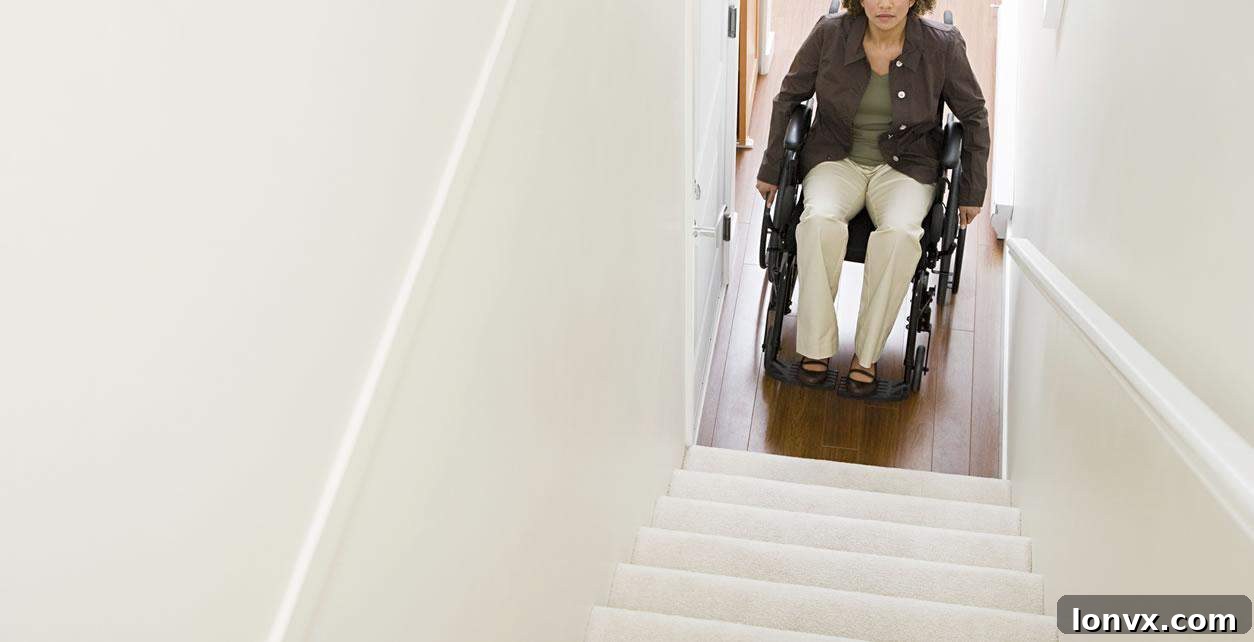
The interior of commercial buildings often presented a new series of challenges. For multi-story structures, the presence and functionality of elevators are paramount. If a building lacked an elevator, or if the existing one was out of order, any floors beyond the main level became entirely inaccessible to someone in a wheelchair. This effectively cut off access to offices, services, or amenities located on upper floors. While navigating stairs on crutches is technically “doable,” it is far from easy and highly dependent on the presence of sturdy, well-placed handrails – which, frustratingly, were frequently absent or inadequate. The design and maintenance of these basic features directly impact the ability of individuals to participate fully in the commercial landscape.
The Restroom Reality Check: A Struggle for Dignity
One of the most significant and often overlooked hurdles within commercial spaces is the public restroom. My experiences confirmed that many washroom doors are barely wide enough for entry, leaving little to no room for maneuvering once inside. The limited space makes it incredibly challenging to turn a wheelchair around, or even to navigate effectively with crutches. The critical transition from a wheelchair to a toilet also presents a daunting task, particularly in the absence of strategically placed safety grab bars. These bars are not merely conveniences; they are essential aids that provide stability and support, enabling independent use of facilities. Without them, what should be a private and dignified act becomes a precarious and often humiliating struggle. This list of challenges is by no means exhaustive, but these personal anecdotes profoundly underscore the pervasive nature of accessibility gaps in our built environments.
Beyond Personal Experience: The Broader Imperative for Inclusive Design
It is crucial to reiterate that my situation was temporary. There are countless individuals living with much more serious, often permanent, disabilities who face these obstacles every single day of their lives. Whether it’s a person dealing with a minor temporary setback or someone confronting lifelong challenges, I am unequivocally asserting that, by and large, businesses are simply not doing enough to genuinely accommodate persons with disabilities. This is a broad generalization, and to be fair, there are commendable exceptions – businesses that go above and beyond, demonstrating extraordinary commitment to making life easier for those with disabilities. To those exemplary organizations, I offer my sincere applause and strongly encourage you to share your insights, best practices, and the tangible benefits of your inclusive decisions with other businesses. Your leadership is vital in fostering a more accessible future.
My temporary confinement profoundly humbled me and deepened my understanding of the daily challenges individuals with disabilities face. Observe, for a moment, how effortlessly most people step on and off a sidewalk curb, without a second thought or a moment’s hesitation. Now, contrast that image with the fear, trepidation, and immense physical effort a person in a wheelchair must expend to navigate that very same curb. This stark difference highlights a fundamental inequity in our urban design and commercial infrastructure – an inequity that too often goes unnoticed by the able-bodied majority.
The Business Case for True Accessibility: Beyond Compliance, Towards Opportunity
Embracing true accessibility extends far beyond mere legal compliance; it represents a smart business strategy and a profound ethical responsibility. Businesses that prioritize inclusive design unlock a myriad of benefits. Firstly, they tap into a significant and often underserved market segment. Individuals with disabilities, along with their families and friends, represent considerable purchasing power. An accessible business not only welcomes these customers but also fosters loyalty and positive word-of-mouth. Secondly, accessibility enhances a brand’s reputation and public image. Companies perceived as inclusive and socially responsible naturally attract a broader customer base and talent pool, differentiating themselves in a competitive market. Thirdly, an accessible workplace supports a diverse workforce, promoting employee morale, retention, and productivity. When employees with disabilities feel fully supported and integrated, they contribute more effectively. Finally, universal design principles, which advocate for environments usable by everyone, often lead to innovative solutions that benefit all customers, regardless of ability. For instance, automatic doors or ramps are convenient for parents with strollers, delivery personnel, or anyone carrying heavy items, not just wheelchair users. Investing in accessibility is not merely an expense; it is an investment in growth, reputation, and community.
Actionable Steps for Business Owners and Property Managers
If you are a business owner, property manager, or even a community leader, I urge you to proactively assess the accessibility of your premises. Consider initiating a comprehensive accessibility audit of your place of business. This audit should go beyond checking boxes for legal compliance; it should evaluate the practical, lived experience of someone with a disability navigating your space. Here are actionable steps to consider:
- Conduct a Thorough Accessibility Audit: Engage professional accessibility consultants or, even better, invite individuals with various disabilities to provide real-world feedback on your facilities. Their insights are invaluable.
- Prioritize Universal Design: Adopt universal design principles, which aim to create environments that are inherently usable by the widest range of people, regardless of age, ability, or situation. This means designing for all, from the outset, rather than retrofitting.
- Invest in Essential Infrastructure: This includes ensuring proper ramps with appropriate slopes, installing functional automatic door openers, widening doorways and corridors where necessary, and outfitting washrooms with sufficient space and grab bars. Regularly check and maintain elevators.
- Improve Signage and Wayfinding: Ensure all signage is clear, at an appropriate height, and includes tactile or braille elements. Clear pathways, free of clutter, are essential for navigation.
- Staff Training and Awareness: Educate your staff on disability awareness, etiquette, and how to appropriately assist customers or colleagues with disabilities. A welcoming and knowledgeable staff can make a significant difference.
- Regular Maintenance: Accessibility features are only effective if they are properly maintained. This means regularly checking automatic doors, clearing snow and ice from accessible routes, and ensuring ramps are free of obstructions.
- Seek and Respond to Feedback: Create avenues for customers and employees to provide feedback on accessibility. Be open to criticism and commit to continuous improvement based on their experiences.
A Collective Call to Empathy and Continuous Improvement
My temporary journey through impaired mobility has left an indelible mark on my perception of the world around us. It has underscored the profound difference that thoughtful, inclusive design can make in someone’s daily life. Each curb, each heavy door, each inaccessible washroom represents not just a physical barrier, but an emotional one – a constant reminder of exclusion. So, whether your motivation stems from a desire for legal compliance, a commitment to ethical business practices, or simply a wish to make the world a better place, I implore you to act. See what small, incremental changes you can implement today to enhance accessibility. Every effort, no matter how minor it may seem, contributes to a larger tapestry of inclusivity. Let’s move beyond the minimum requirements and strive for a society where true accessibility is not an afterthought, but an inherent and fundamental aspect of our built environment, fostering dignity and independence for all.