Canada’s dynamic rental market continues to be a focal point for economists, policymakers, and residents alike. While the latest National Rent Report by Rentals.ca and Urbanation reveals a slight moderation in annual rent increases for May, the underlying trends still paint a picture of persistent demand and escalating costs over the longer term. This comprehensive analysis delves into the nuances of the Canadian rental landscape, examining provincial and city-specific trends, the factors fueling this growth, and the profound implications for renters across the nation, providing crucial insights for anyone navigating this challenging market.
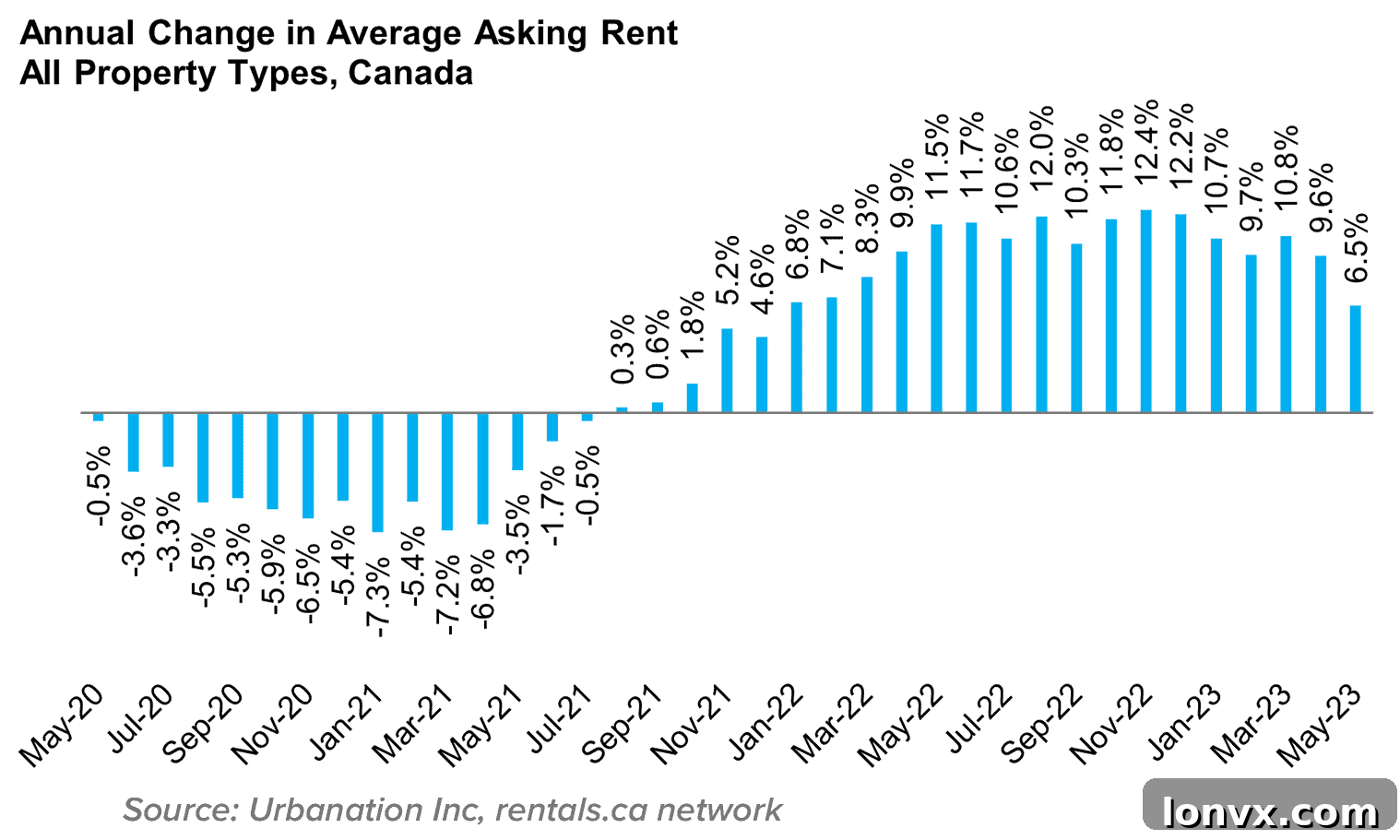
According to the report, average asking rents across Canada rose by 6.5 percent year-over-year in May. Although this marks the lowest percentage increase observed since December 2021, signaling a slight cooling compared to the rapid surges of previous months, it’s crucial to put this into perspective. This moderation in the annual growth rate does not diminish the significant long-term appreciation; the report underscores a substantial surge, with rents for all property types climbing by an impressive 19 percent over the past two years. This dual narrative of recent slowdown versus sustained long-term growth highlights the complex, and often contradictory, dynamics at play within the Canadian housing sector, indicating that while the pace may have slowed, the upward trend remains firmly established.
On a month-over-month basis, the national average rent saw a modest 0.6 percent increase, bringing the average rent to $2,014. This figure, crossing the $2,000 threshold, serves as a stark reminder of the increasing financial pressures facing Canadian households, particularly those relying on the rental market for their accommodation needs. For many, particularly young professionals and new immigrants, this average represents a significant portion of their monthly income, impacting their ability to save, invest, and maintain a high quality of life. Understanding these intricate shifts is vital for anyone navigating Canada’s increasingly competitive rental environment, from prospective tenants struggling to find affordable housing to real estate investors assessing market potential.
Provincial Rental Market Dynamics: A Mixed Landscape of Growth and Affordability
While national figures provide a broad overview, a deeper dive into provincial trends reveals varied growth patterns and differing levels of affordability across Canada. Each province presents a unique set of circumstances, profoundly influenced by local economies, population growth rates, inter-provincial migration patterns, and the effectiveness of regional housing supply initiatives. This section explores how different provinces are experiencing the national rental trends.
Alberta: Leading the Charge in Annual Rent Growth
In May, Alberta emerged as the provincial leader in annual rent growth, demonstrating robust demand within its rental sector. The average rents for purpose-built and condominium apartments in the province climbed by an impressive 13.4 percent year-over-year, reaching $1,521. This significant increase underscores Alberta’s growing appeal, driven by factors such as a relatively affordable cost of living compared to other major provinces, a strong and diversifying job market, and a notable surge in inter-provincial migration, particularly from higher-cost regions like Ontario and British Columbia. Despite this substantial growth, Alberta’s average rents remain approximately 22 percent below the national average, making it an attractive destination for those seeking more budget-friendly housing options. This sustained influx of new residents, combined with a supply chain still catching up, continues to fuel demand and upward price pressure, signaling a dynamic shift in Alberta’s housing landscape.
Ontario: High Rents Persist Amidst Sustained Demand and Supply Shortfalls
Ontario, Canada’s most populous province and an undeniable economic powerhouse, continued to experience exceptionally high average rents, reflecting its strong economic activity and significant population growth. For purpose-built and condominium apartments, average rents in Ontario surged by 12.4 percent year-over-year, reaching an average of $2,409. This firmly positions Ontario as one of the most expensive provinces for renters, a trend that has been consistently observed for several years. The continuous influx of both international immigrants and inter-provincial migrants, drawn by job opportunities and educational institutions, coupled with a persistent housing supply deficit, especially in its major urban centers like the Greater Toronto Area, keeps the provincial rental market highly competitive and costly. The pressure is particularly acute in areas surrounding economic hubs, where demand far outstrips the pace of new construction.
Quebec: Double-Digit Increases Reflect Growing Urban Appeal and Tight Markets
Quebec also recorded notable double-digit annual rent growth in May, with average rents increasing by 10.6 percent to $1,875. This rise signifies the increasing desirability and economic vibrancy of Quebec’s major cities, such as Montreal and Quebec City, which offer a unique cultural experience, a dynamic job market, and a more accessible cost of living relative to their counterparts in Ontario and British Columbia. The province’s growing population, fueled by immigration, and the limited availability of rental units, particularly in popular urban neighborhoods with high student populations and young professionals, contribute significantly to this upward pressure on rental prices. The market’s competitiveness is a growing concern for residents, leading to calls for more aggressive housing development strategies.
British Columbia: The Nation’s Most Expensive Market, Despite Slowing Growth
British Columbia, with its breathtaking landscapes and thriving urban centers, maintained its status as the most expensive province for renters in Canada. While rent growth in BC slowed to 5.2 percent in May, indicating a marginal easing of the market frenzy, the average rents for purpose-built and condo apartments still stood at a staggering $2,468. This slight deceleration in growth does little to alleviate the immense financial burden on renters in the province, particularly in sought-after areas like Vancouver and Victoria. The fundamental imbalance between high demand, driven by strong migration and limited geographical land availability, and a slow-to-respond housing supply continues to keep rental costs exceptionally high. This reality has profound impacts on residents’ quality of life, economic mobility, and the province’s overall economic competitiveness, as businesses struggle to attract and retain talent due to the prohibitive cost of living.
Major City Rental Hotspots: A Tale of High Costs and Fierce Competition
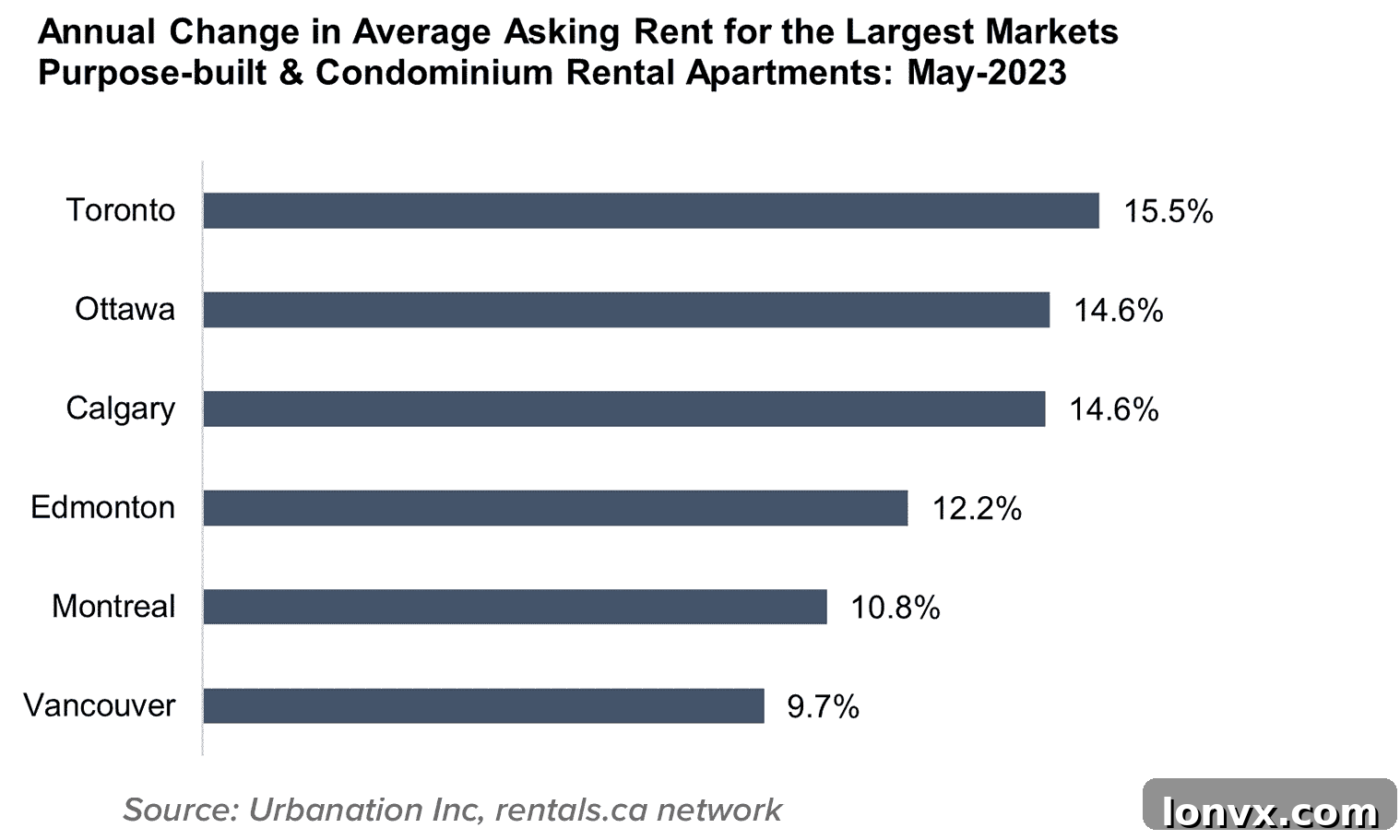
When examining the Canadian rental market, the major metropolitan areas stand out as epicenters of high demand and soaring prices. These cities, acting as economic engines, attract talent, investment, and new populations, but often at the cost of housing affordability. The following provides a snapshot of the most competitive and expensive urban rental markets.
Vancouver: Unwavering as Canada’s Most Expensive Rental City
Vancouver consistently holds the unenviable title of Canada’s most expensive city for renters, and May was no exception among the 35 cities surveyed. The average monthly rent for a one-bedroom home in this Pacific jewel reached an astounding $2,831. For those requiring more space, a two-bedroom unit commanded an average of $3,666 per month. These figures represent significant year-over-year increases of 16 percent for one-bedroom units and 8.7 percent for two-bedroom units, respectively, demonstrating a sustained upward trajectory. The city’s highly desirable lifestyle, constrained geographical space between mountains and ocean, and a robust job market in technology, film, and trade fuel this insatiable demand, making affordable housing an increasingly distant dream for many of its residents and newcomers. The relentless upward trajectory of rents in Vancouver has profound societal implications, pushing many towards the city’s periphery, into smaller accommodations, or even out of the metropolitan area entirely in search of viable housing.
Toronto: A Close Second in Rental Costs and Competition
Following closely behind Vancouver, Toronto secured its position as the second most expensive city for average monthly rent in May. Canada’s largest city and economic capital saw the average rent for a one-bedroom unit climb to $2,538. For two-bedroom accommodations, renters faced an average cost of $3,286. These figures reflect considerable annual increases, with one-bedroom units seeing a 17.5 percent surge and two-bedroom units rising by 12.4 percent year-over-year. Toronto’s status as a global financial hub, a magnet for international immigration, and a vibrant cultural and educational center continues to drive unparalleled demand for housing. The struggle to keep up with this demand, amidst factors like urban sprawl concerns, limited land for development, and regulatory hurdles, means that Toronto’s rental market remains fiercely competitive, often requiring renters to dedicate a staggering portion of their income to housing, leading to reduced discretionary spending and increased financial strain.
Calgary: Continued Strong Growth, Adapting to New Realities
Calgary, a major economic hub in Alberta, also experienced substantial rental growth in May. Average rents for purpose-built and condo apartments reached $1,944, marking a 14.6 percent increase year-over-year. While this growth rate is impressive, it represents a slight moderation compared to the more explosive 22.9 percent annual growth observed in April. This cooling could indicate a stabilization, though the market remains robust and attractive. Calgary’s relative affordability compared to Toronto and Vancouver, coupled with its thriving energy sector and increasing diversification into technology and logistics, continues to attract inter-provincial migrants. This sustained influx of people, seeking better job prospects and a lower cost of living, contributes to consistent demand in its rental market, placing pressure on the existing housing stock.
Ottawa: The Capital City’s Rising Rental Landscape
Canada’s capital city, Ottawa, also witnessed significant rent increases, with average rents rising by a substantial 14.6 percent annually in May, reaching an average of $2,134. As a prominent government and technology hub, Ottawa benefits from a stable job market, consistent federal employment, and a growing presence of high-tech companies. The demand for rental housing, particularly from students attending its universities, government employees, and tech workers, contributes to the persistent upward pressure on prices. Despite being slightly more affordable than Toronto, Ottawa’s rental market is increasingly challenging for many residents, prompting ongoing discussions about urban planning, intensification efforts, and long-term housing supply solutions to ensure the city remains accessible to a diverse population.
The Surge in Mid-Sized Ontario Cities: A Ripple Effect from Urban Cores
Beyond the major urban centers, a significant and increasingly prominent trend emerging from the report is the accelerated rent growth in mid-sized cities and suburban areas, particularly across Ontario. This phenomenon is often attributed to the “ripple effect,” where soaring costs and intense competition in primary cities like Toronto push residents outwards in search of more affordable living options, driving up demand and consequently prices in neighboring communities. This outward migration patterns reshape the housing dynamics of entire regions.
Scarborough Leads the Pack in Rental Price Escalation
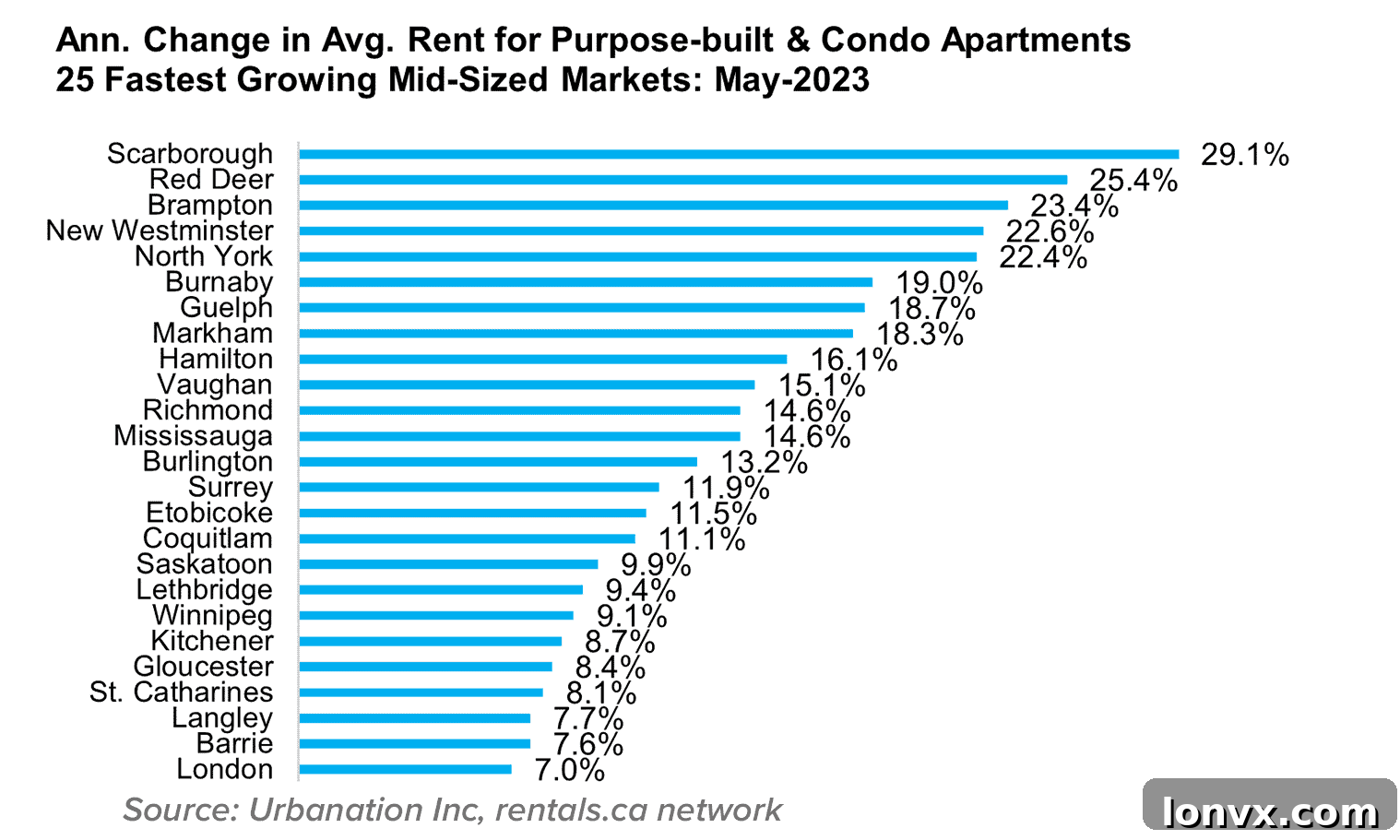
Scarborough, a sprawling district within the eastern part of the City of Toronto, topped the list for the fastest-rising rents year-over-year for condo rentals and apartments in May. Rents in Scarborough skyrocketed by an astonishing 29 percent annually, reaching an average of $2,527. This dramatic increase highlights Scarborough’s growing appeal as a relatively more affordable alternative to downtown Toronto, while still offering excellent transit links, diverse communities, and a wide array of amenities. As renters are increasingly priced out of the city’s core areas, demand intensifies in adjacent, often more diverse and family-friendly, neighborhoods like Scarborough, which can absorb some of the spillover demand while still offering urban conveniences.
Greater Toronto Area (GTA) and Surrounding Regions Witness Broad Double-Digit Hikes
A broad sweep of cities within the Greater Toronto Area (GTA) and surrounding regions also experienced substantial double-digit rent increases in May, reflecting a widespread demand for housing across the economic heartland of Canada. Brampton saw a robust 23 percent increase, indicating its growing prominence as a commuter hub and diverse community. North York, another key Toronto district, rose by 22 percent. Further out, Guelph experienced a significant 19 percent hike, and Markham, a rapidly developing suburban center, recorded an 18 percent surge. Cities like Hamilton, Vaughan, Mississauga, Burlington, and Etobicoke also experienced notable, albeit slightly lower, rent increases. This widespread growth underscores the pervasive nature of Canada’s housing supply challenges, pushing renters further from the city core to find suitable accommodation. The demand extends far beyond Toronto’s immediate vicinity, creating a competitive environment in what were once considered more affordable satellite communities, now becoming desirable destinations in their own right.
Oakville: Canada’s Most Expensive Midsize Market
Despite the rapid growth in many mid-sized cities, Oakville maintained its position as Canada’s most expensive midsize market. With an average rent of $3,373 for purpose-built and condominium apartments, Oakville’s premium pricing reflects its affluent demographic, high quality of life, excellent schools, and strategic proximity to both Toronto and natural amenities along Lake Ontario. Its consistent ranking at the top of the midsize market further illustrates the diverse factors influencing rental costs across different types of communities in Canada, demonstrating that luxury and desirability can command exceptionally high prices even outside the largest metropolitan centers.
Key Drivers Behind Canada’s Rising Rental Costs: A Multifaceted Challenge
Understanding the persistent upward trajectory of rents in Canada requires an examination of the fundamental economic and demographic forces at play. The National Rent Report, alongside broader market analysis, consistently points to a confluence of factors that continue to exacerbate the supply-demand imbalance in the rental market, creating a challenging environment for tenants and an urgent call for policy intervention.
Record Immigration Levels Fueling Exponential Demand
One of the most significant contributors to the surging demand for rental properties is Canada’s ambitious and rapidly increasing immigration targets. The country plans to welcome 465,000 new permanent residents in 2023, with even higher targets projected for subsequent years. While immigration is a vital component of Canada’s economic growth, cultural diversity, and workforce development, this substantial influx of newcomers directly translates into increased demand for housing, particularly rental units, as many immigrants initially seek rented accommodation upon arrival. The current rate of housing construction and the existing housing stock simply struggle to keep pace with this unprecedented population growth, leading to heightened competition for available units and, consequently, significant upward pressure on rental prices across all major urban centers and surrounding communities. This creates a critical bottleneck that requires strategic planning and aggressive action.
The Deteriorating Affordability of Homeownership Pushing More into Renting
Another critical factor is the escalating cost and dwindling accessibility of homeownership, which directly impacts the rental market. With average home prices once again on the rise after a brief dip, and the Bank of Canada aggressively raising interest rates to a 22-year high of 4.75 percent, purchasing a home has become an increasingly unattainable dream for an ever-growing number of Canadians. High mortgage rates translate into significantly higher monthly payments, pricing many potential first-time buyers and even existing homeowners out of the ownership market. As a result, a larger segment of the population is compelled to remain in the rental market for longer periods, intensifying competition for available apartments and further driving up rents. This creates a vicious cycle where the inability to buy a home directly inflates rental costs, effectively trapping many in a perpetual renting scenario and delaying their ability to build equity.
Persistent Housing Supply Shortages: A Foundational Issue
Underlying both immigration-driven demand and homeownership affordability challenges is the perennial issue of insufficient housing supply across Canada. Decades of underbuilding relative to robust population growth have created a structural deficit in housing units that cannot be resolved overnight. Factors contributing to this persistent shortage include slow and cumbersome municipal approval processes for new developments, restrictive zoning bylaws that limit density and housing types, escalating construction costs (both for materials and skilled labor), and a lack of readily available and affordable land in desirable urban areas. Addressing this fundamental supply-demand imbalance requires coordinated, long-term efforts from all levels of government and the private sector to accelerate housing development, diversify housing types, and streamline regulatory frameworks.
Inflationary Pressures and Rising Operating Costs for Landlords
Beyond the direct demand-supply dynamics, broader inflationary pressures also play a significant role in rising rental costs. Landlords face increasing operating expenses, including property taxes, utilities (electricity, heating, water), insurance premiums, and the costs of maintenance and repairs. These increased expenses, which are themselves subject to inflation, are often passed on to tenants through higher rents to maintain profitability and cover overheads. The interconnectedness of the economy means that inflation in one sector can quickly ripple through to others, making rental housing less affordable not only due to increased demand but also due to the rising costs of providing and maintaining rental properties.
Profound Implications for Renters and Canadian Society: Navigating the Affordability Crisis
The sustained rise in rental costs has far-reaching consequences, impacting not just individual household budgets but also the broader social and economic fabric of Canada. The National Rent Report’s findings underscore a growing affordability crisis that demands urgent and multifaceted attention from policymakers and communities alike.
The Squeeze on Household Budgets and Quality of Life
As aptly stated by Matt Danison, CEO of Rentals.ca Network, “Higher rents are on the horizon with interest rates at a 22-year high, rising home prices and record immigration.” This stark assessment highlights the compounding pressures faced by renters. For many Canadians, a significant, and often unsustainable, portion of their income is now dedicated to housing, leaving less for other essential expenses like food, transportation, healthcare, and savings. This financial squeeze can severely limit disposable income, stifle individual economic growth, prevent wealth accumulation, and exacerbate income inequality. Moreover, it impacts mental health and overall quality of life, as housing insecurity becomes a constant source of stress.
Generational Impacts: The “Boomerang” and “Roommate” Generations Emerge
The current rental market trends are profoundly reshaping the lives and aspirations of younger Canadians, particularly Gen Z. Danison aptly points out that “Gen Z could become the ‘boomerang generation’ moving back in with the parents or the ‘roommate generation’ splitting rent as it’s unaffordable for many Canadians to pay rent on their own.” This reality signifies a pervasive delay in key life milestones such as achieving independent living, starting families, and accumulating personal wealth. While sharing accommodations can offer a temporary solution to high costs, it often comes with compromises on privacy, personal space, and lifestyle choices. For many, returning to their parents’ homes becomes a necessary financial refuge, impacting their autonomy and potentially perpetuating intergenerational housing dependence, a phenomenon not commonly seen in previous generations to this extent.
The Urgent Call for Collective Action and Creative Solutions
The escalating rental crisis is not merely a transient market fluctuation; it’s a deep-seated structural challenge requiring concerted effort and innovative thinking from all stakeholders. Danison’s call to action is clear and urgent: “Governments at all levels need to come up with creative solutions to increase housing supply.” This necessitates a comprehensive, multi-pronged approach that goes beyond conventional methods:
- Streamlining Development Processes: Reducing bureaucratic delays and accelerating the approval process for new housing projects, including expediting permits and inspections.
- Zoning Reform: Amending outdated and restrictive zoning bylaws to permit greater density, foster mixed-use developments, and allow for diverse housing types (e.g., multiplexes, mid-rise apartments, laneway houses) in existing neighborhoods, moving away from single-family home dominance.
- Incentivizing Affordable Housing: Providing robust financial incentives, grants, tax breaks, or access to low-cost land for developers focused on building dedicated affordable rental units, ensuring a diverse range of housing options.
- Investing in Infrastructure: Ensuring that essential municipal infrastructure (transit, water, sewer, roads) keeps pace with housing development, especially in growth areas, to support higher population densities.
- Leveraging Public Lands: Strategically utilizing underused public lands for housing development, prioritizing affordable and purpose-built rental projects.
- Protecting Existing Affordable Units: Implementing strong tenant protections and measures to prevent the loss of existing affordable rental stock through “renovictions,” excessive rent increases, or demolition without adequate replacement.
- Innovative Funding Models: Exploring new public-private partnership models and financing mechanisms to stimulate the construction of rental housing at scale.
Without these bold, creative, and collaborative interventions, the trend of rising rents and decreasing affordability is likely to continue, posing significant challenges to Canada’s social equity, economic competitiveness, and long-term stability. The future of the Canadian rental market and the well-being of its citizens hinges on the ability of stakeholders to collaboratively address the fundamental imbalance between housing demand and supply with innovative, sustainable solutions.