
Navigating Toronto’s Shifting Real Estate Landscape: A Comprehensive 2024 Outlook
The Greater Toronto Area (GTA) real estate market, a vibrant and often frenetic hub of activity, has experienced a profound transformation since its electrifying peak in 2022. What followed was a period of recalibration, characterized by significant shifts that continue to shape the decisions of buyers, sellers, and real estate professionals alike. Understanding these evolving dynamics is crucial for anyone involved in the region’s property sector.
Understanding the Market Shift: From Boom to Balance
The euphoria of the 2022 market gave way to a more subdued, yet complex, environment. Several key themes have emerged and solidified over the past two years, fundamentally altering the competitive landscape:
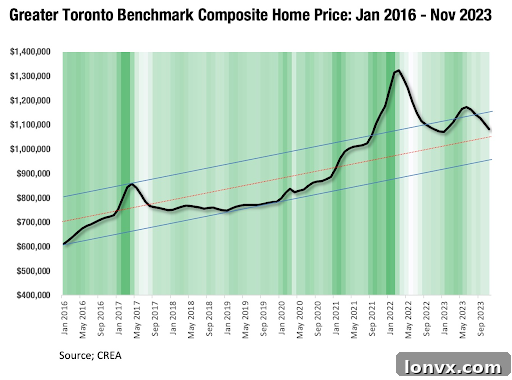
- Price Stabilization: Following an initial, sharp decrease, average home prices in the GTA have largely stabilized, settling into a sideways pattern. This new equilibrium still exhibits typical seasonal fluctuations but lacks the aggressive year-over-year appreciation seen previously, offering a more predictable, albeit less exhilarating, pricing environment.
- Declining Sales Volume: The volume of home sales has seen a noticeable reduction. This contraction in transactions has intensified competition among realtors, demanding greater expertise and resilience to secure deals in a less liquid market.
- Increased Listings and Buyer Power: Concurrently, there has been a significant increase in the number of homes listed for sale. This expanded inventory provides buyers with more choices and, consequently, greater pricing power, shifting the market away from the frantic bidding wars that once dominated.
- Rise in Distressed Sellers: A concerning trend has been the increase in “power of sale” listings. These instances, often indicative of financial distress, underscore the pressures some homeowners are facing due to higher interest rates and economic uncertainty.
These combined factors signify a substantial departure from the remarkably strong market conditions observed in early 2022, creating a new normal for the GTA housing landscape.
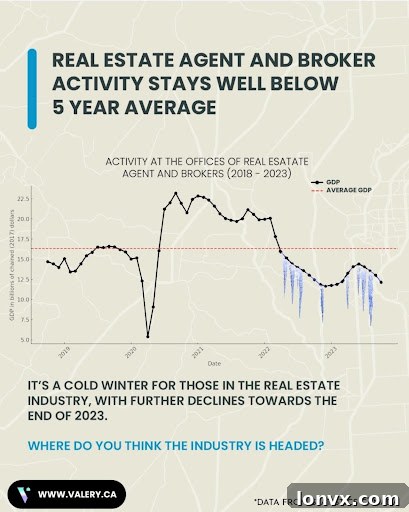
The impact of these shifts is starkly evident in the real estate industry’s activity levels. Data recently published by the real estate AI platform Valery.ca, drawing from Statistics Canada, vividly illustrates this reality:
2023: A Year of Correction and Rental Market Dominance
The year 2023 proved to be a pivotal period for the GTA housing market. High mortgage rates, a direct consequence of the Bank of Canada’s aggressive rate hike cycle, coupled with increasingly stringent mortgage qualification standards, acted as significant headwinds. These factors collectively led to a notable reduction in home sales, pushing many prospective buyers to the sidelines. Consequently, the rental market experienced an unprecedented surge in demand, driven largely by ongoing affordability challenges across the region.
Key Market Metrics from TRREB’s January Release:
The Toronto Regional Real Estate Board (TRREB)’s January release provided critical insights into the market’s performance throughout 2023:
- Significant Sales Decline: The GTA recorded 65,982 home sales in 2023, representing a substantial 12.1 percent decrease compared to the previous year. This deceleration highlights the sensitivity of buyer activity to economic conditions and borrowing costs.
- Average Price Adjustment: The average selling price across all home types settled at $1,126,604. While still a formidable figure, this marked a 5.4 percent decline from the average price recorded in 2022, indicating a necessary market correction after years of rapid appreciation.
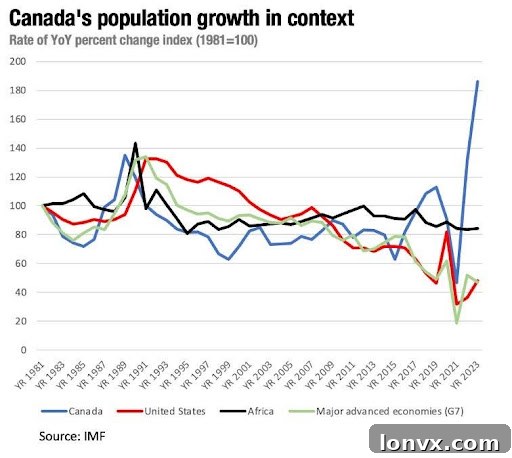
- Unprecedented Rental Demand: Perhaps the most striking trend was the robust increase in rental demand. Record-level immigration to Canada, particularly within the GTA, along with persistent challenges in homeownership affordability, funneled a vast number of individuals and families into the rental sector, putting immense pressure on supply and driving up rental costs.
Source: Danielfoch.substack.com
The Impact on Real Estate Professionals: A Competitive Landscape
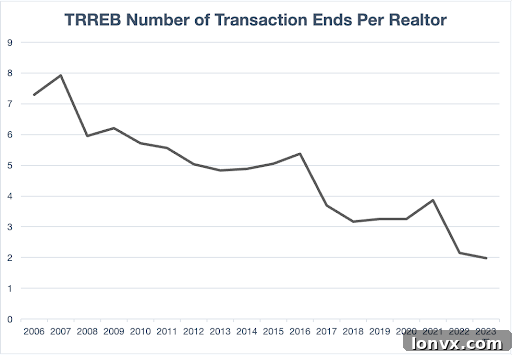
With less than 70,000 home sales recorded in the GTA in 2023, the market found itself at levels not seen since 2008. Crucially, in 2008, the real estate industry had significantly fewer active realtors. The current scenario, with a larger pool of agents vying for a smaller number of transactions, has led to a massive decline in the average number of deals per realtor. This intensified competition underscores the urgent need for agents to adapt, specialize, and offer unparalleled value to their clients.
Looking Ahead to 2024: Optimism Meets Economic Reality
The outlook for 2024 presents a fascinating divergence of perspectives. Jennifer Pearce, TRREB’s new president, has expressed a degree of optimism, anticipating a potential rebound in home sales. Her forecast is rooted in the expectation of declining borrowing costs and a resilient economy, factors traditionally known to stimulate real estate activity.
A Cautious Counter-Narrative
While the prospect of reduced borrowing costs is certainly gaining traction, supported by observable declines in bond yields, the broader economic resilience for 2024 remains a point of contention for some analysts. Historically, a significant drop in bond yields can often precede or coincide with an economic slowdown or recession, as investors move towards safer assets. If this pattern holds, the economy might face a weaker year than some anticipate, potentially dampening the extent of any real estate recovery.
However, there is a strong possibility that December and January represent the bottom for sales volume, rather than price. These months are typically the slowest of the year, and their recent performance comes at the tail end of what has been the quietest year for sales in decades. Therefore, an uptick in transaction volumes from these historic lows is indeed plausible and would indicate a recovery in market activity, even if average prices remain sensitive to economic shifts.
The Enduring Challenge: Housing Affordability
While the worst of the sales volume contraction may be behind realtors, the fate of housing prices, particularly for sellers, remains inextricably linked to the complex issue of housing affordability. This critical metric is not static; it is a dynamic function influenced by several interconnected factors:
- House Prices: The absolute cost of homes continues to be a primary barrier. Even with minor corrections, prices in the GTA remain among the highest globally, requiring substantial capital.
- Interest Rates: The cost of borrowing profoundly impacts monthly mortgage payments. Even small rate increases can significantly reduce purchasing power and qualify fewer buyers.
- Incomes: Wage growth needs to keep pace with, or ideally outstrip, increases in home prices and interest rates. Stagnant incomes in the face of rising costs exacerbate the affordability crisis.
- Job Stability: Economic certainty and job security are fundamental for prospective homeowners to commit to long-term mortgage obligations. Any economic downturn can shake consumer confidence and delay purchasing decisions.
Simply put, people will only re-enter the housing market in significant numbers when they perceive homes to be genuinely affordable. Achieving true affordability in the GTA requires a delicate balance of these factors, and many experts believe that a sustainable equilibrium is still a considerable distance away. Until then, the market will likely continue its careful navigation, with affordability remaining the ultimate gatekeeper for a full and robust recovery.
Enjoying this article?
Get the latest comprehensive real estate insights and market updates delivered directly to your inbox 3x a week, ensuring you stay fully informed on the Canadian real estate industry’s most current trends and analyses.