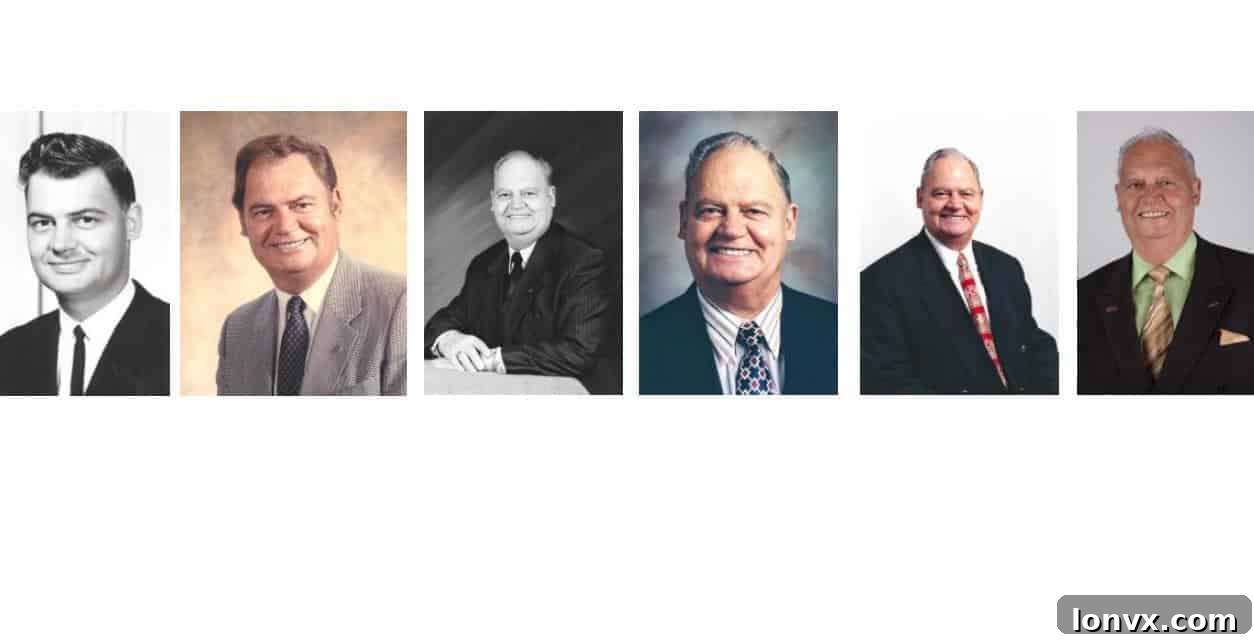
Decades of Dedication: Barry Clark’s Enduring Legacy in Vancouver Island Real Estate
For more than five decades, the vibrant world of real estate has flowed through Barry Clark’s veins, shaping a remarkable career defined by passion, integrity, and an unwavering commitment to people. At 80 years young, this esteemed Realtor continues to demonstrate an unparalleled dedication to his profession, actively serving as the president of Royal LePage Nanaimo Realty in Nanaimo, British Columbia. This venerable institution, celebrating 72 years in business, has been Clark’s professional home for an incredible 54 of those years, a testament to his loyalty and deep-rooted connection to the company and the community it serves.
A Lifetime Devoted to Real Estate and Relationships
Barry Clark’s enduring career is not merely a job; it is a profound calling rooted in his fundamental belief that real estate is, at its core, a people business. Success, he firmly believes, hinges on the ability to forge genuine, lasting relationships – a principle he has meticulously upheld for over half a century. This philosophy has not only shaped his career but has also cemented his status as a revered fixture in the real estate industry across Vancouver Island. He emphasizes, “For me it comes down to the people, not only in the industry but the people that we deal with. It’s a people business.”
Clark observes a significant evolution in the industry’s focus. While real estate once primarily revolved around providing shelter, it has transformed into a dynamic marketplace where investment and profit play a considerable role. “We started off selling shelter but now it’s more of a stock market-like thing. People like to make a profit on their home,” he notes, highlighting the changing motivations of buyers and sellers alike. Despite this shift, the human element remains paramount in his approach.
Drawing from his extensive experience, Clark offers invaluable wisdom to aspiring real estate professionals. His advice centers on timeless principles that transcend market fluctuations and technological advancements. “First, it’s integrity and treat people like you’d like to be treated. We’re only people. We’re human beings. And if you can’t treat people in a proper manner, then of course it’s not going to be to your benefit,” he advises. This emphasis on ethical conduct and mutual respect forms the bedrock of a successful and fulfilling career in real estate. For Clark, the greatest rewards come not from transactions alone, but from the deep sense of satisfaction in guiding individuals through one of life’s most significant decisions. He finds immense gratification in the appreciation expressed by clients who, with his expert guidance, find and purchase the home they truly love.
Even at 80, Clark’s enthusiasm for his work shows no signs of waning. He envisions himself actively participating in the industry for at least another five years. His motivation isn’t financial; rather, it stems from a genuine love for what he does and the meaningful connections he forms. “If you like what you do and you feel comfortable about it, of course you stick it out… I’m not staying because of the money. I’m staying because I like what I do and I like the people and I would miss that if I wasn’t working,” Clark explains. His perspective offers a powerful lesson on finding purpose and joy in one’s profession, asserting that when you truly enjoy your work and maintain good health, there’s little reason to stop.
From Seafaring Adventures to Real Estate Success
Early Life and the Call of the Sea
Barry Clark’s journey to becoming a real estate titan began far from the bustling offices of Nanaimo. Born in Southampton, England, in 1939, his early life was intrinsically linked to the sea. As the son of a navy man, the vast expanse of the ocean held a special allure, a powerful magnetic force that shaped his initial career path. In 1954, at the tender age of 15, Clark immigrated to Canada, seeking new horizons and opportunities. His inherent connection to maritime life led him to a series of adventurous jobs on the water. He spent considerable time working on tugboats, experiencing the raw power and precision required to guide massive vessels. He also plied his trade on fish boats, grappling with the unpredictable rhythms of the ocean and the demanding work of commercial fishing. Later, he served on ferry boats, connecting communities and experiencing the constant ebb and flow of coastal life. These seafaring years instilled in him a strong work ethic, resilience, and an appreciation for diverse experiences, unknowingly preparing him for the dynamic challenges of real estate.
A Pivotal Career Transition
While the sea offered excitement and adventure, it also brought periods of solitude and separation. After many months navigating the waters in various capacities, Clark decided it was time for a change, seeking a more grounded existence. He came ashore and embarked on a series of diverse roles that broadened his skills and introduced him to a wide array of people. His land-based career path included working in upholstery, a craft requiring precision and attention to detail; truck driving, which honed his logistical skills and knowledge of the region; and even stints in logging camps, experiencing the rugged natural beauty and demanding labor of British Columbia’s interior. Perhaps most pivotally, he also worked as a bartender. This role proved to be an unexpected catalyst for his future career.
As a bartender, Clark met and interacted with numerous real estate agents. Observing their profession up close, he began to see a potential path for himself. With two children to support and a desire for greater financial stability, he contemplated a career change. “I wasn’t making very much money where I was and I had two children. So, I thought I was going to give this a whirl, which I did and I was fortunate to pass the exams,” Clark recounts. This decisive moment marked his entry into the real estate world, a choice he would never regret. He quickly found his niche, starting his professional real estate career at Nanaimo Realty Company, a firm founded by Frank Ney, a highly respected and influential business leader in the community, whose vision and values resonated with Clark’s own.
Navigating the Evolving Landscape of Real Estate
The Golden Age of Personal Connection: Real Estate in Yesteryear
Reflecting on his half-century in the industry, Barry Clark vividly recalls how dramatically different the real estate landscape once was. In the early days of his career, technology as we know it today was virtually non-existent. The bedrock of communication was the humble office telephone, a singular lifeline connecting Realtors to clients and properties. Information was a precious commodity, often held by the agents themselves, who served as the primary, and often sole, source of knowledge about available homes, market conditions, and neighborhood specifics. Realtors were deeply embedded in their communities, building relationships face-to-face and through extensive networking. They were employees of real estate companies, typically operating on a 50/50 commission split, fostering a strong sense of team and shared success. The process of finding a home was a far more intimate and guided experience, relying heavily on the agent’s local expertise, intuition, and personal connection with clients. Agents had to physically “find the house” for buyers, often driving them around to view properties that had only been described in brief, perhaps typed, listings.
The Digital Revolution: Real Estate Transformed
Fast forward to the present day, and the real estate world has undergone a complete metamorphosis. Technology has been the driving force behind this transformation, ushering in an era of instant access and unprecedented transparency. Modern real estate is characterized by instantaneous communication channels available at one’s fingertips, whether through email, messaging apps, or video calls. Buyers and sellers now have immediate access to vast amounts of data, from property listings and virtual tours to neighborhood demographics and market trends. Social media platforms have further revolutionized how properties are marketed and how Realtors connect with their clientele, making the business more global and interconnected than ever before.
Clark notes a profound change in the consumer themselves. “Now the people are more sophisticated – buyers and sellers. They’ve gone online. They’ve been told a lot of things. So, when they come to buy a house now they’ve already seen the ones that are of interest online. In the early days that didn’t happen, of course. We had to find the house for them,” he explains. Today’s clients arrive far more informed, having conducted extensive online research, viewed countless photos, and even taken virtual tours before ever setting foot in a property. This shift means the Realtor’s role has evolved from a primary information provider to a trusted advisor, interpreter of data, and skillful negotiator. However, Clark also acknowledges a downside to this technological advancement: “Some of the people element of the business has been taken out of the industry because of that technological advancement.” While efficiency has soared, the personal touch and deep, sustained relationship-building that defined earlier eras sometimes take a back seat.
Professional Growth and Market Dynamics
Elevating the Profession: Education and Ethics
Beyond technology, another significant evolution in the real estate industry has been the escalating emphasis on education and professional development. Over the years, the requirements for becoming and remaining a licensed Realtor have become more rigorous, leading to a marked increase in the professionalism of the industry. This commitment to higher standards ensures that clients are served by knowledgeable, ethical, and highly skilled professionals who can navigate the complexities of property transactions. Increased education has not only elevated the standing of Realtors but has also instilled greater public trust in the profession, fostering a more sophisticated and reputable market environment.
Understanding Property Value and Market Fluctuations
Perhaps one of the most striking changes Clark has witnessed is the tremendous increase in property prices over the decades. What was once affordable for many has, in some areas, become an aspirational investment. This dramatic appreciation in value often leads to questions about fair market value. Clark pragmatically observes, “Sometimes you wonder if they’re worth what the properties are being offered at. But you know, it’s what the buyers are ready, willing and able to pay for.” This sentiment underscores a fundamental principle of economics: market value is ultimately determined by supply, demand, and the collective willingness of buyers to transact at a given price. Property values are influenced by a myriad of factors, including economic growth, population shifts, interest rates, government policies, and local amenities, creating a dynamic and often unpredictable market.
Royal LePage Nanaimo Realty: A Pillar in the Community
A Legacy of Growth and Adaptation
Barry Clark’s illustrious career has mirrored the impressive growth and strategic evolution of Nanaimo Realty Company. Founded on principles of community and service, the company flourished over the decades. A significant milestone occurred in 1999 when Nanaimo Realty entered into a long-term franchise arrangement with Royal LePage, a nationally recognized and respected brand. This partnership provided both the stability of a large network and the localized expertise that had always been the company’s hallmark. In its earlier days, the company specialized heavily in property developments and at one point boasted an impressive network of 12 offices spread across Vancouver Island. However, like many businesses, it faced economic challenges, notably during the market crunch of the 1980s. This period necessitated difficult but strategic reductions in operations. “We had to reduce. We’re down to three offices right now. One in Nanaimo, one in Ladysmith and one on Gabriola Island,” Clark explains, detailing the company’s resilience and adaptability in navigating economic headwinds to maintain a strong, focused presence in key island communities.
Comprehensive Services and Current Market Realities
Today, Royal LePage Nanaimo Realty offers a comprehensive suite of services designed to meet diverse client needs. “We do residential, commercial and property management,” Clark states, highlighting the breadth of their expertise. The company has recently experienced an exceptionally active market, indicative of the high demand for properties on Vancouver Island. However, Clark notes a recent shift towards a more balanced market, influenced by several external factors. “It certainly now is starting to balance off because there have been some interruptions, first of all with the government tax on foreign buyers. Of course, interest rates and the mortgage stress test have also slowed it down a bit.” These governmental and economic interventions, designed to cool an overheated market and ensure financial stability, have played a role in moderating property transactions and prices, creating a more sustainable, albeit less frenzied, real estate environment. Despite these shifts, the company remains a vital resource for anyone looking to buy, sell, or manage property in the region, leaning on its deep history and expert leadership.
A Vision for the Future
Barry Clark’s journey in real estate is a powerful narrative of passion, adaptability, and unwavering commitment. His story serves as an inspiration, demonstrating that a career built on integrity, genuine human connection, and a love for what you do can not only endure but thrive through ever-changing landscapes. As he looks forward to continuing his work for years to come, his legacy at Royal LePage Nanaimo Realty, and within the broader Vancouver Island community, stands as a testament to the timeless value of mentorship, personal dedication, and the enduring power of the “people business.” Clark’s insights into the past, present, and future of real estate offer valuable lessons for both seasoned professionals and newcomers, underscoring that while the tools of the trade may evolve, the heart of the business will always remain in the relationships forged and the trust earned.