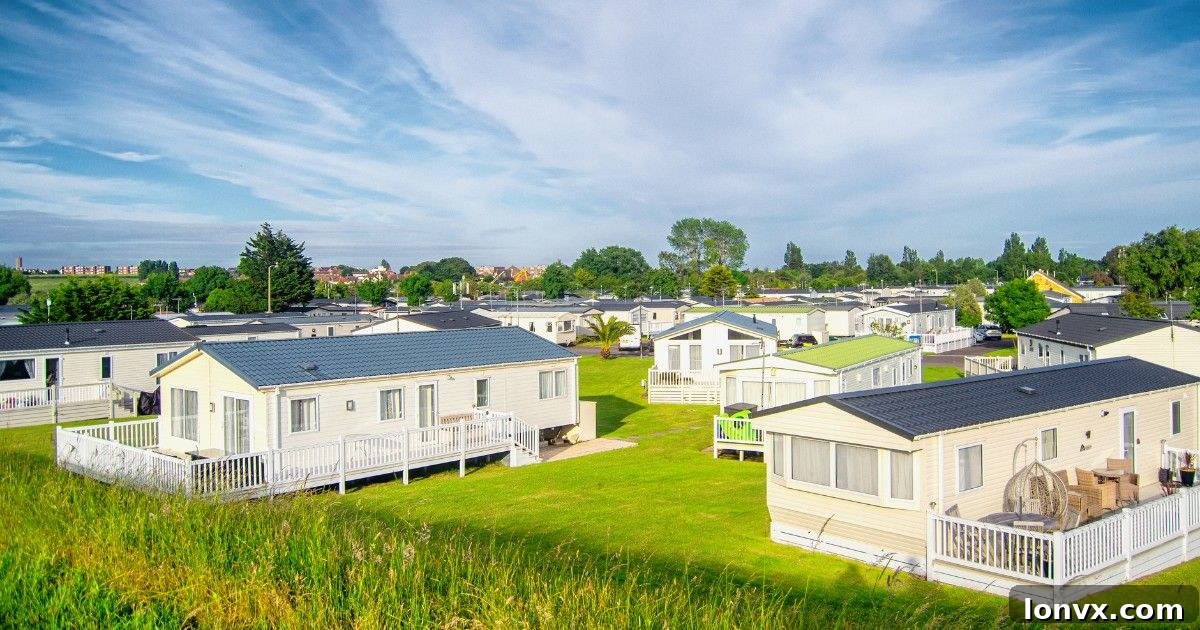
For over 65,000 residents across British Columbia, manufactured home parks – commonly known as mobile home parks or trailer parks – stand as one of the last remaining avenues to affordable homeownership. These vital communities offer a crucial housing solution in a province grappling with an escalating housing crisis. In numerous smaller and rural communities, manufactured home parks contribute significantly, often accounting for as much as one-tenth of the local housing supply. Despite their undeniable importance in the diverse housing landscape, this essential option is currently ensnared in a unique bureaucratic stalemate within British Columbia, stemming from a little-known contractual dispute between park managers and financial lenders. This article delves into the intricacies of this issue, exploring its origins, profound impacts, and the urgent need for a resolution.
The “1097” Form: A Central Cog in a Broken System
At the very core of this complex problem lies a critical banking document officially known as the “Landlord Consent Model Assignment of Consent for Manufactured Home Tenancy Agreements.” More commonly, it is referred to simply as the “1097” form. This document is designed to meticulously define the intricate relationship between lenders, park managers, and residents when financing is involved in the purchase or sale of a manufactured home. It outlines crucial obligations in scenarios of tenant default, and, perhaps most importantly, facilitates the assignment of an existing lease to a new tenant when a manufactured home within the park is sold.
The 1097 form was first introduced by the Canadian Bankers Association in 2002 with the intention of standardizing procedures and ensuring clarity for all parties. However, over the past two decades, what began as a single, unifying document has fragmented into at least nine different versions, with each major bank developing its own in-house variation. This proliferation of forms, each with subtle yet significant differences, has inadvertently laid the groundwork for the current conflict, creating a labyrinth of inconsistent clauses and conflicting interpretations.
The Growing Divide: Lenders vs. Park Managers
For several years, manufactured home park managers in British Columbia have voiced growing concerns regarding specific clauses embedded within the various lenders’ versions of the 1097 form. Their primary contention revolves around what they perceive as a fundamental imbalance: a conspicuous lack of adequate protections for park managers contrasted with an abundance of safeguards for lenders within the agreement. Park managers argue that existing forms often leave them vulnerable to financial risks, administrative burdens, and unclear responsibilities, particularly in cases of tenant default or property abandonment.
Key Concerns of Park Managers:
- Insufficient Protections: Park managers often feel exposed to potential losses related to unpaid rent, property damage, or the costs associated with the removal of abandoned homes.
- Unclear Default Procedures: The varied forms often lack clear, actionable protocols for how park managers should proceed when a tenant defaults on their loan, leading to ambiguity and potential legal challenges.
- Assignment Clauses: Specific clauses related to the assignment of leases to new tenants are often seen as overly advantageous to lenders, potentially limiting the park manager’s ability to ensure a smooth transition and maintain community standards.
- Administrative Burden: Navigating multiple, disparate versions of the 1097 form from various lenders creates an unnecessary administrative load, hindering efficient operations.
This escalating frustration culminated in a significant development in October 2024, when the Manufactured Home Park Owners Alliance of B.C. (MHPOA) took proactive steps by releasing its own standardized version of the 1097 form. This new version was meticulously crafted to address their members’ concerns, aiming to restore a fairer balance of protections and responsibilities. However, the proposed solution was met with firm resistance from lenders, who have, in turn, refused to sign the MHPOA’s version. Their reasoning cites federal banking regulations that they claim preclude them from making some of the requested changes, thereby creating an intractable standoff with no immediate resolution in sight.
The Human Cost: Residents and Realtors Caught in the Crossfire
The prolonged stalemate, now extending for over a year, has created a detrimental ripple effect, leaving countless residents and the realtors who serve them facing severe and often agonizing consequences. The bureaucratic gridlock has effectively paralyzed a segment of the housing market. Prospective buyers of manufactured homes, even those who have successfully secured bank-approved financing and found a willing seller, are consistently unable to complete their transactions because the mandatory 1097 form remains unsigned. Under these current, stifling rules, the sale of a manufactured home is essentially vetoed, creating an insurmountable barrier to property transfer.
The impact is tangible and deeply personal. Consider the case of a Coquitlam couple in late 2024, whose aspirations of homeownership were repeatedly dashed as multiple offers on a manufactured home fell through. They found themselves in an agonizing limbo, feeling “held hostage” by a process entirely beyond their control. This sentiment echoes across the province, where realtors and their clients are experiencing this newly created uncertainty firsthand. Deals consistently collapse at the eleventh hour, not due to a lack of willing buyers or sellers, or even financing, but solely because a signature on this crucial, mandatory form cannot be obtained. The emotional toll, financial strain, and lost opportunities are immense.
This critical lack of a standardized and universally accepted 1097 form is disproportionately harming the most vulnerable segments of British Columbia’s population. Those who feel its most profound impacts include the elderly, who often rely on manufactured homes for affordable retirement living; low-income families, for whom these homes represent their sole path to homeownership; and residents in rural areas, where alternative viable housing options are scarce or non-existent. The current situation has created an untenable paradox: buyers cannot buy, and sellers cannot sell. This systemic dysfunction is not merely an inconvenience; it represents a fundamental breakdown in accessing affordable housing and demands immediate, decisive intervention from the federal government.
The Broader Context: Manufactured Homes in British Columbia
To fully grasp the gravity of this deadlock, it’s crucial to understand the indispensable role manufactured homes play within British Columbia’s housing ecosystem. In a province characterized by some of the highest real estate prices in Canada, manufactured home parks offer a vital safety valve for affordability. They provide a more accessible entry point into homeownership, allowing individuals and families to own their dwelling while leasing the land, significantly reducing the overall cost compared to traditional detached homes.
Why Manufactured Homes are Crucial:
- Affordability: They represent one of the last true bastions of affordable homeownership, making housing accessible to a wider demographic.
- Community Stability: Many parks foster strong, intergenerational communities, particularly vital for seniors seeking stability and connection.
- Economic Contribution: Sales and purchases of these homes contribute to local economies, supporting real estate agents, contractors, and local businesses.
- Rural Development: In rural and remote areas, manufactured homes often form a significant portion of the housing stock, crucial for supporting local workforces and economies.
The current impasse not only stifles individual aspirations but also threatens the very fabric of these communities and exacerbates the broader housing crisis. When transactions are halted, it impacts mobility, limits housing options, and creates a sense of insecurity for thousands of residents.
Path Forward: A Resounding Call for Federal Intervention
It is abundantly clear that the current impasse cannot be effectively resolved through private negotiations alone. The protracted nature of the dispute, coupled with the cited federal regulations by lenders, underscores the necessity for a higher authority to step in. The federal government must act decisively and establish clear, unambiguous guidance around the 1097 form and its standardized application across the province.
Manufactured home parks are far too vital a component of British Columbia’s housing landscape to be allowed to languish in bureaucratic limbo. They are not merely collections of dwellings; they are vibrant communities and one of the last remaining bastions of affordability in an increasingly expensive housing market. The consequences of inaction extend beyond individual transactions, threatening the stability and accessibility of affordable housing for thousands.
This issue is not fundamentally about “lenders versus park managers”; rather, it concerns a critical process that is, at present, fundamentally broken and failing its purpose. Housing Minister Sean Fraser (formerly Robertson, updated to current Minister of Housing) must recognize the urgency of this situation and intervene without delay. Intervention should aim to:
- Mandate a Standardized 1097 Form: Develop and implement a single, universally accepted version of the 1097 form that equitably balances the protections and obligations of all stakeholders – lenders, park managers, and residents.
- Establish Clear Regulatory Frameworks: Provide explicit federal guidelines and regulations to ensure consistency in the application and interpretation of the form, eliminating regional variations and ambiguities.
- Facilitate Mediation and Dialogue: Convene all key stakeholders, including representatives from the Canadian Bankers Association, the Manufactured Home Park Owners Alliance of B.C., and resident advocacy groups, to forge a collaborative and lasting solution.
- Prioritize Consumer Protection: Ensure that any revised framework places a strong emphasis on protecting the rights and interests of manufactured home residents, who are often the most vulnerable party in these transactions.
By taking these decisive steps, the federal government can restore much-needed consistency, transparency, and fundamental consumer protections to one of Canada’s most overlooked yet critical housing options. The future of affordable homeownership for thousands of British Columbians depends on it.