
Calgary’s Real Estate Market Heats Up: A Deep Dive into February 2024 Trends
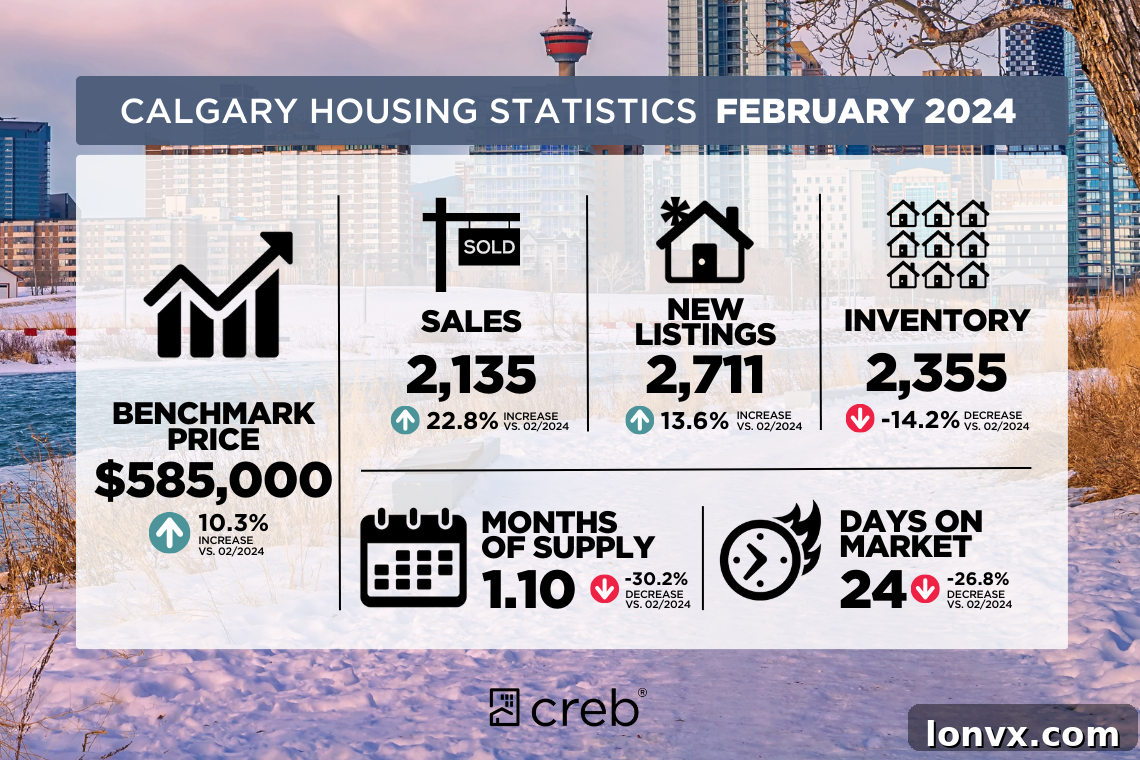
The Calgary Real Estate Board (CREB) recently released its report for February, painting a vivid picture of a bustling and highly competitive housing market. The city witnessed a significant surge in new listings, reaching 2,711 units. However, this increase was quickly absorbed by an even more substantial rise in sales, which soared by nearly 23 percent compared to the previous year, totaling an impressive 2,135 units. This dynamic interplay between supply and demand continues to shape Calgary’s real estate landscape, pushing prices higher across various property segments.
Unprecedented Demand and Scarce Supply Drive Price Jumps Across Calgary
The robust surge in sales, despite the increase in new listings, resulted in an exceptionally high sales-to-new listings ratio of 79 percent. This metric underscores the swift pace at which properties are being acquired once they hit the market, effectively preventing any significant growth in overall housing inventory. Consequently, the months of supply metric plummeted to just over one month, signaling a severe scarcity of available homes and approaching the extremely tight conditions observed during the peak spring market a year ago.
“Purchasers are acting quickly when new supply comes onto the market, preventing inventory growth in the market,” notes Ann-Marie Lurie, CREB’s chief economist. “It is this strong demand and low supply that continues to drive price gains in Calgary. This aggressive buying behaviour highlights the urgency felt by many prospective homeowners to secure a property in a rapidly appreciating market.”
The Affordability Challenge: Disparities in Supply Across Price Points
The challenge of limited supply is not uniformly distributed across all price segments. The most acute shortage is evident in homes priced under $500,000, a critical entry point for many first-time buyers and those seeking more affordable options. This segment saw inventories fall by a staggering 31 percent compared to last February, intensifying competition and making it increasingly difficult for buyers to find suitable properties within their budget.
Conversely, the market for higher-priced homes is beginning to see some relief. Supply levels in this segment are starting to rise, contributing to more balanced conditions at the upper end of the market. This divergence suggests that while luxury and premium properties might offer more choices and less intense bidding wars, the struggle for affordability continues to define the experiences of a large portion of Calgary’s homebuyers.
These supply dynamics are a direct result of several factors, including sustained inter-provincial migration, robust economic growth, and an ongoing preference for homeownership. The continuous influx of new residents seeking employment and a better quality of life in Calgary places immense pressure on an already constrained housing stock, particularly in the most sought-after and affordable areas.
Calgary Benchmark Prices Soar: A Snapshot of February’s Performance
Reflecting the intense market conditions, February’s unadjusted detached benchmark price climbed to an impressive $585,000. This marks a substantial gain of over 2 percent compared to the previous month and a significant 10 percent increase from the previous year. The consistent upward trajectory of benchmark prices underscores the strong underlying demand and the limited availability of homes.
The price growth, however, varied significantly across different districts within Calgary. Notably, the East district experienced the highest year-over-year price appreciation, surging by an remarkable 25 percent. This growth is often attributed to the district’s relative affordability, ongoing community development, and its appeal to buyers looking for value and growth potential. In contrast, the City Centre district reported the slowest price growth, rising by just under 5 percent. This area, characterized by a higher concentration of apartment condominiums and typically higher price points, likely reflects a different buyer demographic and potentially more established market saturation compared to the rapidly developing East.
Understanding these regional variations is crucial for both buyers and sellers, as localized market conditions can greatly influence property values and transactional dynamics. While some areas are experiencing explosive growth, others offer more stable, albeit slower, appreciation.
Detailed Market Performance by Property Type
Calgary’s diverse housing market offers a range of options, each experiencing its unique set of trends driven by specific supply and demand factors. Let’s delve into how each property type performed in February.
Detached Homes: A Highly Competitive and Premium Segment
The detached housing segment, long considered the backbone of Calgary’s market, continued to demonstrate fierce competition. In February, 1,195 new listings entered the market, yet sales quickly rose to 954 units. This absorption rate pushed inventory levels for detached homes to near-record lows for the month of February. A notable characteristic of the new detached listings was that 75 percent were priced over $600,000, signaling a clear shift towards higher-value properties and exacerbating the affordability challenges for entry-level buyers seeking a standalone home.
The exceptionally tight market conditions propelled further price growth in this segment, with the unadjusted detached benchmark price hitting $721,300. This represents a nearly 3 percent increase from the previous month and a substantial over 13 percent rise from the previous year. The consistent demand for detached homes is driven by factors such as a desire for more space, family growth, and the perceived long-term value of land ownership, often fueled by inter-provincial migrants who find Calgary’s detached home prices still relatively more accessible than in other major Canadian cities.
Semi-Detached Homes: Bridging the Gap in Affordability and Space
The semi-detached segment also faced robust demand in February, with 223 new listings confronted by 191 sales. This high sales-to-listing ratio maintained the low inventory situation characteristic of the broader market. Semi-detached homes often represent an attractive compromise for buyers who desire more space than an apartment or row home but find detached properties beyond their budget. They offer a sense of community and yard space at a more accessible price point.
The unadjusted benchmark price for semi-detached homes reached $639,100, marking a monthly gain of over 2 percent and a significant 13 percent increase from the previous year. This segment’s strong performance underscores its growing appeal, particularly for young families and those looking to upgrade from condominiums without committing to the higher price tag of a fully detached home.
Row Homes: Gaining Momentum with Strong Price Appreciation
February saw 457 new listings in the row home segment, contributing to a healthy year-to-date increase of 22 percent in listings. While this slight increase in new supply is a positive sign, it was still met with strong buyer activity. Row homes, often located in developed urban areas or new communities, provide an appealing option for buyers seeking a balance of affordability, modern design, and reduced maintenance compared to larger detached properties.
Strong price growth persisted in this segment, with the unadjusted benchmark price reaching $436,500. This represents more than a 2 percent increase over the previous month and a remarkable nearly 19 percent surge from the previous year. The significant year-over-year growth highlights the increasing desirability of row homes, driven by their relative affordability, efficient use of space, and access to urban amenities. This segment is becoming increasingly popular with first-time homebuyers and investors alike.
Apartment Condominiums: The Most Dynamic and Accessible Segment
The apartment condominium segment emerged as the most dynamic part of Calgary’s housing market in February. Sales in this category reached a staggering 638 units, supporting an impressive year-to-date sales increase of 39 percent. This robust performance makes apartment condominiums a critical component of Calgary’s housing supply, particularly for those entering the market or seeking investment opportunities.
A persistently tight market for condos continued to drive strong price growth, with the unadjusted benchmark price reaching $329,600. This marks a substantial 17 percent gain over the previous year. The surge in condo sales and prices can be attributed to several factors: their relative affordability in a high-priced market, the ongoing influx of residents to Calgary, and the appeal of urban living with convenient access to amenities. For many, condominiums represent the most accessible path to homeownership in Calgary’s competitive environment.
What’s Driving Calgary’s Real Estate Boom?
Calgary’s real estate market is experiencing a period of intense growth and competition, largely fueled by a confluence of economic and demographic factors:
- Inter-Provincial Migration: Alberta, and particularly Calgary, continues to be a magnet for Canadians seeking more affordable living and robust job opportunities compared to other major provinces. This steady influx of new residents places continuous upward pressure on housing demand.
- Strong Economic Fundamentals: Calgary’s economy, traditionally tied to the energy sector, has diversified and shown resilience. A healthy job market and positive economic sentiment encourage both local residents and newcomers to invest in real estate.
- Interest Rate Environment Adaptation: While interest rates have been a significant factor, the market has largely adapted. Many buyers are pre-approved, and the desire for homeownership in a growing city often outweighs the immediate impact of higher borrowing costs. Moreover, some buyers may be anticipating future rate cuts, driving current activity.
- Limited New Construction: Despite rising demand, the pace of new construction often struggles to keep up. Factors like labor shortages, supply chain issues, and regulatory processes can slow down the development of new housing units, contributing to the existing supply deficit.
- Perceived Value: Even with rising prices, Calgary homes are often still considered more affordable than comparable properties in Vancouver or Toronto, making them an attractive investment for both primary residents and out-of-province buyers.
Navigating the Calgary Market: Advice for Buyers and Sellers
In such a dynamic and competitive market, both buyers and sellers need to approach transactions with a clear strategy.
For Buyers: Be Prepared and Act Decisively
Prospective buyers should prioritize getting pre-approved for a mortgage to understand their budget and demonstrate their seriousness. Being ready to act quickly when a suitable property comes to market is essential, as bidding wars and multiple offers are common. Consider exploring various property types and districts to find opportunities that align with both budget and lifestyle. Working with an experienced local real estate agent who understands the nuances of Calgary’s fast-moving market can provide a significant advantage in identifying new listings and crafting competitive offers.
For Sellers: Capitalize on Demand
Sellers are currently in a strong position, but presenting a well-staged and competitively priced home remains crucial to maximize returns. Professional photography and effective marketing can significantly increase visibility and attract multiple offers. While demand is high, understanding the specific trends within your property type and district will help in setting an optimal price and navigating negotiations effectively. Being prepared for a quick closing can also be an attractive factor for eager buyers.
Outlook for Calgary’s Housing Market
Looking ahead, Calgary’s real estate market is expected to remain robust. The underlying factors of strong migration, economic growth, and persistent housing demand are unlikely to dissipate quickly. While some increase in new listings is anticipated as the warmer spring months arrive, it is unlikely to significantly shift the market from its current seller-dominated conditions in the short term. Price growth, while potentially moderating slightly from the most rapid surges, is expected to continue its upward trajectory throughout the year. The apartment condominium and row home segments, offering more accessible price points, will likely continue to see intense buyer interest and strong price appreciation. Monitoring interest rate decisions by the Bank of Canada will also be key, as any changes could influence buyer confidence and affordability.
In conclusion, February 2024 reaffirmed Calgary’s status as one of Canada’s most dynamic real estate markets. The combination of strong sales, tight inventory, and significant price appreciation across all property types paints a clear picture of a market driven by intense demand and limited supply. For both residents and investors, understanding these trends is vital to making informed decisions in this vibrant housing landscape.
Review Calgary’s city and regional February updates, including area summaries, for more detailed information.
Enjoying this article?
Get the latest real estate insights and market updates directly in your inbox to stay informed about the dynamic Canadian real estate industry.