
(Peace Bridge in Calgary/Canva)
Calgary Real Estate Market Navigates January Slowdown Amidst Rising Inventory
The vibrant Calgary real estate market experienced a notable shift in January, with residential sales demonstrating a slower pace compared to the previous year. New data released by the Calgary Real Estate Board (CREB) indicates a decrease in transaction volumes, particularly within higher-density housing segments. This deceleration, while somewhat aligned with typical seasonal patterns following the December holiday period, highlights evolving market dynamics influenced by increasing supply and changing buyer sentiment.
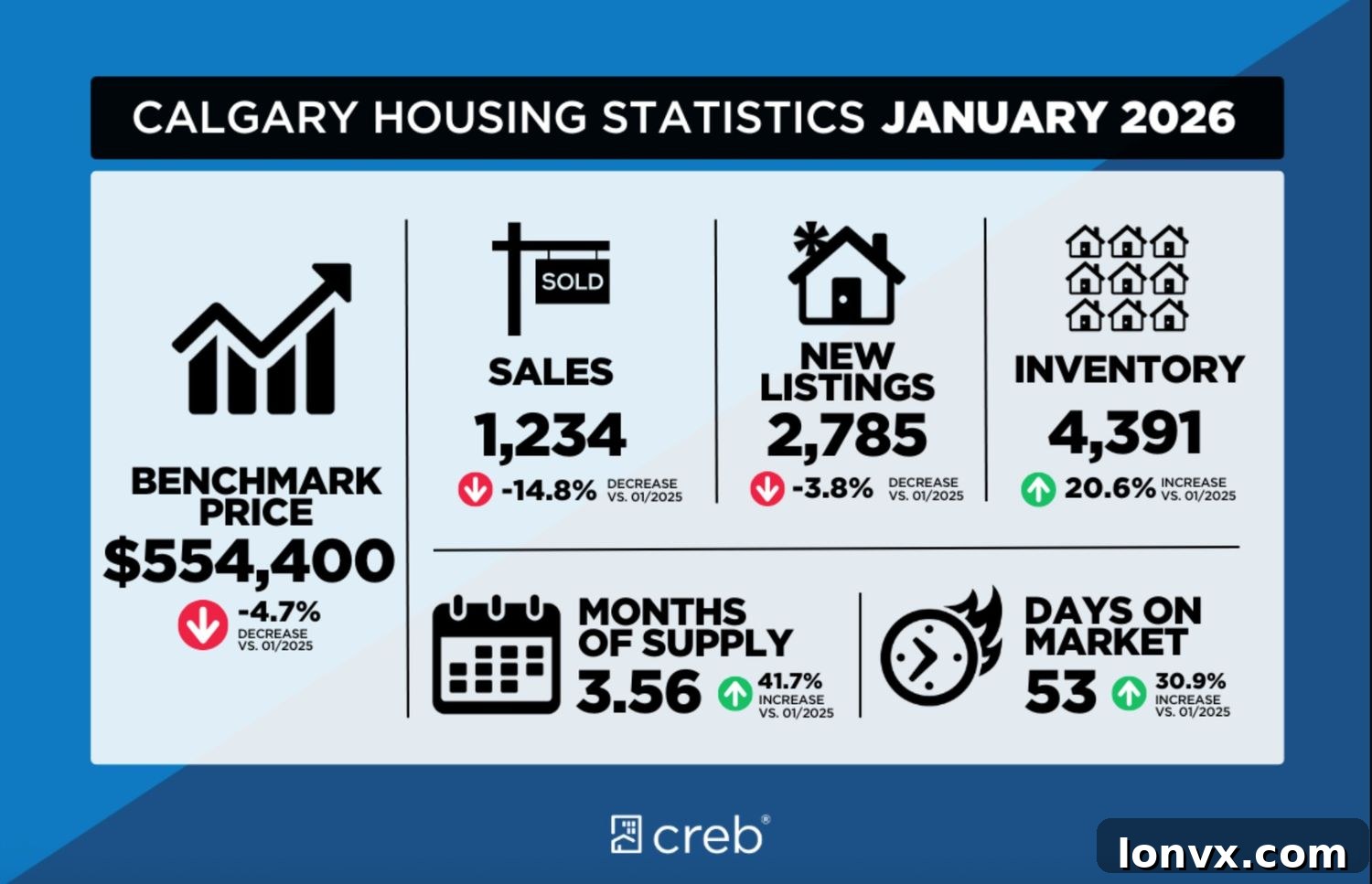
According to CREB’s latest figures, a total of 1,234 residential sales were recorded last month across the Calgary region. This represents a 15 percent decline when compared to January of the previous year (January 2025), signaling a cooling period as the market adjusts. The downturn was not confined to a single property type but rather observed across all categories, with apartment and row-style homes experiencing the most significant drops in sales activity. This trend suggests a broader market recalibration, where the immediate urgency that characterized much of the recent past has begun to subside.
Property Prices Adjust Amidst Cooler Market Conditions
Accompanying the dip in sales, Calgary property prices also saw an adjustment. The average residential price dipped nearly five percent compared to a year earlier, settling at $554,400. This moderate price correction reflects a market that is becoming more balanced, moving away from the intense bidding wars and rapid appreciation seen in previous periods. For prospective buyers, this could signal a more opportune moment to enter the market, while sellers may need to adjust their expectations regarding pricing and sales timelines.
Ann-Marie Lurie, CREB’s chief economist, offered insightful commentary on these emerging trends. “Following the typical December slowdown, potential buyers for high-density homes were more hesitant to return to the market in January,” Lurie explained. “This hesitation stems primarily from an increased supply choice across all aspects of the market, which has effectively reduced the sense of urgency that has defined Calgary’s housing landscape for quite some time.” The availability of more options naturally empowers buyers, allowing them to take a more considered approach to their purchasing decisions.
Furthermore, Lurie noted a quick response from sellers to bring their properties to market. “At the same time, sellers were quick to bring their listings onto the market, causing the sales-to-new-listings ratio to drop to 44 percent, mostly due to shifts in apartment and row-style homes. Overall, this is not entirely uncommon for January, as both buyers and sellers weigh their options ahead of the spring market.” This dynamic interplay between rising listings and slower sales underscores a shift towards a more buyer-friendly environment, particularly in the multi-family sector. The spring market traditionally sees heightened activity, and the current January trends may set the stage for how the market unfolds in the coming months.
Inventory Rises Significantly, Offering More Choices to Buyers
One of the most significant developments in the January Calgary real estate report is the substantial increase in housing inventory. The influx of new listings outpaced sales, leading to a higher number of available homes on the market. By the end of January, there were 4,391 homes listed for sale, representing a robust 20 percent increase year-over-year. This marks the highest inventory level recorded for January since 2020, providing a stark contrast to the supply-constrained markets of recent years. For buyers who have felt frustrated by limited choices, this surge in inventory opens up new opportunities and reduces competitive pressures.
Divergent Trends Across Property Types: Detached vs. High-Density
While the overall inventory has risen, the conditions within the Calgary housing market continue to vary considerably by property type. The increase in inventory has been predominantly driven by apartment and row-style homes, which are now seeing higher levels of available units than usual. This expanded selection in the high-density segment means buyers have more bargaining power and a greater ability to find properties that meet their specific needs and budgets. This trend could also be a reflection of changing affordability dynamics, with more buyers turning to multi-family options as a more accessible entry point into the market.
Conversely, the detached housing market has remained relatively tight. Despite the overall increase in listings, the supply of single-family homes has not grown at the same pace, maintaining a more competitive environment for those seeking detached properties. This divergence is clearly illustrated by the “months of supply” metric, which indicates how long it would take to sell all current listings at the prevailing sales rate. For detached homes, the months of supply lingered at under three months, signifying a relatively balanced to tight market. In stark contrast, apartments saw approximately five months of supply, suggesting a clear shift toward a buyer’s market in that segment. The average months of supply across all property types stood at 3.56, a significant 41 percent increase from January 2025, underscoring the broader trend of rising supply and cooling demand.
Factors Influencing Calgary’s January Real Estate Performance
Several underlying factors contribute to the current state of the Calgary real estate market. Understanding these elements is crucial for both buyers and sellers as they navigate their housing decisions.
Interest Rates and Economic Uncertainty
Fluctuations and expectations surrounding interest rates play a pivotal role in buyer confidence and affordability. While there has been ongoing speculation about potential rate cuts in the future, current rates continue to impact mortgage costs, influencing how much buyers can borrow and their overall comfort level with committing to a major purchase. Economic uncertainty, both locally and globally, can also make buyers more cautious, leading them to delay purchasing decisions or opt for more affordable housing types.
Affordability and Migration Trends
Calgary has long been a destination for inter-provincial migration, attracting individuals and families seeking more affordable living costs and robust job opportunities compared to other major Canadian cities. While migration continues to be a driving force for housing demand, the recent rise in prices and interest rates has put pressure on affordability. This pressure is likely contributing to the increased demand for, and subsequently increased supply in, the more affordable apartment and row home sectors, as buyers adjust their expectations to current market realities. The city’s continued growth, however, suggests that underlying demand remains strong, providing a foundation for future market recovery and stability.
What to Expect: Navigating the Upcoming Spring Market
As Calgary transitions from the typical January slowdown into the bustling spring market, all eyes will be on how these emerging trends develop. The increased inventory, particularly in the high-density sector, offers a renewed sense of choice for buyers. This could lead to a more measured pace of transactions and potentially further price adjustments in segments with ample supply.
For sellers, a realistic pricing strategy will be paramount. With more options available, buyers are less likely to overpay and will be more discerning. Properties that are well-maintained, competitively priced, and effectively marketed are likely to perform best. For buyers, the current environment presents an opportunity to take their time, negotiate more effectively, and potentially secure a property without the intense competition seen previously. Engaging with experienced Calgary real estate professionals will be key to understanding localized market nuances and making informed decisions, whether buying or selling.
Conclusion: A More Balanced Market on the Horizon?
January’s real estate performance in Calgary paints a picture of a market undergoing a significant recalibration. The slowdown in sales, coupled with an appreciable rise in inventory, particularly in the apartment and row home segments, suggests a move towards a more balanced environment. While the detached market remains comparatively tighter, the overall trend points to reduced urgency for buyers and an increased need for strategic pricing and marketing from sellers.
As the market progresses into the crucial spring season, monitoring interest rate decisions, ongoing migration patterns, and local economic performance will be essential. This period of adjustment in Calgary’s housing market may ultimately lead to a more sustainable and accessible real estate landscape for all participants, fostering thoughtful decision-making over frantic competition.