
The release of October’s housing data by the Canadian Real Estate Association (CREA) arrives at a pivotal juncture for Canada. After enduring more than a year of unprecedented market volatility, characterized by dramatic interest rate fluctuations, significant demographic shifts, emerging softness in the labour market, and an unpredictable global trade environment, the trajectory of the Canadian housing market’s next chapter holds immense importance, far beyond the scope of any single monthly report. This period has seen homeowners, prospective buyers, and policymakers grappling with a complex web of interconnected challenges and opportunities.
The latest figures paint a nuanced picture of a market that demonstrates remarkable resilience, refusing to enter a deep downturn, yet simultaneously struggling to build strong upward momentum. The broader economic landscape continues to exert pressure, testing the financial absorption capacity of Canadian households, while government and central bank policymakers meticulously calibrate the effectiveness and reach of their various interventions. For individual households, decisions surrounding property purchases or sales are heavily influenced by the prevailing interest rate environment. However, these choices are increasingly shaped by a wider array of economic and geopolitical forces that now intricately weave through the entire market ecosystem, dictating confidence and long-term outlooks.
Despite the prevailing complexity and underlying economic chill, the October data does offer rays of optimism and critical insights. The month recorded a noticeable, albeit modest, increase in home sales. This was accompanied by a comparatively lean stream of new property listings, indicating a potential supply-demand rebalancing. Crucially, these trends provided the first tangible signs that underlying buyer demand, which had largely been subdued, is beginning to warm up. This suggests a potential shift in buyer sentiment, moving cautiously towards engagement after a period of prolonged hesitation.
The combined result of these factors has led some analysts and observers to label October’s performance as a potential ‘inflection point’ for the Canadian housing market. This descriptor, however, demands careful and thorough interpretation. The underlying forces that are expected to shape the housing landscape not just in the immediate future, but profoundly into 2026 and beyond, are far more structural, political, and global in nature than any single monthly sales figure can fully convey. Understanding these deeper currents is essential for comprehending the market’s long-term evolution and its implications for Canadians.
Canadian Home Sales Rebound in October: A Closer Look at the Market’s Resilience
October marked the sixth instance in seven months where home sales edged higher across Canada, a pattern that would typically be considered unremarkable in a robust, growing economy. However, in the current economic climate – characterized by uneven labour markets, persistent inflationary pressures, and a deliberate slowdown in population growth through adjusted immigration policies – this incremental increase in sales appears particularly significant. A seemingly modest 0.9 per cent month-over-month rise might not, at first glance, signal strong market momentum. Yet, within this unique context, it carries considerable weight. It suggests that the challenging interest rate environment may have finally traversed a critical psychological threshold, encouraging ordinary, end-user buyers to re-engage with the market. This dynamic has been recognized and alluded to in commentary from CREA itself, highlighting a cautious but tangible return of purchasing activity.
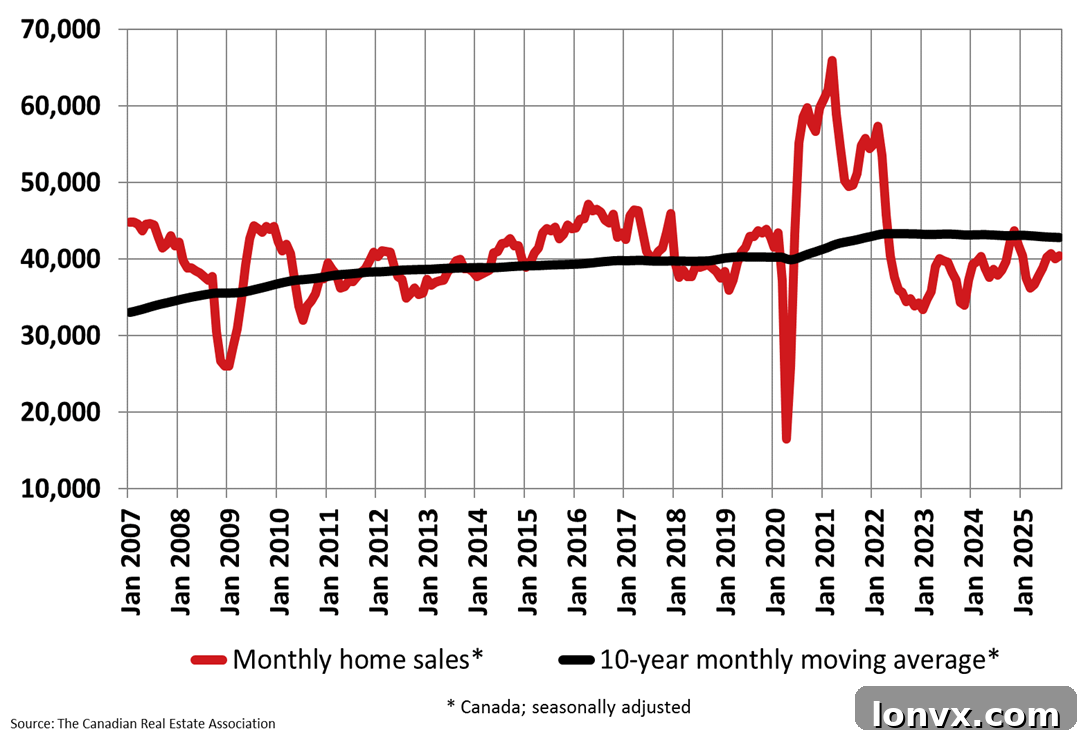
Despite this recent uptick, year-over-year activity continues to register weaker figures, serving as a stark reminder of the underlying caution that still heavily influences purchasing behaviour throughout the country. While the return of buyers to the market is a discernible and real trend, its pace and enthusiasm remain tempered by the broader climate of economic uncertainty. Factors such as job security concerns, lingering inflation, and geopolitical instabilities continue to cast a shadow, preventing a full-fledged return to pre-pandemic market exuberance. Buyers are approaching decisions with increased prudence, prioritizing stability and long-term affordability, rather than rushing into competitive bidding situations. This measured re-entry underscores a market that is slowly finding its footing but remains acutely sensitive to shifts in economic indicators and consumer confidence.
Understanding the Subtle Tightening of the Canadian Housing Market
October’s data revealed a contraction in new housing supply, with listings declining by 1.4 per cent. While this drop might appear small in absolute terms, its repercussions for the overall market balance are noteworthy. With home sales demonstrating a consistent, albeit gradual, upward trend and the influx of new listings simultaneously thinning, the crucial sales-to-new listings ratio experienced a discernible shift. It moved from 51.0 per cent in September to 52.2 per cent in October. This movement, though seemingly modest on the surface, provides a clear signal of a gradual, yet significant, tightening in market conditions. For much of the past year, the Canadian housing market has operated below its long-term average ratio of approximately 55 per cent, indicating a buyer’s market or a balanced state. The recent increase suggests a delicate swing back towards a seller’s advantage, even if only marginally.
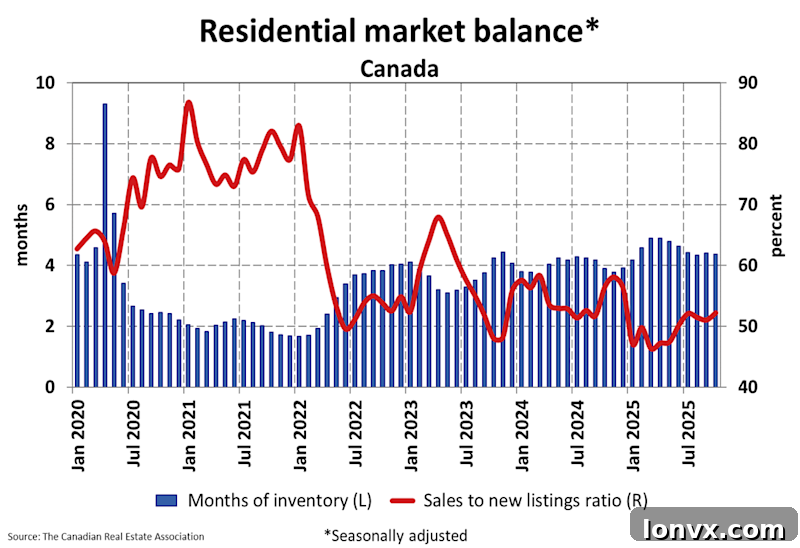
This subtle yet impactful market tightening holds significant implications, particularly as it unfolds within an economic environment that does not overtly incentivize or reward risk-taking behaviour. Canadian households are currently navigating a challenging labour market, marked by elevated unemployment rates and a noticeable rise in part-time employment, which often signals economic fragility. Simultaneously, investors are contending with a moderation in rent inflation, a direct consequence of recent immigration caps designed to curb the pace of population growth. Despite these prevailing headwinds, the housing market continues its tightening trajectory, reinforcing a fundamental truth: genuine, end-user demand is steadily rebuilding. This demand is primarily driven by real family needs, such as a growing family, relocation for work, or the desire for homeownership stability, rather than speculative investment intent. This resurgence of fundamental demand highlights an underlying resilience and a deep-seated aspiration for homeownership that persists even amidst broader economic uncertainties, suggesting a market anchored by genuine domestic requirements.
Canadian Housing Inventory Levels Hold Steady Amidst Shifting Market Dynamics
By the close of October, the total inventory of homes available for sale across Canada reached approximately 189,000 listings. This figure positions the market almost precisely at its long-term seasonal average, suggesting a state of equilibrium in the overall volume of properties. However, this apparent stability masks important crosscurrents and underlying shifts within the market. On one hand, current inventory levels are noticeably higher than they were a year ago, primarily because the subdued demand observed throughout most of 2024 led to a slower absorption of available homes. Yet, critically, the upward trend in inventory has ceased, indicating that supply is no longer rapidly accumulating.
Even more significant is the measure of “months of inventory,” a key indicator of market balance, which held firm at 4.4 months for the fourth consecutive month. This represents the lowest level recorded since January and sits comfortably below the long-term national norm of five months. The shrinking gap between current inventory levels and the long-term average suggests that the line separating a balanced market from one that is gradually tightening is drawing closer with each passing quarter. This sustained level of months of inventory, despite the broader economic climate, underscores a fundamental rebalancing act within the Canadian housing sector.
The recent moderation in population growth, a direct outcome of revised immigration policies, carries profound implications for these inventory dynamics. Slower inflows of new residents play a crucial role in preventing the housing inventory from tightening too rapidly. This controlled pace helps to shield the market from the intense, frenzied bidding wars and steep price escalations that characterized previous boom periods. Simultaneously, fewer new arrivals also translate into a reduction in potential distress sales or involuntary listings, often associated with rapid population turnover or sudden economic shocks. The cumulative effect is a market that avoids extremes – it neither experiences an overwhelming flood of new listings nor does it dry up completely. Instead, it oscillates within a relatively narrow and manageable band, a characteristic often observed just before a significant turning point or a more sustained period of market re-adjustment. This nuanced stability offers a healthier foundation for future growth compared to the volatile swings of recent years.
Canadian Home Price Trends: Small Gains and Moderated Declines Point Towards Stability
In October, the MLS Home Price Index (HPI), a sophisticated measure designed to track typical home prices across Canada, registered a modest 0.2 per cent increase on a month-over-month basis. This incremental uptick, though small, represents a meaningful shift from previous trends. Concurrently, the annual decline in the HPI narrowed significantly to just 3 per cent, marking the smallest year-over-year contraction observed since March. This steady progression suggests a deceleration in the rate of price depreciation. When examining the national average price for a home, it stood at $690,195, indicating a 1.1 per cent decrease compared to the same period a year earlier. While still in negative territory year-over-year, this figure reflects a substantial improvement from the larger declines seen earlier in the year, reinforcing the narrative of a market seeking equilibrium.
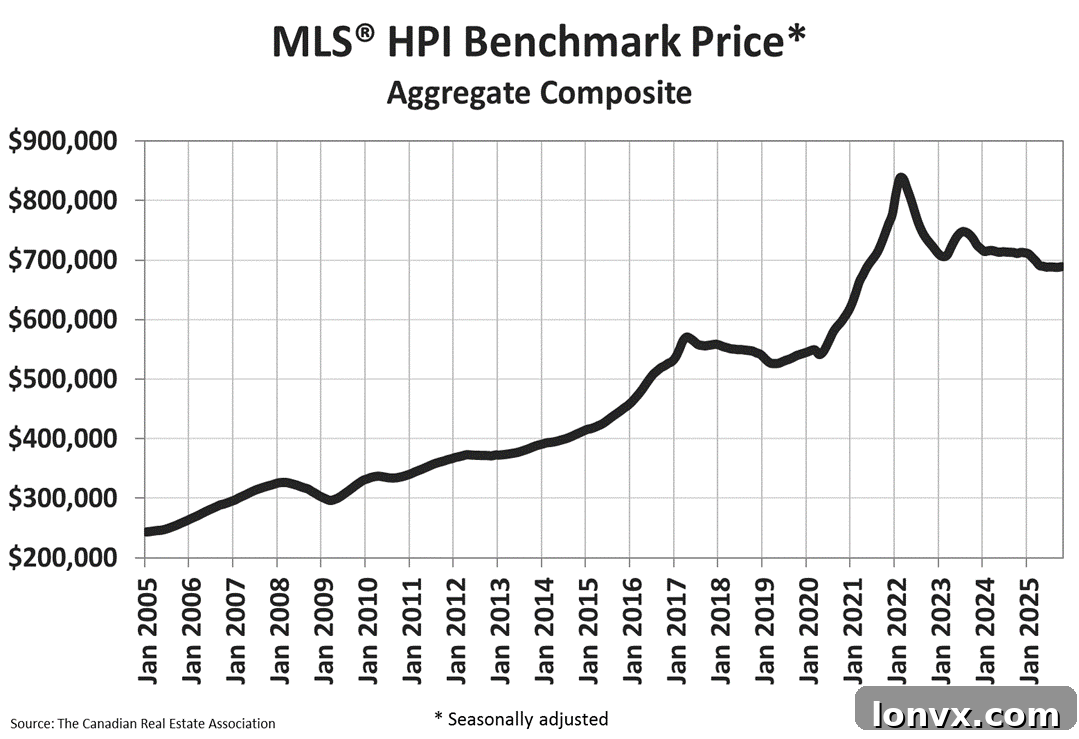
These collective movements in the various price indicators strongly suggest that the Canadian housing market may have largely completed the bulk of its downward adjustment phase following the rapid interest rate hikes and economic uncertainties of the preceding period. Home prices have now achieved a level of stability sufficient to quell widespread predictions of further significant declines, calming anxieties among homeowners and prospective buyers alike. At the same time, the gains have been measured and cautious enough to avoid creating any impression of premature or unsustainable market strength, which could trigger a new cycle of speculation. This delicate balance reflects a market that is consolidating, with both sellers and buyers adjusting their expectations to a new reality defined by more sustainable growth and reduced volatility. The overall picture indicates a shift towards a more predictable and less turbulent pricing environment as the market matures through its current cycle.
The Broader Economic Setting Shaping Canada’s Housing Market Outlook for 2026
Understanding the future trajectory of the Canadian housing market is impossible without a comprehensive grasp of the wider economic environment in which it operates. According to the most recent monthly figures from Statistics Canada, the nation’s labour market experienced job gains ranging between 60,000 and 70,000 positions. However, a deeper analysis reveals a broader pattern where the economy is increasingly relying on part-time work, while the overall unemployment rate remains persistently near 7 per cent. This indicates a labour market that, despite adding jobs, lacks the robust full-time employment growth that typically underpins strong consumer confidence. Wage gains, hovering around 4 per cent, are playing a vital role in sustaining basic household demand, enabling families to manage the rising cost of living. Yet, these wage increases are not substantial enough to ignite the kind of profound financial confidence that fuels aggressive bidding wars, high-risk real estate investments, or significant upward price pressures, suggesting a continued cautious approach from potential buyers.
The global economic environment also casts its own distinct shadow over Canada’s domestic market. The impending 2026 review of the United States-Mexico-Canada Agreement (USMCA) introduces a significant layer of uncertainty at a particularly delicate moment. Canada’s manufacturing and export sectors are profoundly dependent on stable and predictable trade conditions with its North American partners. Any turbulence or renegotiation challenges within this agreement could directly impact hiring intentions and investment decisions in key industrial provinces, potentially leading to job insecurity and reduced economic activity. Canadian households are acutely sensitive to these macro-level risks. They monitor major trade headlines with nearly the same vigilance as they do central bank interest rate announcements, understanding that both factors directly influence job security, long-term financial planning, and overall housing affordability.
Furthermore, federal population policymaking has emerged as a central force in shaping market sentiment and dynamics. Recent immigration caps, particularly those targeting temporary residents, have resulted in a more pronounced slowdown in Canada’s population growth than the country has experienced in several decades. The immediate and tangible effects of this policy shift have been most evident in the rental markets. Investor sentiment has adjusted accordingly, with expectations of rapid rent increases now tempered. Consequently, rent inflation has moderated, and vacancy rates in various urban centres have begun to edge higher. This easing of rental market pressures has, in turn, softened the intense urgency that often compelled renters to transition into homeownership, especially in historically tight markets. While this urgency persists in some highly competitive sub-markets, the overall effect is a more balanced rental landscape, which indirectly influences the demand side of the sales market by reducing immediate pressure to buy.
Key Policy Forces Reshaping the Canadian Housing Market Landscape
A series of recent federal policy reforms are poised to exert significant implications for both the supply and demand sides of the Canadian housing market, targeting specific challenges that have hindered affordability and construction.
On the demand side, the federal government’s decision to remove the Goods and Services Tax (GST) for eligible first-time homebuyers purchasing newly constructed homes introduces a direct and much-needed financial relief measure. This initiative comes at a time when housing affordability in Canada has reached its tightest margins in recent memory, making entry into the market particularly challenging. The measure garnered considerable attention during the most recent budget debates precisely because it directly reduces the upfront tax burden on a critical demographic—first-time purchasers—who have consistently struggled to accumulate sufficient down payments and manage high initial costs. While the reach of this specific policy is limited exclusively to builder-delivered new homes, rather than the vast resale housing stock where the majority of transactions occur, it is expected to refine the financial calculus for a segment of first-time purchasers. These buyers have often been constrained by escalating construction costs and the elevated financial thresholds imposed by the stress test, making this tax relief a crucial, if targeted, support.
A more profound and potentially far-reaching structural shift is represented by Ottawa’s strategic decision to condition the allocation of new federal housing funds on provincial commitments to actively reduce development charges. This policy represents a concerted effort to move away from fragmented local incentives, which often contribute to inefficiencies and high costs, towards a more coherent national framework. This new approach explicitly favors jurisdictions that demonstrate a willingness to align their development fees with broader national housing objectives. Development charges, which have in many regions reached what can only be described as unbelievable levels – particularly in high-demand areas like the Greater Toronto Area (GTA), as vividly illustrated in the accompanying table – significantly inflate the cost of new housing.
The transition stemming from this policy will undoubtedly be gradual and complex. Municipalities will need to undertake the intricate process of amending their existing by-laws, a task that often involves extensive consultations and legislative procedures. Developers, in turn, will be compelled to re-evaluate the economic viability of their projects under new cost structures, which could lead to shifts in project scope or location. Furthermore, lenders must regain conviction that these pro-supply policies will be consistently implemented and endure over the long term, ensuring a stable environment for financing new construction. While these foundational steps are unlikely to dramatically alter household formation or housing starts in the immediate horizon of 2026, they are crucial for laying the groundwork for a more credible, efficient, and ultimately more affordable housing supply environment in the years that follow. This long-term vision aims to address the structural deficiencies that have plagued Canada’s housing market for decades.
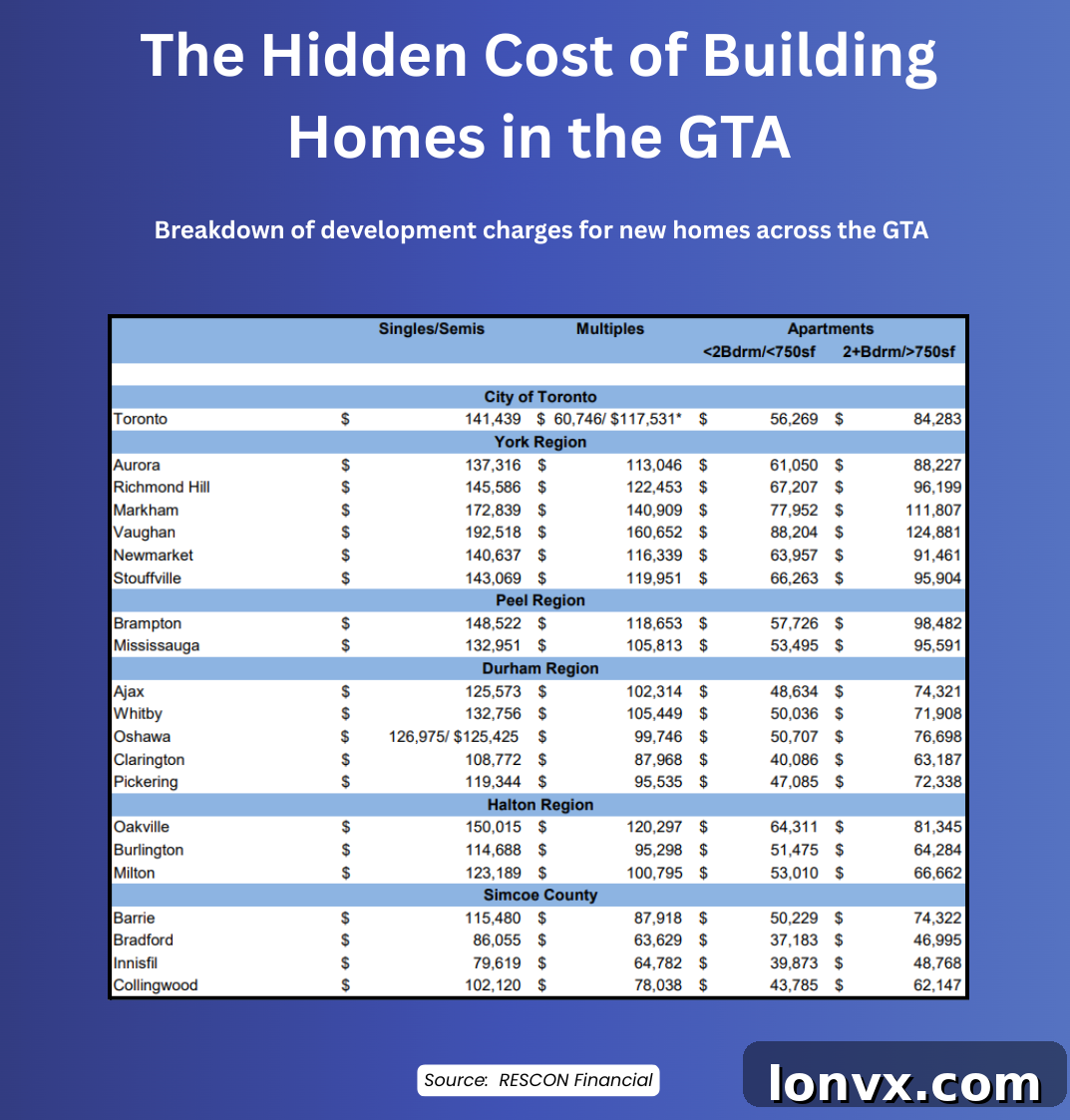
Source: Rescon Financial & Valery
CREA’s Market Outlook and a Balanced Verdict on Canada’s Housing Future
The Canadian Real Estate Association (CREA) offers a perspective that suggests interest rates are steadily moving towards a more stimulative territory, a factor that could increasingly encourage market activity. The cost of borrowing, while still elevated compared to the ultra-low rates of recent years, has now fallen sufficiently to draw previously hesitant buyers back into active consideration of homeownership. However, it is crucial to note that this reduction in borrowing costs has not been steep enough, nor prolonged enough, to unleash an unchecked surge in demand or a return to speculative frenzy. The market is currently preparing for the traditionally quieter winter season, during which activity naturally slows. As this period unfolds, attention will progressively shift towards the ever-anticipated spring market, which is typically a period of heightened real estate activity.
The central question for the Canadian housing market is no longer whether buyers will eventually return. The October data and ongoing sentiment suggest that a cautious re-engagement is already underway. Instead, the critical inquiry now revolves around the scale of their re-entry and, perhaps more importantly, the degree of confidence with which they will approach their purchasing decisions. The definitive answer to this complex question lies within the intricate interplay of evolving policy interventions, both federal and provincial, and the broader economic performance of the nation. These factors will dictate whether the market’s recovery is robust and sustained or remains delicate and prone to external shocks.
If I were to venture a forecast for the upcoming spring market, keenly aware that some observers might expect a prediction of market collapse or doom from this analysis, my assessment would be one of tempered optimism. I anticipate a spring season that brings a housing market advancing with notable restraint rather than explosive excitement. This measured progression implies continued stabilization, gradual price adjustments in certain segments, and a consistent but not aggressive return of buyers. Such a scenario would represent a healthier, more sustainable growth trajectory for Canadian real estate, moving away from the extreme volatility of past years and towards a more balanced and predictable environment for all participants.