
After seven consecutive months of declines, Canada’s rental market is showing early signs of a turnaround.
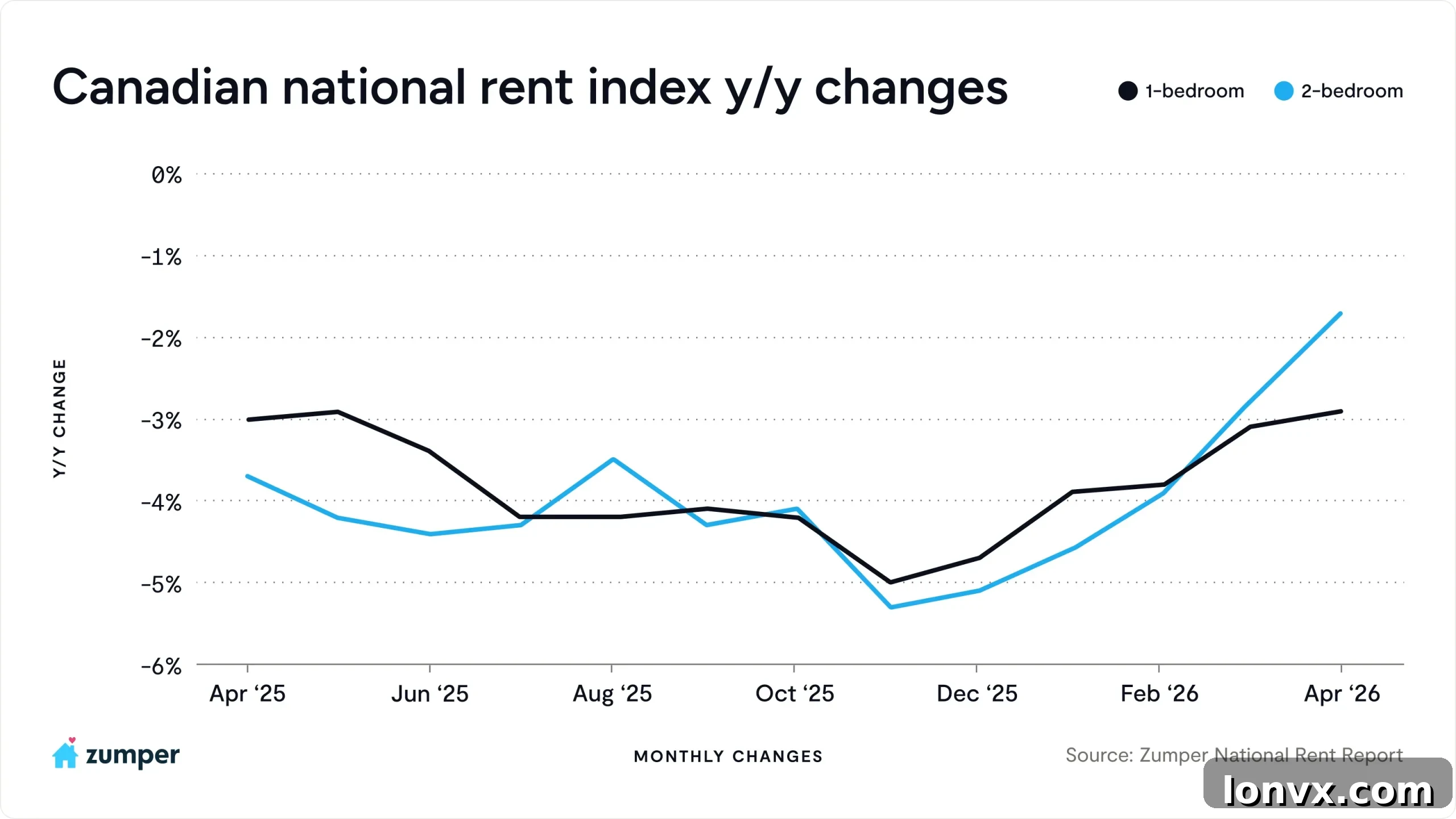
According to a new report from digital rental marketplace Zumper, national asking rents rose in April for both one- and two-bedroom units at the same time for the first time since September 2025.
The recovery is uneven across the country. Ontario continues to face the largest declines, British Columbia is softening further, while Québec and the Prairie provinces are showing steady growth.
Zumper’s analysis of hundreds of thousands of listings across Canada’s 23 largest cities found that one-bedroom asking rents increased 0.2 per cent month-over-month in April, reaching $1,782, while two-bedrooms rose 0.3 per cent to $2,210.
On a year-over-year basis, one-bedrooms remain down 2.9 per cent and two-bedrooms are down 1.7 per cent.
Cities with the strongest annual one-bedroom rent growth
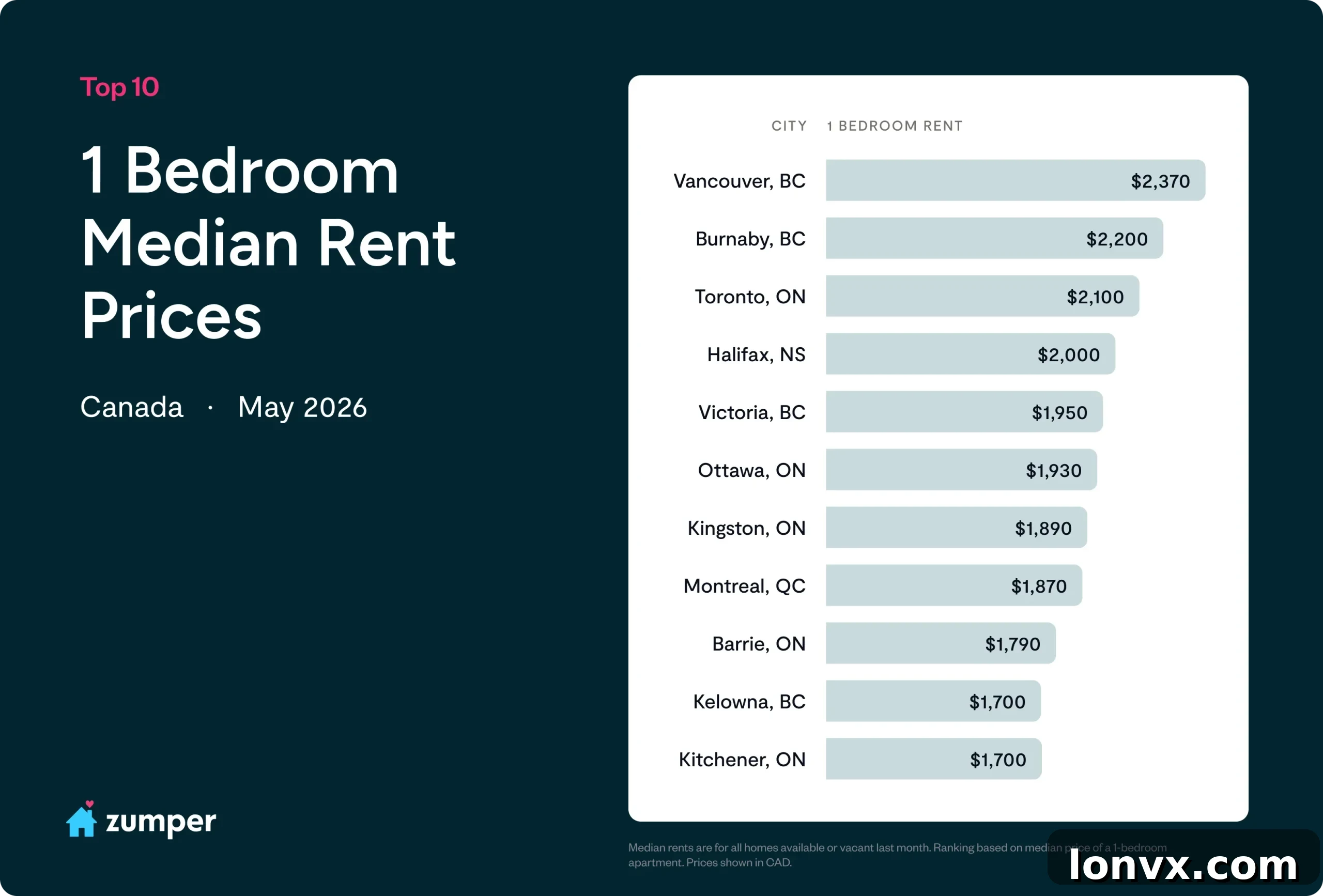
Kingston, Ont., Montréal and Québec City posted the strongest annual rent growth this month. Kingston led the country with a 9.2 per cent annual increase, followed by Montréal at 8.7 per cent and Québec City at 5.9 per cent.
Kingston’s gains are largely driven by a shortage of student housing and steady demand from Queen’s University and St. Lawrence College, which have kept the city among the top-performing rental markets for several months.
Montréal and Québec City’s strong performance underscores Québec’s relative resilience. The province has been less affected by a slowdown in immigration-driven rental demand, and interprovincial migration from Ontario and B.C. has helped sustain its renter population.
Cities feeling the most downward pressure
Oshawa, Ont., Victoria and Kelowna recorded the steepest annual rent declines this month, reflecting pressure across Ontario’s commuter belt and in British Columbia’s coastal and interior markets.
Oshawa experienced the largest drop at -11.6 per cent as affordability concerns and softer demand continue to weigh on the market. This decline mirrors broader challenges in Ontario’s secondary rental markets, which expanded during the pandemic and are now correcting.
In B.C., Victoria’s rents fell 9.7 per cent year-over-year and Kelowna’s dropped 9.6 per cent. Both cities are absorbing new housing supply while population growth has slowed following a decline in international migration throughout 2025.
Nova Scotia has benefited from strong interprovincial migration from Ontario and B.C. in recent years, but that inflow has not fully insulated the region from Canada’s broader rental slowdown. Halifax rents are down by as much as five per cent annually.