
Navigating Canada’s Dynamic Housing Market: A Deep Dive into TD Economics’ Outlook
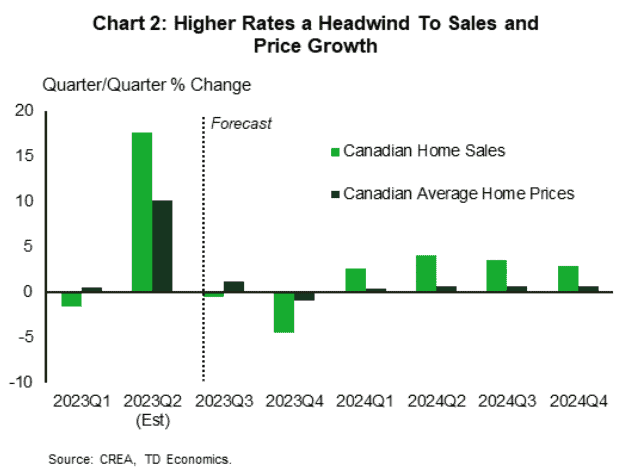
The Canadian housing market has emerged from the second quarter (Q2) of the year with remarkable strength, defying earlier predictions and captivating observers across the nation. This period witnessed a significant surge in both home sales volumes and average prices, showcasing an unexpected resilience. However, this robust performance is viewed with a degree of caution by economists at TD Economics, who are now forecasting a potential slowdown in sales during the latter half of 2023. This anticipated cooling could partially reverse the impressive gains observed in recent months, setting the stage for a nuanced market trajectory.
Rishi Sondhi, a distinguished economist with TD Economics, provides an illuminating perspective on these intricate market dynamics within the Provincial Housing Market Outlook. His analysis delves into the underlying factors that shaped Q2’s surprising vitality and outlines the critical influences expected to govern the market’s direction in the coming months and into the new year. Understanding these forces is crucial for homeowners, prospective buyers, and investors alike as they navigate Canada’s evolving real estate landscape.
Earlier projections had indicated that home sales were lagging behind levels typically supported by fundamental economic drivers such as income growth and Canada’s burgeoning population. The extraordinary surge in Q2 sales, however, effectively closed this gap, bringing market activity more in line with these foundational metrics. While this recovery signifies a healthy underlying demand, the rapid escalation in property prices has simultaneously intensified concerns regarding housing affordability. This escalating affordability challenge is a significant factor that could temper future market enthusiasm and moderate transactional activity.
The Bank of Canada’s Pivotal Role in Housing Market Dynamics
The Bank of Canada (BoC) recently ended its four-month pause on interest rate adjustments, opting to raise its benchmark policy rate. This decision was primarily driven by persistently resilient economic data, notably strong housing market activity and robust consumer spending, which indicated that the economy was running hotter than anticipated. Following this initial move, TD economists have adjusted their outlook, now projecting an additional 25 basis points hike. This would culminate in a total of 50 basis points of monetary tightening by the end of July, a more aggressive stance than initially expected by many market participants.
This upward revision to the policy rate carries substantial implications for the housing market. A higher policy rate directly translates into increased borrowing costs for homebuyers, thereby diminishing overall housing affordability. Mortgage rates, closely tied to the BoC’s policy decisions, become more expensive, impacting monthly payments and reducing the maximum loan amounts for which buyers can qualify. Furthermore, a more hawkish stance from the central bank – signaling a commitment to curbing inflation even at the expense of economic growth – is likely to have a pronounced psychological effect on potential buyers. This shift in sentiment often leads to a more cautious approach, with many prospective purchasers choosing to postpone their buying decisions, thus cooling market demand.
The ripple effect of these interest rate adjustments extends beyond immediate affordability concerns. They influence investor confidence, developers’ willingness to initiate new projects, and even the propensity of existing homeowners to sell. As borrowing becomes more costly, the speculative component of the housing market tends to recede, fostering a more fundamental-driven environment. This intricate interplay between monetary policy and market behavior underscores the BoC’s profound influence on the trajectory of Canada’s real estate sector.
Anticipated Decline in Home Sales and Prices for the Second Half of 2023
Looking ahead, TD Economics firmly anticipates a noticeable decline in Canadian home sales throughout the latter half of 2023. This projection reflects a recalibration of market expectations, acknowledging the lagged effects of tighter monetary policy and heightened affordability pressures. Beyond 2023, the pace of purchase growth in 2024 is also expected to be more subdued than previously forecasted, indicating a tempered recovery rather than a sharp rebound.
Despite the broader expectation of a slowdown, Rishi Sondhi highlights a nuanced short-term outlook for prices. He expects average price growth to remain positive in the third quarter of 2023, primarily sustained by persistently tight market conditions and a constrained supply of homes available for sale. This indicates that while demand may soften, the imbalance between available homes and prospective buyers will continue to exert upward pressure on prices in the immediate term. However, this momentum is not expected to last indefinitely. A slight drop in average prices is forecasted for the fourth quarter, signaling the eventual impact of reduced buyer sentiment and increased borrowing costs.
Consequently, the quarterly growth profiles for both home sales and average prices in 2024 have been adjusted downward compared to TD Economics’ earlier March forecast. This revision underscores a more conservative outlook for the market’s recovery, acknowledging persistent headwinds. The cumulative effect of higher interest rates, ongoing affordability concerns, and a gradual rebalancing of supply and demand are all expected to contribute to a less exuberant market environment than initially envisioned. This period of moderation is seen as a necessary adjustment, allowing the market to digest the rapid changes and move towards a more sustainable growth trajectory.
Key Factors Shaping the Outlook: Central Bank Policy, Bond Yields, and Population Growth
Given the significant challenges and headwinds currently facing the Canadian housing market, a critical question arises: “Why are we still forecasting growth in sales and prices next year?” Rishi Sondhi’s comprehensive analysis provides answers, pointing to a confluence of powerful underlying factors that are expected to provide support and stimulate the market beyond the current period of moderation.
A primary driver for future market revitalization is the anticipated shift in the Bank of Canada’s monetary policy. Economists project an expected reduction in interest rates by the BoC, likely commencing in the second quarter of 2024. This easing of monetary policy, coupled with a forecast for lower bond yields, is expected to significantly reduce borrowing costs, thereby injecting renewed vigor into the housing market. Lower mortgage rates would enhance affordability, encourage more buyers to enter the market, and alleviate some of the financial pressures on existing homeowners.
Beyond monetary policy, Canada’s demographic landscape continues to be a formidable demand driver. Rapid population growth, primarily fueled by robust immigration targets, is anticipated to persist. This steady influx of new residents creates an enduring demand for housing across all market segments, from rentals to first-time home purchases and beyond. Despite potential fluctuations in the unemployment rate, positive income gains are also expected to continue for a significant portion of the workforce. This combination of strong demographic expansion and improving household incomes forms a powerful fundamental underpinning for the housing market, ensuring sustained demand over the medium to long term.
However, the resale market in Canada is currently contending with a significant structural challenge: persistently low supply. Data from May revealed that new listings were approximately 16 percent below the average levels observed since the Global Financial Crisis (post-GFC). This acute shortage of homes available for sale exacerbates price pressures and limits transaction volumes. Sondhi explains that healthy job markets, coupled with the flexibility for homeowners to extend their mortgage amortizations, have largely prevented widespread forced selling, thereby keeping supply tight. Paradoxically, while strong fundamentals prevent a crash, poor affordability, driven by high prices and rates, is now discouraging “move-up” buyers – those looking to upgrade their homes – from listing their current properties. This creates a self-reinforcing cycle of limited supply, further fueling price rigidity in certain segments.
Enjoying this article?
Get the latest REM articles in your inbox 3x week so you stay up to date on the latest in the Canadian real estate industry.
On a more positive note for market balancing, an increase in new listings is anticipated in the near term. This expected rise is predicated on the idea that as homeowners observe improving price conditions, they will be more incentivized to list their properties, responding to a more favorable selling environment. Looking further ahead into the next year, the economist foresees a sustained rise in the overall resale supply. This anticipated growth in inventory, combined with continued resilience in employment levels across the country, is expected to significantly mitigate the risk of excessive forced selling, contributing to a more stable and balanced market dynamic.
Regional Variations in Sales and Price Growth Across Canada
TD Economics’ projections reveal significant regional disparities in the anticipated performance of Canada’s housing market, underscoring the mosaic nature of real estate across the country. These variations highlight the influence of localized economic conditions, demographic shifts, and market sensitivities to interest rates.
Ontario and British Columbia: Returning to Normalcy
Ontario and British Columbia are projected to lead other provinces in terms of sales growth for both 2023 and 2024. However, this anticipated outperformance is primarily a reflection of these markets returning to more “normal” sales levels after experiencing a significant downturn in the preceding year. These provinces, characterized by higher property values and greater sensitivity to interest rate fluctuations, witnessed sharper declines during the initial phase of monetary tightening. While comparatively cooler price growth is expected in these regions going forward due to their heightened sensitivity to higher interest rates, specific compositional forces may provide some short-term upside to average prices. For instance, a stronger demand for higher-value detached homes compared to other housing types can skew average price figures upwards, even if overall market activity remains moderated.
The Prairies: Emerging Strength and Affordability
Conversely, the Prairie provinces, including Alberta, Saskatchewan, and Manitoba, are forecasted to experience stronger quarterly price growth moving forward. This marks a notable reversal from their earlier underperformance relative to other regions. This positive trend is expected to be buoyed by a combination of decent affordability conditions, particularly when compared to the country’s most expensive markets, and relatively firm economic growth. Robust performance in the energy and agriculture sectors, alongside growing populations, contributes to a stable demand base. In Alberta specifically, while strong, slightly slower sales growth is anticipated due to its comparatively higher starting point and already active market conditions.
Atlantic Region: Population Boom Meets Affordability Challenges
The Atlantic region, encompassing provinces like Nova Scotia, New Brunswick, and Prince Edward Island, continues to benefit from solid population gains, largely driven by inter-provincial migration and increased immigration. These demographic tailwinds, combined with historically tight markets, are expected to sustain elevated prices through the second half of this year and drive further increases into 2024. However, the region is now grappling with severe affordability challenges, a relatively new phenomenon given its past reputation for more accessible housing. These escalating affordability pressures are likely to constrain the overall pace of growth, even with strong underlying demand, as a significant portion of the population finds it increasingly difficult to enter the market.
Quebec: Modest Growth in a Balanced Market
Quebec’s housing market is projected to experience a more modest expansion compared to some other regions. This outlook is primarily influenced by a relatively slower rate of population growth, which translates into lower overall demand for housing compared to provinces experiencing rapid demographic expansion. Furthermore, Quebec’s markets have historically been characterized by a more balanced supply-demand dynamic, leading to relatively looser conditions. This balance, coupled with the modest population expansion, may contribute to a slower pace of price growth compared to the more heated markets elsewhere in Canada.
Assessing Downside Risks and Upside Potential
The Canadian housing market, while displaying remarkable resilience, remains subject to a spectrum of risks and opportunities that could alter its projected path. Understanding these potential deviations is crucial for a complete outlook.
Potential Downside Risks
One significant downside risk to the housing market outlook stems from the potential for tighter mortgage lending rules. Although TD Economics has not explicitly factored these into their current forecast due to a lack of clear visibility on their implementation and scope, any significant tightening would directly impact borrowers’ ability to qualify for mortgages, thereby reducing purchasing power and dampening demand. Rishi Sondhi also highlights that if the Bank of Canada were to adopt an even more hawkish stance than currently anticipated, potentially raising rates further or holding them higher for longer, it could severely disrupt buyer psychology. Such a move could erode consumer confidence, leading to a more pronounced weakening of sales activity beyond current expectations. Additionally, weaker-than-expected economic growth across Canada could exert significant downward pressure on housing prices. A deteriorating economic environment would likely reduce overall demand for housing and increase the probability of forced selling by homeowners who become financially strained due to job losses or reduced incomes, potentially leading to a more substantial market correction.
Identifiable Upside Potential
Conversely, several factors present upside potential that could see the housing market outperform current predictions. The “compositional forces” observed in markets like Ontario and British Columbia, where demand for higher-value properties (e.g., detached homes) continues to drive average prices upwards, could persist longer than anticipated. This dynamic could sustain higher average prices even amidst a general cooling of activity. More fundamentally, the ongoing housing shortages that plague many Canadian markets, exacerbated by robust population growth, could continue to propel prices upward. If supply creation fails to keep pace with the sustained demand from a growing population, the inherent scarcity could lead to stronger price appreciation than forecasted, even in the face of affordability challenges and higher interest rates.
Read the full outlook from Rishi Sondhi here.