
Saint John, New Brunswick (Canva)
Don’t miss out—join us online for REM’s first monthly market breakdown for Realtors on Feb. 25 at 2 PM Eastern. Hosted by REM, columnist Daniel Foch will dive into CREA’s latest stats and key market trends. Have questions? Leave them in the comments or send them in advance to [email protected]. Register here.
Canada’s Housing Market in 2025: A Landscape of Uncertainty and Opportunity
The Canadian housing market is undergoing a significant transformation. This shift isn’t occurring in isolation; it mirrors a broader global geopolitical realignment that is creating a palpable sense of apprehension. For real estate professionals and consumers alike, understanding these complex forces is paramount to navigating what could be described as a “terrifying” headwind for the nation’s property sector.
For many years, the narrative was consistent: tight supply, robust demand, and a seller’s market where homes were snatched up quickly, often above asking price. However, as 2025 unfolds, the landscape has dramatically changed. A remarkable influx of new listings is hitting the market, while sales activity simultaneously falters under the weight of growing economic uncertainty and geopolitical tensions. This dynamic creates a stark contrast to previous years and signals a crucial turning point for Canadian real estate.
It’s a familiar pattern in times of great uncertainty; Canada’s real estate market often defaults to a “pause button” mentality. Whether facing a historic election, a global pandemic, or a rapidly evolving economy, periods of introspection and hesitation are common. The current climate, heavily influenced by the prospect of a trade war, is no exception. This wait-and-see approach reflects a market grappling with unknowns, where both buyers and sellers are re-evaluating their strategies.
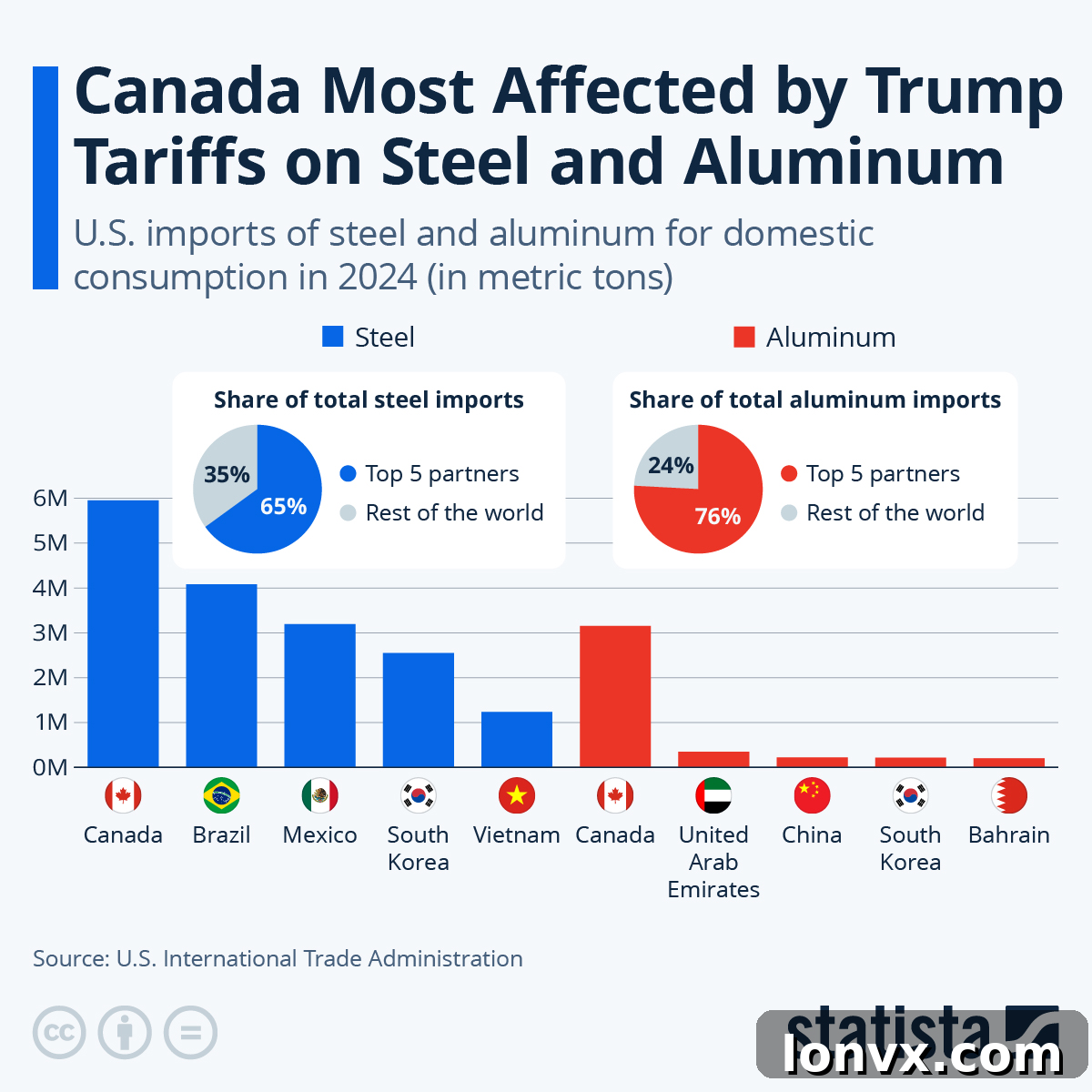
Adding layers of complexity, the specter of President Trump’s proposed tariffs on Canadian exports casts a long shadow over key industries. These potential tariffs raise serious concerns about job losses, wage stagnation, and a broader dampening effect on housing demand across the country. While the specific targeting of Canadian goods was temporarily postponed, Trump’s broader global focus on steel and aluminum industries inevitably impacts Canada, given its significant role as a producer and exporter in these sectors. The implications for the Canadian economy, and by extension, its housing market, are profound and warrant close attention.
A Historic Surge in Listings, a Decelerating Pace in Sales
For prospective homebuyers, particularly those with a higher tolerance for risk, this period could represent a significant window of opportunity. The increased inventory means more choices, and potentially, more leverage in negotiations. Furthermore, a softening in interest rates makes financing more appealing, reducing the overall cost of borrowing. However, for sellers, the market shift serves as a potent wake-up call. The era where they held undisputed advantage is fading, giving way to a more balanced market, or even a buyer-friendly environment in certain areas. Yet, the full extent of these evolving dynamics remains fluid, heavily contingent on the resolution of the postponed tariffs and their eventual ripple effects throughout the Canadian economy.
To gain a clearer understanding of the path ahead, we turn to the Canadian Real Estate Association’s (CREA) January market data. This vital information provides crucial insights into the current state and anticipated trajectory of the market.
Unprecedented Inventory Growth: A Flood of New Listings
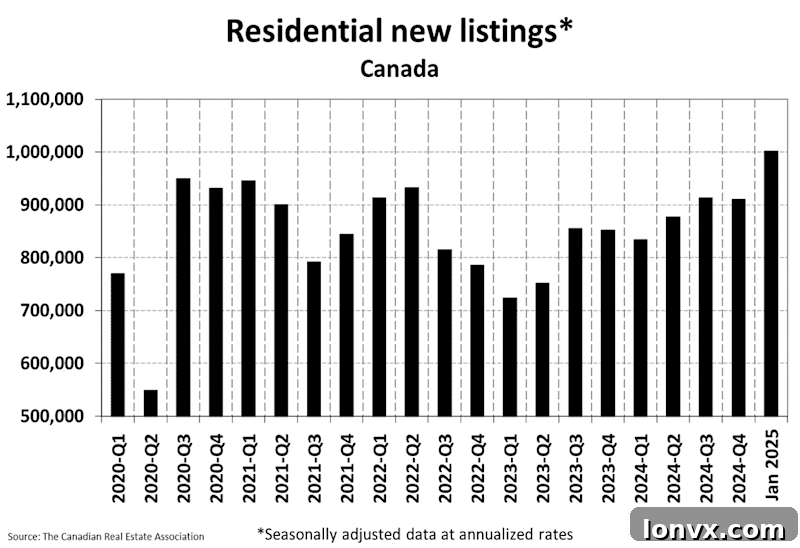
One of the most striking developments of early 2025 has been the extraordinary surge in new housing listings. January’s figures reveal an impressive 11 percent month-over-month increase in new supply compared to December 2024. This marks the largest seasonally adjusted jump since the late 1980s, excluding the unique disruptions observed during the pandemic era. Such a significant rise in inventory suggests a notable shift in seller behaviour.
What does this mean for the market? It’s a strong indicator that more homeowners are electing to sell, potentially in anticipation of less favourable market conditions down the line. In historically high-priced regions like British Columbia and Ontario, where supply had been a persistent challenge throughout 2024, this sudden influx of listings is already exerting downward pressure on prices. This shift is empowering buyers, granting them more negotiating power and a greater selection of properties, a stark contrast to the competitive bidding wars of previous years.
Sales Take a Hit Amid Economic Jitters
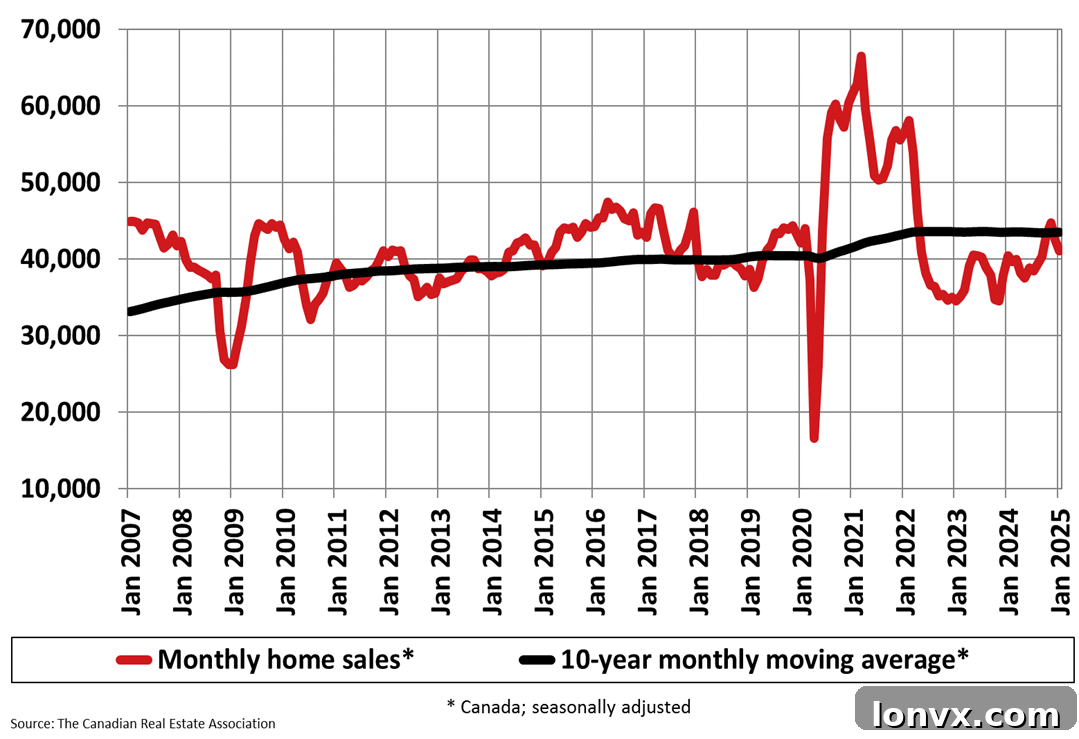
While the supply side of the market experienced a significant boost, sales activity failed to keep pace. National home sales experienced a 3.3 percent month-over-month decline, with the most pronounced drop occurring in the final week of January. The timing of this slowdown is critical, strongly suggesting that buyers retreated due to escalating apprehension over the potential implications of Trump’s tariff policies. The fear of economic instability stemming from a potential trade war appears to be a major deterrent for those contemplating large financial commitments like home purchases.
However, the picture isn’t entirely bleak. When compared to January 2024, actual sales were up by a modest 2.9 percent. This indicates that underlying demand is still present, albeit cautious. Buyers haven’t vanished from the market; rather, they are adopting a prudent stance, preferring to await greater clarity regarding the broader economic trajectory before committing to significant real estate transactions. This hesitation reflects a desire to mitigate risk in an environment riddled with uncertainty.
Prices Hold Their Ground – For Now, But Regional Divergence Persists
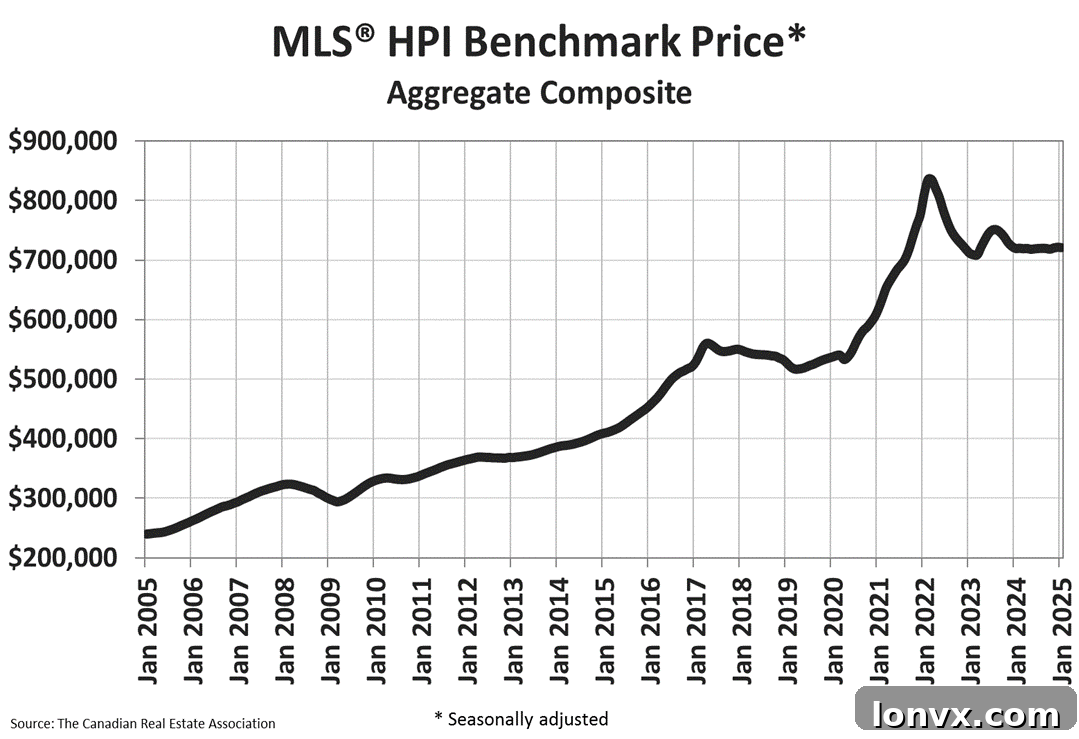
Despite the notable increase in inventory and a softening of sales, home prices have demonstrated surprising resilience. This stability, however, masks significant regional variations and the underlying tension between supply and demand.
- The MLS Home Price Index (HPI) registered minimal change both month-over-month (-0.08 percent) and year-over-year (+0.07 percent), indicating a general flattening of prices nationally.
- The national average home price reached $670,064, representing a slight increase of 1.1 percent from January 2024. This modest rise suggests that while the market is cooling, a widespread price collapse has not occurred.
However, a closer look reveals a fragmented market where regional dynamics dictate different outcomes:
- British Columbia and Ontario: The substantial surge in new supply in these traditionally hot markets is leading to a softer pricing environment. This translates into more favorable conditions for buyers, who now face less competition and potentially more room for negotiation. The intense upward pressure on prices seen in previous years is now largely dissipated.
- Alberta and Saskatchewan: In stark contrast, these provinces continue to experience robust market conditions. With inventories hovering at near 20-year lows, the scarcity of available homes is fueling continued price appreciation, even amidst broader economic uncertainty. Strong interprovincial migration and a relatively affordable entry point for housing contribute to this sustained demand.
- Quebec and Atlantic Canada: These eastern markets are projected to see a balanced trajectory of both price and sales growth throughout 2025. Their economies, often less directly impacted by certain cross-border trade tensions, combined with relatively lower housing costs compared to major hubs, make them attractive for a diverse range of buyers, contributing to a stable and sustainable growth environment. These regions represent some of the country’s most balanced housing sectors.
The Big Unknown: Trump’s Tariffs and Their Economic Fallout
Just as the Canadian housing market appeared poised for a recovery, a formidable new challenge emerged on the horizon: President Trump’s proposed tariff policy targeting Canada. This policy, if fully implemented, has the potential to be a significant game-changer for the entire Canadian economy and, consequently, its real estate sector.
The U.S. government has proposed a substantial 25 percent tariff on all Canadian non-energy exports and a 10 percent tariff on Canadian energy exports. While implementation has been temporarily delayed by 30 days, the threat remains potent. Such a policy shift could severely disrupt vital Canadian industries, significantly hamper cross-border trade, and dramatically increase the risk of a widespread economic downturn. The implications stretch far beyond the initial sectors, impacting supply chains, consumer confidence, and investment across the board.
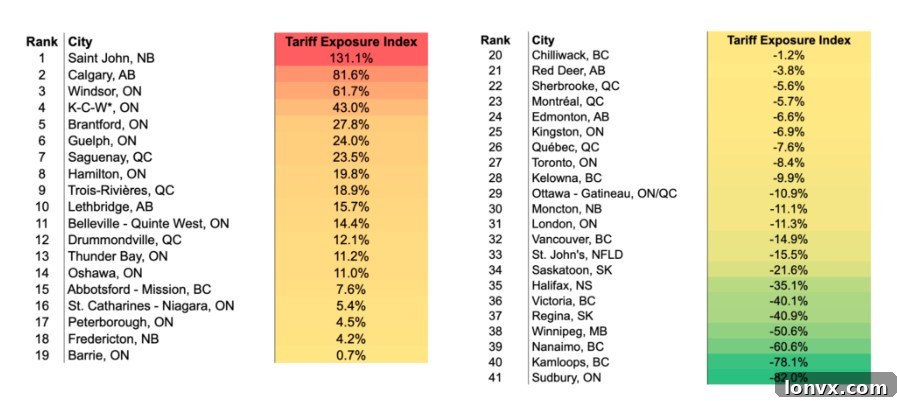
Not all cities or regions will feel these effects equally. New research from the Canadian Chamber of Commerce’s Business Data Lab has pinpointed specific regions most vulnerable to these tariffs, based on their economic reliance on U.S. trade and export profiles. The most exposed markets include:
- Saint John, New Brunswick: This city is particularly vulnerable due to its heavy dependence on crude oil exports, primarily facilitated by the large Irving Oil Refinery. Any disruption to energy exports would have a direct and severe impact on the local economy and job market.
- Calgary, Alberta: As a major energy hub, Calgary’s economy is deeply intertwined with the export of crude oil, natural gas, and, to a lesser extent, beef. Tariffs on these key commodities would reverberate throughout the provincial economy, affecting employment and investment.
- Southwestern Ontario (Windsor, Kitchener-Cambridge-Waterloo, Brantford, Guelph): These cities are intimately linked to Canada’s robust auto and manufacturing industries. These sectors rely heavily on integrated cross-border supply chains with the U.S. Tariffs would disrupt production, increase costs, and potentially lead to significant job losses in these manufacturing-dependent regions.
- Hamilton, Ontario: Known as Canada’s steel capital, Hamilton’s economic stability is directly threatened if tariffs impede steel exports. The steel industry is a foundational employer, and any slowdown would create considerable economic hardship.
- Quebec’s aluminum and forestry hubs (Saguenay, Trois-Rivieres, Drummondville): These regions are key exporters of aluminum and forestry products. Tariffs on these goods would directly impact local industries, potentially leading to reduced output and job cuts, thereby weakening local housing markets.
If these crucial industries experience a slowdown, the ripple effects will be undeniable. Job security will diminish, wage growth could stagnate, and overall housing demand in these specific cities will likely decline. In simpler terms, these tariffs could translate into fewer qualified buyers in affected regions, leading to extended selling times for properties and potentially price stagnation or outright declines. The market would shift distinctly in favor of buyers, but likely out of economic necessity rather than pure opportunity.
The detailed ranking below, derived from the same comprehensive research, offers a clearer visualization of Canadian cities most vulnerable to the proposed U.S. tariffs, providing valuable context for understanding regional market risks.
What’s Next for the Canadian Real Estate Market?
The Spring Rebound is Coming – But Will It Be Enough to Counter Headwinds?
Despite the prevailing economic concerns and geopolitical tensions, CREA remains cautiously optimistic about a strong spring market. This forecast is primarily underpinned by two key factors:
- Lower Borrowing Costs: Mortgage rates have shown signs of declining, a trend that traditionally draws more prospective buyers into the market. Reduced interest rates improve affordability and make the prospect of homeownership more attractive to a wider segment of the population.
- Pent-Up Demand: A significant portion of buyers have been on the sidelines, patiently waiting for prices to stabilize and market conditions to become more predictable. This accumulated demand is expected to re-enter the market as confidence slowly returns, contributing to increased activity.
According to CREA’s projections, an estimated 532,704 homes will sell in 2025, representing an 8.6 percent increase from 2024 figures. Furthermore, prices are anticipated to rise by 4.7 percent this year, reaching an average of $722,221 by year-end. While these are optimistic projections, the ultimate outcome will heavily depend on the trajectory of global trade relations and domestic economic stability.
Not Every Market Will Recover Equally: A Regional Outlook
The anticipated market rebound will not be uniform across Canada; regional disparities will continue to be a defining characteristic:
- British Columbia & Ontario: While sales are expected to rebound in these high-volume markets, the current elevated inventory levels will likely keep price growth relatively subdued. Buyers will continue to benefit from increased choice and less intense competition, preventing rapid price escalation.
- Alberta & Saskatchewan: These provinces are poised for continued strong performance. With sales already near record highs in 2024 and inventory levels remaining at two-decade lows, prices in these markets are expected to climb at a faster rate than sales. The enduring affordability and economic resilience of these regions will continue to attract buyers.
- Quebec & Atlantic Canada: These eastern provinces are predicted to experience a healthy balance of both price and sales growth. Their steady economic fundamentals and relatively more affordable housing options will contribute to sustainable market expansion, making them attractive to both local and interprovincial buyers.
Essential Considerations for Realtors, Buyers, and Sellers
Navigating the Canadian housing market in 2025 requires strategic thinking and a nuanced understanding of current trends. Here’s what real estate professionals and their clients need to consider:
For Buyers: Maximizing Opportunity in a Shifting Market
- More Listings, More Choices: The surge in inventory means buyers finally have significant leverage in many regions. This is the time to be discerning, compare options, and negotiate terms that were previously unattainable. Don’t rush into decisions; take the time to find the right property at the right price.
- Lock in Rates Now: With mortgage rates showing a downward trend, securing a favorable rate sooner rather than later could lead to substantial long-term savings. Fluctuations are always possible, and delaying could result in higher borrowing costs.
- Watch the Economy Closely: Economic indicators, particularly those related to the potential tariffs and their impact on employment, should be monitored diligently. If widespread job losses occur in vulnerable sectors, it could trigger a more pronounced buyer’s market later in the year, potentially offering even better purchasing opportunities.
- Research Regional Vulnerabilities: Understand how your desired region might be affected by tariffs or other economic shifts. A market less exposed to trade disruptions might offer more stability, while a more vulnerable one could present greater discounts.
For Sellers: Adapting to Increased Competition
- More Competition Means Smarter Pricing: In a market with abundant listings, overpricing a property is a direct path to stagnation. Realistic and competitive pricing is crucial for attracting buyers, especially in high-inventory regions. Sellers should work closely with their Realtors to establish an attractive price strategy.
- Consider Selling Before a Potential Slowdown: If economic fears intensify and tariffs are fully implemented, waiting to sell could expose properties to a tougher market with fewer motivated buyers and potentially lower prices. Proactive selling could mitigate risk.
- Emphasize Property Value and Condition: With more choices available, buyers will be pickier. Sellers should focus on presenting their homes in the best possible condition, highlighting key features, and making necessary repairs or upgrades to stand out.
- Regional Differences Matter: Recognize that not all markets are created equal. Some markets, like Alberta and parts of Atlantic Canada, may still favor sellers due to tighter supply, while others, such as Ontario and British Columbia, are distinctly shifting towards buyers. Tailor your selling strategy to your specific local market conditions.
Final Thoughts: A Market on the Edge of Transformation
The Canadian housing market in 2025 is no longer a straightforward, upward trajectory. It represents a complex and dynamic environment where buyers and sellers must adapt to evolving realities. From the intricate interplay of supply and demand dynamics to the significant potential fallout of a major international trade dispute, the landscape is fraught with both challenges and latent opportunities.
For some, this year will undoubtedly bring forth unique opportunities to enter the market or upgrade their homes at more favorable terms. For others, a continued strategy of patience and observation may prove to be the most prudent choice, waiting for greater clarity to emerge from the current haze of uncertainty.
How the market ultimately unfolds will depend on a delicate and interconnected balance of forces: the direction of interest rates, the sustained levels of housing inventory, and, critically, the broader economic impact of U.S. trade policies on Canada’s key industries and labor markets. While the housing sector has historically demonstrated remarkable resilience in the face of adversity, this particular period of uncertainty runs deeper. Its wide-ranging economic and political ramifications may take longer to fully play out, requiring sustained vigilance and adaptability from all market participants.
Don’t miss out—join us online for REM’s first monthly market breakdown for Realtors on Feb. 25 at 2 PM Eastern. Hosted by REM, columnist Daniel Foch will dive into CREA’s latest stats and key market trends. Have questions? Leave them in the comments or send them in advance to [email protected]. Register here.
Enjoying this article?
Get the latest REM articles in your inbox 3x week so you stay up to date on the latest in the Canadian real estate industry