Canada’s Rental Market Enters Extended Downturn: A Comprehensive Analysis
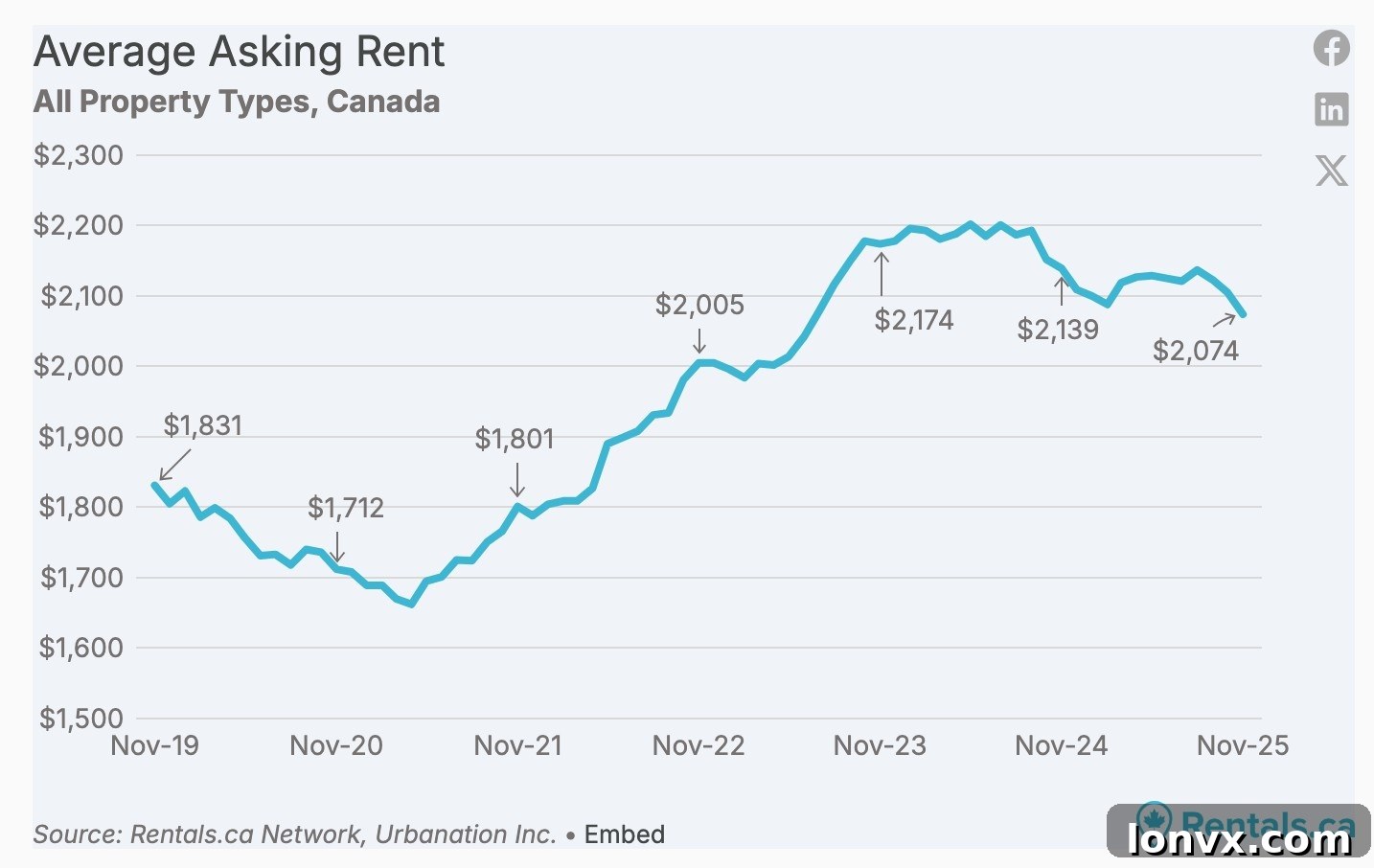
The Canadian rental market has entered a significant period of adjustment, with the average asking rent price continuing its downward trajectory in November. The national average experienced a 3.1 per cent year-over-year decline, settling at $2,075. This marks the fourteenth consecutive month of falling prices, signalling a prolonged shift in a market previously characterized by rapid growth and intense competition.
This sustained decline has pushed rents to their lowest level since 2023, representing a notable $100 reduction from two years prior. Such a prolonged period of deceleration offers a glimmer of hope for renters grappling with persistent affordability challenges across the country, while prompting a re-evaluation for property owners and investors.
Shaun Hildebrand, president of Urbanation, offered insights into the multifaceted dynamics at play: “The rental market in Canada continues to face short-term challenges as demand pulls back due to a flattening in population growth and continued economic uncertainty, while at the same time supply ramps up as a record number of apartments finish construction.” This statement encapsulates the delicate balance between supply and demand that is currently reshaping the rental landscape. Hildebrand further suggested, “In this environment, rents can be expected to continue trending down in the next few months during the typical seasonal slowdown.” This indicates that the current trend may persist, particularly as the market heads into the traditionally quieter winter period.
Despite this extended downturn, it is crucial to contextualize these declines. The average asking rents across Canada still remain 3.4 per cent higher than they were three years ago. This long-term perspective highlights that while recent drops offer some relief, the market has not fully reverted to pre-pandemic affordability levels, suggesting that the journey towards broadly accessible housing continues.
Dissecting Rental Trends by Unit Type: Stability and Shifts
A deeper dive into the rental market reveals varying degrees of impact across different unit types, demonstrating that not all segments are experiencing the downturn uniformly. Purpose-built rentals, designed specifically for long-term tenancy, have shown the most resilience and stability amidst the broader market softening. These units saw their average rents fall by just two per cent annually, reaching $2,060. This relative stability can often be attributed to professional management, newer facilities, and a dedicated focus on rental accommodation, which can appeal to a specific tenant base.
In contrast, condo rentals, which are typically owned by individual investors and leased out, experienced a more significant decline. The average rent for condo units posted a 3.7 per cent year-over-year decrease, settling at $2,157. Other secondary market units, encompassing a diverse range of rental properties like basement apartments or individually rented rooms within houses, recorded the sharpest drop, falling by 5.2 per cent to an average of $2,087. This greater volatility in the secondary market could be due to a more fragmented landlord base, less standardized pricing, and quicker reactions to changing economic conditions or local supply increases.
Performance by Bedroom Count: The Demand for Space
The performance of rental units also varied considerably based on their size, particularly within the purpose-built segment. Three-bedroom purpose-built units emerged as a notable outlier, continuing to outperform the market with a 2.5 per cent annual increase, reaching an average of $2,743. This trend suggests a sustained demand for larger living spaces, potentially driven by families seeking more room, or an increasing preference for dedicated home office areas as remote work continues to be prevalent. The relative affordability of these larger units compared to purchasing a home may also be a contributing factor.
Conversely, one-bedroom rents saw a 3.8 per cent decline, bringing the average to $1,811. Two-bedroom units also experienced a drop of 2.1 per cent, averaging $2,179. Interestingly, three-bedroom units in the broader market (not exclusively purpose-built) dipped only slightly by 0.4 per cent to $2,503. This nuanced performance across unit types underscores the complex interplay of tenant needs, demographic shifts, and specific market segment dynamics. Smaller units might be facing increased competition from new supply or a slight decrease in demand from single individuals or couples due to economic factors.
Provincial Rental Market Dynamics: Winners and Losers
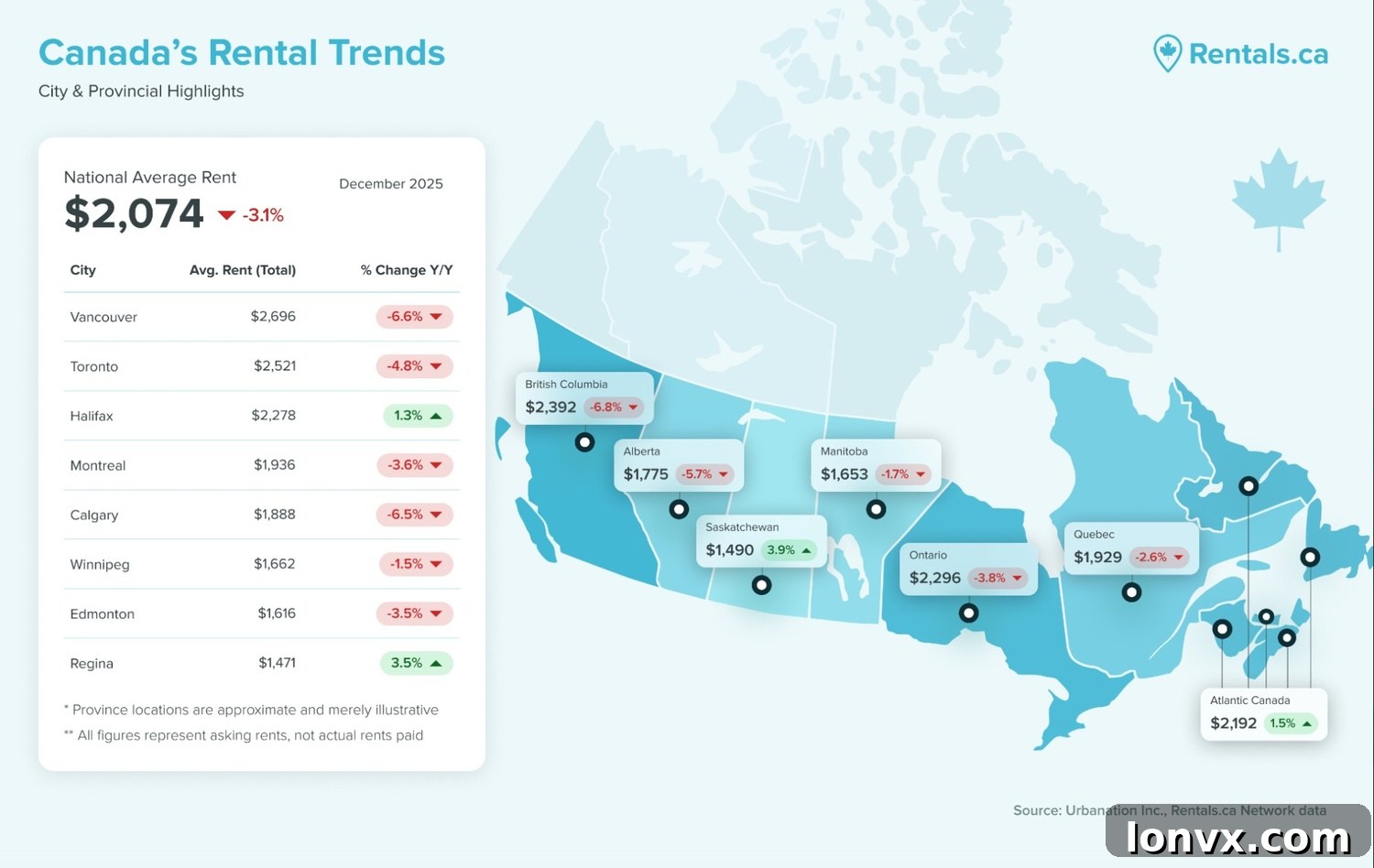
The national average, while indicative, masks considerable variation at the provincial level. While most regions experienced declines, two provinces notably bucked the trend, demonstrating unique economic and demographic factors at play. Saskatchewan led the country in growth, recording a 0.5 per cent increase in average apartment rents, closely followed by Nova Scotia with a 1.8 per cent rise. These provinces may be experiencing an influx of inter-provincial migration due to their relatively lower cost of living, growing job markets, or specific regional development projects that are stimulating housing demand.
On the other end of the spectrum, Canada’s traditionally most expensive and populous provinces registered the sharpest declines. British Columbia saw the most significant annual drop at 6.4 per cent, followed by Alberta at 4.3 per cent, and Ontario at 3.5 per cent. These decreases suggest that new housing supply coming online in major urban centers within these provinces, coupled with a potential moderation in demand, is beginning to exert downward pressure on rental prices.
Three-Year Provincial Trends: A Shifting Landscape
Looking at a broader three-year window provides additional context. Over this period, apartment rents have decreased in both British Columbia (-2.6 per cent) and Ontario (-5.2 per cent). This longer-term decline in these high-cost provinces indicates a more significant market correction, possibly driven by sustained efforts to increase housing supply and a recalibration of inflated prices seen in previous years. In stark contrast, Saskatchewan has emerged as a clear leader in rental growth over three years, boasting an impressive 21.8 per cent increase. This phenomenal growth underscores a fundamental shift in its housing market, likely fueled by strong economic performance, population growth, and a relatively affordable entry point compared to other Canadian provinces.
Major Urban Centers See Significant Rent Reductions
The impact of the widespread rental market cooldown is particularly pronounced in Canada’s largest urban centers. Each of the six largest cities recorded annual rent declines in November, marking a notable departure from previous trends where these cities often led market appreciation.
- Vancouver, long considered one of the most expensive rental markets globally, saw its rents fall by 6.8 per cent to $2,692. This represents its lowest level since March 2022, offering a much-needed reprieve for tenants in this high-demand city. The drop reflects a potential increase in housing completions and possibly a stabilization or even slight decrease in population growth within the metropolitan area.
- Toronto, another major economic hub and typically a high-cost rental market, experienced a five per cent drop in rents, bringing the average to $2,508. This marks its lowest point since May 2022. The declines in both Vancouver and Toronto are particularly significant as these cities have historically driven national average increases, and their downturns can have a cascading effect on the broader market sentiment.
- Calgary also registered a substantial decline of 5.9 per cent. While Calgary had seen significant rent increases earlier in the year due to inter-provincial migration, this recent drop indicates that new supply might be catching up with demand, or that the pace of migration has moderated.
- Montreal‘s rents decreased by 3.3 per cent, reflecting a broader market adjustment in Quebec’s largest city.
- Edmonton experienced a 2.8 per cent decline, while Ottawa saw a more modest drop of 0.7 per cent.
These widespread declines across major cities underscore a synchronized market adjustment. Factors contributing to this urban slowdown include the influx of new housing units from construction booms, a potential cooling of the job market impacting tenant mobility, and the lingering effects of high interest rates on overall economic sentiment. For prospective renters in these key urban centers, the current environment presents opportunities for potentially more favorable lease terms or a wider selection of available properties.
The Future Outlook: Navigating a Shifting Rental Landscape
The extended downturn in Canada’s average asking rent signals a pivotal moment for the country’s housing sector. For fourteen consecutive months, tenants have seen some relief from the relentless price increases that defined the post-pandemic era. This trend is not merely a seasonal blip but a reflection of significant shifts on both the supply and demand sides of the market.
The increased pace of new apartment construction, combined with a moderation in population growth and ongoing economic uncertainties, has created an environment conducive to continued downward pressure on rents, at least in the short to medium term. While rents are still elevated compared to three years ago, the sustained nature of the decline offers a cautious optimism for improved affordability. Policymakers and housing advocates will be closely monitoring whether these drops translate into genuine long-term accessibility, or if they represent a temporary correction before another upward cycle.
Looking ahead, the interplay between interest rates, immigration policies, and the speed of housing completions will dictate the market’s trajectory. Tenants may find more leverage in negotiations, particularly in cities and provinces that have seen the most significant declines. Landlords, conversely, will need to adapt to a more competitive market, potentially focusing on unit upgrades, tenant retention, or adjusting pricing strategies. The current environment marks a transition from a seller’s market to a more balanced, or even renter-favorable, landscape, shaping the future of housing affordability across Canada.