
Navigating the Nuances: Canada’s Real Estate Market Outlook for 2024
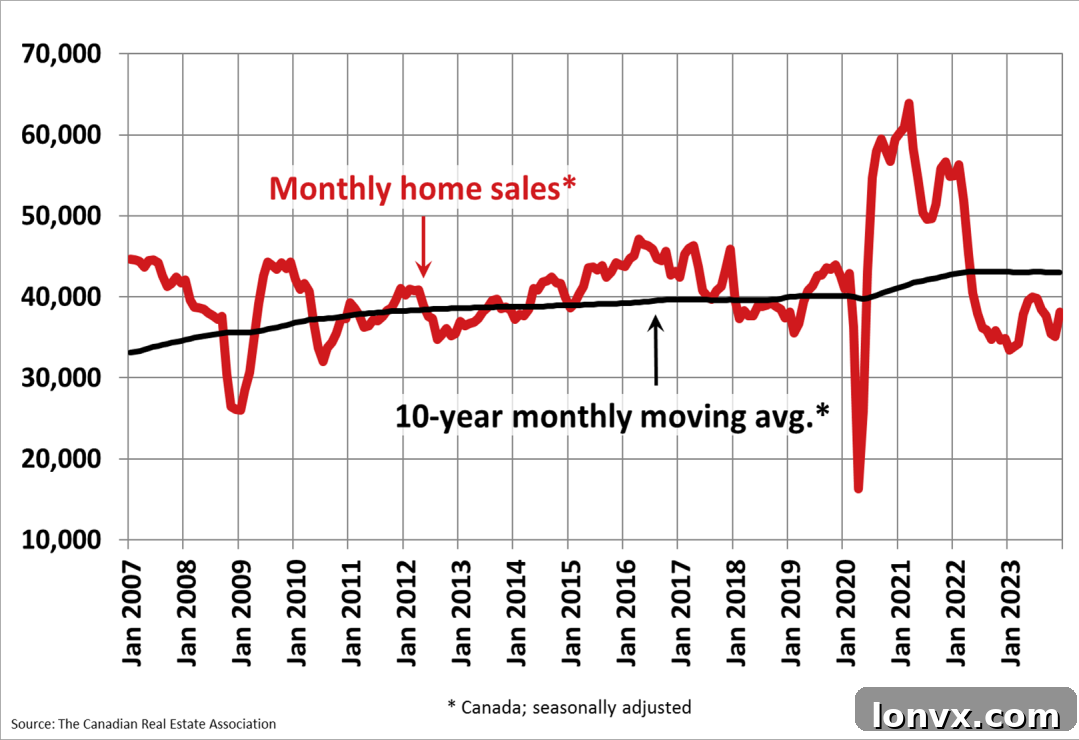
The recent trajectory of the Canadian real estate market has been a fascinating journey, marked by unprecedented shifts and unexpected turns. Looking back, 2022 delivered the most significant price correction in Canadian history, a direct response to aggressive interest rate hikes aimed at taming inflation. Yet, defying many predictions, 2023 surprised us once again with the strongest spring market in terms of price growth from January to May, showcasing remarkable resilience. This rollercoaster year, however, concluded with a stark reality: the lowest number of home sales since 2008, a year etched in memory as the peak of the global financial crisis. These historical precedents set a complex stage for what lies ahead.
The volatile nature of the Canadian housing market demands a closer look as we step into 2024. Homeowners, prospective buyers, investors, and industry professionals alike are keenly watching for signs of stability or further disruption. Understanding the forces at play—from economic indicators to demographic shifts—is crucial for making informed decisions in this ever-evolving landscape.
What Key Factors Will Shape 2024’s Real Estate Narrative?
While much of the public discourse centers on the future path of interest rates, a deeper analysis suggests that the true trajectory of the Canadian real estate market in 2024 will hinge on more fundamental economic forces: specifically, the severity of any impending recession and its impact on unemployment levels. Interest rates, while undeniably powerful, often act as a lagging indicator, reacting to broader economic health rather than dictating it solely.
Already, we are witnessing financial institutions globally, including major Canadian banks, fortifying their balance sheets by shoring up loan loss provisions. This prudent but cautious move signals an anticipation of potential economic headwinds and a tightening of credit conditions. A broad contraction in the balance sheets of financial institutions worldwide suggests a more conservative approach to lending, which will have direct implications for mortgage availability.
Therefore, if interest rates do begin to decline, but primarily as a reactive measure to a deepening recession rather than an indication of a ‘soft landing’ for the economy, then credit availability will emerge as a paramount theme this year. The adage that the availability of capital matters just as much, if not more, than the cost of capital rings particularly true in such an environment. Even if rates become more attractive, obtaining a mortgage might prove challenging for many, especially if job security wavers or lending criteria become stricter. This nuanced interplay between rates, recession, and credit availability adds layers of complexity to any market forecast.
Against this backdrop of economic uncertainty and shifting financial landscapes, the Canadian housing market continues its tradition of delivering surprises.
A Surprising Close to 2023: December’s Robust Sales Performance
The final month of 2023 brought an unexpected surge in Canadian home sales, a move highly atypical for December, a month traditionally characterized by seasonal slowdowns. According to the latest data from the Canadian Real Estate Association (CREA), home sales experienced a significant month-over-month increase of 8.7 per cent. This cyclically anomalous jump suggests the presence of opportunistic buyers in the market—individuals or families who may have been waiting on the sidelines for a perceived dip or for more favorable borrowing conditions, or perhaps those with pre-approved rates expiring soon.
Despite this notable monthly uptick, it is crucial to place these figures in a broader context. Overall sales volumes remain well below the long-term historical average, indicating that while there was a burst of activity, it was not sufficient to fully reverse the slower trend observed throughout most of the year. This suggests that while some segments of the market found momentum, widespread recovery remains a future aspiration. The unexpected December surge points to underlying demand that, given the right conditions, could re-emerge more forcefully in the coming months, yet contrasting trends within the housing market during this period hint at a complex picture.
Shifting Supply Dynamics: The Potential for Inventory Re-entry
While home sales saw an unexpected rise in December, the supply side of the equation presented a different story. The number of newly listed properties actually decreased by 5.1 per cent compared to the previous month. This decline in new listings exacerbated the existing tightening of inventory in the market, echoing the supply scarcity theme that has dominated Canadian real estate narratives for several years. A persistent lack of available homes for sale has historically fueled price increases, even amidst higher interest rates.
However, several factors could alleviate this supply crunch in the early months of 2024. Many property listings typically expire at the end of the year. January will be a defining month as we observe how much of this dormant supply re-enters the market. Sellers who pulled their listings over the holidays or whose properties failed to sell in 2023 might decide to re-list, emboldened by any perceived positive shift in buyer sentiment or simply needing to move forward with their plans.
Furthermore, throughout 2023, many homeowners who struggled to sell their properties opted to try their hand in the rental market. This strategy provided an alternative income stream and allowed them to hold onto their assets, hoping for better selling conditions later. However, with rents now falling for three consecutive months—a trend that challenges the long-standing narrative of ever-increasing rental costs—this option is gradually becoming less compelling. A sustained rent reversal could incentivize these “accidental landlords” to pivot back to selling, potentially channeling a significant amount of inventory back into the sales market. This dynamic could be a crucial determinant of supply levels in 2024, providing much-needed options for buyers and potentially moderating price growth.
Dissecting Price Trends: Monthly Declines Amidst Annual Gains
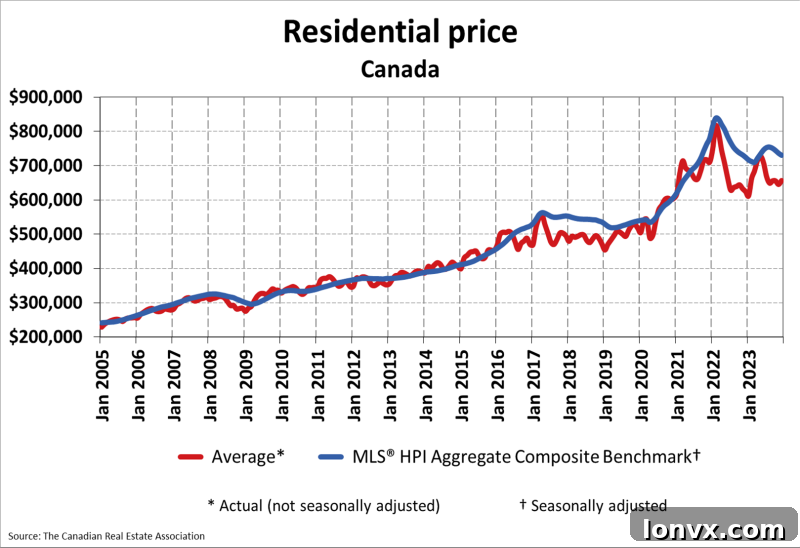
The MLS Home Price Index (HPI), often considered a more accurate gauge of home price trends due to its adjustment for property types, fell by 0.8 per cent month-over-month in December. This figure points to a relatively consistent, albeit modest, monthly decrease in home prices across the country. Such a decline reflects the ongoing pressure from higher borrowing costs and a general market cooling that defined much of the latter half of 2023.
Yet, paradoxically, the national average sale price managed to record a year-over-year increase of 5.1 per cent. This apparent contradiction can be attributed to several factors. Firstly, the base effect from a weaker market in late 2022 means that even modest gains in late 2023 appear significant when compared to the depressed prices of the previous year. Secondly, shifts in the mix of homes sold—perhaps a higher proportion of more expensive properties being transacted in December, or a concentration of sales in higher-priced markets—can skew the average sale price upwards, even if underlying values are softening. Time will ultimately reveal whether this divergence in price metrics was primarily a function of seasonal fluctuations and sales mix or a more fundamental trend indicating underlying market strength that withstands current economic pressures.
The Critical Spring Season: A True Test of Market Resilience
While December’s sales data offered a glimmer of positive activity, the true test of the Canadian housing market’s resilience and its overall direction for 2024 is widely anticipated to arrive with the spring season. The spring market traditionally represents the peak buying and selling period, characterized by increased listings, heightened buyer activity, and a clearer indication of prevailing demand. This period typically sees a surge in both supply and demand, making it an accurate barometer for the market’s underlying health and sentiment.
Experts are generally forecasting a recovery in housing demand in the coming year, driven by various factors such as potential interest rate cuts (even if reactive), continued population growth, and pent-up demand from buyers who have been deferring purchases. However, the exact timing and strength of this recovery remain uncertain. The spring market will provide concrete evidence of how these anticipated factors translate into actual transaction volumes and price movements. Its performance will offer a more comprehensive and accurate picture of the market’s ability to adapt to economic shifts and meet the evolving needs of buyers and sellers across the country.
Demand Outpacing New Listings: A Tightening Market Indicator
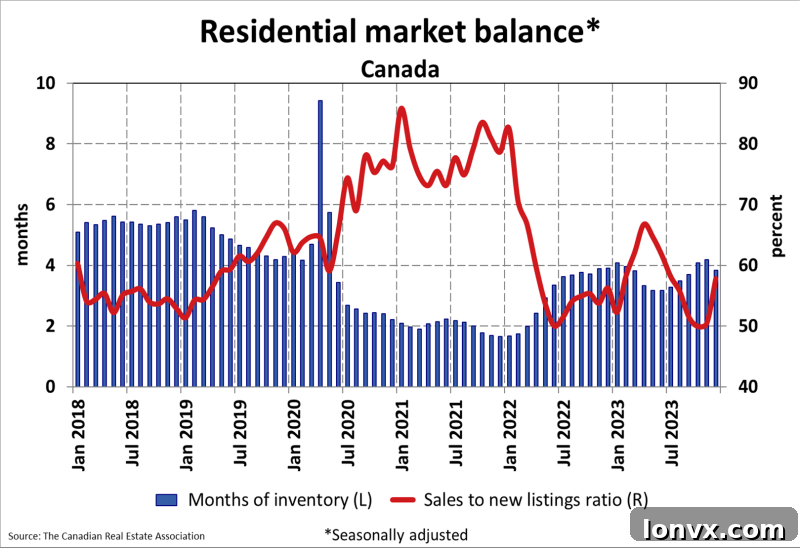
Market conditions in December also revealed a tightening sales-to-new listings ratio, which climbed to 57.8 per cent from 50.5 per cent in November. This ratio is a crucial indicator, with values between 40-60 per cent generally considered balanced, below 40 per cent favoring buyers, and above 60 per cent favoring sellers. December’s tightening ratio, especially given it’s typically a low-listing month, signifies a notably higher level of demand relative to the fresh supply entering the market. This suggests that the available properties are being absorbed relatively quickly, pointing to underlying buyer appetite.
Complementing this, the months of inventory, a measure indicating how long it would take to sell all currently listed homes at the prevailing sales rate, decreased to 3.8 months on a national basis, down from 4.2 months in November. A figure below four months often indicates a seller’s market, where supply is scarce relative to demand. However, this interpretation requires careful consideration in the current environment. We are observing that homes are taking considerably longer to sell than in previous years, reflecting a market where buyers have more time for due diligence and negotiation. Furthermore, there’s a growing trend of properties being re-listed after failing to sell at initial asking prices, which inflates overall inventory figures even if the ‘fresh’ supply is limited. Therefore, while December’s inventory numbers suggest scarcity, the true picture of market balance in 2024 will likely become clearer once January’s more robust listing data is available and we can assess the genuine pace of sales relative to new, quality inventory.
Monitoring Bellwether Markets: British Columbia and Ontario
The decline observed in the Aggregate Composite MLS HPI was predominantly concentrated in key Ontario markets, particularly within the expansive Greater Golden Horseshoe region, and to a lesser extent, in British Columbia. These two provinces, especially their major metropolitan areas like Toronto and Vancouver, wield immense influence over national averages, often comprising 40-60 per cent of total Canadian real estate activity. Their performance can thus significantly skew national statistics, making it easy for their trends to overshadow regional variances.
However, beyond their statistical weight, these markets are also crucial for another reason: they often serve as forward-looking indicators for the rest of Canada. We saw this phenomenon in early 2022 when the Greater Toronto Area (GTA) housing market peaked in February, almost immediately after the Bank of Canada fired its initial warning shot regarding the impending rate-hiking cycle. Most smaller Canadian markets did not experience their peak until March or April of that year, underscoring the GTA’s role as an early indicator. Therefore, professionals across Canada, regardless of their specific geographic location, would be well-advised to closely monitor the developments in these bellwether markets. For instance, a detailed analysis of the Toronto Regional Real Estate Board’s (TRREB) January statistics and the subsequent spring market activity could provide invaluable insights into the broader national direction. While Ontario might be contributing to upward price pressure in the current environment, it could just as swiftly create a significant headwind against a recessionary downturn in 2024, making its performance a critical watchpoint.
Interprovincial Migration Fuels Varied Price Trends Across the Country
In contrast to the price softening seen in parts of Ontario and British Columbia, several other regions across Canada have demonstrated remarkable stability or even experienced rising prices. Provinces such as Alberta, New Brunswick, and Newfoundland and Labrador stand out in this regard. This divergence highlights a significant trend: price trends are becoming increasingly localized, with regional differences becoming more pronounced rather than homogenous. The era of a uniformly rising or falling national market appears to be giving way to a more fragmented, nuanced landscape.
A primary driver behind these varied regional performances is the unprecedented level of interprovincial migration within Canada. A notable ‘exodus’ of Ontarians, for example, is occurring as residents seek more affordable housing options and a lower cost of living outside their home province. These migration patterns are channeling demand into previously less overheated markets, stimulating local economies, and contributing to price appreciation in provinces that offer greater affordability and quality of life. Alberta, with its relatively robust economy and attractive housing prices, has been a significant beneficiary, as have the Atlantic provinces, which offer competitive housing costs and appealing lifestyles. This demographic shift is not only reshaping local housing markets but also influencing community development and economic growth in both sending and receiving provinces.
A Turbulent Path Ahead: Navigating Canada’s Evolving Housing Market in 2024
In summation, the Canadian housing market closed 2023 with surprisingly positive sales growth in December, a testament to pockets of underlying demand and opportunistic buying. However, this surge occurred amidst a tightening supply and mixed price signals, painting a picture of a market still very much in flux. As we progress into 2024, the evolution of the market in the coming months, particularly through the critical spring season, will be instrumental in defining its true trajectory.
The recovery in housing demand throughout this year will be a key determinant of the market’s overall resilience and performance. Whether this demand is sustained and robust enough to overcome economic headwinds, or if it will be tempered by factors like prolonged high interest rates, credit availability constraints, or rising unemployment, remains to be seen. Given that 2023 was the worst year for Canadian real estate since the last major recession, the road ahead is unlikely to be smooth. While some market participants express optimism that the worst may be behind us, the confluence of global economic uncertainties, domestic monetary policy, and shifting demographic patterns suggests that the Canadian housing market is poised for a period of continued turbulence and dynamic change. Prudent observation and strategic decision-making will be essential for anyone involved in this pivotal sector.
Enjoying this article?
Get the latest REM articles in your inbox 3x week so you stay up to date on the latest in the Canadian real estate industry