Canadian Housing Market in Recession: An In-Depth Analysis of CIBC’s Alarming Report
The Canadian housing market finds itself in an unprecedented downturn, officially entering what CIBC describes as recessionary territory. This significant contraction marks the most profound challenges faced by the nation’s real estate sector since the recession of 1991, signaling a critical period for homeowners, prospective buyers, and investors alike. The dream of homeownership in Canada is increasingly out of reach for many, as escalating costs and economic uncertainty cast a long shadow over the market.
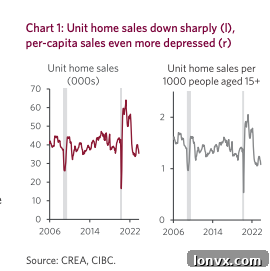
Following an exuberant peak in early 2021, when unit sales soared to approximately 64,000, the market has witnessed a drastic reversal. Current sales figures have plummeted by a staggering 45 percent, now sitting 12 percent below the pre-pandemic decade-average level. When viewed on a per capita basis, the situation appears even grimmer; excluding the anomalous period of early pandemic lockdowns, sales levels have fallen below those observed during the 2008 global financial crisis. This alarming decline underscores the severity of the current market correction, painting a stark picture of weakened demand and eroding consumer confidence in Canadian real estate.
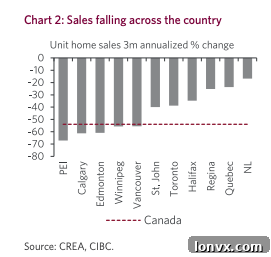
While major, often overvalued urban centers like Toronto and Vancouver are experiencing the brunt of this downturn, its ripple effects are extending across the country. Even markets that have enjoyed recent population booms, such as those in the Prairie and Atlantic regions, are not immune. Their three-month annualized sales volumes continue to trend downwards. However, there’s a nuanced regional variation; apart from St. John’s and Halifax, several markets in these regions are still reporting unit sales higher than their pre-pandemic levels, suggesting a degree of resilience or a delayed impact compared to the larger metropolitan areas.
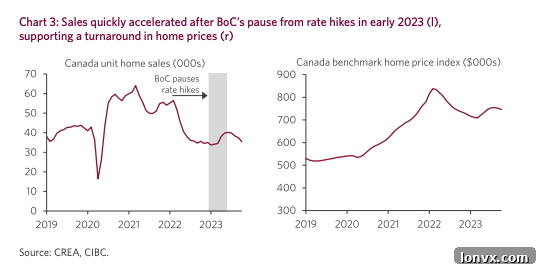
Despite these regional differences, CIBC’s economic experts project that the downward trend for the Canadian housing market is likely to intensify before it improves. Although the Bank of Canada might pause or even halt further interest rate increases, experts caution against expecting a rapid market rebound similar to the quick recovery observed after the rate hike pause in January. This outlook is rooted in persistent inflationary pressures, the cumulative impact of past rate hikes on household budgets, and a general cooling of economic activity. The prolonged period of high interest rates has significantly eroded borrowing power and dampened buyer enthusiasm, contributing to an environment where a swift recovery seems improbable.
Navigating the New Reality: Supply, Demand, and Benchmark Prices
For an extended period, the scarcity of available housing supply acted as a protective barrier, preventing average home prices from plummeting despite falling sales volumes. The national benchmark home price, while down 11 percent from its early 2022 peak, still remains a considerable 38 percent above its pre-pandemic level. This resilience in pricing, even amidst a significant correction in unit sales, highlighted the chronic supply shortage that has plagued the Canadian market for years.
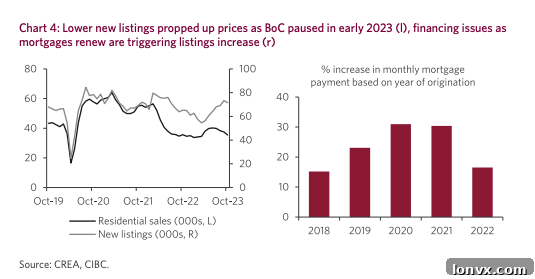
During the low interest rate environment of the pandemic, single-family home prices experienced an unprecedented surge, surpassing condominium prices dramatically. Single-family dwellings climbed an astounding 42 percent above their pre-pandemic levels, fueled by a desire for more space and the rise of remote work. Condominium prices, while also increasing, saw a more modest rise of 30 percent during the same period. The elevated prices were sustained by an exceptionally tight market, characterized by very few new listings from early 2022 into the beginning of this year, often seeing declines of 31 percent or more in available properties.
However, the dynamics of the housing market are now undergoing a crucial transformation. The landscape is shifting dramatically as new listings have recently begun to increase. From a 19-year low recorded in March of this year (excluding the brief anomaly of pandemic lockdowns), new listings have surged by 31 percent. This significant boost in inventory is not necessarily a sign of market health. A considerable portion of this increase reflects a growing number of homeowners compelled to list their properties for sale. The primary drivers behind this trend are the mounting financial pressures from escalating mortgage payments, alongside other increasing costs of living, forcing many to reconsider their housing situations. This influx of supply, driven by necessity rather than market confidence, is poised to put further downward pressure on home prices in the coming months, signaling an end to the era where low supply single-handedly propped up valuations.
The Affordability Hurdle: A Buyer’s Market Without Buyers
The cumulative impact of rising interest rates, increasing inventory, and declining sales has fundamentally altered the national housing market. What was once predominantly a seller’s domain has rapidly transitioned through balanced conditions and is now unmistakably heading into buyer’s territory. Major urban centers, particularly Toronto, are already experiencing the full force of this shift, with Vancouver closely following suit. In these markets, buyers now have more options and greater negotiating power, a stark contrast to the bidding wars and rapid sales of just a couple of years ago. The shift is less pronounced in the Prairie and Atlantic regions, which, while softening, still remain closer to seller-favorable conditions due to varying local economic factors and differing supply-demand balances.
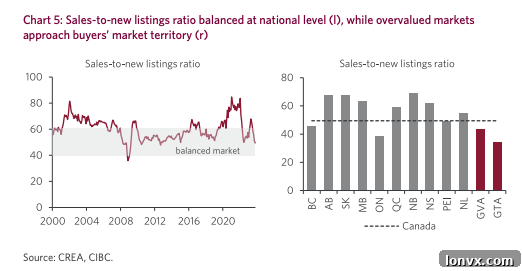
Despite the emergence of buyer-favorable conditions, a paradoxical situation is unfolding: a buyer’s market with a distinct lack of buyers. The fundamental issue lies in the pervasive affordability crisis that continues to grip the nation. Even with potential price corrections and more inventory, many Canadians are simply priced out of the market due to prohibitively high mortgage rates, stringent stress tests, stagnant wage growth relative to inflation, and the soaring overall cost of living. The increased financial burden of homeownership, exacerbated by a high interest rate environment, means that even properties available at a “discount” are still beyond the financial reach of a significant portion of the population. This disconnect between market conditions and actual purchasing power is a critical challenge, preventing the market from finding a new equilibrium driven by robust demand.
Furthermore, consumer sentiment plays a crucial role. With ongoing economic uncertainty, fears of a broader recession, and potential job market instability, many prospective buyers are choosing to delay large financial commitments. This cautious approach, coupled with the difficulty of qualifying for mortgages at current rates, means that the demand side of the equation remains significantly constrained. Until there is a substantial improvement in affordability – either through lower interest rates, significant wage growth, or more substantial price corrections – the Canadian housing market is likely to remain in this peculiar state of a buyer’s market where the buyers themselves are in short supply, prolonging the current period of stagnation and uncertainty.
Future Outlook and Navigating the Uncertainty
The current Canadian housing market recession, as highlighted by CIBC, is a multifaceted challenge rooted in a perfect storm of elevated interest rates, persistent inflation, and deeply entrenched affordability issues. The expectation of a prolonged downturn, rather than a quick recovery, suggests that both buyers and sellers must adjust their strategies to a new, more sober reality. While sellers may face the prospect of further price corrections and longer listing periods, buyers, despite favorable market conditions, will continue to contend with the formidable barrier of affordability. This environment demands prudence, thorough market research, and realistic expectations from all participants.
Understanding the nuances of these trends, from the national downturn to specific regional shifts, is crucial for anyone involved in Canadian real estate. The insights provided by financial institutions like CIBC offer a valuable compass in these turbulent times. For a complete and comprehensive understanding of the current situation and future projections, we strongly encourage interested parties to delve deeper into the expert analysis:
Read CIBC’s full report here.
Enjoying this article?
Get the latest real estate insights and market updates delivered directly to your inbox 3x a week, so you stay ahead on the latest in the Canadian real estate industry.