
Navigating Canada’s Housing Market: A Deep Dive into CMHC’s 2023-2025 Outlook
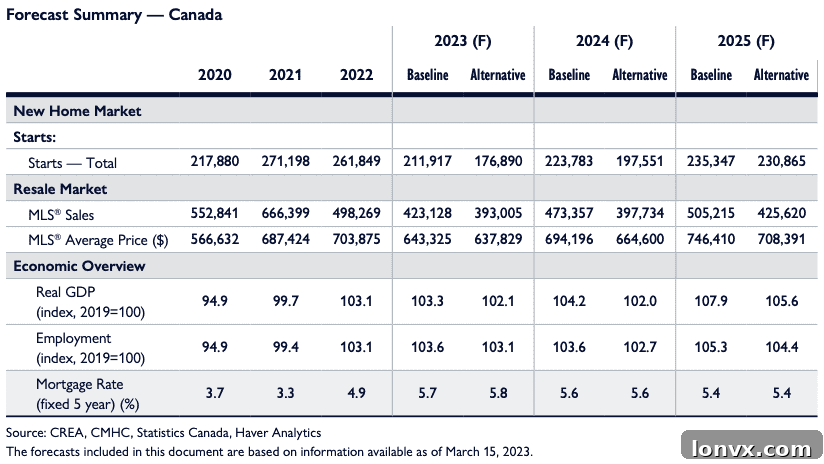
The Canadian housing market is entering a pivotal phase, marked by shifting economic landscapes and evolving demographic pressures. According to the comprehensive Canada Mortgage and Housing Corporation’s (CMHC) Spring 2023 Housing Market Outlook, Canadians can anticipate a notable decline in both housing prices and new housing starts throughout 2023. However, a return to the more accessible pre-pandemic price levels is not on the horizon, signaling a new reality for buyers and renters alike. This detailed report, a crucial resource for anyone interested in the Canadian real estate market, pinpoints weaker economic growth and persistently higher mortgage rates as the primary catalysts for this impending market slowdown.
Bob Dugan, CMHC’s Chief Economist, articulates the complex interplay of these factors, stating, “While prices have declined, homeownership will be less affordable because of higher mortgage rates and still-elevated price levels.” This statement underscores the core challenge facing many Canadians: even with price adjustments, the financial burden of owning a home remains substantial, particularly with the increased cost of borrowing. Understanding these dynamics is essential for homeowners, prospective buyers, investors, and policymakers navigating the country’s housing landscape.
Housing Price Decline Expected to Bottom Out in 2023
The CMHC report forecasts a continuation of the downward trend in Canadian housing prices. This anticipated decline, however, is not expected to completely erase the significant gains observed during the pandemic-era boom. The average home price, despite falling, will likely remain above pre-2020 levels, presenting a stark contrast to previous market corrections. CMHC economists predict that this decline will reach its lowest point, or “bottom out,” sometime in 2023. This bottoming out period is largely driven by a confluence of macroeconomic factors, primarily influenced by the Bank of Canada’s aggressive interest rate hikes aimed at taming inflation.
A major contributing factor to this price correction is the sustained period of higher mortgage rates in Canada. Elevated borrowing costs directly impact purchasing power, reducing the pool of eligible buyers and dampening overall demand. Furthermore, slower income and employment growth across various sectors means that household budgets are stretched thinner, making it harder for potential buyers to qualify for mortgages or save for down payments. This reduced demand, coupled with a more cautious sentiment among investors, puts downward pressure on property values. While the immediate future points to further price softening, the expectation that prices won’t revert to pre-pandemic benchmarks indicates a fundamental shift in the market’s long-term value perception.
Significant Decline in Housing Starts Forecast for 2023
Beyond price adjustments, the CMHC’s outlook paints a concerning picture for new housing construction, with a significant decline in housing starts in Canada projected for 2023. This reduction in new supply is particularly troubling given Canada’s ongoing housing shortage. Several critical constraints are impacting the construction sector:
- Labour Shortages: The construction industry continues to grapple with a deficit of skilled tradespeople, from carpenters and electricians to plumbers and heavy equipment operators. An aging workforce, coupled with a lack of new entrants, means that projects often face delays or cannot be initiated at all.
- Elevated Costs of Materials: Global supply chain disruptions, geopolitical events, and inflation have driven up the prices of essential construction materials, including lumber, steel, concrete, and insulation. These increased input costs directly translate into higher overall project expenses, making new builds less financially viable for developers.
- Higher Project Financing Costs: With increased interest rates, the cost for developers to secure financing for new projects has soared. Higher borrowing costs reduce profit margins and increase financial risk, leading many developers to postpone or cancel planned developments, especially larger, multi-unit projects.
The compounding effect of these challenges is particularly acute in already supply-constrained housing markets such as Vancouver and Toronto. These metropolitan areas, facing intense demand from population growth and limited land availability, desperately need new housing supply. A decline in housing starts in these regions will only exacerbate existing shortages, further intensifying competition for available homes and deepening the housing affordability crisis.
While CMHC anticipates some recovery in housing starts during 2024 and 2025, these levels are widely expected to be insufficient to meet Canada’s rapidly growing housing demand. This persistent gap between supply and demand will continue to exert immense pressure on affordability for Canadian households, ensuring that the struggle for attainable housing remains a defining feature of the market for years to come.
Rental Market Conditions to Significantly Tighten
The challenges in the ownership market inevitably ripple into the rental sector, with CMHC economists forecasting a significant tightening of rental market conditions in Canada. The persistent struggle for affordability in homeownership is directly driving up demand for rental units. As a growing number of individuals and families find themselves priced out of buying a home, they increasingly turn to the rental market, intensifying competition for available units.
Adding to this immense pressure are high levels of immigration. Canada continues to welcome a substantial number of new permanent residents and temporary workers, many of whom initially seek rental accommodations, particularly in major urban centers. This surge in population growth, combined with limited new rental supply – a consequence of the broader decline in housing starts – creates a perfect storm for renters. The imbalance between burgeoning rental demand and constrained supply will inevitably lead to even tighter conditions in already strained markets. This will manifest in higher vacancy rates, fierce competition for available units, and, most notably, a sustained upward trajectory in average rents across the country, further eroding household budgets and impacting the overall cost of living in Canada.
Key Risk Factors to the Housing Market Forecast
The CMHC report acknowledges that its baseline forecast, while comprehensive, is subject to significant risks. To account for potential deviations, the agency has developed an alternative scenario, which explores the impact of inflation and, consequently, mortgage rates remaining higher for a longer duration than currently anticipated. This scenario outlines a more challenging path for the Canadian real estate market.
Should this alternative scenario materialize, the federal housing agency forecasts additional downside risks, including even lower housing prices and further reductions in housing starts. In this environment, households would face the compounding burden of not only higher mortgage rates for an extended period but also escalating debt levels. This situation could lead to increased financial stress, potential mortgage delinquencies, and a broader slowdown in consumer spending, impacting the wider Canadian economy. Factors that could lead to this scenario include persistent global supply chain issues, unforeseen geopolitical events, or a sustained strength in demand that keeps inflationary pressures elevated, forcing the Bank of Canada to maintain a hawkish stance for longer than projected. Understanding these potential risks is vital for informed decision-making by market participants and policymakers alike.
Housing Prices Could Start Rising by 2024
Despite the immediate challenges, CMHC’s forecast offers a glimmer of optimism for the medium term. While 2023 is expected to record year-over-year declines in both housing prices and sales, the outlook shifts positively towards the end of the year and into the 2023-2024 period onward. CMHC predicts that housing prices, sales activity, and housing starts will begin to record growth, marking the beginning of a recovery phase.
Bob Dugan elaborates on the underlying drivers of this anticipated recovery: “With inflation coming back to the 2.0 per cent target by the end of the forecast period, mortgage rates will gradually decline, supporting both housing demand and a recovery in the construction of new housing supply.” This indicates that as inflationary pressures ease and the Bank of Canada potentially begins to lower its policy rate, borrowing costs will become more manageable, reigniting buyer confidence and making housing more accessible. Lower mortgage rates are a critical factor in stimulating demand and providing developers with more favourable conditions for project financing, thus boosting new construction.
However, even with this projected recovery, a significant underlying issue will persist: “demand for housing still well outpacing new housing supply, affordability challenges will persist for owners and renters.” This highlights a structural problem within the Canadian housing market. Even if market conditions improve, the fundamental imbalance between the number of people seeking homes and the limited availability of housing units means that the dream of affordable housing will remain elusive for many, necessitating continued focus on policies that address supply constraints and population growth effectively.
Regional Outlook Differences: A Mosaic of Market Conditions
The Canadian housing market is not monolithic; its dynamics vary significantly across different regions. CMHC’s outlook provides a nuanced view, highlighting distinct trends that will shape local market conditions:
The Prairie Provinces: A Beacon of Relative Stability
The Prairie provinces (Alberta, Saskatchewan, Manitoba) are expected to experience more positive housing market developments compared to other regions. Notably, they are projected to see a much smaller decline in housing starts in 2023 across various scenarios. This resilience is attributed to several key factors:
- Positive Impact of High Interprovincial Migration: Over the forecast period, the Prairies are anticipated to attract a significant influx of residents from other Canadian provinces. This migration is often driven by the search for greater economic opportunities and, crucially, more affordable living.
- Relatively Healthy Ownership Affordability: Compared to the soaring prices in major urban centers, home prices in the Prairies have remained relatively lower, contributing to better overall affordability for potential homeowners. This allows a broader segment of the population to enter the ownership market.
- Generally Stronger Economic Outlook: The economies of the Prairie provinces, often bolstered by robust natural resource sectors (such as oil and gas in Alberta, and agriculture across the region), tend to exhibit greater stability and growth potential, supporting employment and consumer confidence.
Ontario, British Columbia, and Quebec: Deepening Supply Challenges
In stark contrast, Ontario, British Columbia, and Quebec are expected to face substantial declines in 2023 housing starts. CMHC characterizes this as “discouraging” because these provinces are home to Canada’s three largest and most sought-after housing markets: Toronto, Vancouver, and Montréal. These regions are already highly supply-constrained, meaning there simply aren’t enough homes to meet the existing and growing demand. A further reduction in new construction will only exacerbate existing bottlenecks, intensify competition, and further push up housing costs, making these markets even more challenging for both buyers and renters.
The Atlantic Region: A Middle Ground
The Atlantic region (New Brunswick, Nova Scotia, Prince Edward Island, Newfoundland and Labrador) is broadly positioned as falling between the Prairies and the more challenged provinces of Ontario, B.C., and Quebec in terms of its forecast growth in economic and housing variables for 2023. While experiencing some of the benefits of interprovincial migration and a burgeoning tech sector, it also faces unique challenges in expanding its housing supply to meet this new demand, reflecting a mixed bag of opportunities and hurdles.
Understanding these regional disparities is crucial for stakeholders to tailor strategies that address specific market needs and challenges. For a comprehensive understanding of these trends, including a detailed look at 18 of Canada’s largest housing markets, the full CMHC outlook is an invaluable resource.
You can find the complete CMHC Spring 2023 Housing Market Outlook, offering granular data and deeper insights into these critical forecasts, by clicking here.