Navigating the Modern Real Estate Landscape: The Power of Co-working and Virtual Offices in Canada
The Canadian real estate industry is a dynamic and competitive arena, demanding adaptability and efficiency from its professionals. For real estate agents, brokers, and teams across the country, the choice of where and how they conduct their business is more diverse and crucial than ever. From traditional franchise models to burgeoning independent ventures, the workspace needs of these professionals vary significantly. This article explores the evolving options available, with a particular focus on how co-working spaces and virtual offices are becoming indispensable tools for success, offering flexibility, professionalism, and community.
The Diverse World of Canadian Real Estate Professionals and Their Workspace Needs
Real estate professionals in Canada operate under a myriad of arrangements, each presenting unique challenges and opportunities regarding their physical workspace. At one end of the spectrum are agents who align with established franchises, often paying a fee for a dedicated desk within a branded office. This provides immediate access to resources, a recognized brand identity, and a structured environment. Similarly, some experienced professionals choose to become broker/owners, establishing their own franchise company and managing a team.
However, a growing segment of the market comprises independent agents or those working under smaller franchises that empower them with greater autonomy. These agents are frequently responsible for their own expenses and might be expected to set up an office where they live. Furthermore, a new wave of truly free agents, or those affiliated with a brand but lacking a local branch office, operate without the traditional tether of a physical hub. These professionals often choose not to establish a dedicated brick-and-mortar presence, opting instead for maximum flexibility.
The Challenges of Unconventional Workspaces: Privacy, Professionalism, and Perception
For agents without a formal office, the initial solution might involve conducting client meetings and writing offers in public places. This approach is sometimes stipulated in independent contracts, encouraging business to be conducted in neutral, public environments rather than from a home address. Cafes, public libraries, and community centers can become makeshift transaction hubs. While offering convenience and accessibility, this model introduces several significant drawbacks, particularly concerning privacy and professionalism.
Consider the delicate nature of real estate transactions. Is a client going to feel entirely comfortable discussing and signing a deal worth hundreds of thousands, or even millions, of dollars in a bustling cafe where they just ordered a latte and a pastry? The risk of confidential information being inadvertently overheard or seen by passersby is substantial. Crucial details about property values, financial agreements, personal information, and negotiation strategies could easily be compromised. This not only puts the client at a disadvantage but also undermines the agent’s professional image and trustworthiness. A lack of a dedicated, private space can erode client confidence, making complex, high-stakes decisions feel less secure and professional.
Embracing Modern Solutions: The Rise of Virtual Offices and Co-working Spaces
In response to these evolving needs and challenges, virtual office spaces and co-working environments have surged in popularity, particularly within the real estate sector. These flexible workspace solutions offer a compelling alternative to traditional office setups, marrying professionalism with unparalleled flexibility. Kane Willmott, co-founder of IQ Office Suites in Toronto, an innovator in this space, understands firsthand the agent’s quest for the ideal work environment.
“My partner Alex Sharpe and I have our own real estate company. We’ve operated out of shared workspaces for years,” Willmott explains. This personal experience with the demands and benefits of flexible work models directly inspired their entrepreneurial leap. “In 2012, we decided to open our own workspace building.” This move was not just about providing space; it was about creating an ecosystem designed for modern professionals.
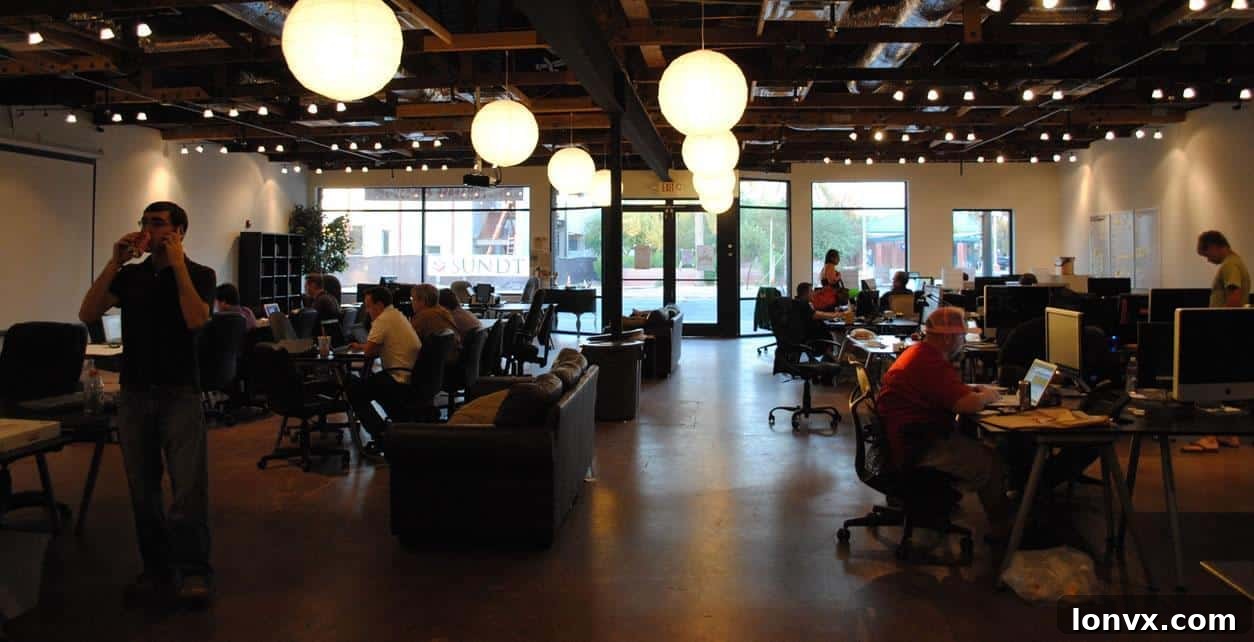
Willmott emphasizes how their strategic downtown location has significantly elevated their brand. “Most business people who use co-work spaces want to be where the people are all working, so they can interact and network. They find they really like the energy of a large workspace with people around.” This highlights a fundamental draw of co-working: it’s not just about a desk, but about a vibrant community and a dynamic professional atmosphere that fosters connections and collaboration.
“Most business people who use co-work spaces want to be where the people are all working, so they can interact and network,” says Willmott.
The Undeniable Appeal of Co-working for Real Estate Professionals
Co-working spaces, like IQ Office Suites in Toronto or Unit B in Edmonton, offer much more than just a place to sit. They are designed to cater to the diverse needs of their clientele, providing a robust blend of services and amenities:
1. Enhanced Professional Image and Credibility
For agents operating from home or public spaces, a virtual office provides a prestigious business address in a prime location. This address can be used on business cards, websites, and marketing materials, instantly elevating their professional standing. Mail forwarding services ensure all correspondence reaches the client’s actual address, maintaining operational efficiency while projecting an image of establishment and reliability. Access to professionally furnished boardrooms on demand allows agents to host client meetings, presentations, and closings in a dignified and private setting, far superior to a noisy coffee shop or a home office.
2. Networking and Community Building
One of the most significant advantages of co-working is the built-in community. Real estate professionals, particularly independent ones, can often feel isolated. Co-working environments bring together individuals from various industries—including law, finance, communications, and graphic design, as noted by Willmott—fostering serendipitous interactions and deliberate networking opportunities. This cross-pollination of ideas and connections can lead to valuable referrals, partnerships, and a shared sense of camaraderie that combats professional isolation. The vibrant energy of a communal workspace can inspire creativity and collaboration.
3. Flexibility and Cost-Effectiveness
Traditional office leases often involve long-term commitments, substantial upfront costs, and ongoing overheads. Co-working spaces offer unparalleled flexibility, allowing agents to choose plans that scale with their business needs. From hourly boardroom rentals to monthly memberships for hot desks or private offices, professionals can avoid the financial burden of a fixed lease. This agility is particularly appealing in a market that can fluctuate, enabling agents to manage their overheads more efficiently and reinvest savings into their core business activities.
4. Comprehensive Amenities and Support
Modern co-working spaces are equipped with state-of-the-art infrastructure that would be costly for an individual agent to replicate. This includes high-speed internet, reliable utilities, printing and scanning facilities, and often, professional reception services to greet clients and handle administrative tasks. Many also offer additional perks like fully stocked kitchens with coffee and snacks, ergonomic furniture, and even IT support. These amenities streamline daily operations, allowing agents to focus on client relationships and deals without logistical distractions.
Exploring Different Models of Flexible Workspaces
The spectrum of flexible workspace solutions is broad, catering to different levels of need and privacy:
a. Virtual Office Solutions: The Foundation of Remote Professionalism
The most basic, yet highly effective, level of a virtual office is a prestigious mailbox address. This service provides a prime commercial address that can be used for business correspondence, enhancing credibility. Mail is then forwarded to the customer’s actual address. Beyond a physical address, virtual office packages often include cyber services such as professional email hosting, virtual phone numbers, and website development support, creating a robust online presence for home-based businesses. Crucially, these services often include access to on-demand boardrooms and meeting spaces, perfect for client consultations or team collaborations without the commitment of a full-time physical office.
b. Co-working Space Tiers: From Hot Desks to Private Suites
Co-working spaces offer a tiered approach to physical presence:
- Hot Desks and Open Lounges: This model provides flexible seating in an open-plan environment. Users typically bring their laptops and can choose any available spot, fostering an energetic and collaborative atmosphere. These areas are designed for individuals who thrive on interaction and need an adaptable workspace without fixed boundaries.
- Semi-Private Co-working Spaces: For those requiring a degree of personal space without full isolation, semi-private options are ideal. These typically feature desks separated by walls or half-walls, providing a dedicated workstation. IQ Office Suites, for example, enhances this with lockable filing cabinets for members, ensuring secure storage of sensitive documents and personal items. This offers a balance between community engagement and individual focus.
- Closed-Door Private Offices: At the highest tier, private, lockable offices are available for individuals or small teams. These spaces offer complete privacy, essential for confidential client discussions and concentrated work. Often, these private offices still benefit from shared amenities like reception services, kitchen facilities, and common lounge areas, ensuring that occupants don’t lose the sense of community that defines co-working. Some private offices are designed with multiple desks, encouraging a social yet focused environment for small internal teams.
Strategic Location: A Key Differentiator for Success
Location remains paramount, even in the age of flexible work. Willmott highlights that the most sought-after co-working locations are strategically positioned near public transit hubs in vibrant downtown cores. This accessibility is vital for professionals and clients alike. “They want to work in an office they love and in the area most likely to attract good partners, affiliates and customers,” he states. This underscores the importance of a location that not only facilitates commutes but also places professionals within a hub of economic activity and potential collaborations.
The clientele drawn to these spaces is diverse, extending beyond just Realtors to include professionals from communications, law, finance, and graphic design. This eclectic mix further enriches the networking potential and broadens the scope for cross-industry collaborations, a significant advantage for real estate professionals looking to expand their network and service offerings.
The Future of Real Estate Work: Beyond the Traditional Office
Technology has fundamentally reshaped the way business is conducted, empowering professionals with unprecedented flexibility. For real estate agents who might feel isolated working from a home office, or those who find their current setup lacking in professionalism or resources, co-working spaces present a compelling solution. They bridge the gap between complete independence and traditional corporate structures, offering the best of both worlds.
At its core, the appeal of co-working taps into a fundamental human need: we are social creatures. While the autonomy of being one’s own boss is highly valued, there remains a deep-seated desire for a sense of belonging, recognition, and community in the workplace. Co-working spaces fulfill this yearning, providing a place where professionals can go, where they are known, and where they are part of a larger, supportive ecosystem. It’s a place that separates work life from home life, allowing for greater focus, collaboration, and a healthier work-life balance.
In conclusion, the Canadian real estate landscape is continuously evolving, and the workspace solutions available to its professionals must evolve alongside it. Virtual offices and co-working spaces are not just a trend; they are a vital component of the modern real estate ecosystem. By offering unparalleled flexibility, a professional image, cost-effectiveness, and a vibrant community, these innovative environments empower real estate agents and brokers to thrive in an increasingly competitive market, ensuring they remain connected, credible, and consistently productive.