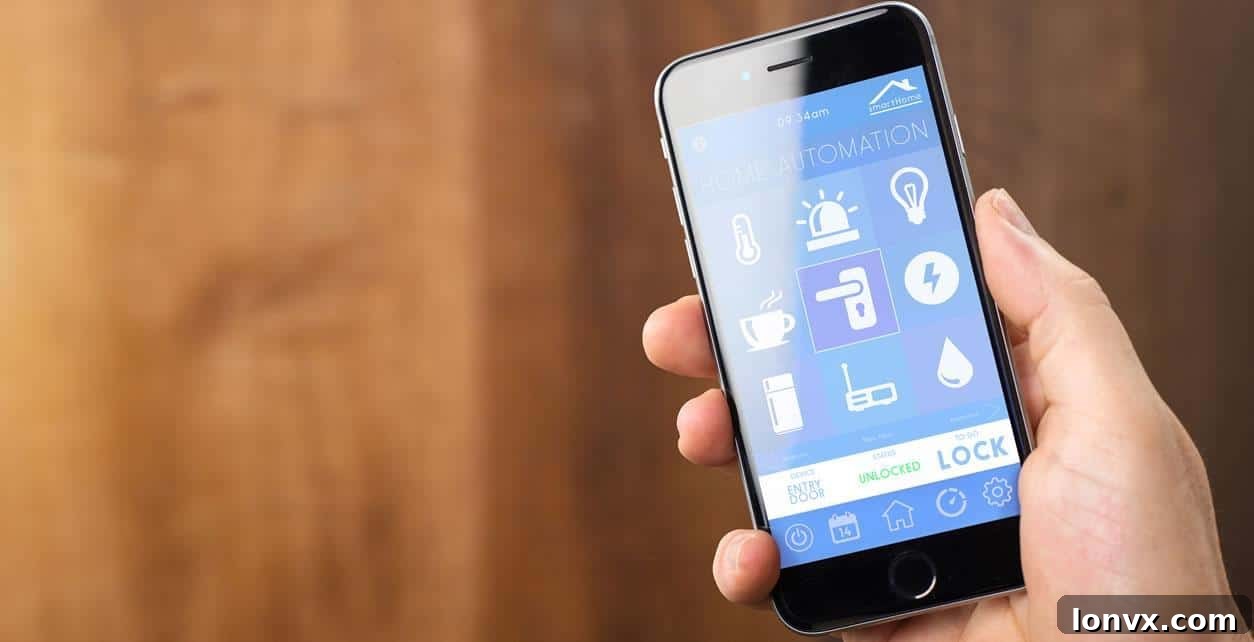
Defining the Future: Coldwell Banker and CNET Establish a Clear Smart Home Standard
In an increasingly connected world, the concept of a “smart home” has rapidly moved from futuristic fantasy to mainstream reality. However, as technology evolves at breakneck speed, a clear and universally accepted definition of what constitutes a smart home has remained elusive within the real estate industry. This lack of clarity has often led to confusion among buyers, sellers, and real estate professionals alike. Recognizing this critical need for standardization, Coldwell Banker Real Estate, a global leader in residential real estate, forged a strategic alliance with CNET, a preeminent online authority on consumer technology news and product reviews. Their collaborative effort culminated in the creation of a definitive, standardized “smart home” definition, designed to bring much-needed precision to the market.
This groundbreaking definition serves a dual purpose: to empower Coldwell Banker’s extensive network of sales associates with accurate criteria for identifying smart properties, and to provide home buyers and sellers with a transparent framework for understanding and evaluating these technologically advanced residences. The initiative underscores Coldwell Banker’s commitment to staying at the forefront of real estate innovation and ensuring its agents are equipped to navigate the complexities of the modern housing market.
The Imperative for a Unified Smart Home Definition
The absence of a common language for smart homes has long presented a challenge. Properties are often marketed as “smart” based on minimal features, creating inconsistencies and managing consumer expectations. With the proliferation of smart devices—from automated lighting to advanced security systems—a clear designation is more vital than ever. Coldwell Banker’s collaboration with CNET directly addresses this issue by providing a clear and unified designation that is robust enough to keep pace with the rapidly evolving technological landscape within residential properties.
To further enhance transparency and ease of search, properties that meet this newly established smart home definition will be prominently identified with a distinctive icon on Coldwell Banker’s Canadian and U.S. websites. This simple yet effective visual cue will allow prospective buyers to effortlessly search for and identify homes that truly embody smart technology, streamlining their home-buying journey and ensuring they can find properties that align with their modern lifestyle needs. This move not only benefits buyers but also helps sellers accurately position their high-tech homes in a competitive market.
Expert Collaboration: Coldwell Banker, CNET, and the Smart Home Ecosystem
Sean Blankenship, Chief Marketing Officer of Coldwell Banker Real Estate, highlighted the profound impact of this new definition, stating, “The new smart home definition will allow our network of independent sales associates to educate their home buyers and sellers regarding what defines a smart home and how the technology is making our lives more comfortable and convenient.” This emphasis on comfort and convenience underscores the fundamental value proposition of smart home technology – it’s not just about gadgets, but about enhancing the daily living experience.
The partnership with CNET was instrumental in crafting a definition that is both authoritative and accessible. CNET’s long-standing expertise in reviewing and testing consumer technology, coupled with insights gleaned from their dedicated smart home testing facility, provided a robust foundation for the definition. This collaborative approach ensured that the criteria established are not only easy to understand but also truly representative of the best and most impactful smart home technology available today. It’s a testament to combining real estate market knowledge with deep technological understanding.
Empowering Agents: The Exclusive Smart Home Curriculum
Beyond simply defining a smart home, Coldwell Banker has taken proactive steps to ensure its entire network is well-versed in this critical area. The company launched an exclusive smart home curriculum, made available solely to its affiliated franchised brokers and agents. This comprehensive educational program was developed in partnership with CEDIA (Custom Electronic Design & Installation Association), the global trade association recognized as the authoritative voice for the home technology market.
The curriculum is accessible to all members of the Coldwell Banker network and is delivered by certified CEDIA instructors through the robust platform of Coldwell Banker University. This strategic collaboration ensures that the training provided is not only cutting-edge but also delivered by experts with hands-on experience in home technology integration. It’s a significant investment in agent education, positioning Coldwell Banker associates as true thought leaders in the burgeoning smart home sector.
Budge Huskey, President and Chief Executive Officer of Coldwell Banker Real Estate, articulated the driving philosophy behind this initiative: “We believe it is our responsibility to ensure that our affiliated agents are the foremost experts in every aspect of the home. As ambassadors to the home, it is imperative for our affiliated agents to learn about smart home products and provide exceptional advice for homebuyers interested in smart home integration.” This statement encapsulates Coldwell Banker’s commitment to equipping its agents with the knowledge and skills necessary to serve as trusted advisors in an increasingly complex and technologically advanced market.
Developed entirely by CEDIA, the curriculum offers an extensive exploration into the fascinating evolution of home technology, tracing its journey from rudimentary systems to the sophisticated smart homes of today. It focuses on how smart home products are fundamentally changing the way we live in and interact with our homes, covering topics from energy efficiency to enhanced security and personalized comfort. The program is meticulously designed to equip attendees with the practical skills and knowledge needed to confidently advise buyers looking to invest in a smart home, as well as sellers aiming to effectively stage and showcase their smart homes to attract the right buyers. This comprehensive training ensures agents can speak fluently about the benefits and intricacies of smart living.
The Official Coldwell Banker Smart Home Definition Dissected
The core of this entire initiative lies in the precise definition established by Coldwell Banker and CNET. This definition serves as the bedrock for identifying, marketing, and understanding smart homes:
A home that is equipped with network-connected products (also known as ‘smart products,’ connected via Wi-Fi, Bluetooth, or similar protocols) for controlling, automating, and optimizing functions such as temperature, lighting, security, safety, or entertainment, either remotely by a phone, tablet, computer or a separate system within the home itself.
Let’s break down the key components of this definition:
- Network-Connected Products: This is fundamental. A smart home isn’t just about standalone gadgets; it’s about devices that communicate with each other and often with external networks. Protocols like Wi-Fi and Bluetooth are the common conduits for this connectivity, forming the backbone of the smart home ecosystem.
- Controlling, Automating, and Optimizing Functions: This highlights the active and beneficial nature of smart technology. It’s about more than just turning things on and off; it’s about setting schedules (automation), fine-tuning performance (optimizing), and having direct command (controlling) over various aspects of the home.
- Core Functions: The definition specifies key areas: temperature, lighting, security, safety, and entertainment. These represent the most common and impactful applications of smart home technology, directly enhancing comfort, peace of mind, and enjoyment.
- Remote or Internal Control: The ability to manage these functions from anywhere in the world via a smartphone, tablet, or computer, or even through an integrated control system within the home, underscores the convenience and flexibility offered by smart homes.
Categorization Requirements: What Makes a Home Truly “Smart”?
In order to be categorized as a smart home, the property must have a smart security feature that either controls access or monitors the property OR a smart temperature feature, in addition to a reliable Internet connection. It must also include at least two additional features from this list:
This section sets the minimum bar, ensuring that homes aren’t labeled “smart” without substantial integration. The foundational elements are:
- Reliable Internet Connection: This is non-negotiable. Without a robust and consistent internet connection, most smart home devices cannot function effectively or communicate with each other or external networks. It’s the lifeblood of the connected home.
- Primary Smart Feature: A home must possess either a smart security feature or a smart temperature feature. This criterion highlights the importance of safety, peace of mind, and energy efficiency as core pillars of a truly smart living environment.
- Smart Security: This could include smart locks that allow remote access control, advanced alarm systems that notify homeowners of breaches, or surveillance cameras offering live feeds and motion detection. These features greatly enhance a home’s protective capabilities.
- Smart Temperature: Devices like smart thermostats are prime examples, learning homeowner preferences, optimizing heating and cooling schedules, and allowing remote adjustments, leading to significant energy savings and enhanced comfort.
- At Least Two Additional Features: Beyond the primary requirement, a smart home must demonstrate further integration of technology across various aspects of daily living. The list of categories provides a comprehensive overview of where these additional features can be found:
- Lighting: This includes smart light bulbs that can change color and intensity, or entire smart lighting systems that allow for custom scenes, scheduling, and remote control, enhancing ambiance and energy efficiency.
- Safety: Beyond security, this category covers smart fire and carbon monoxide detectors that can send alerts to phones, and smart nightlights that automatically illuminate pathways, adding layers of protection for residents.
- Entertainment: Smart TVs with integrated streaming services, voice-controlled sound systems, and multi-room audio setups fall under this umbrella, transforming the home into a hub for immersive media experiences.
- Appliances: The kitchen and laundry room are becoming smarter with refrigerators that track inventory, ovens that can be preheated remotely, and smart washer/dryers that optimize cycles and send notifications.
- Heating / Cooling: Beyond smart thermostats, this includes smart HVAC systems, smart fans, or vents that can be controlled individually or as part of a zoned climate control system, further refining indoor comfort and energy usage.
- Outdoors: Smart technology extends beyond the walls of the house to include smart plant sensors that monitor soil conditions and automated watering systems, ensuring beautiful landscaping with minimal effort.
- Security: While a primary feature, additional security elements like smart doorbells with video capabilities, advanced smart alarm systems with professional monitoring, or comprehensive outdoor camera networks can also fulfill this requirement, providing layered protection.
- Temperature: Augmenting the primary smart temperature feature, additional elements like smart blinds that adjust to sunlight, or other climate control accessories, contribute to an even more optimized indoor climate.
The Future of Real Estate is Smart
Coldwell Banker’s proactive approach in defining the smart home, coupled with its robust educational curriculum, signifies a pivotal moment for the real estate industry. As consumer demand for connected living spaces continues to soar, agents equipped with this precise knowledge will be invaluable resources. Buyers will approach the market with greater confidence, understanding exactly what a “smart home” truly entails, while sellers can more effectively highlight the technological sophistication of their properties.
This initiative not only elevates the professional standards within Coldwell Banker but also sets a benchmark for the wider real estate community. It acknowledges that technology is no longer an optional add-on but an integrated component of modern living and home value. By demystifying the smart home, Coldwell Banker and CNET have paved the way for a more transparent, educated, and efficient real estate market, ensuring that the dream of a truly connected home is clearly understood and readily accessible for everyone.