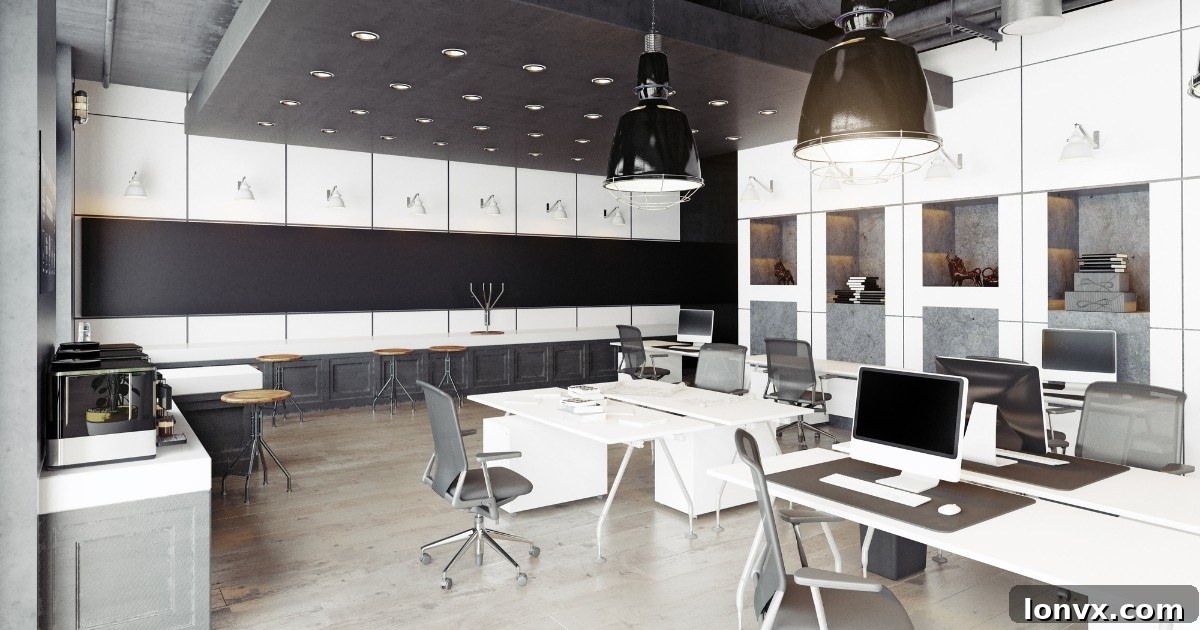
After navigating a period marked by unprecedented challenges stemming from the global pandemic, the transformative shift to remote work, and significant disruptions in international trade, Canada’s office and industrial real estate markets are demonstrating remarkable resilience and are poised to enter 2026 on a much firmer footing. A comprehensive new report from Royal LePage Commercial underscores this pivotal shift, detailing how the commercial real estate sector is not merely recovering but actively evolving to align with the dynamic operational strategies and spatial demands of modern businesses. This newfound stability marks a crucial turning point, offering a clearer outlook for investors, developers, and tenants alike.
While various economic headwinds, including ongoing tariff uncertainties and broader macroeconomic concerns, have led to a moderation in industrial activity across several key markets, the office leasing sector is experiencing a gradual yet discernible recovery. This resurgence is primarily propelled by a growing trend of employers implementing return-to-office mandates, signaling a renewed appreciation for in-person collaboration and workplace culture. According to Matt Jacques, interim general manager of Royal LePage Commercial, the sentiment echoing through the market is one of growing stability, a stark contrast to the reactive decision-making that characterized recent years. He notes, “Much like the residential real estate sector, broader economic uncertainty has weighed on commercial real estate decision-making in recent years. What’s different heading into 2026 is the growing sense of stability.”
This stability is translating into a more strategic and measured approach to space planning. Businesses are moving beyond short-term reactions to daily headlines and are instead adopting a forward-looking perspective, meticulously planning their real estate needs with a long-term vision. This paradigm shift fosters an environment of cautious optimism, suggesting that market conditions are steadily normalizing and entering a phase of sustainable growth. Concurrently, national labour market shifts are exerting a considerable influence on the commercial real estate landscape. While the employment rate saw a slight dip to 60.8 per cent in January, particularly in the manufacturing and transportation sectors, there were notable gains in service-oriented industries such as healthcare, construction, and retail. These shifts directly impact demand for specific commercial property types, from medical offices and specialized retail spaces to logistics and distribution centers catering to a burgeoning service economy.
Return-to-Office Mandates Fuel Downtown Revitalization
The immediate aftermath of 2020 saw office markets, particularly the vibrant downtown cores across Canada, grapple with the profound impact of the rapid and widespread adoption of remote work. Vacancy rates soared, foot traffic dwindled, and the very concept of the traditional office space was called into question. However, as 2026 approaches, the pendulum is swinging back, with a concerted push towards return-to-office (RTO) mandates expected to be a primary driver for a significant rebound in office leasing activity. This trend is not merely anecdotal; Royal LePage’s report highlights that since 2025, a growing roster of major Canadian employers, including financial giants like Royal Bank of Canada, telecommunications behemoths such as Rogers Communications, and leading retail brands like Starbucks Canada, have implemented policies requiring employees to be in the office anywhere from three to five days a week. Furthermore, a substantial return of federal public servants, mandated to be in the office four days per week starting this summer, will inject considerable vitality back into the capital’s commercial core and other government centers nationwide.
Matt Jacques emphasizes that this market evolution is not a simple return to pre-pandemic norms but rather a more thoughtful and strategic transformation. He describes it as “evolving into something more deliberate and intentional.” Employers are fundamentally re-evaluating their relationship with office space, shifting their focus from merely the sheer square footage occupied to a nuanced understanding of how that space is utilized. The paramount objectives now revolve around fostering enhanced collaboration, nurturing a robust company culture, and significantly elevating the overall employee experience. This involves designing flexible layouts, integrating advanced technology, and providing amenities that attract and retain top talent. Landlords are responding by investing in significant building upgrades, offering more flexible lease terms, and creating dynamic common areas that act as extensions of individual office spaces, promoting community and informal interactions.
The implications of these shifts are reflected in the optimistic outlook of commercial real estate professionals. A recent survey conducted among Royal LePage commercial experts reveals that a substantial 66 per cent anticipate either a modest increase or a stabilization of demand for office space within their respective markets in 2026. A further encouraging 5 per cent predict a significant surge in demand, indicating strong underlying confidence. Furthermore, nearly half, 42 per cent, foresee a decline in office vacancy rates this year. This “flight to quality” trend is becoming increasingly apparent, where companies are consolidating into premium, amenity-rich buildings that offer superior environments, leaving older, less desirable spaces with higher vacancies. The future of the office is less about a full-time return to desks and more about creating compelling environments that justify the commute, facilitate innovation, and strengthen organizational bonds.
Industrial Space Navigates Global Trade Headwinds with Resilience
Following the initial turbulence of the pandemic, Canada’s industrial real estate sector experienced an extraordinary surge. The rapid acceleration of e-commerce, the need for businesses to rebuild depleted inventories, and a growing emphasis on supply chain resilience spurred unprecedented demand for warehousing, logistics, and distribution facilities. Manufacturing sales, integral to this demand, saw robust growth in the early post-pandemic recovery phase and largely maintained their strength, underscoring the vital role of industrial infrastructure in the national economy. This period of intense activity led to record-low vacancy rates and significant rent growth across the country, transforming industrial properties into highly sought-after assets.
However, more recently, the industrial sector has begun to contend with a new set of challenges, primarily stemming from ongoing global trade disruptions and the persistent pressure of international tariffs. These factors have contributed to a modest decline in manufacturing sales in 2025, causing some segments of the industrial market to cool from their previous overheated state. Geopolitical tensions, trade policy shifts, and the re-evaluation of global supply chains have created an environment of increased caution. Despite these headwinds, the long-term outlook for industrial real estate remains fundamentally strong, supported by critical underlying trends. Matt Jacques highlights this resilience, stating, “Looking ahead, a slowdown in new construction and ongoing supply chain realignment will support market balance. As businesses prioritize efficiency and speed to market, the creation of modern industrial facilities will remain a critical component of Canada’s commercial real estate landscape.”
The anticipated slowdown in new construction is a key factor in achieving market balance, helping to absorb existing supply and prevent overbuilding, especially as borrowing costs remain elevated. Concurrently, the ongoing global realignment of supply chains represents a profound shift. Businesses are moving away from purely “just-in-time” models towards “just-in-case” strategies, necessitating larger inventory holdings and more diversified storage solutions closer to end-markets. This realignment also involves increasing investment in automation and advanced logistics technologies within warehousing to enhance operational efficiency and speed. Modern industrial facilities are no longer just storage boxes; they are sophisticated operational hubs featuring higher clear heights, ample loading docks, advanced security systems, and increasingly, sustainable design elements to meet ESG (Environmental, Social, and Governance) criteria. These cutting-edge facilities are essential for supporting the burgeoning e-commerce sector, facilitating efficient goods movement, and strengthening Canada’s position in global trade. The market sentiment remains largely positive, with nearly half of Royal LePage commercial experts expecting occupier demand for industrial space to increase in their respective markets in 2026, indicating continued confidence in the sector’s foundational strengths and adaptability.
Diverse Dynamics: A City-by-City Outlook for Commercial Real Estate
While overarching national trends provide a general direction, the intricate reality of Canada’s commercial real estate landscape reveals a mosaic of regional variations. The pace of recovery and evolution within both the office and industrial sectors differs significantly from one city to another, influenced by unique local economic drivers, demographic shifts, industry concentrations, and government policies. This divergence underscores the importance of a nuanced, market-specific analysis for investors and businesses planning their strategic footprints across the country.
In the office sector, for instance, some major metropolitan centers are exhibiting renewed momentum, largely propelled by the increasing efficacy of return-to-office mandates and robust economic activity. The Greater Toronto Area (GTA) stands out as a prime example, where a large corporate presence, a diversified economy, and sustained population growth are contributing to a visible uptick in office leasing. Its financial district, burgeoning tech hubs, and vibrant cultural scene create a strong pull for businesses seeking premium, collaborative spaces. In contrast, other prominent markets, such as downtown Vancouver and Calgary, continue to navigate their own unique challenges. Vancouver, with its high cost of living and a tech sector that has experienced some fluctuations, faces distinct pressures, while Calgary’s office market is heavily influenced by the cyclical nature of the energy sector and ongoing efforts towards economic diversification. Some cities, having experienced earlier returns to in-person work, might now be seeing stabilization rather than rapid growth, indicating different stages in their recovery cycle.
The industrial markets across Canada are similarly out of sync. Cities with higher concentrations of manufacturing or export-driven industries, particularly those reliant on complex international supply chains, have felt the impact of trade tensions and tariff uncertainty more heavily. These regions often experience fluctuations tied directly to global economic health and trade policy shifts. Conversely, regions characterized by highly diversified economies, robust logistics infrastructure, and a strong focus on domestic-oriented industries have demonstrated greater resilience and consistent demand. Major distribution hubs located strategically near ports, key transportation arteries, and significant consumer bases continue to thrive, benefiting from ongoing e-commerce growth and the imperative for efficient goods movement. These cities often attract investments in modern warehousing and logistics facilities, bolstering their industrial prowess regardless of international trade headwinds. As Matt Jacques aptly summarizes, “Each region has its own economic drivers, labour dynamics and industry mix.” This inherent diversity means that the performance and outlook for commercial real estate will continue to vary significantly by city and indeed by property class, requiring localized strategies and keen market intelligence from all stakeholders.
Looking ahead, Canada’s commercial real estate market is poised for a period of strategic growth, underpinned by adaptability and a commitment to innovation. The stability observed heading into 2026 is a testament to the market’s resilience, even as it continues to navigate an evolving landscape shaped by technology, sustainability imperatives, and shifting demographic patterns. Both landlords and tenants will need to remain agile, embracing flexible solutions and investing in spaces that are not only functional but also contribute positively to employee well-being and corporate objectives. This thoughtful evolution ensures Canada’s commercial property sector remains a dynamic and vital component of its national economy.