Navigating Condominium Fees in the GTA: A Comprehensive Guide for Homebuyers
For prospective homeowners in the Greater Toronto Area (GTA), understanding the full scope of monthly housing costs is crucial. Beyond mortgage payments and property taxes, condominium fees, often referred to as maintenance fees, represent a significant ongoing expense that directly impacts affordability and budgeting. These fees can vary considerably, making thorough research an essential step for anyone considering a condo purchase.
To shed light on this important aspect of the real estate market, Wahi, a prominent real estate insights platform, undertook an in-depth analysis. Their study focused on 1-bedroom units that were sold within the GTA, specifically identifying the ten condominium buildings with the highest and lowest median monthly maintenance fees. This analysis offers invaluable insights into the factors that drive these costs and where prospective buyers might find the most value.
Understanding What Condominium Fees Cover
Condominium fees are not merely an additional charge; they are integral to the upkeep and financial health of the entire condominium corporation. These mandatory monthly payments pool resources from all unit owners to cover a variety of essential services and expenses, ensuring the building remains well-maintained and functional. Typically, these fees encompass:
- Building Insurance: This covers the common elements of the building, such as the structure, roof, and shared facilities, against damage from events like fire, flood, or other perils. Individual unit owners are still responsible for insuring the interior of their own units.
- Common Area Maintenance: This includes the daily operational costs and general upkeep of all shared spaces. Think of hallways, lobbies, elevators, stairwells, landscaping, and parking areas. It covers cleaning services, repairs, and regular maintenance required to keep these areas presentable and safe.
- Amenities: Many modern condominiums boast a range of amenities designed to enhance residents’ lifestyles. These can include fitness centers, swimming pools, party rooms, guest suites, saunas, and rooftop terraces. A portion of the condo fees goes towards maintaining, cleaning, and repairing these facilities, as well as staffing them (e.g., lifeguards, concierges).
- Utilities for Common Areas: While some buildings include heating, hydro, or water for individual units, all buildings will have common area utilities that are covered by the fees. This includes electricity for lighting hallways, heating/cooling lobbies, and water for shared facilities.
- Reserve Fund Contributions: This is a crucial component often overlooked by first-time buyers. The reserve fund is a savings account for the condominium corporation, specifically designated for major repairs and replacements of common elements that occur periodically. Examples include roof replacement, elevator upgrades, window replacements, or significant structural repairs. A healthy reserve fund prevents the need for large, sudden “special assessments” on owners in the future.
- Property Management: A professional property management company is often hired to oversee the day-to-day operations of the condominium, manage finances, and ensure compliance with the condo’s bylaws. Their fees are also covered by the monthly maintenance charges.
The calculation of these fees is generally based on a unit’s size and its proportionate share of the overall condominium corporation’s expenses. Larger units typically command higher fees because they represent a larger percentage of the building’s total area and therefore its associated costs.
Benjy Katchen, CEO of Wahi, emphasizes the critical role these fees play in financial planning: “For homebuyers who are considering buying a condo, maintenance fees are an important factor to consider when figuring out their budgets. Wahi’s latest study provides a ballpark estimate of what condo owners can expect to pay at different price points in the GTA market.” This perspective highlights that the purchase price is only one part of the ownership equation; ongoing operational costs are equally significant.
Key Factors Influencing Condo Maintenance Fees
The wide variation in condominium fees across the GTA is not arbitrary. Several key factors contribute to these differences, making some buildings significantly more expensive to maintain than others.
Building Age and Infrastructure
One of the primary determinants of condo fees is the age of the building. Older buildings often come with unique characteristics that can drive up maintenance costs:
- Larger Floor Plans: Many older condominiums were built with more spacious units compared to the newer, more compact designs prevalent today. While appealing to some buyers, larger individual units mean a greater total common area square footage, which proportionally increases overall maintenance expenses.
- Included Utilities: It was once common practice for older condo buildings to include certain utilities, such as heat and hydro, directly within the maintenance fees. While this simplifies budgeting for residents, it consolidates a significant utility expense into the condo fee, making the overall figure appear higher than in buildings where residents pay utilities separately.
- Aging Systems: As buildings age, their mechanical systems (HVAC, plumbing, electrical), roofs, windows, and structural components naturally require more frequent and often more expensive repairs or replacements. A robust reserve fund is essential here, but even with one, the sheer volume and complexity of maintaining older infrastructure can lead to higher operational costs.
- Less Energy Efficient: Older buildings typically predate modern energy efficiency standards. This can translate to higher heating and cooling costs for common areas and, if included, for individual units.
Luxury Amenities and Services
The allure of luxury amenities is a major draw for many condo buyers, but these conveniences come at a cost. Buildings that offer high-end features and extensive services inherently incur higher maintenance expenses:
- Upscale Facilities: Features such as indoor swimming pools, elaborate fitness centers, movie theaters, spas, tennis courts, and 24/7 concierge services require consistent cleaning, maintenance, and often dedicated staff. The more luxurious and extensive the amenities, the higher the operational overhead.
- Staffing Levels: Luxury buildings often employ a larger number of staff, including concierges, security personnel, valets, and specialized maintenance crews. Salaries and benefits for these employees are a significant portion of the maintenance budget.
- Quality of Materials: High-end finishes and materials in common areas, while aesthetically pleasing, are often more expensive to repair or replace than standard materials.
Location and Market Dynamics
While not a direct physical factor of the building itself, location plays a subtle yet important role. Operating costs, such as property taxes for common elements, wages for staff, and contractor rates, can vary depending on the municipality within the GTA. Prime downtown locations, for example, might have higher service costs compared to suburban areas.
Reserve Fund Contributions
As mentioned, the reserve fund is critical. A building that has been diligently contributing to its reserve fund over many years might have higher ongoing fees but fewer sudden special assessments. Conversely, a building with historically low fees might indicate an underfunded reserve, potentially leading to significant one-time charges for unit owners down the line.
Wahi’s Insights: Highs and Lows Across the Greater Toronto Area
Wahi’s comprehensive analysis provides tangible data points illustrating these influencing factors in action across the GTA. Their findings highlight distinct patterns regarding where the highest and lowest fees are observed.
The Peak of Condo Fees: Older Luxury Buildings in Downtown Toronto
The study revealed that a significant number of GTA condominium buildings—thirteen, to be exact—had a median monthly maintenance fee exceeding $1,000 per month for a one-bedroom unit. Unsurprisingly, the ten most expensive buildings in terms of fees were predominantly characterized as older luxury establishments located in the highly desirable downtown core of Toronto. Only one of these top ten buildings was situated outside the city limits, specifically in Oakville.
This concentration of high fees in downtown Toronto makes sense when considering the factors discussed. These buildings often represent the pinnacle of urban living, offering expansive units, included utilities, and a suite of high-end amenities that demand significant investment to maintain. Furthermore, their age means they have potentially faced more wear and tear, necessitating more substantial contributions to the reserve fund for major repairs and ongoing operational expenses. Residents in these buildings are often paying for unparalleled convenience, prestige, and a comprehensive lifestyle package that comes with round-the-clock services and premium facilities.
Uncovering Affordability: Newer Buildings in GTA Suburbs
In stark contrast, Wahi’s analysis found that condominium buildings with the lowest maintenance fees in the GTA tended to be newer constructions, primarily built between 2018 and 2022. These more affordable options were typically located beyond the immediate city core, in burgeoning suburban areas. Examples of these locations include Oakville, Milton, and Toronto’s own expansive suburbs such as North York and Scarborough.
Several reasons contribute to these lower fees:
- Modern Construction: Newer buildings often benefit from more energy-efficient designs and materials, leading to lower utility costs for common areas. Their systems are also new, meaning fewer immediate repair needs and lower current reserve fund demands for major components.
- Compact Unit Sizes: Recent trends in condo development favor smaller, more efficient unit layouts. As condo fees are often tied to unit size, smaller units naturally translate to lower individual contributions.
- Fewer/More Streamlined Amenities: While still offering desirable amenities, newer suburban buildings might feature a more curated selection rather than the extensive, high-maintenance facilities found in older luxury towers. This allows for lower operational costs.
- Separate Utilities: Many newer buildings have individual metering for utilities, meaning residents pay for their own heat, hydro, and water directly. This shifts those costs out of the condo fee, making the headline figure appear lower.
- Development Stage: In some newer developments, fees might be set relatively low initially, with the expectation that they will increase as the building ages and reserve fund contributions become more significant.
This trend suggests that homebuyers prioritizing lower monthly expenses might find greater affordability and value in the newer developments emerging in the GTA’s peripheral communities.
Regional Variations: Where Your Dollar Goes Further (or Less Far) in the GTA
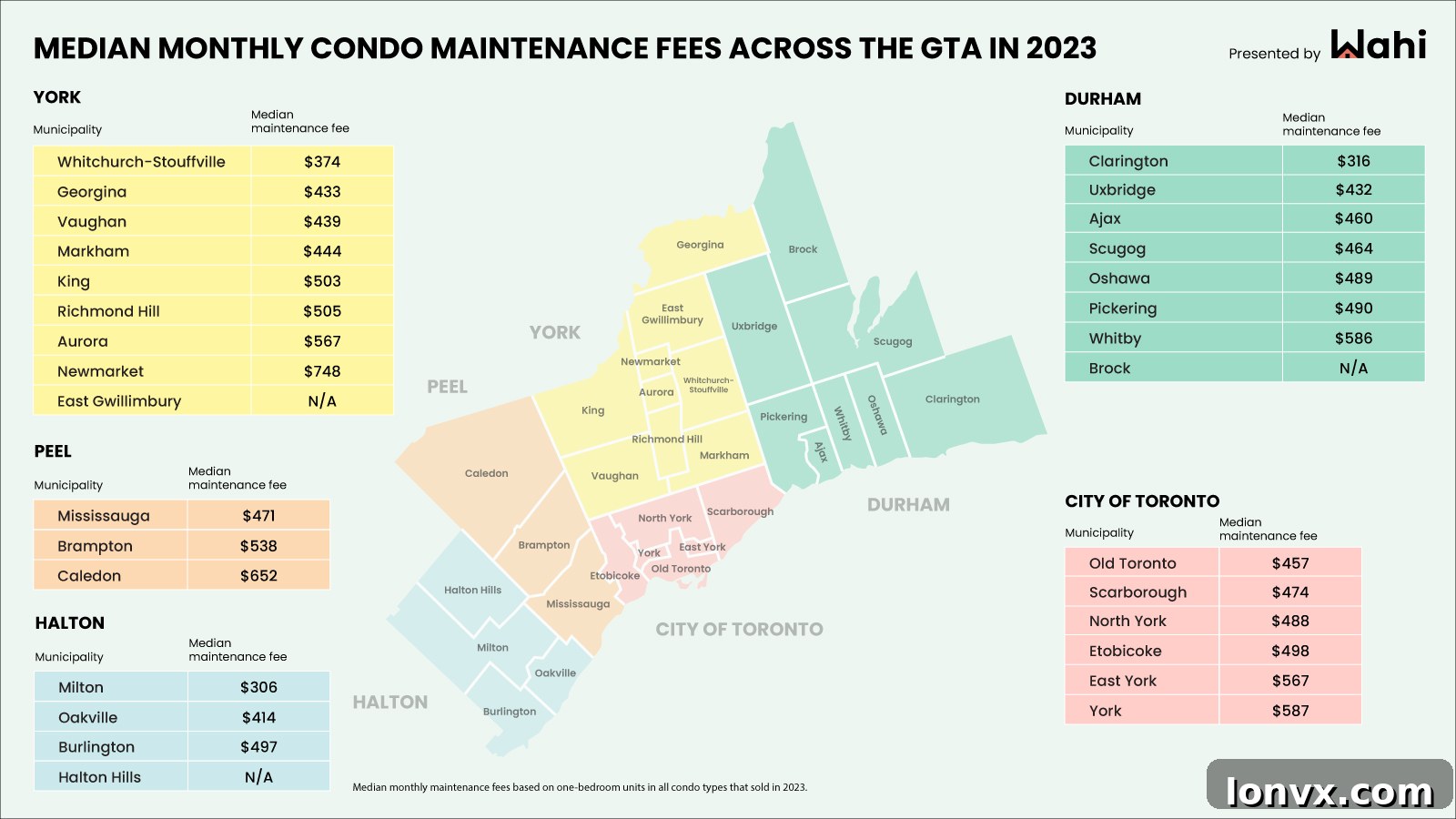
Beyond the characteristics of individual buildings, Wahi’s report also pinpointed interesting regional differences in median maintenance fees across the GTA in the past year. In 2023, Milton emerged as the municipality with the lowest median local maintenance fee, offering potentially more budget-friendly options for condo living. Conversely, Newmarket registered the highest median local fee, indicating a higher cost of condominium ownership in that specific area.
These regional disparities can be influenced by a combination of factors:
- Development Patterns: Areas like Milton have seen a surge in new, relatively affordable condo developments, aligning with the “newer suburban buildings” trend. This influx of newer, often smaller units helps to drive down the median fee.
- Average Building Age: Newmarket might have a higher proportion of older, perhaps mid-luxury, buildings, or a different mix of development that skews the median upwards.
- Local Cost of Services: The general cost of living and doing business in a particular municipality can also impact maintenance fees. Wages for service providers, property taxes on common elements, and other local economic factors can vary.
- Market Demand and Property Values: While not directly dictating fees, the overall property market in an area can influence the type and scale of developments, indirectly affecting the fee structure.
This granular regional data empowers buyers to make more informed decisions, helping them to identify areas where their budget might stretch further or where they should anticipate higher ongoing costs.
Essential Considerations for Prospective Condo Buyers
Armed with this knowledge, potential condo buyers in the GTA can approach the market with greater confidence. Here are key takeaways to consider:
- Holistic Budgeting: Always factor condominium fees into your total monthly housing budget alongside your mortgage, property taxes, and other utilities. A lower purchase price doesn’t necessarily mean lower overall costs if the condo fees are exceptionally high.
- Due Diligence on the Status Certificate: Before finalizing any purchase, thoroughly review the Status Certificate of the condominium corporation. This crucial document provides a wealth of financial information, including the current budget, the health of the reserve fund, any pending litigation, and details about past or upcoming special assessments. A healthy reserve fund is a strong indicator of responsible management and fewer unexpected costs for owners.
- Understand What’s Included: Clarify exactly what the condo fees cover. Does it include heat, hydro, or water for your unit? The more utilities included, the higher the fee will be, but it simplifies your personal budgeting.
- Building Management and Financial Health: Research the condominium’s management history. A well-managed building tends to have more stable fees and better long-term property values. Look for transparency in financial reporting and a proactive approach to maintenance.
- Long-Term Fee Trends: Inquire about how fees have increased over time. While some annual increases are normal and necessary to keep pace with inflation and rising costs, unusually sharp or inconsistent increases warrant further investigation.
Conclusion
Condominium fees are an unavoidable and often substantial part of owning a condo in the Greater Toronto Area. Wahi’s insightful analysis underscores the significant impact of building age, amenities, and location on these costs. From the premium fees associated with older luxury buildings in downtown Toronto to the more budget-friendly options found in newer suburban developments, the GTA presents a diverse landscape for condo buyers.
By understanding what these fees cover, the factors that influence their variation, and the regional trends highlighted by Wahi’s report, prospective homeowners can make more informed decisions. Prioritizing thorough research, reviewing essential documents like the Status Certificate, and factoring in all ongoing costs will empower buyers to find a condominium that perfectly aligns with both their lifestyle aspirations and their financial realities in the dynamic GTA real estate market.
For a more detailed breakdown and specific data points, you can review the full analysis here.