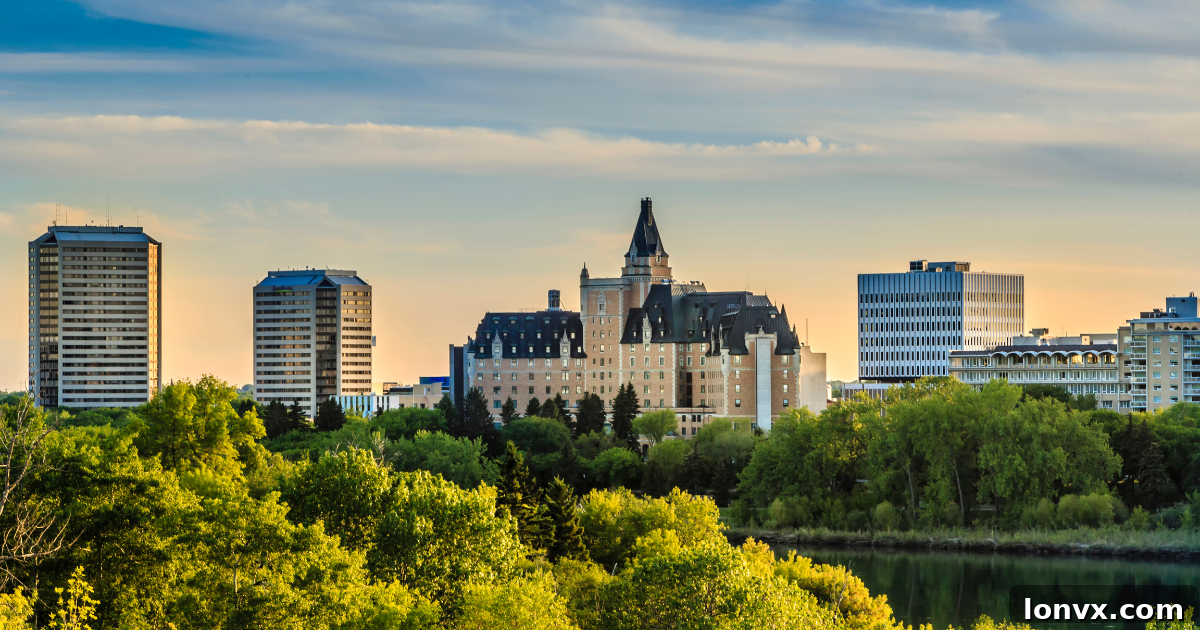
Saskatchewan’s Housing Market Surges: Record Sales and Rising Prices in July
Saskatchewan’s housing market continued its extraordinary upward trajectory in July, establishing a new provincial record with an impressive 1,851 residential sales. This robust performance represents an 11 percent increase compared to July of the previous year and stands a remarkable 30 percent above the province’s 10-year average for the month. This exceptional sales volume underscores a market consistently outperforming expectations and solidifying its position as one of Canada’s most dynamic real estate landscapes.
The record-breaking momentum in July has propelled year-to-date sales ahead of 2023 levels, making the first seven months of the year particularly noteworthy. This achievement is especially significant given that 2023 itself was Saskatchewan’s second-strongest year on record for residential sales. The province’s real estate sector is not just experiencing a fleeting boom but a sustained period of growth, driven by a confluence of economic and demographic factors.
While new listings also saw a year-over-year increase in July, the unprecedented surge in sales activity kept overall inventory levels tight and relatively steady compared to June. By the end of July, out of 5,214 units listed, over 1,000 were already under conditional offer, leaving just 4,174 active listings as the province entered August. This scarcity of available homes in the face of escalating demand continues to define the market’s competitive nature.
Chris Guérette, CEO of the Saskatchewan Realtors Association, attributes this stellar performance to fundamental strengths. “Saskatchewan’s housing market continues to benefit immensely from a strong and growing economy, record-setting population growth, and the lowest unemployment rate in Canada,” Guérette stated. “Our market is not just meeting but consistently exceeding expectations, significantly outperforming many other regions across the country, showcasing remarkable resilience and appeal.”
Home Prices Reach Unprecedented Highs Amidst Persistent Inventory Constraints
July marked the 25th consecutive month of above-average sales activity in Saskatchewan, a testament to the enduring strength of buyer demand. This sustained appetite for homes, combined with ongoing inventory constraints, has inevitably exerted upward pressure on prices. The provincial residential benchmark price consequently climbed to a new record high of $372,700 in July. This figure is up from $370,700 in June and represents an impressive increase of more than eight percent compared to July of the previous year.
Beyond the provincial record, several key cities and towns across Saskatchewan also witnessed their own benchmark prices peak last month. These communities include:
- Humboldt
- Meadow Lake
- Melville
- Regina
- Saskatoon
- Swift Current
- Yorkton
Guérette further elaborated on the widespread price appreciation. “We’ve now observed record prices in dozens of communities for three straight months, with some areas experiencing substantial year-over-year price growth, reaching into the high teens,” she added. “While it is undeniably encouraging to witness such strong demand and see more individuals and families choosing to make Saskatchewan their home, it simultaneously underscores an urgent and critical need to significantly increase our housing supply. To truly preserve our competitive affordability advantage, we must prioritize building more homes, and we need to build them at a much faster pace.”
The consistent pattern of above-average sales coinciding with below-average inventory levels, as noted by Guérette, has created a seller’s market for over two years. Recent data from the Canada Mortgage and Housing Corporation (CMHC) confirms that Saskatchewan led the nation in housing starts in early 2024, with Saskatoon alone experiencing a remarkable 113 percent year-over-year increase. Despite these commendable efforts and record-setting construction volumes, the available listings remain critically low. Both Saskatoon and Regina currently possess only about one-third of the inventory considered necessary for a balanced market, indicating that new construction is struggling to keep pace with the influx of demand.
Economic Prosperity and Record Migration Fuel Market Pressure
Several intertwined factors are powerfully fueling the unprecedented demand currently observed in Saskatchewan’s housing market. The province’s widely recognized relative affordability continues to act as a significant magnet, attracting a diverse array of buyers from across Canada. This is particularly true for those who have been priced out of historically expensive markets such as Toronto and Vancouver, seeking better value and quality of life.
A Haven for Interprovincial Migrants
Robert Hogue, Assistant Chief Economist at RBC, highlights Saskatchewan’s unique position, noting that it is one of the few provinces in Canada where housing activity has not only remained robust but has actively stayed above pre-pandemic levels. Cities like Saskatoon and Regina are consistently ranked among the most affordable urban centers in the country, a factor that strongly appeals to interprovincial migrants. Many of these newcomers are families and retirees seeking a significantly better cost of living, combined with the added benefit of proximity to relatives who have already established roots in the province. This demographic shift is contributing profoundly to the sustained housing demand.
Local Affordability Under Increasing Strain
However, Guérette issues a crucial caution: even within Saskatchewan’s relatively affordable market, a growing number of local residents are beginning to find homeownership increasingly challenging to attain. This concern stems directly from the rapid pace of price appreciation and the intensely tight rental markets. In these rental markets, vacancy rates have dipped below a critical one percent, and rents have surged by over 40 percent in just five years, creating a difficult landscape for many to navigate.
The Potash Project: Catalyzing Economic Growth and High-End Demand
Adding another layer of significant pressure and opportunity to Saskatchewan’s housing market is a powerful wave of economic development. A prime example is BHP’s multi-billion-dollar potash project in Jansen. This ambitious undertaking is poised to attract hundreds of highly skilled, high-earning professionals to the region, creating a ripple effect across the local economy and housing sector. The anticipation of this influx has already begun to drive up demand within the high-end home segment, as executives and their families seek suitable properties, often in the $700,000–$1 million range.
However, this surge in demand presents a formidable challenge for home builders, who are currently struggling to keep pace. Their efforts are hampered not only by persistently high material costs but also by a critical shortage of skilled tradespeople, making it difficult to scale construction to meet the escalating needs.
Guérette points to considerable market movement, particularly within Saskatchewan’s two primary urban centers: Saskatoon and Regina. She reiterates their status as some of the most affordable cities in Canada, which continues to draw significant interest.
“Saskatoon, in particular, is widely recognized as a burgeoning economic engine. Among the top 15 cities in Canada, it is projected to outperform many others in terms of growth,” Guérette explained. “This outlook signals substantial investment and anticipates a sharp increase in population—a trend evident in both Saskatoon and Regina, though perhaps more acutely felt in Saskatoon due to its specific economic drivers.”
She also highlighted the broader appeal of the province: “When people actively seek a more affordable place to live, Saskatchewan naturally becomes an easy and highly attractive consideration. We offer competitive housing prices in our urban centers, but if you explore our smaller, rural communities, housing is exceptionally affordable, providing the added benefits of strong, tight-knit community living and a high quality of life.”
Guérette commended BHP for their proactive engagement, noting their collaboration with local communities and stakeholders. “For example, we supply them with a comprehensive monthly housing report that meticulously tracks pricing trends and availability within a specific radius of the Jansen project,” she added. “BHP has been actively involved not only in investing in the project itself but also in directly contributing to housing solutions, working to ensure there is sufficient development to accommodate the employees they are bringing into the region.”
Market and Demographic Shifts: A Transforming Landscape
Gregg Bamford, a seasoned realtor with Coldwell Banker Signature in Saskatoon, offers a valuable historical perspective on the city’s evolution. He recalls that when he first entered the real estate industry in 2005, Saskatoon was largely perceived as a retirement community. The changes since then have been profound.
“Presently, we find ourselves in a market situation quite reminiscent of what I witnessed unfolding between 2006 and 2008,” Bamford remarked. “At that time, the average selling price hovered around $118,000. While I don’t anticipate our market prices tripling due to the demands of mining and the needs of the Baby Boomer generation, the current trajectory is one of significant and rapid growth.”
Bamford notes that many long-time residents are grappling with the pace of change. “Right now, many people are struggling to fully comprehend the magnitude of what’s happening in Saskatoon, and I believe that a lot of the people living here don’t yet fully understand the significant transformations that are still to come,” he stated, pointing to the rapid evolution of the market.
The most pressing issue continues to be a severe lack of listings to adequately meet the escalating demand. “There’s a palpable shortage of supply. I would estimate we are likely operating with only about one-third of the inventory we should ideally have for a healthy, balanced market,” Bamford added, emphasizing that this fundamental imbalance is the primary driver behind the consistent rise in prices.
Beyond external migration, internal demographic shifts are also playing a crucial role. “A significant number of individuals who originated from farming backgrounds in rural communities and subsequently moved to Saskatoon over the past 20 years, raising their families here, are now experiencing their parents retiring,” Bamford explained. “These retiring parents are selling their farms, and the majority of them are choosing to relocate to Saskatoon. They are all moving back to Saskatoon to be closer to their grandchildren and to gain better access to the city’s robust healthcare system, further intensifying demand.”
Sustained Demand for Higher-End Homes and Broader Economic Impact
Gregg Bamford anticipates that the Jansen potash project alone will bring approximately 435 executives to the region, creating substantial demand within the higher-end housing market, particularly in cities like Saskatoon.
“I firmly believe that truthfully, we are the gateway to the North,” Bamford asserted, broadening the perspective beyond just potash. “When you consider the operations of large companies involved in copper, uranium, and all the extensive mining activities currently underway, alongside the new mines that are opening up across Northern Saskatchewan, it becomes clear that these mines require support from hundreds of ancillary businesses. This, in turn, translates into thousands of additional jobs, not directly within the mines themselves, but within the rapidly growing companies that support them, creating a powerful multiplier effect on the economy and housing needs.”
Robert Hogue of RBC emphasized Saskatchewan’s remarkable resilience as a market. “When you contextualize it within the broader Canadian housing landscape, we have observed certain challenges this year, particularly during the first half of 2024. These challenges were largely attributable to broader economic headwinds, which significantly impacted consumer and business confidence. While Saskatchewan’s market has certainly felt a degree of this impact, it has done so to a much lesser extent than many other markets across the country,” he highlighted.
“If we examine actual housing activity so far this year, it remains historically quite strong—and unequivocally stronger than it was prior to the pandemic. While numerous other markets have seen activity fall below their pre-pandemic levels, Saskatchewan’s market has maintained an elevated performance,” Hogue added. “Furthermore, price pressures within the province remain quite significant, specifically exhibiting clear upward momentum.”
Hogue also noted that Saskatchewan’s economy is performing relatively well, especially given the context of a challenging broader environment. “Demographics also remain quite strong, with a considerable number of people continuing to migrate into the province. While the pace of immigration has begun to cool somewhat due to recent changes in federal policy, there is still adequate momentum contributing to population growth,” he observed. “Crucially, relative to other major markets, Saskatchewan continues to offer significant affordability. This is proving highly attractive not only to local residents but also to individuals and families relocating from other parts of the country.”
“The bar to becoming a homeowner is considerably more achievable here than in the vast majority of Canada, making it a compelling destination for aspiring homeowners,” Hogue concluded.
Saskatchewan: A Beacon of Affordability in the Canadian Housing Market
The most recent RBC Housing Affordability Measures unequivocally highlight Saskatchewan’s leading position in providing accessible homeownership. These measures meticulously calculate the proportion of median pre-tax household income required to cover essential housing costs, including mortgage payments (both principal and interest), property taxes, and utilities, all based on the benchmark market price. According to this comprehensive analysis, Regina stands out as the most affordable city in the country, requiring only 26.1 percent of median household income for housing. It is closely followed by St. John’s at 28.2 percent, with Saskatoon securing a strong position at 31.8 percent.
“We recognize that a great many Canadians are actively seeking communities where they can not only afford to live but, ideally, also achieve the dream of homeownership. While affordability is certainly not the sole reason people choose to relocate—job prospects, for instance, are typically high on the priority list—Saskatchewan’s significant relative affordability is undeniably a powerful and distinct advantage for its local housing market,” Hogue emphasized.
The substantial investment by BHP, coupled with other economic activities within the province, is tangibly reflected in robust consumer and business confidence levels. “When individuals and businesses clearly perceive that companies are making significant investments and that the long-term economic outlook is positive and stable, they are naturally far more inclined to make substantial financial decisions, such as purchasing a home,” Hogue explained.
“This stands in stark contrast to periods of economic uncertainty, such as the impacts felt from broader trade disputes, where confidence can be severely shaken. In such times, people often hesitate, uncertain if the economy might contract, leading to numerous decisions by both consumers and businesses being placed on hold.”
“However, when you have inherently stronger provincial or regional economic fundamentals, as seen in Saskatchewan, these strengths effectively offset broader national or international pessimism. This robust local foundation undeniably contributes significantly to the remarkable market resilience we continue to witness and celebrate in Saskatchewan’s thriving housing sector.”