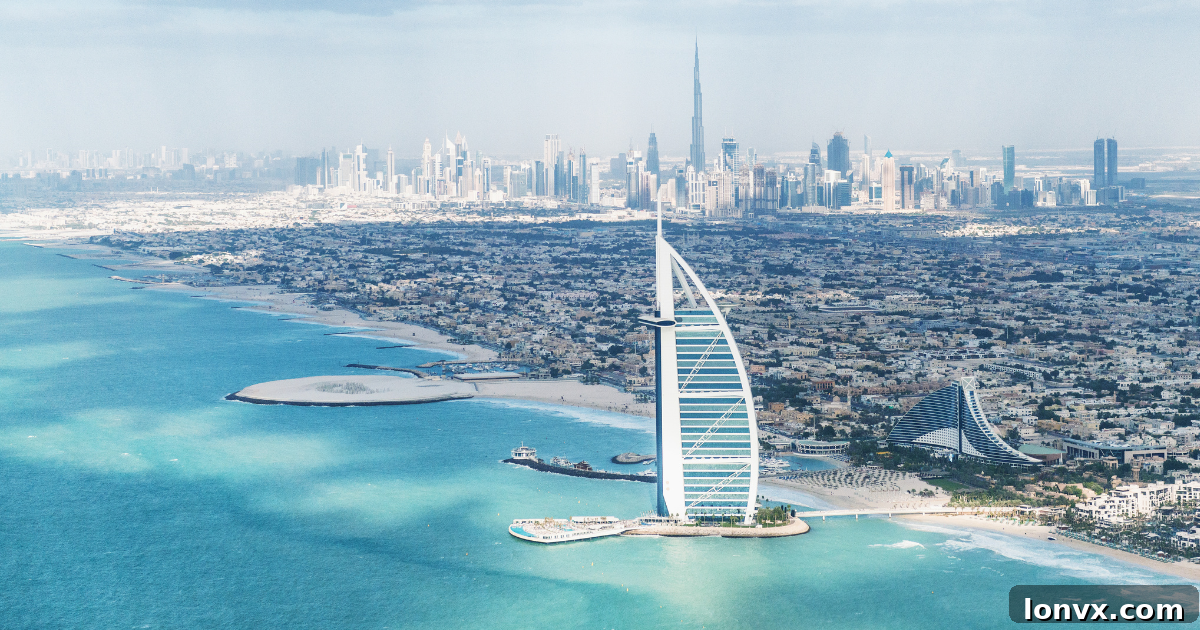
Amidst a landscape of global economic shifts and geopolitical uncertainties, the real estate market in Dubai and the wider United Arab Emirates (UAE) continues to shine as a beacon of opportunity and growth. This opulent playground for billionaires and a dynamic hub for international business defies conventional market headwinds, pushing forward with remarkable momentum. The iconic skyline of Dubai, a testament to audacious architectural ambition, is so densely packed with towering structures that a widely debated rumor suggests it hosts a significant portion of the world’s operational cranes – a vivid symbol of its relentless development. This once tranquil desert expanse on the Arabian Gulf has rapidly transformed into one of the most vibrant and sought-after markets globally, appealing to investors and residents alike. Its allure extends beyond its sheer economic dynamism, even as summer temperatures can soar to a blistering 50 degrees Celsius, requiring innovations like air-conditioned bus stops to maintain comfort.
Dubai’s journey from a humble fishing village to a sprawling, futuristic metropolis in just over half a century is nothing short of extraordinary. It embodies a vision of progress and prosperity, attracting individuals and enterprises from every corner of the globe. This transformation is deeply rooted in strategic planning, robust infrastructure development, and an unwavering commitment to fostering a pro-business environment. The city’s status as a pivotal global business hub is reinforced by its strategic geographical location, bridging East and West, making it an ideal nexus for trade, finance, and tourism. The resilience of its real estate sector, particularly, stands out, demonstrating an ability to not only withstand but thrive in times when other major global markets face contractions. This inherent strength and continuous evolution contribute significantly to its reputation as a safe haven for investment and a coveted destination for a high-quality lifestyle.
A Land of Unparalleled Opportunity
The UAE’s real estate sector is currently experiencing a phenomenal boom, propelled by a confluence of favorable factors. At its core are the nation’s astute, business-friendly policies designed to attract foreign direct investment and entrepreneurial talent. These policies include streamlined company formation processes, the establishment of numerous free zones offering 100% foreign ownership and repatriation of capital, and a clear legal framework that instills confidence in international investors. This fertile ground has cultivated an explosive surge in demand for luxury properties, predominantly from high-net-worth individuals and discerning global buyers seeking both opulent residences and lucrative investment vehicles. Complementing this is an exploding population, driven by continuous immigration of professionals and families drawn to the UAE’s promise of economic advancement and a superior quality of life. This demographic expansion naturally fuels demand across all segments of the property market, from rental units to premium villas.
Financial incentives further enhance the UAE’s appeal. The market boasts attractive rental yields, with potential returns frequently upwards of seven percent annually, a figure that significantly outpaces many mature real estate markets worldwide. Such robust yields are a powerful draw for investors looking for strong, consistent passive income streams. Furthermore, the UAE showcases impressive, world-class infrastructure that underpins its high standard of living. Beyond the iconic Burj Khalifa, the world’s tallest skyscraper, the nation has invested heavily in state-of-the-art transportation networks, including a sophisticated metro system, expansive international airports, and meticulously planned urban developments. These developments are complemented by advanced healthcare facilities, leading educational institutions, and a remarkably low crime rate, all contributing to an exceptional quality of life and a secure environment for residents and their assets.
The UAE has also strategically diversified its economy, significantly reducing its historical dependence on oil revenue. This proactive approach has fostered growth in sectors such as tourism, logistics, finance, technology, and renewable energy, creating a more robust and resilient economic foundation that supports sustained real estate growth. As Peter Kolisnyk, an Ontario-based Engel & Völkers broker/advisor who frequently assists international clients in sourcing investment properties in the region, asserts, “It’s the new land of opportunity. The UAE welcomes your money.”
Perhaps the most significant financial advantage, and a primary magnet for international talent and investors, is the UAE’s highly attractive tax regime. There is no personal income tax, allowing individuals to retain 100 percent of their earnings. Furthermore, investors benefit from the absence of capital gains tax on property sales, no taxes on rental income, and crucially, no annual property tax. This complete lack of direct taxation on income and property significantly enhances the profitability of investments and the disposable income of residents, distinguishing the UAE from nearly every other major global economic hub.
Kolisnyk elaborates on the magnetic pull of these benefits: “The younger demographic sees the opportunity to make a fresh start and keep 100 per cent of their income. It’s not nearly as onerous as it is here as an immigrant to re-qualify in your career. In my opinion, some of the best and brightest are now going to places like Dubai.” This ease of career transition and financial empowerment resonates deeply with skilled professionals globally. He further notes the tangible impact of this influx: “It’s incredible to see such a large demographic of young people in the shopping malls, on the beach, and in stores and restaurants,” painting a vivid picture of a vibrant, youthful, and energetic society.
A Cosmopolitan Influx of Outsiders
The demographic landscape of the UAE is truly unique, characterized by a predominantly expatriate population. As Kolisnyk explains, the vast majority of the UAE’s roughly 11-million residents “are transplants,” leading to an incredibly diverse and multicultural society. “There are so many immigrants from all over the world. It’s very cosmopolitan,” he emphasizes. This rich tapestry of cultures, languages, and professional backgrounds contributes to the dynamic energy and global outlook of the Emirates.
Dubai, followed closely by the oil-rich capital Abu Dhabi, stands as the primary luxury market within the UAE, consistently attracting a steady stream of expats, highly skilled professionals, and international investors. While both emirates offer exceptional opportunities, they present distinct atmospheres. Dubai is generally regarded as the most liberal of the seven emirates, known for its fast-paced lifestyle, innovative spirit, and extensive entertainment options. Abu Dhabi, while equally modern and affluent, tends to be somewhat more traditional and slower-paced, appealing to those who prefer a slightly more conservative environment. However, it is crucial for all newcomers and investors to be aware of and respect the local laws and cultural norms. For instance, both emirates maintain a zero-tolerance policy regarding recreational drugs, including marijuana. While the high life in the UAE offers immense rewards, it comes with the expectation of cultural adjustments and adherence to local regulations.
More recently, the burgeoning demand for real estate has begun to stretch beyond the established epicenters, reaching into neighboring emerging communities such as Ras Al Khaimah. This northern emirate is rapidly gaining prominence on the global stage, largely driven by ambitious development projects. A prime example is the enormous hotel complex planned by Wynn Resorts, set to open on the picturesque Arabian Gulf in 2027. This groundbreaking development is particularly notable as it will house the country’s first-ever casino – a remarkable achievement given that Islamic law traditionally prohibits locals from gambling. This strategic move aims to diversify tourism offerings and attract a new segment of international visitors.
The colossal $5-billion resort, strategically located on a man-made archipelago, is poised to become an instant investment hotspot. It boldly embraces the vision of the UAE evolving into the “Vegas of the Middle East,” offering an unparalleled luxury experience. The complex is planned to include an impressive array of amenities: 24 world-class restaurants catering to diverse palates, 12 lavish swimming pools, a host of high-end designer boutiques for an exclusive retail therapy experience, and a private marina, offering bespoke services for yacht owners and enthusiasts. This development not only signifies Ras Al Khaimah’s ascent but also underscores the UAE’s continuous innovation in attracting global tourism and entertainment, further solidifying its real estate investment appeal.
Navigating the Dubai Real Estate Landscape
As one might expect in a global luxury destination, living in the UAE, particularly Dubai, is not inexpensive; even the police force famously patrols in high-performance luxury vehicles like Ferraris. However, when viewed through a global lens, the property market itself remains remarkably competitively priced, especially considering the quality of life, infrastructure, and investment potential it offers. While prices are, of course, on an upward trajectory, particularly in prime locations, the ultra-luxury segment is decidedly soaring on its own unparalleled trajectory. Khaled Nasser, the Re/Max region owner for the UAE, confirms the high-end market’s incredible potential: “It can go ridiculously high. There are some $30+ million condos.” This segment caters to an exclusive clientele seeking unparalleled luxury, privacy, and state-of-the-art amenities.
For real estate professionals, this dynamic and rapidly expanding market presents immense opportunities. “A portion of them make a killing,” Nasser confirms, highlighting the significant earning potential for driven and skilled agents. Builders and developers often offer incentivizing commissions, which can range anywhere from five to eight percent, especially for new inventory. However, the market is also characterized by fierce competition, and Nasser observes that there are “a lot of struggling agents who don’t know how to market themselves.” Furthermore, some brokers, from Nasser’s perspective, tend to view their salespeople more as employees than as independent contractors, which can impact their operational autonomy and incentive structures. Understanding this competitive landscape and building strong marketing capabilities are crucial for success.
In terms of specific commission structures, a common commission for residential resale properties in Dubai is typically two percent of the transaction value. Interestingly, sellers generally do not sign exclusive contracts with a single brokerage, meaning multiple agents can market the same property, fostering a highly competitive environment. When a sale is concluded, the brokerage’s cut is usually 50 percent of the commission, with the remainder going to the agent. For rental transactions, the commission structure is slightly different, usually set at five percent of the annual rent, providing a consistent revenue stream for agents specializing in the vibrant rental market.
The Horizon: Innovation and Investor Confidence
While the UAE boasts an increasingly active resale market, a significant driver of its real estate sector is the “massive pipeline of new inventory” continuously being brought to market. This includes a diverse range of properties, from urban condos and contemporary apartments to luxurious new waterfront homes, spacious townhouses, exclusive luxury villas, and expansive commercial developments. Nasser points out that a key differentiator in the UAE market, especially for international buyers, is the prevalent use of builder/developer payment plans. These structured payment schemes often replace the need for a traditional mortgage process, offering flexible installment plans that align with construction milestones, making property acquisition more accessible and appealing to a global investor base.
The regulatory framework governing real estate in the UAE is characterized by its clarity and transparency, providing a secure environment for investors. Contracts are standardized, offering uniformity and predictability, and transactions are seamlessly handled electronically, eliminating the need for cumbersome ‘wet’ signatures and accelerating the process. Realtors, referred to as ‘brokers’ in the UAE, undergo rigorous training and are required to be licensed, ensuring a high standard of professionalism and ethical conduct. However, Nasser notes some peculiarities of the market structure: there is currently no unified Multiple Listing Service (MLS), nor a consolidated national association for real estate professionals. This results in limited collaboration between salespeople from different brokerages, presenting both challenges and opportunities for individual agents to carve out their niche.
The UAE is also taking aggressive steps to bolster its financial integrity by cracking down on illicit activities. Nasser highlights that the nation is “cracking down aggressively on money laundering,” and addressing cybercrime remains an ongoing concern. These concerted efforts reflect the UAE’s commitment to maintaining a robust, secure, and reputable financial ecosystem, which is vital for sustained investor confidence and long-term economic stability.
While the UAE does not offer traditional permanent residency status akin to some other nations, its highly successful Golden Visa long-term residency program is extremely popular with investors and offers a viable path to extended residency. This program, available through various investment criteria including property acquisition, allows eligible foreigners to secure a long-term residency visa, providing stability and peace of mind. For foreigners looking to purchase property, ownership is restricted to designated freehold areas. These areas encompass many of Dubai’s most exclusive and sought-after neighborhoods, such as the prestigious Emirates Hills and the iconic Palm Jumeirah, ensuring that foreign investment is channeled into strategic development zones.
Robert Villalobos, who heads Engel & Völkers’ Dubai brokerage, underscores the unique demands and rewards of operating in such a globalized market. He notes that “given Dubai’s highly international population, our advisors regularly work with clients from all over the world. This means cultural awareness, multilingual communication, and understanding foreign processes are especially valuable.” This emphasis on cultural acumen and diverse expertise is critical for success. Villalobos affirms that the city offers significant earning potential “for those who are driven and committed,” emphasizing that Dubai rewards ambition and hard work.
He further verifies that Dubai continues to see “consistent transaction volume across both end user and investor segments,” a testament to its enduring appeal. This consistent demand is fueled by its powerful “lifestyle appeal, world-class amenities, safety and security, leading schools, healthcare, and a central global location.” These fundamental strengths make Dubai an attractive destination not just for investment, but for establishing a high-quality life for families and professionals. When one lands in Dubai, they are stepping into what is often cited as one of the busiest airports in the world, a bustling gateway to global commerce and tourism. It remains profoundly impressive to consider that just over 55 years ago, this gleaming city of gold was merely a small fishing village, with the vast, undulating Arabian desert stretching out endlessly around it. This incredible transformation is a powerful indicator of Dubai’s unwavering vision and its boundless future potential as a global leader in innovation, luxury, and opportunity.