Navigating the Canadian Real Estate Market: Resilience, Challenges, and Future Outlook
The Canadian real estate market is a critical pillar of the nation’s economy, serving as a barometer for broader economic conditions, societal shifts, and evolving demographic patterns. It represents not just a sector but a fundamental aspect of Canadian life, influencing everything from individual wealth to national stability. Currently, this dynamic market displays a surprising degree of resilience as it confronts an array of formidable challenges, including the specter of a looming recession, unprecedented interest rate hikes, and economic stagnation reminiscent of Japan’s “lost decade.” Understanding these intricate dynamics is key to deciphering the future trajectory of Canadian homeownership and investment.
Unforeseen Strength Against Economic Headwinds
Despite significant recessionary pressures and a global economic slowdown, Canada’s real estate market has remarkably defied conventional expectations. It has showcased a notable stability as the crucial spring market approaches, confounding many analysts and market participants. While some indicators point to a slowdown, the overall picture suggests a market finding its footing rather than collapsing under pressure.
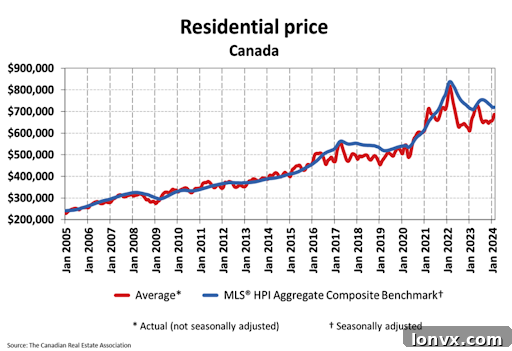
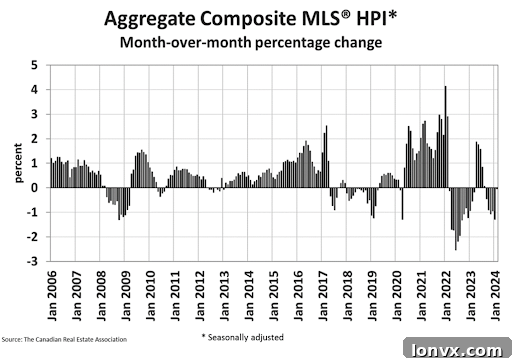
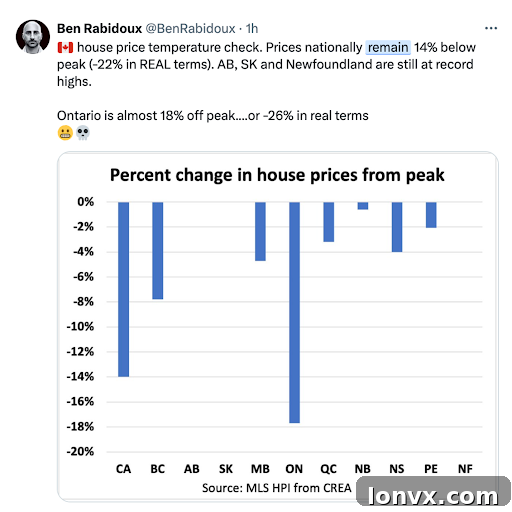
An in-depth look at house price data reveals a complex narrative. House prices across Canada remained unchanged month-over-month recently, yet they registered a 2.3 percent decrease over the last three months and a 4.6 percent dip compared to six months prior. However, a broader historical perspective, as reflected by the House Price Index (HPI), tells a story of long-term appreciation: prices are up 1.2 percent from the same month last year and a robust 13.1 percent higher than three years ago. This divergence between short-term fluctuations and long-term gains can often create confusion for consumers attempting to gauge market health.
Consumer sentiment is further complicated by the contrasting trends between average price and the MLS HPI benchmark. While the average sale price might trend upwards monthly due to shifts in the mix of homes sold (e.g., more high-end homes selling), the HPI, which tracks the price of a typical home, may show a downward trend. This distinction is crucial for understanding the true underlying value movement in the market rather than just transactional volume effects.
Adding another layer of complexity, recent data indicates that 30 Canadian markets experienced a decrease in HPI value, while 24 markets saw a monthly increase, and two remained unchanged. This means that more than half of the markets registered a decline in value. This nuanced reality somewhat contrasts with headlines from organizations like CREA, which optimistically declared a “sudden end to declines in advance of spring market.” While the rapid declines may indeed have paused, it’s clear that the market is not uniformly experiencing growth across all regions. Typically, the spring market, spanning from January to May, witnesses steady growth in prices, a pattern that is not universally observed this year.
Regional Market Dynamics: Identifying Hotspots and Cool Downs
The Canadian real estate landscape is a mosaic of local markets, each with its own unique supply-demand characteristics and economic drivers. This regional diversity is clearly evident when examining the largest monthly changes in house prices, as measured by the HPI:
Markets with the Biggest Monthly HPI Increases:
- Simcoe & District: +4.3 per cent
- Quebec CMA: +3.8 per cent
- Regina: +2.6 per cent
- Saskatoon: +2.5 per cent
- Winnipeg: +1.5 per cent
These markets, largely concentrated in Quebec and the Prairies, often represent more affordable options compared to the country’s major urban centers. Their growth can be attributed to a combination of sustained local demand, relatively lower entry prices, and, in some cases, an influx of interprovincial migrants seeking greater affordability.
Markets with the Biggest Monthly HPI Decreases:
Conversely, five Ontario real estate markets experienced the most significant drops in house prices, as measured by the HPI:
- Woodstock-Ingersoll: -3.5 per cent
- Windsor-Essex: -2.3 per cent
- Niagara Region: -1.7 per cent
- North Bay: -1.7 per cent
- Cambridge: -1.7 per cent
These Ontario communities, many of which experienced substantial price growth during the pandemic-induced real estate boom, are now feeling the sharper impact of higher interest rates and reduced buyer activity. The cooling trend in these areas suggests a market correction as affordability challenges persist and borrowing costs remain elevated.
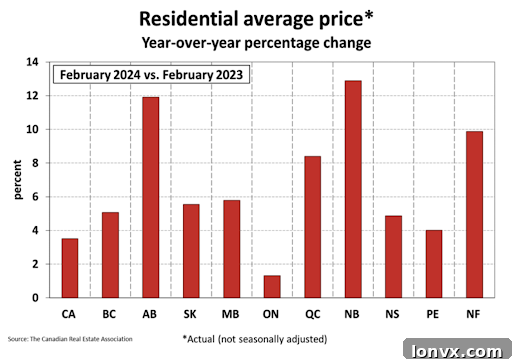
On a provincial basis, the biggest annual increases in average price are observed in Alberta, New Brunswick, and Newfoundland and Labrador. This trend is not coincidental; these provinces have also been significant beneficiaries of interprovincial migration, particularly from Ontario residents seeking more affordable housing and a lower cost of living. This demographic shift has created robust demand in these receiving markets, bolstering their housing sectors even as other regions cool.
Beyond migration, record population growth, primarily driven by immigration, has played a pivotal role in underpinning housing demand across the country. This sustained demand has helped to bolster market activity, counteracting the downward pressures that typically accompany economic downturns or recessions. The consistent influx of new residents creates a persistent need for housing, which in turn provides a floor for property values, particularly in the face of ongoing supply constraints.
The Impact of Record Interest Rate Hikes on Housing
The Bank of Canada’s unprecedented series of interest rate hikes, aimed at curbing inflation, has undoubtedly posed a significant challenge to the real estate market. Traditionally, housing markets are highly sensitive to fluctuations in borrowing costs, as higher rates directly translate into larger mortgage payments and reduced purchasing power for prospective buyers. However, the Canadian market’s response has been remarkably resilient, especially in entry-level segments and in more affordable markets outside of the highly competitive and expensive provinces of Ontario and British Columbia.
While these aggressive rate increases have undeniably tempered buyer demand to some extent, leading to fewer transactions and longer selling times in certain areas, their overall impact has been mitigated by a confluence of other factors. Strong demographic trends, particularly the aforementioned population growth, continue to inject fresh demand into the market. Furthermore, persistent supply constraints in many urban and suburban areas mean that even with reduced demand, the inventory of available homes remains tight, preventing a drastic collapse in prices. The market’s adaptability, coupled with the differing impacts on various segments and regions, underscores its complex nature.
Economic Stagnation and its Long-Term Implications for Housing
Canada’s recent experience with GDP per capita stagnation presents a sobering backdrop for the real estate market. This trend, drawing parallels with Japan’s “lost decade” of economic underperformance, signifies that despite nominal economic growth, the prosperity per individual Canadian has either plateaued or declined when adjusted for population growth. Alarmingly, GDP per capita has regressed to 2016 levels, raising significant concerns about long-term economic prospects, living standards, and, critically, housing affordability.
Under ordinary circumstances, such economic stagnation would typically dampen housing market sentiment significantly. A lack of growth in individual prosperity often translates to reduced purchasing power, lower consumer confidence, and a general reluctance to make large investments like homeownership. However, in Canada’s unique situation, other powerful factors have largely offset these negative effects. Robust population growth, for instance, continues to create demand for housing, even if the per capita economic conditions are not improving. Additionally, relatively low unemployment rates have provided a sense of job security for many, allowing them to remain in the housing market despite economic headwinds. This delicate balance highlights how intertwined and often contradictory various economic indicators can be in shaping the real estate landscape.
Conclusion: Cautious Optimism Amidst Lingering Challenges
The current state of the Canadian real estate market calls for a nuanced perspective – one characterized by cautious optimism tempered by a clear awareness of underlying and persistent challenges. While the market has demonstrated remarkable resilience against recessionary pressures, the rapid succession of interest rate hikes, and the concerning trend of economic stagnation, vulnerabilities undeniably remain. Housing affordability, in particular, continues to be a pressing concern, especially within the country’s major urban centers where demand consistently outstrips supply.
The unexpected strength observed in the market can be attributed to several key factors: unprecedented population growth fueling sustained demand, a degree of adaptability by buyers and sellers to the new interest rate environment, and ongoing demographic shifts that continue to reshape housing needs. However, the specter of long-term economic stagnation and the persistent affordability crisis necessitate proactive and strategic interventions from policymakers and industry stakeholders. Addressing the chronic housing supply shortage, exploring innovative financing models, and implementing regionally tailored solutions will be essential steps.
As the Canadian real estate sector navigates these uncertain waters, careful monitoring of market indicators, coupled with thoughtful policy interventions, will be paramount. The goal must be to ensure the long-term health, stability, and sustainability of a market that is not only central to the nation’s economy but also fundamental to the well-being of its citizens. Balancing growth with affordability and stability will define the future of Canadian housing.
Enjoying this article?
Get the latest REM articles in your inbox 3x week so you stay up to date on the latest in the Canadian real estate industry.