
Navigating Canada’s Shifting Housing Landscape: A Deep Dive into Starts, Sales, and Affordability
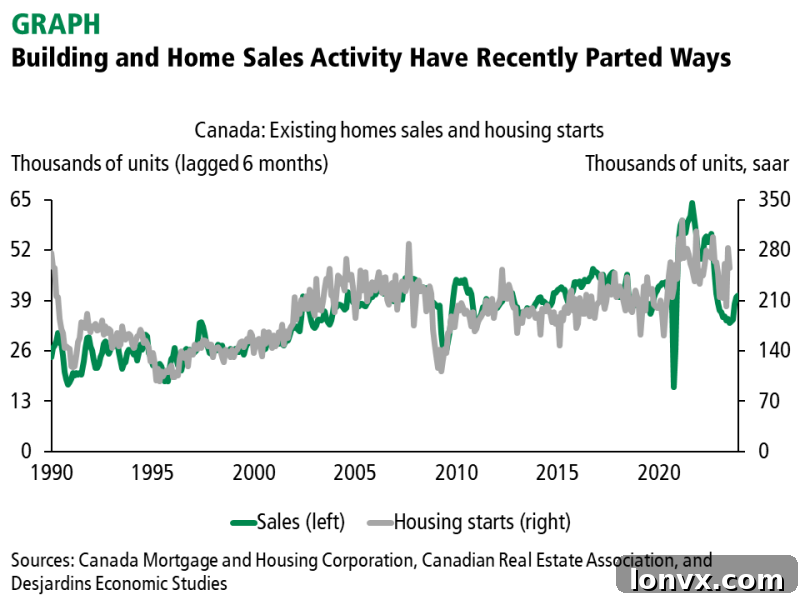
The intricate dance between new housing construction and existing home sales continues to shape the future of affordability in the Canadian housing sector. A recent comprehensive report from Marc Desormeaux, the principal economist at Desjardins, highlights a growing dichotomy that is prompting crucial questions about market dynamics and accessibility for prospective homeowners across the nation.
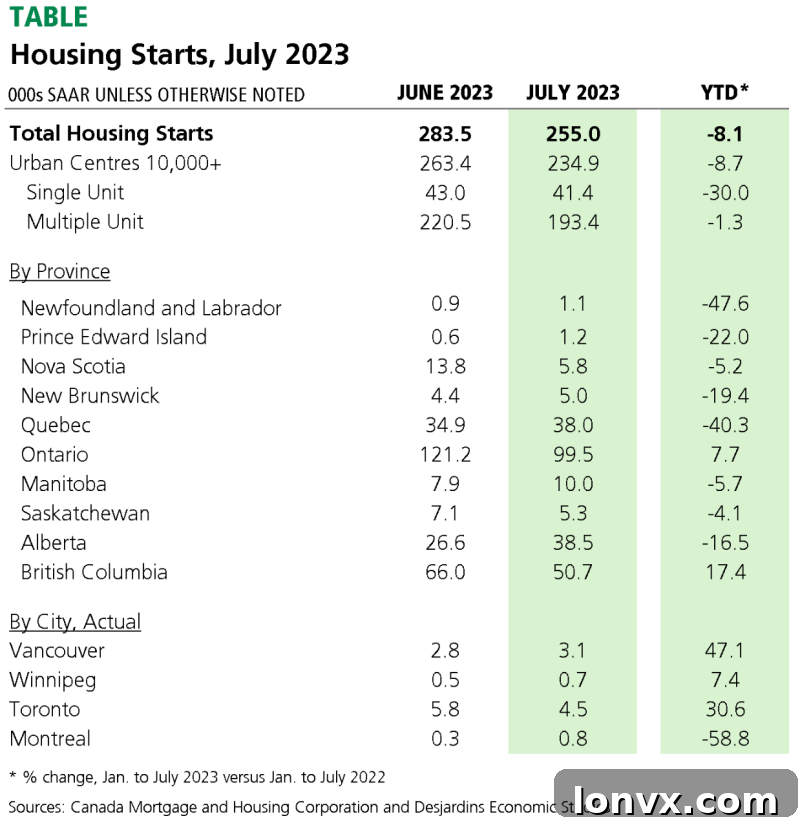
July 2023 marked a significant period for the Canadian housing market, witnessing a noticeable setback in housing starts. The seasonally adjusted annual rate (SAAR) for new constructions dropped to 255,000, signaling a moderation in building activity. This decline occurred concurrently with the first recorded decrease in home sales in six months, suggesting a broader cooling trend across the market.
Historically, housing starts and home sales have often moved in unison, reflecting a cyclical relationship where demand for housing stimulates new construction, and a healthy supply supports transaction volumes. However, as Desormeaux points out, current data paints a more complex picture. While July’s dip in housing starts indicates a continued easing in the overall pace of new construction, the aggregate figures for new homes remain comparatively elevated when viewed against long-term historical averages. This nuance suggests a market undergoing rebalancing, but not necessarily a complete slowdown.
Looking ahead, Desjardins projects a more pronounced deceleration in the housing market. This anticipated slowdown is attributed to a confluence of persistent challenges that are impacting the construction sector and buyer sentiment. These factors include entrenched labour shortages within the construction industry, elevated borrowing costs stemming from interest rate hikes, and persistently high material costs. Furthermore, a discernible weakening in homebuilder sentiment, coupled with broader expectations of softening economic activity, are all contributing to a cautious outlook for future housing development.
The interplay of these economic forces creates a challenging environment for both developers and potential homebuyers. Labour shortages can lead to project delays and increased labour expenses, which inevitably translate into higher construction costs. High borrowing costs directly impact the feasibility of new projects for builders and reduce the purchasing power of buyers, especially those reliant on mortgages. Material costs, often subject to global supply chain disruptions and inflationary pressures, add another layer of financial burden. Collectively, these elements dampen enthusiasm among builders and signal a market grappling with fundamental supply-side and demand-side pressures.
The Bank of Canada’s Stance Amidst Cooling Economic Indicators
The broader economic landscape is undeniably influencing the Bank of Canada’s monetary policy decisions. As Desormeaux explains, the recent softening of key economic indicators – including Gross Domestic Product (GDP), employment figures, international trade volumes, and core inflation rates – is unlikely to go unnoticed by the central bank. These cooling trends collectively suggest that the Bank of Canada’s aggressive efforts to moderate economic growth and curb persistent inflationary pressures through a series of interest rate hikes are beginning to yield the intended results.
The central bank’s primary mandate is to maintain price stability, and the recent economic data offers a degree of reassurance that its tightening cycle is effectively taming an overheated economy. A slowdown in GDP growth indicates less aggregate demand, while a moderation in employment suggests a rebalancing of the labour market, potentially easing wage pressures. Similarly, a decline in core inflation signals that underlying price increases are decelerating, moving closer to the Bank’s target range.
In light of these developments, Desjardins analysts predict that the Bank of Canada will opt to maintain its current policy rate at 5.0 per cent during its upcoming September meeting. This decision would reflect a strategic pause, allowing the central bank to assess the full impact of its previous rate hikes on the economy. A sustained pause would provide stability for borrowers and financial markets, while continuing to exert a moderating influence on inflation without unnecessarily stifling economic activity.
However, the Bank of Canada’s position remains a delicate balancing act. While cooling indicators offer some relief, the path to a sustained return to the 2% inflation target is not without challenges. Global economic uncertainties, geopolitical events, and domestic factors could still influence future policy decisions. The central bank will likely continue to monitor incoming data closely, ready to adjust its stance if economic conditions deviate significantly from its projections.
Persistent Affordability Challenges: A Regional Perspective
A more granular examination of housing trends across various regions and different unit types reveals the enduring and complex challenge of housing affordability across Canada. Despite robust construction activity in provinces like Ontario and British Columbia, largely driven by the development of multi-unit projects, this surge in supply does not automatically translate into improved affordability in these notoriously high-priced markets.
Resilience and Strain in Ontario and British Columbia
In Ontario and British Columbia, the focus on multi-unit developments, such as condominiums and townhouses, aims to address housing shortages by increasing density. While these projects are vital for expanding the overall housing stock, Desormeaux’s research highlights a concerning trend: a significant portion of these new constructions are investment properties, which are inherently more expensive on a per-square-foot basis. This investor-driven demand often inflates prices, pushing homeownership further out of reach for first-time buyers and those with average incomes. The high land costs, development charges, and regulatory hurdles in these provinces also contribute to the elevated prices of even new, smaller units.
The Elusive “Missing Middle”
A critical component often overlooked in new construction projects is the “missing middle”—a term referring to moderately priced housing options that bridge the gap between high-rise condominiums and detached single-family homes. These typically include duplexes, triplexes, row houses, and small-scale apartment buildings that cater to a diverse range of incomes and household sizes. The continued underrepresentation of the “missing middle” in new developments exacerbates affordability issues by limiting choices for middle-income households. This scarcity is often attributed to restrictive zoning bylaws, higher profitability for developers in building larger, more expensive units, and community resistance (NIMBYism) to increased density.
Supply Constraints Looming in Quebec and Oil-Producing Provinces
Beyond the bustling markets of Ontario and British Columbia, other regions of the country are grappling with dwindling housing starts. In provinces such as Quebec and the oil-producing regions, which have thus far been relatively less impacted by the latest series of interest rate hikes, there are clear signs of potential supply constraints on the horizon. Inventories of available homes in these areas are notably lower than levels recorded in the pre-pandemic years. This shrinking supply, coupled with steady demand, could lead to increased competition among buyers and, consequently, further affordability challenges. While these regions may have experienced a lag in the full effects of rising interest rates, the tightening supply could soon exert upward pressure on prices, making homeownership increasingly difficult.
The Broader Implications for Canadian Homeowners and Aspiring Buyers
The evolving dynamics of the Canadian housing market, as detailed in Desormeaux’s report, have profound implications for a wide spectrum of the population. For existing homeowners, particularly those with variable-rate mortgages, the Bank of Canada’s continued maintenance of higher interest rates means sustained pressure on monthly payments. This could lead to a re-evaluation of financial strategies, with some homeowners potentially choosing to sell or tighten household budgets. For those with fixed-rate mortgages nearing renewal, the prospect of significantly higher rates presents a substantial financial challenge, potentially impacting their ability to remain in their homes or requiring difficult financial adjustments.
Aspiring homebuyers, particularly first-time buyers, face an increasingly daunting landscape. The dual challenge of high property prices, especially in key urban centers, coupled with elevated borrowing costs, significantly reduces their purchasing power. Even in regions where prices might be comparatively lower, dwindling housing starts and limited inventories are creating supply-induced price pressures. This situation necessitates larger down payments and higher income thresholds to qualify for mortgages, effectively locking many out of the market. The dream of homeownership, a cornerstone of financial stability for many Canadians, is becoming increasingly elusive.
Conclusion: A Complex Path Ahead for Canada’s Housing Market
The recent report from Desjardins economist Marc Desormeaux paints a nuanced and somewhat challenging picture of the Canadian housing market. The emerging disconnect between housing starts and sales, combined with the Bank of Canada’s firm stance on interest rates, signals a period of significant adjustment. While the central bank’s efforts appear to be cooling broader economic indicators, the housing market grapples with a unique set of structural issues, from labour shortages and material costs to persistent regional affordability challenges and an underrepresentation of the “missing middle” housing types.
The future trajectory of Canadian housing will depend on a delicate balance of monetary policy, government initiatives to address supply-side issues, and the overall resilience of the economy. For Canadians, understanding these complex dynamics is crucial as they navigate one of the most significant financial landscapes in the country. The path to a more balanced and affordable housing market is intricate and will require sustained attention and strategic interventions from all stakeholders.