
The Greater Toronto Area (GTA) housing market is currently exhibiting a fascinating and unexpected phenomenon. Contrary to widespread expectations—shared by many, including industry analysts—the anticipated surge in new listings has simply not materialized. This defies a prevailing sentiment that suggested a significant increase in homes for sale was imminent, potentially leading to further market cooling.
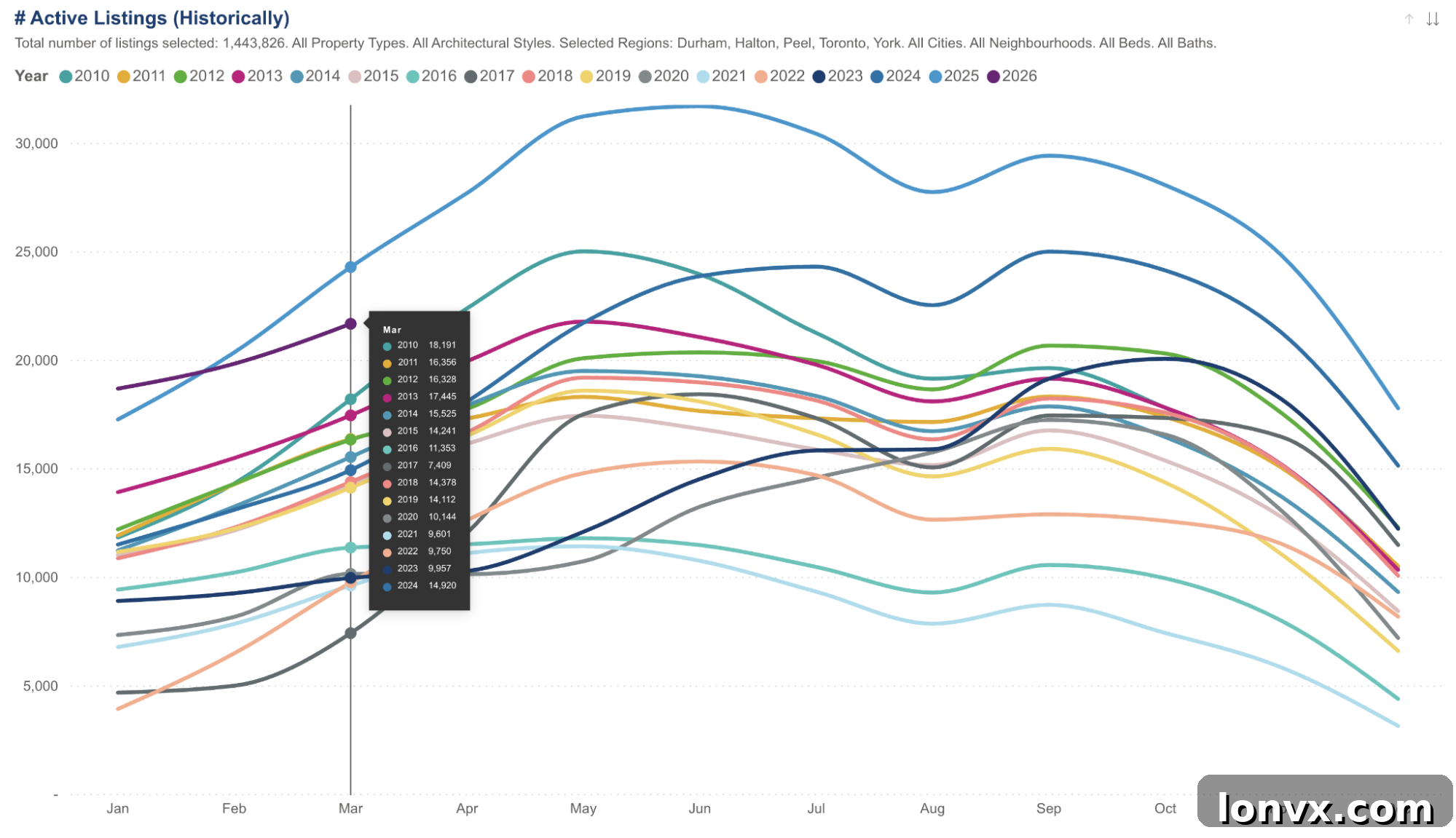
While it’s premature to declare this a long-term trend, especially since active listings typically peak in May and current levels remain above historical averages (excluding the exceptional year of 2025), the recent data demands closer scrutiny. The GTA market is always a bellwether for Canadian real estate, and these shifts have profound implications.
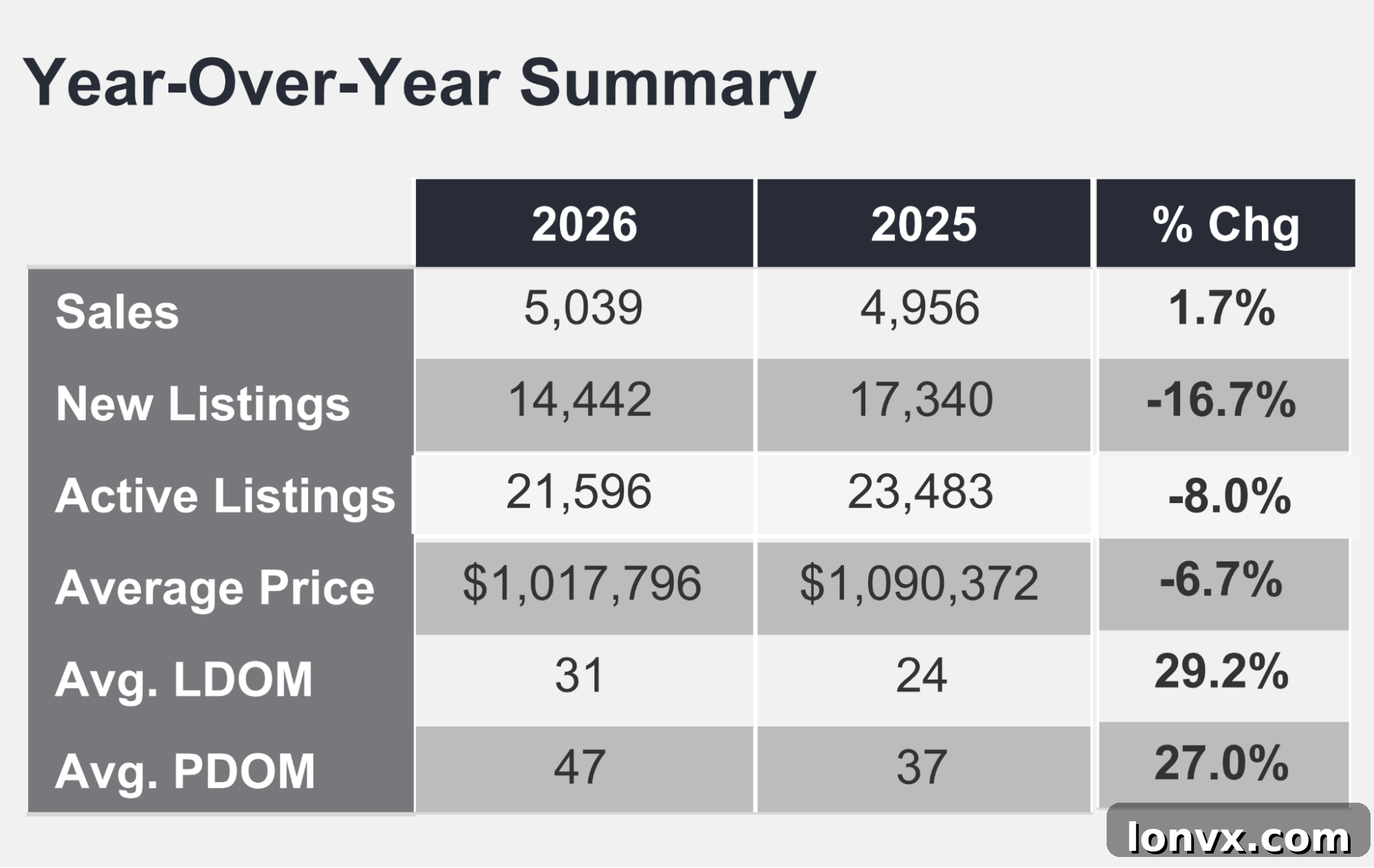
March 2026 data revealed a notable deviation: both new listings and active listings in the GTA registered below last year’s figures. This marks a significant departure from the trend that has characterized the past two years. For approximately 24 consecutive months, housing inventory had been steadily accumulating. More homeowners were testing the market, leading to consistent year-over-year growth in both active and new listings.
The dominant narrative was straightforward: increasing supply would eventually exert downward pressure on prices, and indeed, it did. This logic seemed sound and played out as expected for a period. However, for the first time in a considerable while, that consistent narrative of rising supply has paused, even if only momentarily. This unexpected halt in listing growth prompts a crucial question: What factors are driving this change in the GTA real estate landscape?
A Fundamental Shift in Seller Behavior in the GTA
A year-over-year decline of 16.7 percent in new listings is not merely a statistical anomaly; it represents a significant behavioral shift among property owners in the Greater Toronto Area. Sellers are demonstrably making different decisions compared to just a few months ago, indicating a notable change in their market participation strategy.
Several factors likely contribute to this evolving behavior. Some sellers may have initially listed their properties but withdrew them after failing to achieve their desired target price. The current market valuations might simply be unacceptable for others, leading them to postpone or reconsider selling. Furthermore, an increasingly viable third option, which was not as prevalent in previous market cycles, is emerging: holding onto the property and renting it out. This strategy allows homeowners to retain their asset while generating income, mitigating the urgency to sell at a potentially lower price.
Crucially, none of these behaviors suggest panic or distress selling. On the contrary, they imply a strategic choice. Sellers are not being forced into the market by financial hardship; they are actively choosing not to participate under current conditions. The average Canadian homeowner, particularly in the GTA, often possesses a degree of financial protection against market downturns, affording them the luxury of choice. While there are certainly individuals facing significant financial strain—hundreds of thousands who do not share this luxury—they represent the margins, not the majority, of property owners.
Housing market corrections typically occur when sellers are compelled to sell, irrespective of the price. This “forced selling” dynamic is what truly drives inventory surges and price declines. However, despite widespread anticipation of such conditions, particularly with the looming “renewal wall” of mortgages, this forced selling has yet to materialize in meaningful volumes. The resilience of Canadian homeowners is proving to be a stronger force than expected, influencing the supply side of the GTA housing market profoundly.
The Expected Distress That Hasn’t Materialized in the GTA Housing Market
The current state of the GTA housing market is particularly intriguing due to a stark divergence between widely discussed expectations of distress and the actual market data. On one hand, there’s been extensive conversation about a potential wave of financial pressure impacting homeowners. Estimates have suggested that a significant number—roughly 150,000 Canadians—could face difficulties meeting their mortgage payments this year, especially as higher interest rates take their toll and fixed-rate mortgages renew at considerably elevated rates.
Compounding these concerns, the broader economic landscape presents several red flags. Unemployment rates, a key indicator of economic health, have reached levels typically associated with recessions and continue to climb. The rapid advancement of artificial intelligence (AI) is already leading to job displacements and layoffs in various sectors, contributing to economic uncertainty. Furthermore, mortgage delinquencies, though still relatively low, are on the rise, and the lagged impact of successive interest rate hikes is still working its way through the financial system, putting pressure on household budgets.
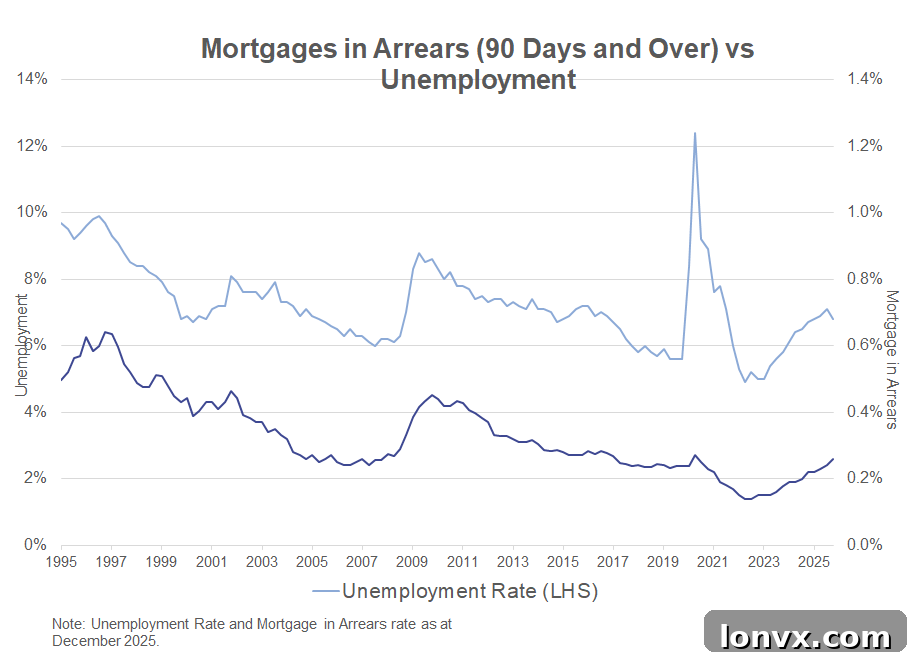
Source: Canadian Bankers Association
From a theoretical standpoint, this confluence of economic pressures should create an environment conducive to a surge in housing listings. Financial strain typically compels homeowners to sell, often regardless of price, leading to an influx of properties on the market. This expected increase in supply would, in turn, put further downward pressure on housing prices.
However, the empirical data from the GTA market is not yet reflecting this anticipated outcome. Instead, many households appear to be demonstrating remarkable adaptability and resilience. Strategies to cope with financial pressures include extending mortgage amortizations to reduce monthly payments, aggressively cutting discretionary spending, increasing income through secondary jobs, or bringing in tenants to generate rental income. While strain undeniably exists within the system, there is also a discernible level of resilience that has surprised many.
It’s possible that visible signs of distress may still emerge more prominently over time as the full impact of economic headwinds unfolds. However, real estate markets operate on realized conditions, not merely anticipated ones. As it stands today, the expected surge in housing supply, predicated on widespread financial distress, has simply not materialized. This resilience among homeowners is a critical factor shaping the current dynamics of the GTA housing market, leading to a tighter supply environment than many would have forecast.
GTA Housing Prices Down, Yet Supply is Tightening
While the supply side of the GTA housing market presents a narrative of unexpected resilience, price movements continue to tell a different, more traditional story. March 2026 data indicates that the average selling price across the Greater Toronto Area experienced a 6.7 percent year-over-year decline. Similarly, the benchmark price, a more stable measure of home values, fell by 7.4 percent over the same period. These are undeniably meaningful drops that reinforce a prevailing perception that the market remains weak and challenging for sellers.
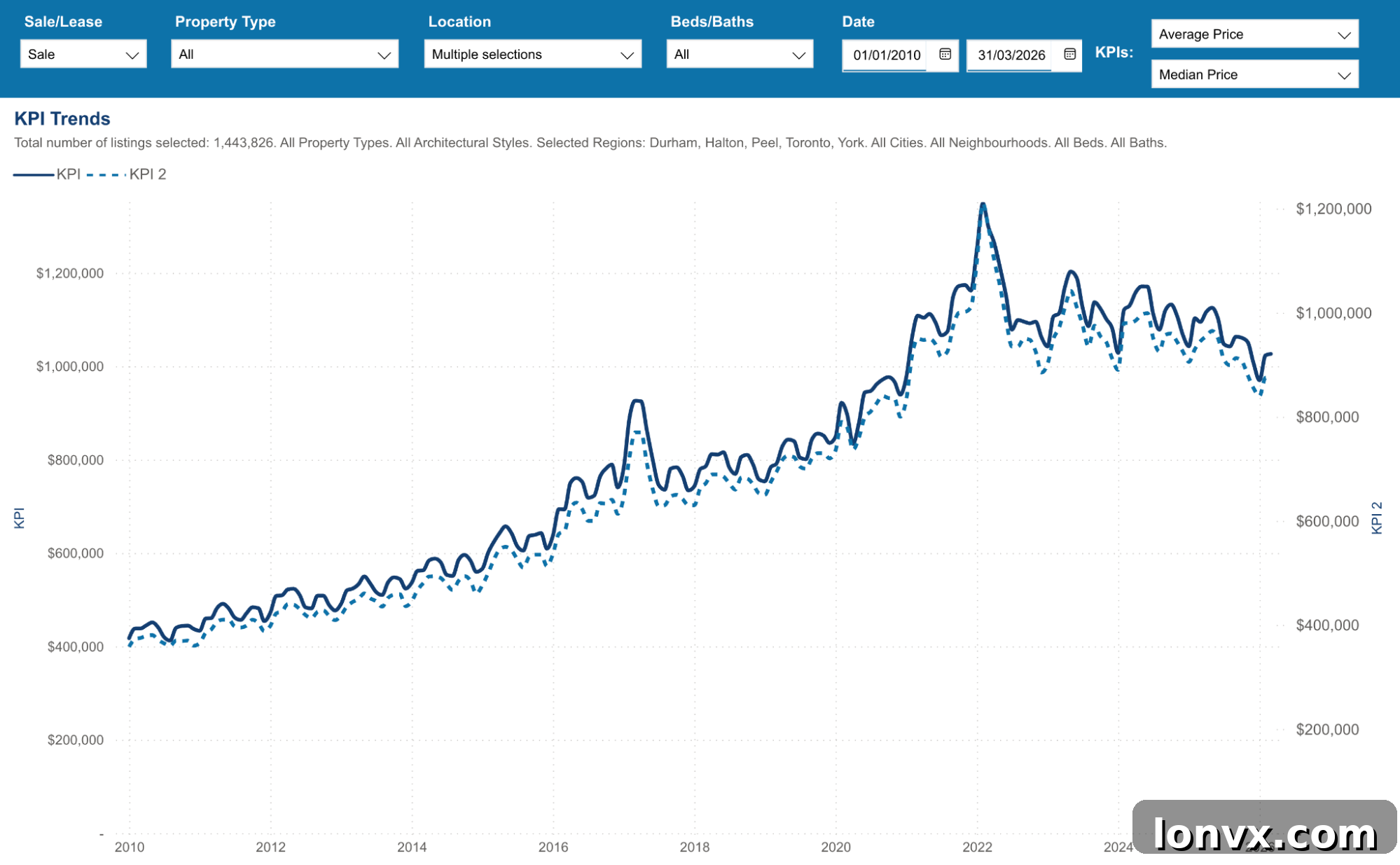
However, this surface-level view becomes less comprehensive and potentially misleading when one delves into the underlying market dynamics. A deeper analysis reveals a subtle but significant shift occurring beneath the headline price figures. Sales activity, after a period of contraction, has begun to stabilize and, in some segments, even tick higher. Crucially, as discussed, new listings are falling, and the existing inventory of homes is being absorbed at a faster rate.
In essence, the fundamental balance between housing supply and demand in the GTA is beginning to tighten. This tightening, while originating from what was previously a very wide spread between supply and demand, suggests a market in transition. Prices, by their nature, are backward-looking indicators, reflecting past transactions and prevailing sentiment. Conversely, supply dynamics—such as new listings, active inventory, and sales absorption rates—are more forward-looking, signaling potential future shifts.
When these two sets of signals move in opposite directions—prices still reflecting past declines while supply dynamics indicate tightening—it typically signifies a transitional phase that rarely persists for long. The critical question now is whether this current dynamic represents merely a delayed spring market, with sellers holding out for better conditions, or if it indicates a more fundamental shift where homeowners are genuinely disinclined to sell under current valuations. Only the passage of time will reveal which scenario ultimately plays out, but the divergence between price trends and supply fundamentals is a key development for anyone monitoring the Toronto real estate market.
Policy Distortions: New Homes vs. Resale Market Dynamics
Adding another layer of complexity to the evolving GTA housing market dynamics are recent policy interventions. Governments have introduced efforts to remove or reduce Goods and Services Tax (GST) and Harmonized Sales Tax (HST) on new housing developments. The overarching objective behind these policies is clear and commendable: to stimulate construction activity, alleviate persistent structural supply shortages, and ultimately improve housing affordability in the long run.
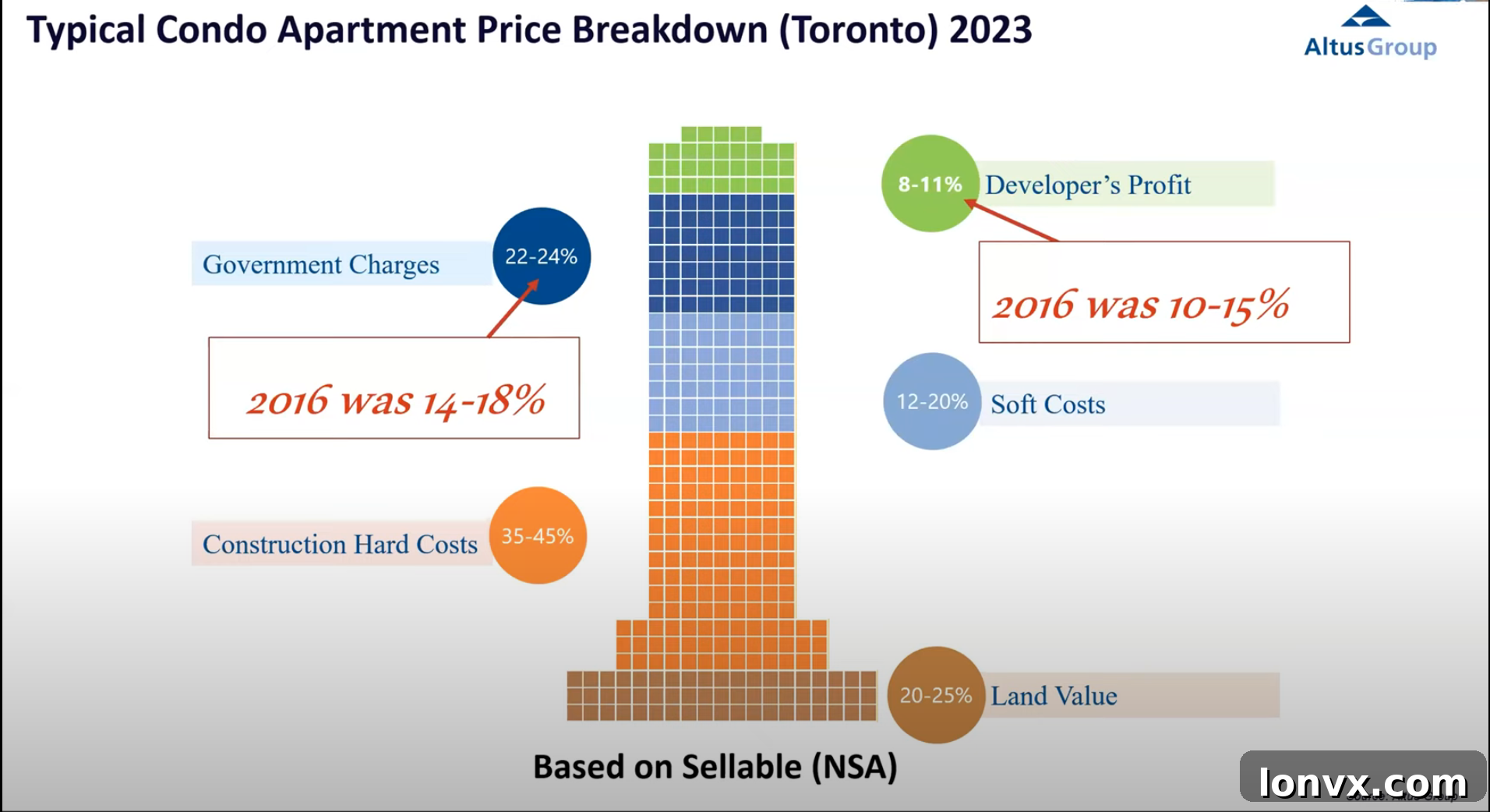
While beneficial for the new construction sector and long-term supply goals, these policies introduce a significant distortion in the short to medium term. By effectively lowering the total cost of acquiring new homes, these incentives inherently make pre-construction and newly built properties more attractive to potential buyers. This can, and likely will, pull demand away from the resale market.
Buyers who might have otherwise considered purchasing existing homes could now pivot towards pre-construction units, lured by the tax savings and potentially newer amenities. This shift in buyer preference creates a scenario where resale prices could face additional downward pressure, even as overall housing supply conditions appear to be tightening. It’s an unusual and counterintuitive overlap of market forces: government policy designed to boost one segment of the market (new construction) inadvertently creates a softening effect on another (the existing resale market).
This dynamic highlights the intricate interconnectedness of different housing market segments and the nuanced, sometimes unforeseen, consequences of policy interventions. While the long-term vision of increased supply is crucial for affordability, the immediate impact of these distortions on existing home values and seller expectations needs careful consideration, especially in a market already grappling with a unique supply shortage.
The GTA Housing Market: Not One, But Several Distinct Markets
A crucial understanding for anyone navigating the GTA real estate landscape is that it is no longer a monolithic entity; rather, it comprises several distinct housing markets, each with its own unique supply and demand dynamics, responding differently to economic shifts and policy changes. This segmentation is becoming increasingly difficult to ignore and is vital for accurate market analysis.
Consider the low-rise housing segment, particularly detached homes. Historically, these properties have demonstrated greater stability and resilience. They are primarily driven by end-user demand—families and individuals seeking long-term residences—which has proven more robust even in challenging economic climates. Furthermore, recent rounds of upzoning initiatives, allowing for increased density, have attracted investor interest in these properties for multiplex development. This adds another layer of demand, contributing to their relative stability compared to other housing types. While not entirely immune to aggressive price adjustments seen elsewhere, their foundational demand remains strong.
Condominiums, by stark contrast, continue to face considerable pressure. This segment is heavily influenced by investor activity, which has weakened significantly due to higher financing costs and shifting economics in the rental market. While the rental market itself remains robust, the investment returns for new condo purchases have become less compelling. The GTA is also experiencing record numbers of condo completions hitting the market this year, leading to a substantial increase in available units. This influx, coupled with reduced investor demand, suggests a significant oversupply of condos that could persist for a considerable period before any meaningful recovery can be expected.
An interesting, albeit complex, twist emerging in the condo market concerns the new GST/HST incentives. Anecdotal evidence from a handful of developers suggests that these incentives are making it more financially compelling for them to rent out their unsold inventory—even if it means operating at a short-term loss—rather than selling at a significant discount. This strategy, while seemingly a “lose-lose” scenario for developers in the immediate term, could paradoxically tighten the supply of condos available for sale, slightly altering the market balance. However, the fundamental challenge of oversupply in the condo segment remains a dominant factor. Understanding these distinct market behaviors is paramount for both buyers and sellers in the diverse GTA real estate landscape.
GTA Sellers: Opting Out, Not Giving Up
In conclusion, the prevailing evidence strongly suggests that sellers in the Greater Toronto Area housing market are not capitulating to current market conditions. Instead, a more nuanced and strategic behavior is at play: they are opting out if their financial circumstances allow them to do so. This means they are choosing not to transact in a market that does not align with their price expectations or desired terms.
This collective decision by a significant portion of homeowners to withhold their properties from the market has a profound impact: it limits housing supply. A constrained supply, especially when coupled with even stable or gradually improving demand, has the potential to alter the direction of the market. While this shift may not manifest immediately—and certainly, a dramatic turnaround is unlikely within this year—it sets the stage for future price stabilization and eventual growth.
The path forward for the GTA housing market is not predetermined and hinges on several critical factors. Should financial stress accelerate meaningfully, perhaps as the much-discussed 150,000 mortgagees potentially facing difficulties in 2026 come under increasing pressure, then a surge in listings could still materialize. In such a scenario, prices would likely remain under significant pressure.
However, if the current behavior persists—with sellers holding firm, demonstrating resilience, and demand gradually improving as economic conditions stabilize—then the tightening supply dynamics we are beginning to observe could indeed translate into market price stabilization, and eventually, a return to growth.
For now, the most crucial takeaway for anyone involved in the GTA real estate market is simple yet powerful: the influx of distressed sellers that many were anticipating and waiting for has not yet materialized. Until that supply appears in significant volume, the downside risk to prices in this year’s spring market, particularly given the current supply constraints, may be considerably more limited than widely expected.
(It’s understood that we are still relatively early in the 2026 spring market cycle, but these initial trends provide compelling insights into the underlying resilience and strategic shifts at play.)