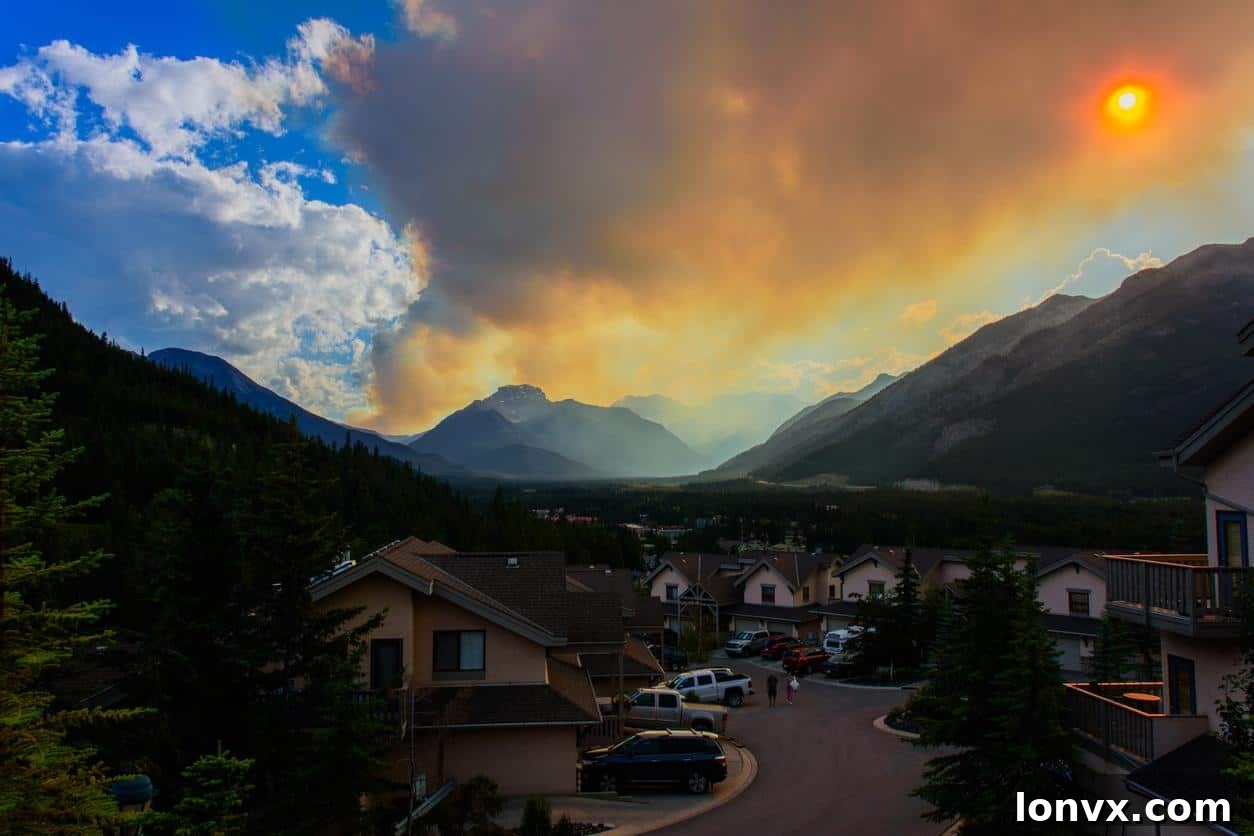
Comprehensive Wildfire Preparedness: Protecting Homes, Businesses, and Communities
As the global climate continues to shift, bringing with it extended periods of drought and extreme heat, wildfires have evolved into an increasingly pervasive and destructive force across many regions worldwide. These aren’t merely remote forest blazes; they are frequently encroaching upon populated areas, posing direct and severe threats to homes, critical infrastructure, and economic stability. The visible flames are just one aspect of their danger; the consequences extend far beyond, encompassing devastating property damage, extensive business interruptions, and severe health risks from widespread smoke exposure.
The alarming frequency and intensity of recent wildfire seasons, exemplified by the situation in British Columbia in late July 2021 where hundreds of blazes necessitated a provincial state of emergency, serve as a stark reminder. Such events underscore the urgent need for robust, multi-faceted preparedness strategies. This article aims to provide a comprehensive guide to wildfire readiness, offering actionable advice for residents, businesses, and entire communities. Our goal is to empower stakeholders to mitigate risks effectively, build lasting resilience, and safeguard lives and livelihoods in the face of this escalating environmental challenge.
The Escalating Threat: Understanding Wildfire Impacts on Our Lives and Livelihoods
The increasing frequency and intensity of wildfires are undeniable, transforming what were once seasonal concerns into year-round anxieties for many regions globally. These aren’t just isolated incidents; they represent a significant shift in environmental patterns, leading to more aggressive and unpredictable fire behavior. The immediate danger of evacuation is a stark reality, forcing families to abandon their homes with little to no notice, often leaving behind cherished possessions and facing prolonged displacement. This disruption extends beyond the physical, creating significant emotional stress, psychological trauma, and profound uncertainty for affected residents.
For businesses, the threat of wildfire translates directly into the risk of severe operational interruption and substantial financial losses. A 2021 First Onsite Survey provided critical insights into this vulnerability within Canada, revealing that 11 percent of businesses in British Columbia and 13 percent in Alberta had already experienced direct interruptions due to wildfires. The concern for future events is even more pronounced, with 28 percent of B.C. businesses and 31 percent of Alberta businesses expressing significant worry. Even in regions historically less affected, such as Ontario, where only four percent reported past interruptions, a notable 11 percent are now concerned about future wildfires. Nationally, this apprehension stands at 17 percent, painting a clear picture of a widespread and growing challenge across the Canadian business landscape.
These statistics underscore a crucial point: wildfires are not solely an environmental issue; they are a significant economic and societal challenge with far-reaching implications. Businesses can face direct property damage, loss of inventory, irreparable data loss, severe supply chain disruptions, and the complete inability to operate due to evacuations, infrastructure damage, or compromised air quality. The ripple effect of these interruptions can devastate local economies for months or even years, making comprehensive business continuity planning an indispensable and integral part of modern risk management strategies. Protecting employees, maintaining customer trust, and ensuring long-term viability all hinge on robust preparedness.
Essential Preparedness: Safeguarding Your Home and Family
In the face of wildfire threats, personal safety and the protection of your family are paramount. Being prepared means having a clear, actionable plan and the necessary resources to respond quickly and effectively. Authorities consistently emphasize that awareness, immediate responsiveness, and meticulous planning are key to survival and minimizing losses.
Immediate Evacuation Readiness: Be Prepared to Go at a Moment’s Notice
When an evacuation alert is issued, it serves as a critical warning that you must be ready to leave your home at a moment’s notice. Procrastination or underestimation of the threat can have dangerous, even fatal, consequences. Here’s how to ensure you and your family are comprehensively prepared for a swift evacuation:
- Assemble a Comprehensive “Go-Bag” or Emergency Kit: This should be a pre-packed, easily accessible bag for each family member, ideally stored in a location known to all. Include essential items such as:
- A minimum of three days’ supply of water and non-perishable food.
- A well-stocked first aid kit and any essential prescription medications, with extra doses if possible.
- Copies of vital documents (e.g., identification, insurance policies, birth certificates, property deeds, medical records) stored securely in a waterproof, fireproof bag or digitally on a cloud service.
- Emergency cash in small denominations and copies of credit cards.
- A change of clothes, sturdy shoes, and a lightweight blanket or sleeping bag.
- A battery-powered or hand-crank radio, a flashlight, and extra batteries.
- Chargers for mobile phones and fully charged power banks.
- Special items for infants, elderly family members, or individuals with disabilities (e.g., formula, diapers, mobility aids).
- Pet supplies, including food, water, a leash, carrier, and any necessary medications.
- Ensure Vehicle Readiness: Always maintain your vehicle’s fuel tank at least half full. In an emergency, gas stations may be closed, power outages could prevent pumping, or traffic congestion could lead to prolonged waits, making fuel scarce.
- Establish a Family Communication Plan: Develop a clear and practiced communication strategy. Designate an out-of-area contact person everyone can check in with if separated. Decide on a family meeting point outside the immediate danger zone, and ideally a secondary location further afield.
- Stay Hyper-Informed: Continuously monitor local news, official government alerts via radio or emergency apps, and social media channels from verified authorities. Understand the crucial distinction between an “evacuation alert” (meaning be ready to leave) and an “evacuation order” (meaning leave immediately).
Fortifying Businesses Against Wildfire Disruption
For business owners, preparing for wildfires is a complex but absolutely vital undertaking. The overarching goal is to minimize operational disruption, protect valuable assets, ensure the safety and well-being of employees, and facilitate a swift and efficient recovery. A proactive, well-documented approach can often be the fundamental difference between a temporary, manageable closure and permanent, irreversible loss.
Developing a Robust Business Continuity Plan (BCP)
A comprehensive Business Continuity Plan (BCP) should meticulously address all potential impacts of a wildfire event, anticipating various scenarios and outlining precise responses:
- Thorough Risk Assessment: Conduct a detailed risk assessment to identify critical business functions, essential assets (physical and digital), and potential vulnerabilities to fire, smoke, and related disruptions.
- Comprehensive Emergency Contacts: Maintain an updated and accessible list of all key contacts, including employees, critical suppliers, major clients, insurance agents, utility providers, and local emergency services.
- Data Backup and Recovery Strategy: Implement regular, redundant, and secure off-site or cloud-based data backups to protect crucial information, operational software, and IT systems. Critically, test your data recovery process periodically to ensure its functionality and efficiency.
- Supply Chain Resilience: Proactively identify and establish relationships with alternative suppliers or logistics routes in case primary ones are disrupted. Communicate your emergency plans with key partners and integrate their plans into your own.
- Employee Safety and Communication Protocols:
- Establish clear, well-communicated procedures for employee evacuation and safety during a wildfire event, including designated assembly points.
- Develop a multi-channel communication strategy to keep employees informed about the evolving situation, workplace status, and return-to-work protocols.
- Consider implementing flexible work schedules, remote work options, or temporary relocation strategies for employees on days with poor air quality or evacuation alerts.
- Financial Preparedness and Management:
- Establish an accessible emergency fund to cover immediate operational costs, payroll, and unexpected expenses during a business interruption.
- Regularly review and update all insurance policies to ensure adequate coverage for property damage, business interruption, loss of income, and potential additional living expenses. Keep digital and physical copies of policies off-site.
- Maintain comprehensive, regularly updated records of inventory, equipment, and other assets to streamline potential insurance claims.
- Physical Property Protection: Actively implement FireSmart principles (detailed in a subsequent section) for your business premises, just as you would for a private residence, focusing on defensible space and structural hardening.
The Invisible Threat: Wildfire Smoke and Air Quality
Even if a wildfire doesn’t directly threaten a community with flames, its smoke can travel hundreds or even thousands of kilometers, posing a significant, often underestimated, and widespread health risk. Wildfire smoke is a complex mixture of gases and fine particulate matter, and its presence can drastically diminish air quality, transforming once-clear skies into hazy, unhealthy environments across vast geographical areas.
Health Implications of Smoke Exposure: Understanding the Risks
The primary health concern associated with wildfire smoke is the presence of fine particulate matter (PM2.5). These microscopic particles, less than 2.5 micrometers in diameter, are so small that they can bypass the body’s natural defenses, penetrating deep into the lungs and even entering the bloodstream. Exposure to high levels of PM2.5 can lead to a wide range of acute and chronic health issues:
- Severe Respiratory Problems: PM2.5 can exacerbate existing conditions such as asthma, bronchitis, and chronic obstructive pulmonary disease (COPD), leading to coughing, wheezing, shortness of breath, and severe irritation of the throat and nasal passages.
- Cardiovascular Effects: Studies have linked smoke exposure to an increased risk of heart attacks, strokes, irregular heart rhythms, and other cardiovascular events, particularly in vulnerable populations.
- Eye and Nose Irritation: Common symptoms include burning eyes, excessive tearing, runny nose, and sinus congestion.
- Vulnerable Populations: Certain demographics are particularly susceptible to the adverse effects of smoke, including children (whose respiratory systems are still developing), the elderly, pregnant women, and individuals with pre-existing heart or lung conditions.
Instances where particulate levels in major metropolitan areas like Vancouver and Toronto climb to 30 or 40 times the normal safe limit, despite the nearest fire being 1,000 km away, vividly highlight the extensive reach and profound impact of wildfire smoke. Such events often necessitate widespread public health advisories recommending individuals to stay indoors, limit outdoor activity, and take protective measures.
Protecting Employees, Customers, and Residents from Smoke
During periods of compromised air quality, providing and maintaining clean indoor air becomes an urgent priority for businesses, building managers, and residents alike:
- Optimizing Indoor Air Quality Solutions:
- HVAC System Upgrades: Regularly replace and upgrade air filters in heating, ventilation, and air conditioning (HVAC) systems to a Minimum Efficiency Reporting Value (MERV) of 13 or higher. These filters are significantly more effective at capturing fine particulate matter.
- Portable Air Purifiers: Strategically deploy standalone HEPA (High-Efficiency Particulate Air) air purifiers in key areas of homes, offices, and public spaces to provide localized air cleaning.
- Sealing Buildings: Proactively inspect and ensure that all windows, doors, and other potential entry points are well-sealed to prevent smoke intrusion into indoor environments.
- Implementing Workplace Adjustments:
- Offer flexible work schedules or facilitate remote work options on days with severe air quality warnings to reduce employee exposure.
- Minimize or completely restrict outdoor work, or provide appropriate personal protective equipment (e.g., N95 respirators) for essential outdoor tasks.
- Educate employees thoroughly about the health risks of smoke exposure and personal protective measures they can take.
- Public Communication and Transparency: Businesses and public venues should communicate clearly and proactively with customers and tenants about current air quality conditions and any specific measures being implemented to ensure their safety and comfort.
- Promoting Personal Protection: Advise individuals to limit outdoor exposure, especially strenuous physical activities, and encourage the use of N95 or P100 respirators if they must be outdoors during poor air quality events.
Safeguarding Properties: Implementing FireSmart Principles
Beyond meticulously crafted evacuation plans and comprehensive business continuity strategies, tangible and proactive actions can significantly protect physical properties from the direct impact of wildfires. The FireSmart program, widely recognized and adopted across North America, offers practical, evidence-based strategies for substantially reducing wildfire risk around homes, businesses, and entire communities.
Creating Defensible Space: Zoning Your Property for Enhanced Safety
Defensible space refers to the strategic area around a structure that has been carefully modified and maintained to reduce fire hazard and slow or stop the spread of wildfire. It is typically divided into three distinct zones, each with specific requirements:
- Zone 1 (0-1.5 meters from the building): The Immediate Zone
This critical zone should be entirely free of combustible materials to prevent embers from igniting the structure directly.
- Thoroughly clear away all dead leaves, pine needles, twigs, and other vegetative debris from gutters, roofs, and around the foundation of the building.
- Utilize non-combustible landscaping materials exclusively, such as gravel, concrete, rock mulch, or pavers.
- Remove any vegetation, including shrubs, small plants, and trees, from this immediate zone.
- Ensure that firewood piles, propane tanks, and other flammable items are not stored within this zone.
- Zone 2 (1.5-10 meters from the building): The Intermediate Zone
This zone requires careful landscaping, diligent maintenance, and strategic plant selection to further reduce fire intensity.
- Keep lawns meticulously mowed and regularly irrigated to maintain their greenness and moisture content.
- Prune trees regularly, removing all branches up to 2 meters (6 feet) from the ground, or at least one-third of the tree’s total height for smaller trees.
- Strategically space out trees and shrubs to prevent a continuous “fuel ladder” that allows fire to spread from ground vegetation to tree crowns.
- Remove highly flammable plants and replace them with fire-resistant varieties that possess high moisture content and a low flammability rating.
- Zone 3 (10-30 meters from the building): The Extended Zone
This outermost zone focuses on reducing the overall fuel load and influencing fire behavior as it approaches the property.
- Thin out dense stands of trees and shrubs to reduce fuel density.
- Remove dead trees, excessive ground litter, and continuous areas of highly flammable vegetation.
- Create natural or constructed fuel breaks, such as driveways, walkways, areas of rock, or well-maintained gardens.
Home and Business Hardening: Making Structures Fire-Resistant
Beyond exterior landscaping, the inherent construction materials and specific features of a building play a critical role in its ability to withstand direct wildfire exposure and ember attacks:
- Roofs: The roof is often the most vulnerable part of a structure to embers. Prioritize using fire-resistant roofing materials such as metal, clay tiles, or asphalt shingles with a Class A fire rating. Crucially, regularly clear all debris (leaves, pine needles) from gutters to prevent ignition.
- Vents: Install fine mesh screens (no larger than 1/8 inch) over all attic, soffit, foundation, and gable vents to prevent wind-blown embers from entering the building’s interior.
- Windows and Doors: Utilize multi-pane, tempered glass windows, which offer better resistance to heat and impact. Ensure all exterior doors are solid core and fit tightly within their frames to prevent ember intrusion. Consider non-combustible siding materials like stucco, brick, fiber cement, or treated wood siding.
- Decks and Fences: Where possible, use non-combustible materials for decks and fences. If wood is used, ensure it is properly maintained, free of debris, and stained with fire-resistant coatings. Ensure any fences connecting to the house are non-combustible for the first few feet or have a non-combustible gate.
The Crucial Role of Insurance in Wildfire Recovery
Amidst the immediate and often chaotic crisis of a wildfire, the paramount importance of adequate insurance coverage often becomes starkly apparent. For both homeowners and business owners, comprehensive insurance is not just a financial product; it is a critical safety net that can facilitate recovery, rebuilding, and the restoration of normalcy after devastating loss.
- Proactive Policy Review: Do not wait until a fire strikes. Regularly review your home or business insurance policy with a qualified broker or agent. Understand precisely what is covered (e.g., direct fire damage, smoke damage, evacuation expenses, business interruption, replacement costs) and, equally important, what exclusions may apply.
- Ensuring Adequate Coverage: Verify that your coverage limits are sufficient to rebuild your property at current construction costs and replace all contents at today’s market value. Inflation, rising material costs, and labor shortages can quickly outpace older policy limits, leaving you underinsured.
- Detailed Asset Documentation: Create a meticulous inventory of all your possessions (for homeowners) or equipment, machinery, and inventory (for businesses). Take high-resolution photos or videos of all items and store this comprehensive documentation securely off-site or on a cloud-based platform. This vital step will significantly expedite and simplify any claims process.
- Business Interruption Insurance: For businesses, this type of coverage is absolutely vital. It can provide critical financial support by covering lost income and ongoing operating expenses (like payroll, rent, and utilities) if your business is forced to close due to a covered peril like a wildfire.
Building Resilient Communities: Proactive Planning for a Safer Future
While individual and business preparedness is undeniably vital, a truly sustainable and effective approach to wildfire risk demands collective action and forward-thinking, integrated community planning. Catastrophes, while tragic, often provide a compelling occasion to fundamentally reshape our thinking about how our communities are designed, constructed, and managed to create safer, more sustainable, and truly resilient environments for future generations.
Integrated Land Use Planning and Responsible Development
- Wildland-Urban Interface (WUI) Management: Communities situated in Wildland-Urban Interface (WUI) zones, where human development directly abuts wildland vegetation, require specialized attention. Planning should include strategic buffer zones, aggressive fuel reduction treatments, and carefully considered restrictions on certain types of development in the highest-risk areas.
- Robust Zoning Regulations and Building Codes: Implement and rigorously enforce modern building codes that mandate the use of fire-resistant construction materials and techniques in high-risk zones. Adjust zoning regulations to proactively promote the creation of defensible space around all structures and limit unchecked development in extremely high-risk landscapes.
- Infrastructure Hardening and Protection: Prioritize the protection of critical infrastructure such as power lines, water supply systems, communication networks, and transportation routes from wildfire damage. This includes aggressive vegetation management around all utility corridors and regular maintenance.
Enhanced Emergency Services and Public Education Initiatives
- Strengthened Inter-Agency Coordination: Foster strong, seamless collaboration between local fire departments, emergency management agencies, law enforcement, utility companies, and other relevant stakeholders to ensure a unified, effective response and recovery effort.
- Comprehensive Public Education Programs: Vigorously support and promote programs like FireSmart that empower residents and businesses with the knowledge and tools to reduce their wildfire risk. Regular community workshops, public outreach campaigns, and accessible educational materials are crucial for widespread adoption.
- Advanced Early Warning Systems: Invest in and deploy advanced wildfire detection technologies and robust early warning systems to provide residents with the maximum possible time to prepare, evacuate, and respond to imminent threats.
Adapting to Climate Change and Sustainable Practices
- Long-Term Mitigation and Adaptation: Communities must fully integrate climate change projections into their long-term planning horizons, acknowledging that wildfire seasons are lengthening, becoming more severe, and requiring sustained adaptation strategies.
- Proactive Ecosystem Management: Implement sustainable forest and land management practices, including ecologically sound prescribed burns where appropriate, to reduce hazardous fuel loads, restore natural fire regimes, and promote overall forest health and resilience.
- Integrated Water Management: Develop robust water infrastructure and implement effective water conservation strategies, as water scarcity often exacerbates wildfire conditions and hampers firefighting efforts.
Conclusion: A Call to Action for Collective Resilience
The escalating threat of wildfires demands a comprehensive, integrated, and proactive approach from every level of society. From the individual homeowner meticulously preparing an emergency kit and creating defensible space, to businesses diligently crafting intricate business continuity plans, and communities investing in resilient infrastructure and strategic land management, the onus is on all of us to adapt, prepare, and innovate. The devastating fires witnessed in British Columbia, California, Australia, and numerous other regions globally serve as a powerful, undeniable reminder that ignoring these growing risks is no longer a viable option.
By collectively embracing robust preparedness strategies, rigorously implementing FireSmart principles, securing adequate and comprehensive insurance coverage, and fostering community-wide resilience through thoughtful, forward-looking planning, we can work in concert to significantly mitigate the devastating impacts of wildfires and safeguard our shared future. This journey is not a singular event but a continuous process of learning, adapting, and steadfastly building stronger, safer, and more resilient communities for generations to come.