Don’t miss out—join us online for REM’s monthly market breakdown on Jan. 27 at 2 PM ET. Columnist Daniel Foch will analyze CREA’s latest stats, regional variations and what shifting sentiment means for Realtors—register here.
The Canadian housing market concluded 2025 in a state of deceptive calm, a stark contrast to the turbulent years that preceded it. This apparent stability, however, bears the hallmarks of a late-cycle phase, inherently fragile and susceptible to rapid shifts. Beneath the surface, powerful economic currents are at play, poised to redefine the landscape of Canadian real estate. A confluence of factors—including rising unemployment, an alarming increase in mortgage arrears, and a pronounced pivot towards rental-focused housing supply—set the stage for an uncertain future. Furthermore, the looming renegotiation of the Canada–United States–Mexico Agreement (CUSMA) next year adds a layer of geopolitical complexity that could significantly impact regional economies and, by extension, the housing sector. While recent rate cuts have undeniably buoyed market sentiment, they have yet to address the fundamental economic pressures that will truly dictate the market’s trajectory. The question remains: will these forces lead to genuine stabilization, or will the market reset deepen further into 2026?
Unemployment and Mortgage Arrears: Key Drivers of Price Trajectory
The year 2025 was largely defined by a consistent pattern of weakening employment and a subsequent climb in mortgage arrears, intertwining to exert downward pressure on home prices. According to Statistics Canada, the national unemployment rate hovered persistently around the seven percent mark for the better part of the year. In major urban centers like Toronto, the situation was even more pronounced, with unemployment touching nine percent. This trend was amplified in industrial cities such as Windsor and Oshawa, which experienced significantly sharper increases, primarily due to struggles within the vital auto manufacturing sector and its broader supply chain.
Of particular concern was the youth unemployment rate, which consistently ranged between 10 and 15 percent. This demographic challenge carries profound long-term implications, as it erodes the financial foundation for future first-time homebuyers. Despite various supportive policy efforts aimed at fostering homeownership, persistent job insecurity among younger Canadians makes accumulating a down payment and servicing a mortgage an increasingly daunting prospect. This not only delays entry into the ownership market but also impacts overall generational wealth accumulation.
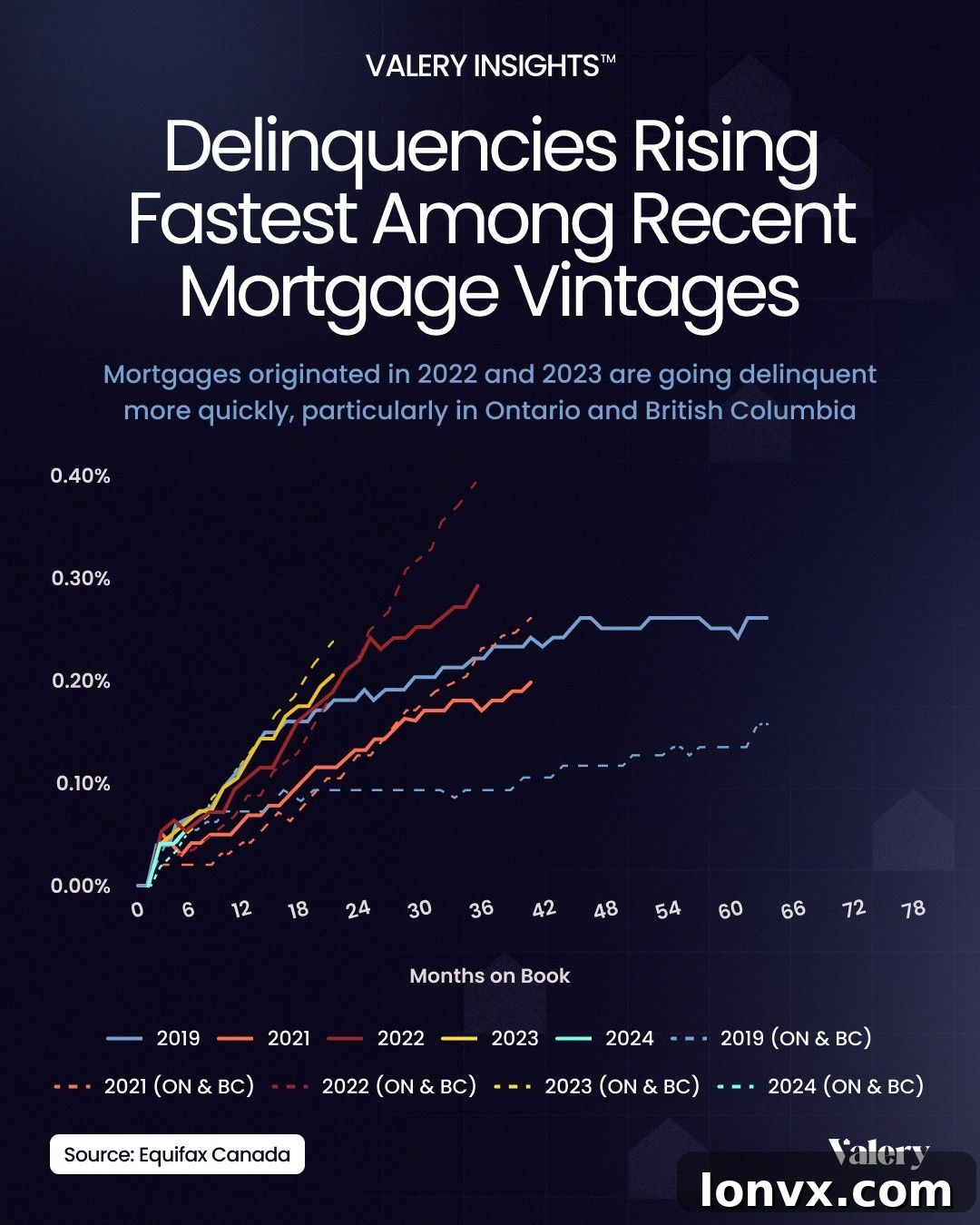
In almost direct correlation, mortgage arrears steadily climbed throughout the year. Initially, many households managed to mask growing financial strain by drawing upon pandemic-era savings or relying on lines of credit. However, as the wave of low-rate, fixed-term mortgages from the early pandemic era matured and came up for renewal at significantly higher interest rates, the strain became unbearable for many. Delinquencies accelerated markedly, particularly affecting larger mortgages prevalent in Canada’s most expensive markets, Ontario and British Columbia. These homeowners, often carrying substantial debt loads, faced the steepest payment shocks. Data also revealed that newer loans, often taken out during periods of heightened market activity, defaulted at an even faster rate. This phenomenon underscored a critical, unequivocal conclusion: sustained and durable recovery in house prices would remain elusive as long as the tide of rising mortgage arrears continued to surge.
Rising arrears are not merely a statistical anomaly; they represent genuine financial distress for Canadian families, impacting credit scores, increasing the risk of forced sales, and contributing to broader economic anxiety. This fundamental economic pressure creates a ceiling for price appreciation, regardless of other market stimulants.
Expanding Rental Supply as Ownership Contracts
A defining truth revealed in 2025 was the accelerating and pronounced shift from ownership-centric housing solutions to an expansion of rental supply. This fundamental transformation has significant long-term consequences for Canadian society and its economy. Purpose-built rental housing starts reached unprecedented record levels, largely bolstered by the effectiveness of CMHC’s MLI Select program. This initiative, designed to incentivize the construction of rental units, successfully stimulated development where it was most needed, particularly in response to Canada’s rapidly growing population and increasing housing demand.
Conversely, condominium starts, historically a significant driver of ownership supply, retreated sharply. This decline was particularly evident in investor-heavy markets, where rising interest rates, increasing construction costs, and a cooling resale market deterred speculative purchases and new project launches. Developers found that smaller infill rental projects, often comprising fewer than 100 units, offered the most viable financial model. These projects typically have shorter development timelines, lower capital requirements, and less exposure to the volatile pre-sale market. Larger, more ambitious projects, on the other hand, frequently stalled under immense cost pressures and waning investor or end-user demand.
This dramatic shift in the composition of new housing supply carries profound long-term implications for housing affordability and wealth accumulation in Canada. While affordability metrics have shown modest improvement in certain regions as both prices and interest rates have eased from their peaks, the underlying structure of new supply tells a different story. Canada is now constructing rental solutions at a pace significantly faster than ownership opportunities. This suggests that for an increasing number of households, the traditional dream of homeownership is slipping further out of reach. While more Canadians may find adequate shelter in the rental market, the pathway to building equity, a cornerstone of intergenerational wealth, is undeniably narrowing. This trend could exacerbate wealth inequality and alter the social fabric of communities for decades to come, creating a permanent renter class with fewer opportunities to build personal assets through real estate.
Interest Rates: Soothing Sentiment, Not Structural Issues
The Bank of Canada’s monetary policy adjustments throughout 2025, which saw the benchmark interest rate fluctuate from 3.25 percent in January to a more accommodative 2.25 percent by year-end, were met with an initial surge of enthusiasm, particularly among borrowers. This optimism translated into a significant increase in the uptake of variable-rate mortgages, which accounted for nearly 42 percent of all new mortgage originations. This figure surpassed any single fixed-term option, indicating a widespread belief among consumers that rates were likely to continue their downward trend, making variable mortgages a more attractive, flexible choice.
However, the bond market, a more sober arbiter of future economic conditions, remained notably less convinced. Despite the Bank of Canada’s rate cuts, government bond yields – which dictate fixed mortgage rates – remained stubbornly elevated relative to pre-pandemic norms. This divergence reflected persistent investor expectations of renewed inflationary pressures, primarily stemming from continued government spending initiatives and the potential imposition of new trade tariffs. Consequently, fixed mortgage rates did not fall in lockstep with the policy rates, creating a significant gap between short-term sentiment and the long-term cost of borrowing.
This crucial divergence had profound implications for both buyers and sellers in the Canadian housing market. Buyers who had anticipated a swift return to the ultra-low borrowing costs of previous years found only temporary and partial relief. Their purchasing power, though slightly improved, remained constrained by elevated fixed rates and persistent income pressures. For sellers, the lessons of 2025 were equally stark and clear. Lower policy rates alone, while psychologically comforting, failed to spark the fervent bidding wars characteristic of past boom cycles. This was largely because household incomes remained under significant pressure, eroding potential buyers’ ability to stretch their budgets further. The year unequivocally demonstrated that interest rates, in isolation, simply cannot offset the formidable structural headwinds facing the market, including job losses, rising mortgage arrears, and an increasing oversupply in certain segments.
The market learned that a truly robust housing recovery requires not just lower borrowing costs but also strong economic fundamentals, including stable employment, healthy wage growth, and a balanced supply-demand dynamic. Without these foundational elements, rate cuts merely provide a temporary salve rather than a lasting cure.
CUSMA Renegotiation and Ontario’s Industrial Fault Line
Looking ahead to 2026, the impending renegotiation of the Canada–United States–Mexico Agreement (CUSMA) looms as a colossal shadow over Canada’s economic outlook, with direct and indirect implications for the housing market. Set to intensify, these trade talks will place immense scrutiny on the agreement that underpins much of North American trade. Ontario, the indisputable linchpin of Canada’s manufacturing sector and automotive supply chain, is particularly vulnerable. The province is already grappling with significant job losses and economic uncertainty, a situation exacerbated by the fact that approximately 20 percent of all goods exported to the United States are currently subject to various tariffs or trade barriers under the existing framework. Any tightening of this trade regime, such as the introduction of new tariffs or more stringent protectionist measures, would inevitably place further and severe restraints on Ontario’s economy, impacting key industries and employment figures.
The housing implications stemming from this geopolitical and economic uncertainty are profound. A region already experiencing elevated unemployment rates and structural economic shifts could face even deeper, more entrenched weakness if manufacturing GDP contracts significantly, as various economic models suggest. Such a contraction would not remain confined to Ontario; the ripple effects would spread across the nation. The crucial “wealth effect” – whereby economic prosperity and investment flowing from powerhouse provinces like Ontario and British Columbia stimulate growth in other regions – would undoubtedly falter. This would lead to cascading consequences for provincial economies across Alberta, Atlantic Canada, and beyond, impacting everything from interprovincial migration patterns to local housing demand and affordability. To truly comprehend the complex dynamics of the Canadian housing market in 2026, one must recognize that the CUSMA renegotiation is, in many crucial respects, a housing story in disguise, dictating the financial health of countless Canadian households and the stability of regional economies.
A Practical Playbook for Navigating 2026
The conditions meticulously forged throughout 2025 undeniably point towards emerging opportunities within the Canadian housing market for 2026, yet these opportunities are exclusively reserved for those who approach the market with unwavering discipline, strategic insight, and robust financial planning. The days of speculative, rapid appreciation are over; success in 2026 will be predicated on careful analysis and informed decision-making.
Guidance for Buyers: Patience and Prudence
First-time buyers continue to represent a significant segment of market activity, particularly in more affordable regions that still offer entry-level price points. Areas such as Ontario’s Durham Region, for instance, have seen steady demand for homes in the $600,000 to $700,000 range. These buyers, often driven by longer-term horizons and the desire for generational wealth building, tend to be less sensitive to short-term market volatility. However, for this group, prudent and realistic financing is more critical than ever before. This includes securing pre-approvals, understanding all associated costs beyond the mortgage (e.g., property taxes, insurance, maintenance), and ensuring a comfortable debt-to-income ratio. Focusing on properties that align with genuine needs rather than speculative hopes will be key.
Strategies for Sellers: Embrace Realism
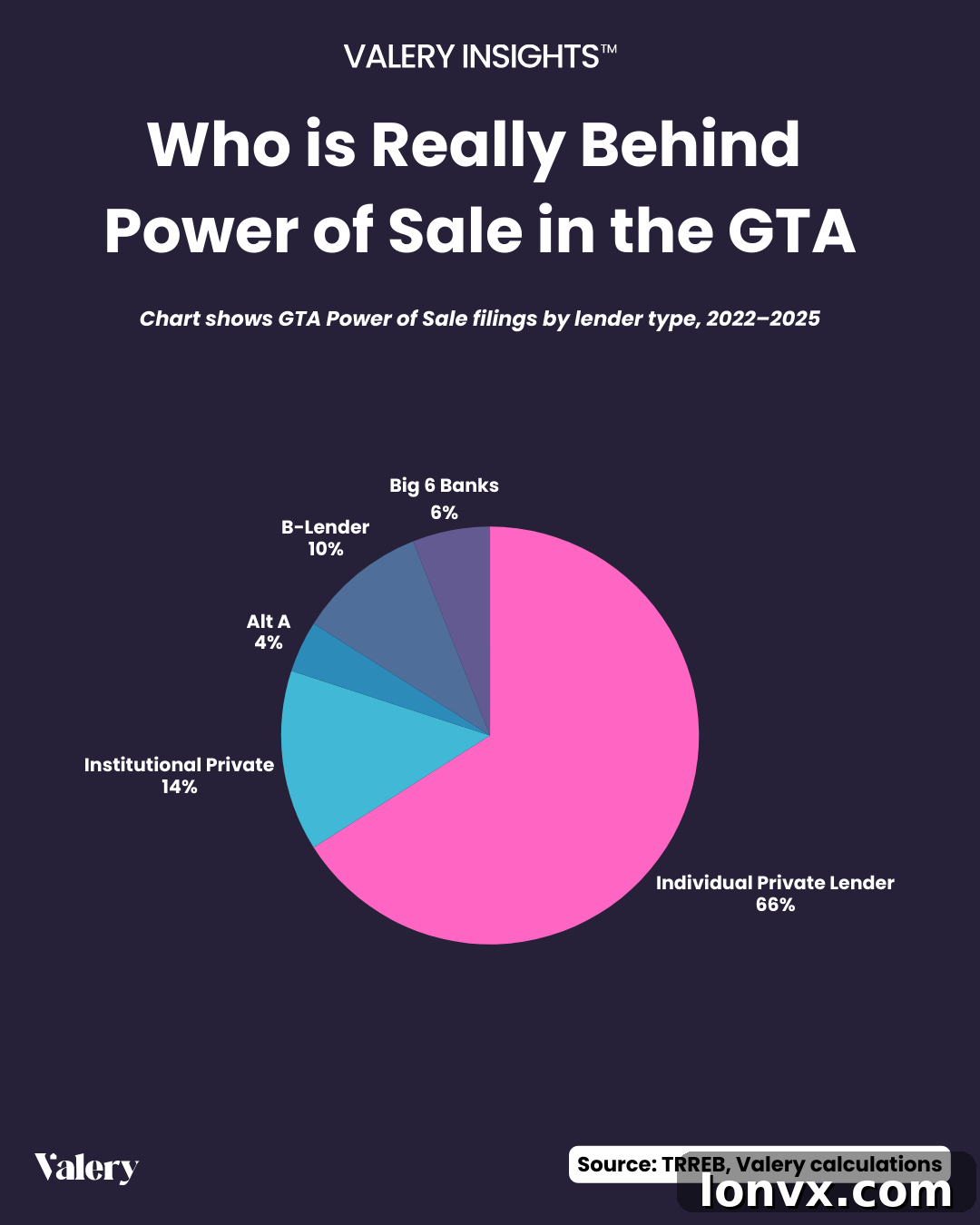
Sellers entering the 2026 market must adopt a fundamentally realistic approach to pricing their properties. With listings steadily climbing across many regions and an increasing volume of distressed inventory entering the market through power-of-sale proceedings, overpricing is a strategy swiftly and severely punished. Pricing that disregards current market comparables, current demand levels, and prevailing economic conditions will only lead to prolonged listing times, price reductions, and ultimately, a less favorable outcome. Since 2022, approximately 66 percent of all Toronto-area power-of-sale filings have originated from individual private lenders. This statistic serves as a stark warning and a clear indicator of how widespread financial distress is actively reshaping market comparables. Sellers must prioritize agility, be prepared to adjust their expectations, and work closely with experienced real estate professionals who can provide data-driven pricing strategies.
Insights for Investors: Calculated Caution
Investors will face a bifurcated landscape in 2026, demanding nuanced strategies. Cash-flow-driven plays, particularly those focused on small, purpose-built rental developments or the strategic acquisition of distressed properties through power-of-sale or other motivated seller scenarios, can still yield positive returns. These opportunities require thorough due diligence, a deep understanding of local rental markets, and a long-term perspective. However, speculative bets on quick appreciation, a hallmark of previous boom cycles, are now exceedingly perilous. With rental supply surging in many urban centers and rent growth moderating, even cooling in some areas, caution must be the guiding principle behind every underwriting decision. Investors should rigorously analyze vacancy rates, potential rent control regulations, property tax increases, and maintenance costs to ensure the viability of any investment. The emphasis should shift from capital gains to consistent, sustainable rental income and long-term asset preservation.
Ultimately, 2026 will reward market participants who demonstrate adaptability, patience, and a deep understanding of the evolving economic and structural forces shaping Canadian real estate. Prudent decision-making, rather than speculative gambles, will define success in the year ahead.