Mastering AI for Real Estate Agents: A Guide to Authentic Integration and SEO Success
In today’s rapidly evolving digital landscape, Artificial Intelligence (AI) presents both unprecedented opportunities and significant challenges for real estate professionals. Many agents either completely overlook AI’s potential or deploy it in ways that are overtly artificial and detrimental to their credibility. Neither approach yields sustainable success. The key lies in strategic, authentic integration that enhances, rather than replaces, human expertise.
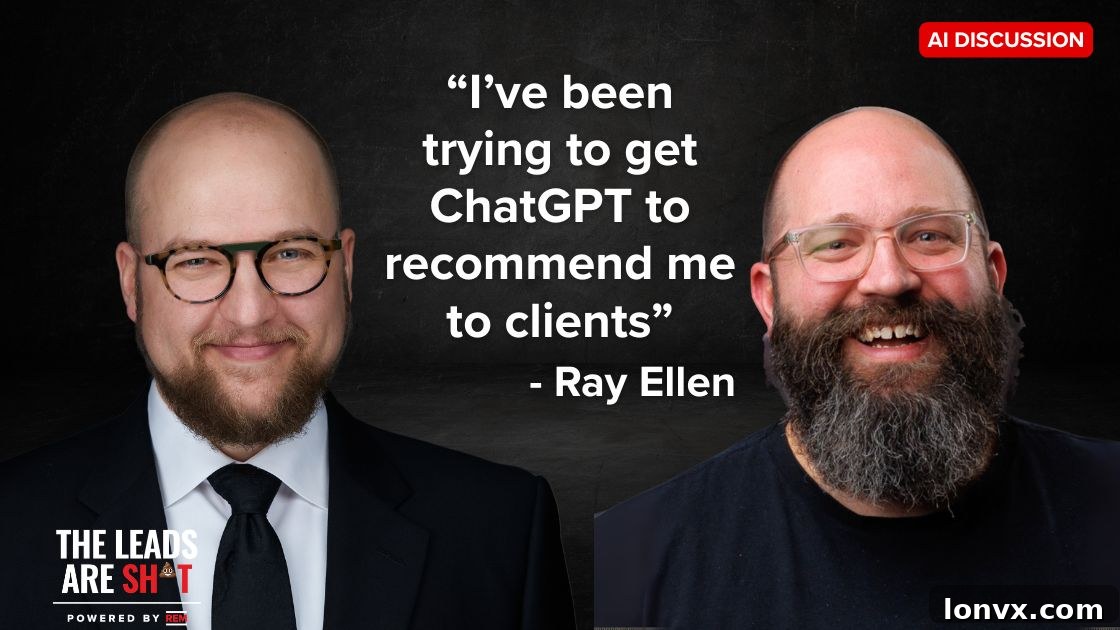
Recently, on their popular sales and marketing program, “The Leads Are Sh*t,” Taylor Hack hosted Ray Ellen, the owner of Pixel Properties in Arkansas, for an insightful discussion. Ellen, a seasoned real estate professional since 2007 who leads a team serving five counties, has dedicated years to rigorously testing AI’s practical applications and identifying its limitations within the real estate sector. Their conversation delved into crucial topics, including the telltale signs of poorly utilized AI, methods to fine-tune AI output to genuinely reflect an agent’s unique voice, and specific, actionable tactics agents can implement immediately to bolster their presence in AI-driven search results.
AI: Your Strategic Co-Pilot, Not Your Automated Driver
Ray Ellen’s perspective on AI is nuanced and pragmatic. As a writer, he candidly admits to disliking AI’s attempts to mimic his craft, often finding its default output inferior. Yet, he has discovered immense value in harnessing AI as a powerful tool to overcome creative blocks and spark new ideas. “One of the things that stops a lot of writers from writing is a blank page,” Ellen observed. “It’s wonderful to bounce ideas off of.” This sentiment encapsulates AI’s role not as a replacement for human intellect, but as an indispensable partner in the creative process.
Ellen shared a compelling example: tasked with devising a team name for a real estate golf scramble, he prompted ChatGPT to generate 150 options. While he didn’t favor any of the suggestions directly, the sheer volume of ideas stimulated his own thinking, ultimately leading him to the perfect team name. “I used it to bounce the idea, not to think for me,” he clarified, highlighting the distinction between AI as an ideation engine and human judgment as the ultimate decision-maker.
Taylor Hack eloquently framed this dynamic as a “hardware and software problem.” AI excels at generating volume and processing information at an unparalleled speed, acting as powerful “hardware.” However, the “software” – the human capacity to critically evaluate results, discern genuine insights, and apply nuanced judgment – remains irreplaceable. The technology has not yet, and is nowhere near, replicating this essential human element. For real estate agents, this means AI can significantly augment efficiency in tasks like market research, content generation, and administrative duties, freeing up valuable time for client interaction, negotiation, and strategic thinking – areas where human empathy, experience, and intuition are paramount.
The Unmistakable Signals of Poor AI Integration
Deploying unedited, AI-generated content is a fast track to eroding trust and credibility with both clients and colleagues. Both Hack and Ellen have developed a keen sensitivity to the “AI tells” that instantly reveal content generated without human refinement. Recognizing and eliminating these signs is crucial for maintaining a professional and authentic online presence.
The most commonly cited giveaway is the excessive use of the em dash (—), a punctuation mark that frequently appears in AI outputs but is used sparingly and intentionally in natural human writing. Ellen humorously recounted an instance where he received a reply to his own newsletter, accusing him of using AI because of his authentic, albeit rare, use of em dashes. This anecdote underscores how quickly the public has become attuned to these stylistic markers.
Beyond the em dash, other prominent signals include:
- Excessive Headings and Bullet Points: While useful for readability, over-structuring content with an abundance of headings and bulleted lists, particularly in short sections, can betray AI generation.
- Random Bolded Words: AI sometimes bolds words indiscriminately within body paragraphs, seemingly without a clear emphasis strategy, making the text appear disjointed and artificial.
- Unusual Spacing and Formatting Anomalies: Inconsistent paragraph breaks, odd line spacing, or other minor formatting quirks can be subtle yet effective indicators of unedited AI output.
- Vague, Passive Phrasing: AI often defaults to generalized, non-committal language that lacks specific detail or a strong authorial voice. Phrases that “suggest,” “tend to,” or “might indicate” without decisive statements diminish authority.
- Repetitive Word Choices and Sentence Structures: Generic AI can fall into patterns of using the same transition words or sentence constructions, leading to monotonous and unengaging prose.
“If you’re using the default output, it is a dead giveaway,” Ellen cautioned. “It will ruin you.” His benchmark for acceptable AI output is achieving “one-shot results.” This means being able to prompt the AI, receive an output, and use it with only minor, stylistic adjustments. Consistently reaching this level of efficiency requires a significant investment in tuning and training the AI, transforming it from a generic tool into a personalized assistant.
Crafting Your AI Voice: Making It Sound Like YOU
The true power of AI for real estate agents emerges when the tool is meticulously customized to reflect their unique brand, personality, and expertise. Ray Ellen achieves this through a paid ChatGPT account, leveraging custom instructions that fundamentally alter the AI’s response patterns. Crucially, he has configured his AI not as a “yes man,” but as a critical filter designed to challenge and refine his ideas. “What do you think of this idea? And it’ll go, I see where you’re going, but no, you should really form it like this,” he explained, emphasizing that his AI provides “legit advice,” pushing him towards stronger outcomes.
Beyond these foundational settings, Ellen has developed custom GPTs tailored for specific real estate tasks. One such GPT is meticulously trained on his entire buyer process and guide, enabling it to provide highly specific and accurate advice aligned with his established methodology. Another custom GPT is infused with extensive Arkansas gardening knowledge, adopting the persona of a “knowledgeable neighbor” to assist clients with property-specific landscaping queries. A third serves as a comprehensive “for-sale-by-owner” guide, which he provides to sellers considering an independent route.
The distinction between a general AI and a finely tuned one is profound. A casual user interacting with default ChatGPT receives generic, broad-spectrum responses. In contrast, an agent like Ellen, who has invested months in feeding the AI context, correcting its errors, and building specialized tools, essentially cultivates a highly trained, personalized assistant. Ellen likens this process to baking with a sourdough starter: a novice must strictly follow a recipe, but an experienced baker who has nurtured the same starter for years can intuitively create a vast array of breads and pastries. The skill, he concludes, lies in the practice and refinement, not merely in the tool itself.
When Transparency Transforms Trust: Leveraging AI Openly
While discretion often dictates AI usage, there are specific instances where transparency about employing AI can significantly enhance an agent’s authority and build client trust. Ray Ellen shared a compelling example involving a VA appraisal that came with conditions on handrails and other property elements. The appraiser suggested drafting a waiver request letter to the VA, a task that left the buying agent feeling uncertain.
Ellen utilized a research-focused custom GPT to draft the complex letter. Critically, he then sent it to the buying agent with an explicit note explaining that he had used AI to compile the draft. The agent’s response was immediate approval and appreciation. “If I would have said I think you should try this and send the email, the agent would have been like, what do you know?” Ellen mused. “But saying my AI researched this, here is what it came up with, let’s try it – that landed differently.”
This scenario illustrates a powerful principle: when AI is positioned as an advanced research and synthesis tool, rather than a ghostwriter attempting to impersonate human thought, its use can elevate an agent’s perceived competence and efficiency. It demonstrates an agent’s commitment to leveraging cutting-edge technology for their clients’ benefit. The challenge arises when agents use AI to entirely usurp their own voice and hope their clients remain oblivious. As Taylor Hack succinctly summarized, “the right amount of AI is when no one can see the wires.” It’s about seamless integration that supports, rather than detracts from, the human connection.
Dominating AI Search: Guiding Buyers to YOUR Doorstep
The paradigm of how buyers search for real estate information and agents is undergoing a profound shift, driven by the rise of AI-powered search tools like ChatGPT and Google’s AI Overviews. These intelligent platforms are moving beyond traditional keyword matching to understand user intent and synthesize comprehensive answers. Ray Ellen experienced this firsthand when a recent client found him through ChatGPT. Upon inquiry, the client revealed she had simply asked the AI for a local agent, and Ellen’s name surfaced. This wasn’t a stroke of luck; Ellen had been strategically working towards this exact outcome for over a year.
Getting your name or business to appear in AI search results is a deliberate process. AI search tools crawl and analyze existing online content, weighting it based on specificity, helpfulness, and engagement signals. Here are several actionable tactics that emerged from the conversation:
1. Structured Content for AI Overviews: Answer First
One of the most impactful and immediately actionable strategies is to structure your blog posts and online content so that the core answer to a potential query appears at the very beginning. For example, if someone searches, “How much earnest money is required to buy a home in Arkansas?”, your blog post should directly answer this question within the first paragraph, then provide comprehensive details and expansion below. AI overview tools, such as those integrated into Google Search, are designed to extract these concise, direct answers and often cite the source. Ellen vividly demonstrated this by conducting an incognito browser search, revealing his own Pixel Properties blog post cited as the top AI result, even above established financial giants like Wells Fargo and Rocket Mortgage. This “answer first” approach significantly increases the likelihood of your content being featured and credited by AI.
2. Dynamic Video Content for Algorithmic Reach
The way AI interprets and processes video content has undergone a revolutionary change. Previously, AI primarily relied on video titles, descriptions, and user-generated tags. Now, advanced AI models are actively analyzing the spoken words, visual cues, and overall context *within* video content. Furthermore, social media platforms have largely transitioned from follower-based feeds to interest-based algorithms. This means that video content focused on a specific real estate market, a unique neighborhood feature, or a common buyer/seller question can now reach a highly targeted audience interested in that particular subject, regardless of whether they explicitly follow your account. Agents who consistently produce authentic, informative, and engaging local video content are effectively building a compounding presence that pays dividends in both traditional search engine results and AI recommendations over time.
3. Harnessing Reddit for Community Credibility
Reddit, often an overlooked channel by real estate professionals, carries significant weight with AI tools. The platform’s unique upvote system functions as a robust community credibility signal. When users actively engage with content, upvoting helpful, insightful, and knowledgeable responses, it tells AI that this information is valuable and trustworthy. Agents who genuinely participate in local or real estate-specific subreddits, offering well-researched and helpful answers to community questions, are actively cultivating the kind of online authority that AI search algorithms reward. This isn’t about self-promotion; it’s about demonstrating expertise and trustworthiness within relevant online communities.
In essence, excelling in AI search is an evolution of effective SEO. It prioritizes clarity, authority, and genuine helpfulness. By adapting your content strategy to meet these evolving demands, real estate agents can ensure they are the first point of contact for buyers and sellers seeking information through AI-powered platforms.
A Prudent First Step: Practical AI Application & Safeguards
For real estate agents eager to cautiously integrate AI into their daily workflows without significant risk, Taylor Hack identified an excellent starting point: generating trade record sheets from a purchase agreement and the MLS highlight sheet. This administrative task is repetitive, prone to human error, and involves clearly defined data points, making it an ideal candidate for AI automation to improve efficiency and accuracy.
However, this practical application comes with a critical warning that cannot be overstated: **always use paid AI tools for any tasks involving client information or sensitive data.** Free AI services often operate by retaining and using input data as part of their training sets. This means confidential client details – such as names, addresses, financial information, or transaction specifics – entered into a free service could inadvertently become part of a publicly searchable knowledge base or be accessible to others. “If you’re not paying for your email server, you are the payment,” Ellen starkly reminded listeners. “Your data and your clients’ information is being used.” Prioritizing data privacy and client confidentiality through the use of secure, paid AI platforms is not just best practice; it is a fundamental ethical and legal obligation for real estate professionals.
Beyond the Basics: The Future of AI in Real Estate
The full episode of “The Leads Are Sh*t” delves into even more intricate aspects of AI, including the subtle “AI fingerprints” that can identify machine-generated content, deeper philosophical discussions around Artificial General Intelligence (AGI), and Ray Ellen’s unique perspectives on the current trajectory of AI development. While the complexities of AGI continue to unfold, the immediate imperative for real estate agents is clear: proactive, ethical, and intelligent AI adoption is no longer optional but essential for remaining competitive and relevant in an increasingly digital and AI-driven market. By focusing on authentic integration, leveraging AI for efficiency and insight, and optimizing for modern AI search, agents can truly harness this transformative technology.
Join the Conversation Live
Each week, The Leads Are Sh*t brings working agents together to dissect what’s actually working in real estate right now. Be part of the live recording, get your questions answered, and join the after-show conversation.
Register for the next live session.
Related Posts
Learn more about leveraging technology in real estate:
- Article Title 1: Future-Proofing Your Real Estate Business
- Article Title 2: Maximizing Your Digital Presence as a Realtor
- Article Title 3: The Latest Tools for Real Estate Lead Generation