
Don’t miss out—join us online for REM’s monthly market breakdown on Dec. 23 at 2 PM ET. Columnist Daniel Foch will analyze CREA’s latest stats, regional variations and what shifting sentiment means for Realtors—register here.
The Canadian real estate market, particularly in the Greater Toronto Area (GTA), has been navigating a significant recalibration for nearly three years. What began as a mere correction has evolved into a complex, multi-faceted reordering, pushing market participants to confront new realities. The latest data from the Toronto Regional Real Estate Board (TRREB) for November has brought into sharp focus the intricate forces at play, suggesting that the market is not just adjusting, but actively rewriting its own rules. This deep dive explores how shifting dynamics in sales, inventory, and pricing are exposing the underlying currents that will inevitably shape the next chapter of the GTA’s housing cycle, offering crucial insights for buyers, sellers, and investors alike.
GTA Real Estate: Sales Decline as Inventory Surges
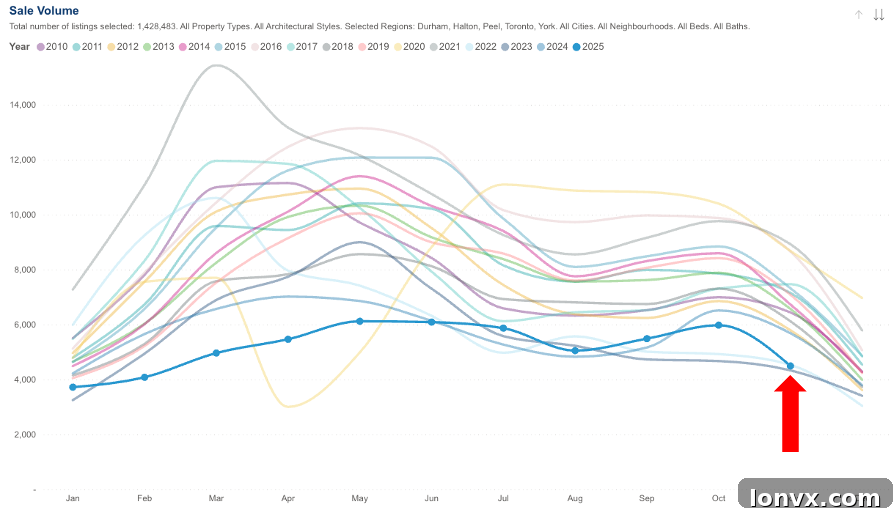
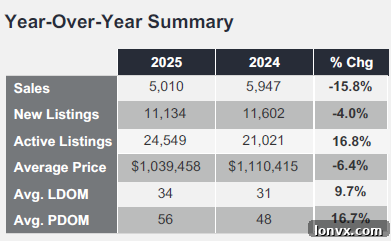
November’s TRREB data revealed a pronounced deceleration in home sales, with transactions falling to just under 5,000. This represents a substantial year-over-year decline of over 15 percent, marking November as the second slowest on record, surpassed only by the aftermath of the global financial crisis. Such a significant drop in sales volume underscores a profound shift in buyer sentiment and purchasing power, influenced by a confluence of economic factors including elevated interest rates and persistent affordability challenges.
(Source: TRREB)
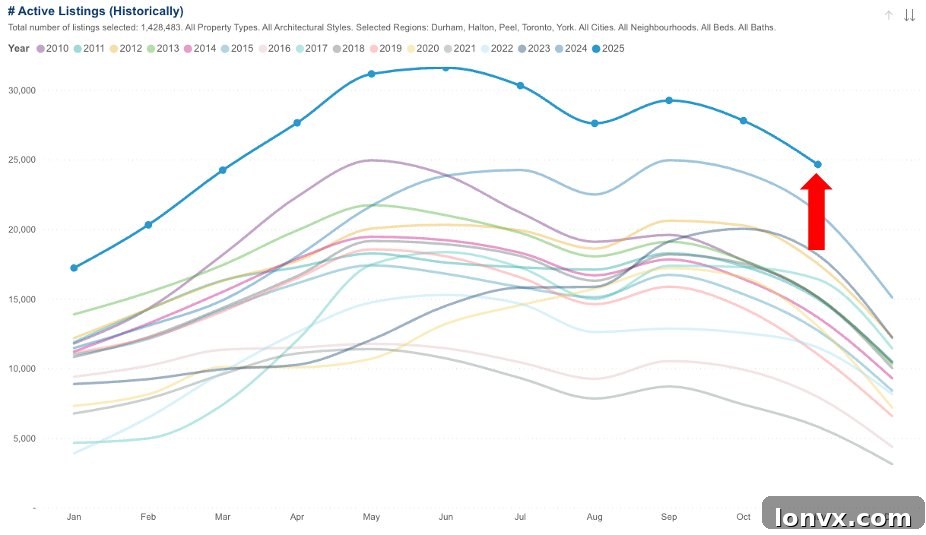
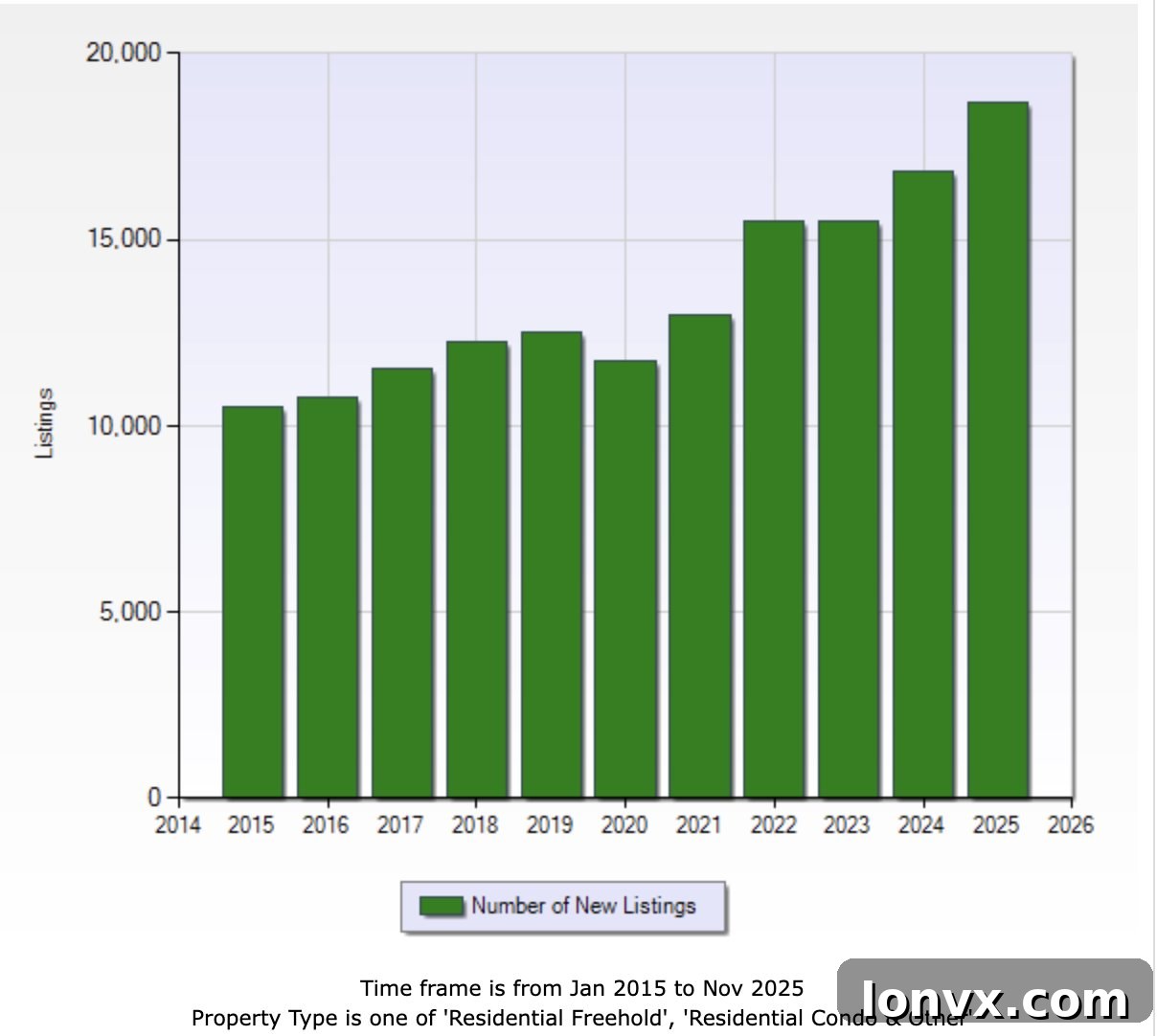
Concurrently, active listings in the GTA soared to an unprecedented 24,549 units, establishing a new record high for November. This level of inventory has not been observed in more than a decade, signaling a significant imbalance between supply and demand. What’s particularly noteworthy is that this surge in active listings is outpacing the modest four percent year-over-year decline in new listings. This dynamic—sales falling at a much faster rate than new supply entering the market—creates an environment of increasing buyer choice and diminished urgency, inevitably pushing the market towards a downward trajectory. The sustained accumulation of unsold properties exerts continuous pressure on pricing, as sellers compete for a shrinking pool of active buyers.
(Source: TRREB)
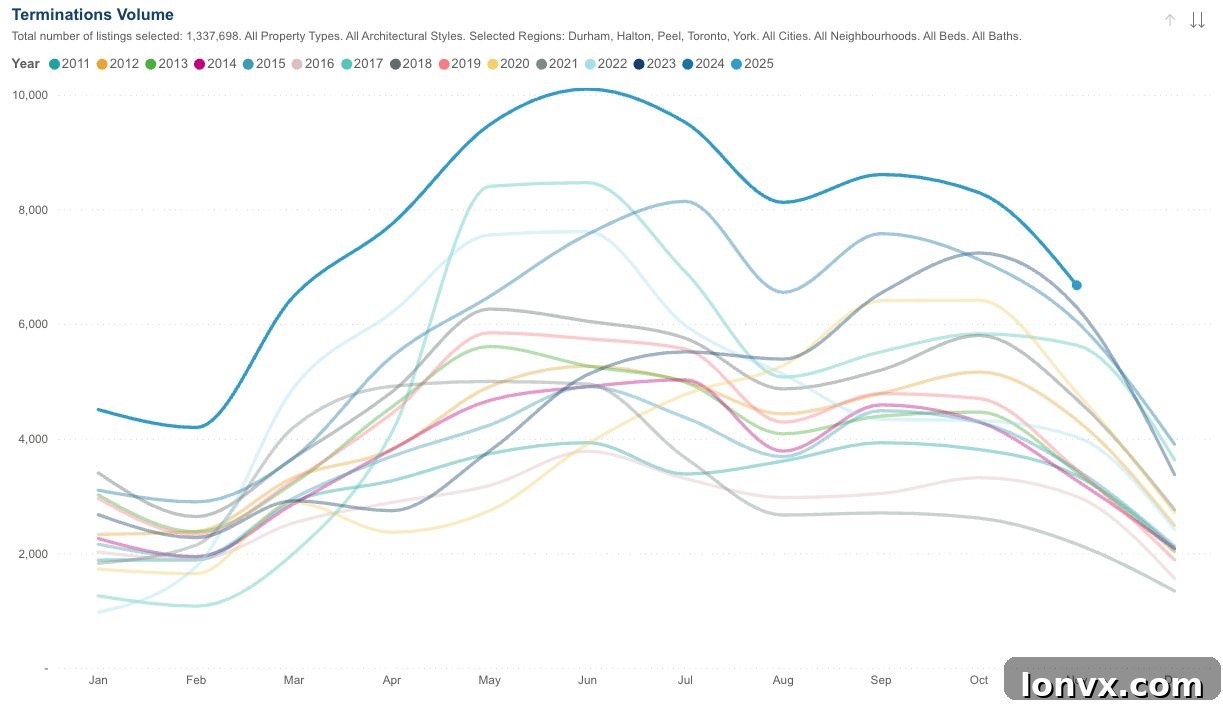
Beyond the headline figures, another critical indicator emerged from the November data: a record number of terminated listings for the month. When sellers opt to terminate their listings, especially during the slower winter season, it often reflects a strategic decision to withdraw from a challenging market with the intention of re-listing in the more vibrant spring market. This phenomenon creates a layer of “pent-up supply”—homes that are not currently active on the market but are poised to re-enter, potentially intensifying competition and inventory levels in the near future. While these properties don’t contribute to the current active listing count, their latent presence significantly influences the underlying pressure building beneath the market’s surface, suggesting that the supply-demand dynamics could become even more pronounced in the coming months.
(Source: TRREB)
GTA Home Prices: A Controlled Downward Trajectory
The average selling price for a home in the GTA settled at $1,039,458 in November, representing a year-over-year decline of over six percent. The MLS Home Price Index (HPI), which offers a more accurate measure of price trends by adjusting for variations in property type and size, echoed this sentiment with a similar drop of almost six percent. While these percentage declines may not appear dramatic on their own, their significance lies in confirming a persistent downward trend that has been in place since the market’s peak in early 2022. The month-to-month price changes were observed to be relatively flat, indicative of a steady and controlled correction rather than a volatile market crash. This “slow, grinding return of balance” is characteristic of many housing corrections, where market adjustments unfold gradually, driven by a cumulative effect of factors like affordability constraints, interest rate hikes, and evolving buyer expectations, rather than sudden shocks. It highlights a market diligently working through its previous excesses, with price equilibrium being sought through a prolonged period of moderation.
(Source: TRREB)
Detached Homes: The Unexpectedly Weakest Segment
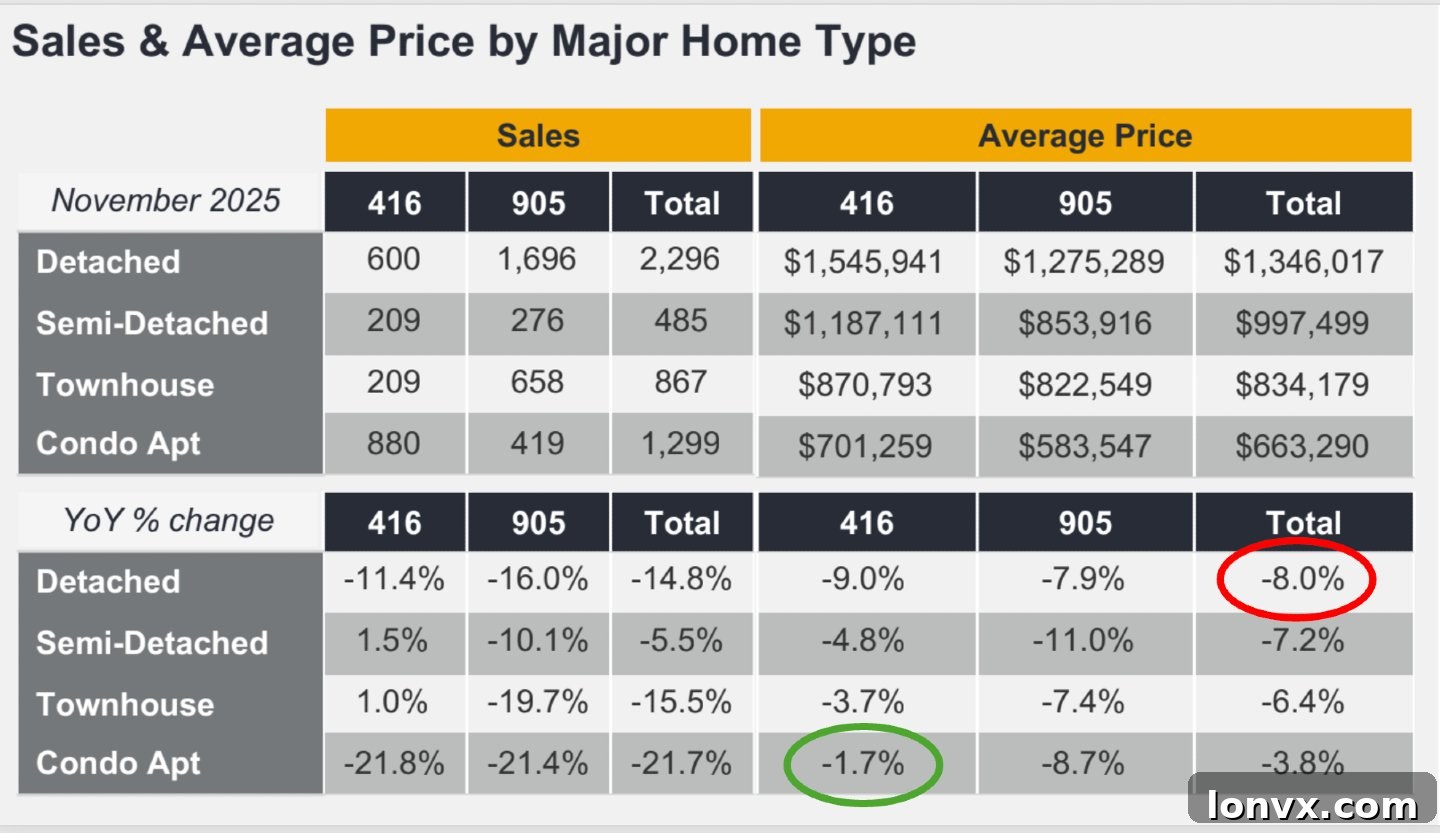
One of the most compelling and surprising revelations from November’s data is the stark divergence in market performance across different property types, with detached homes emerging as the weakest segment. Prices for detached properties experienced the most significant year-over-year decline, falling by an average of eight percent. This trend was observed uniformly across both the City of Toronto (416 area code) and its surrounding suburban regions (905 area code). This behavior defies conventional expectations, as detached homes are traditionally perceived as the most robust and resilient asset class within the housing ladder, often leading market recoveries and weathering downturns with greater stability. The current scenario, where they are absorbing some of the largest price corrections, indicates a fundamental shift in market dynamics. This could be attributed to factors such as higher borrowing costs disproportionately impacting larger mortgages required for detached properties, or a re-evaluation of lifestyle priorities post-pandemic that makes suburban detached living less universally aspirational when faced with significant carrying costs.
Downtown Condos (416): Signs of Early Price Stability
In stark contrast to detached homes, the downtown condominium market is exhibiting remarkable resilience. Prices for a typical condo unit in the City of Toronto experienced only a modest 1.7 percent year-over-year decline. While sales volumes have certainly been affected by the broader market slowdown, the underlying price stability in the core condo segment is unmistakable. This marks the second consecutive month of such a pattern, hinting at an early floor forming for this specific housing type. This phenomenon echoes historical precedents, particularly what transpired in the early 1990s correction, where condos, after initially leading the market decline, also reached their price floor earlier than low-rise homes. This historical parallel suggests that downtown condos might be on a path to a quicker stabilization or even a nascent recovery compared to other segments.
(Source: TRREB)
Why Toronto’s Core Condo Market is Diverging
The divergent performance of Toronto’s core condominium market can be attributed to several synergistic factors, primarily rooted in the city’s ongoing revitalization. A significant driver is the increasing return-to-office trend. While hybrid work models persist, the pace at which office towers are refilling has accelerated notably compared to a year ago. This resurgence in physical office attendance has reignited the importance of commute times and proximity to urban centers, making downtown living a more attractive proposition for many professionals. The city is gradually regaining the gravitational pull it temporarily lost during the pandemic, fostering a steady rebalancing that inherently supports the demand for core condo units. This isn’t a headline-grabbing surge, but a consistent, fundamental shift in how people utilize and value urban spaces.
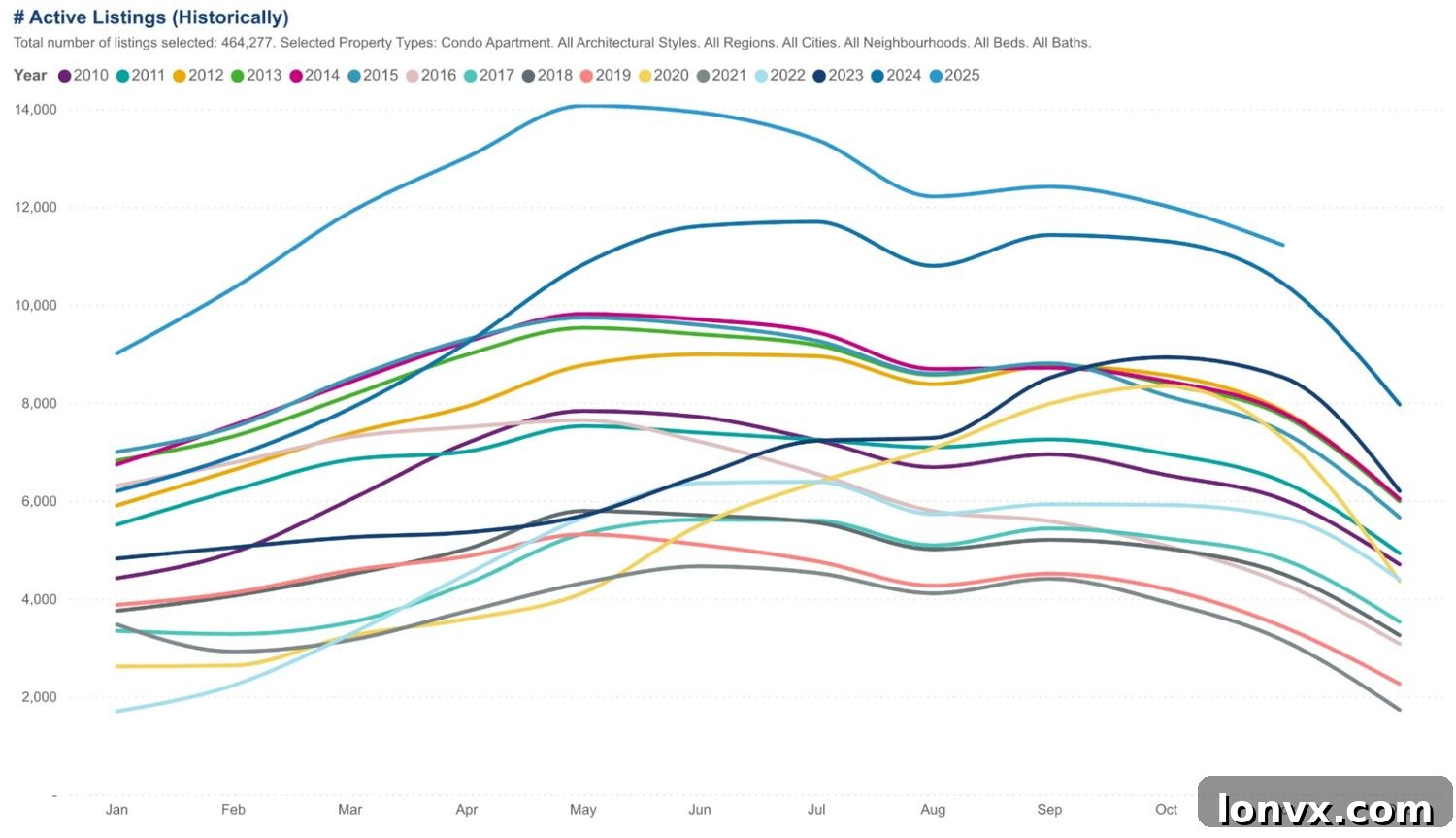
Furthermore, the supply side of the condo market presents a nuanced picture. Active condo listings for sale have been at record levels for an astounding 19 consecutive months, as illustrated in the chart below. Similarly, rental listings are nearing record highs for November outside of the pandemic period. This suggests that while investor-owned units are indeed spending more time on the rental market, the relatively stable prices in the core indicate that demand is effectively absorbing this expanding flow of supply. This unique combination reflects a market that is not only rediscovering the utility and allure of downtown living but is also efficiently working through the accumulated inventory from previous development cycles. The balance here is delicate: substantial supply is met by resilient, albeit not booming, demand, preventing sharp price declines seen elsewhere and underscoring the intrinsic value of Toronto’s urban core.
(Source: TRREB)
Structural Supply Pressures Beneath the Surface
Estate and POA Listings Add a New Layer of Supply
Beyond cyclical market fluctuations, the November data highlights significant structural shifts influencing housing supply, primarily driven by demographic changes. Listings associated with estates and power of attorney (POA) have surged, now standing 10 percent higher than last year and a remarkable 78 percent higher than a decade ago. This isn’t a temporary market anomaly but a profound structural phenomenon. As Canada’s population ages, a growing number of homeowners are entering life stages that necessitate the transition of properties through estate sales or long-term care planning. These types of sales are often less sensitive to market conditions and more driven by life events, providing a consistent and growing layer of supply that becomes particularly visible and impactful during slower market cycles. This demographic shift is a critical underlying factor explaining why overall inventory levels are rising faster than current demand can absorb them, adding a steady stream of properties regardless of prevailing market sentiment.
(Source: @JonFlynnREstats on X)
Days on Market Reflect the Market Reset
The pace of real estate activity has undeniably slowed, a trend clearly reflected in the “Days on Market” metrics. In November, the average listing spent 34 days on the market before selling. When considering the broader “property days on market”—which includes periods when a property might have been listed, terminated, and then re-listed—this figure extended to 56 days. These statistics confirm that homes are taking considerably longer to sell compared to the frenzied pace of the previous boom. However, it’s important to contextualize these numbers: while slower, they remain within the bounds of historical norms for softer, more balanced markets. This isn’t a collapse in sales velocity but rather a return to a more traditional and considered transaction cycle, requiring greater patience from sellers and offering more deliberation time for buyers.
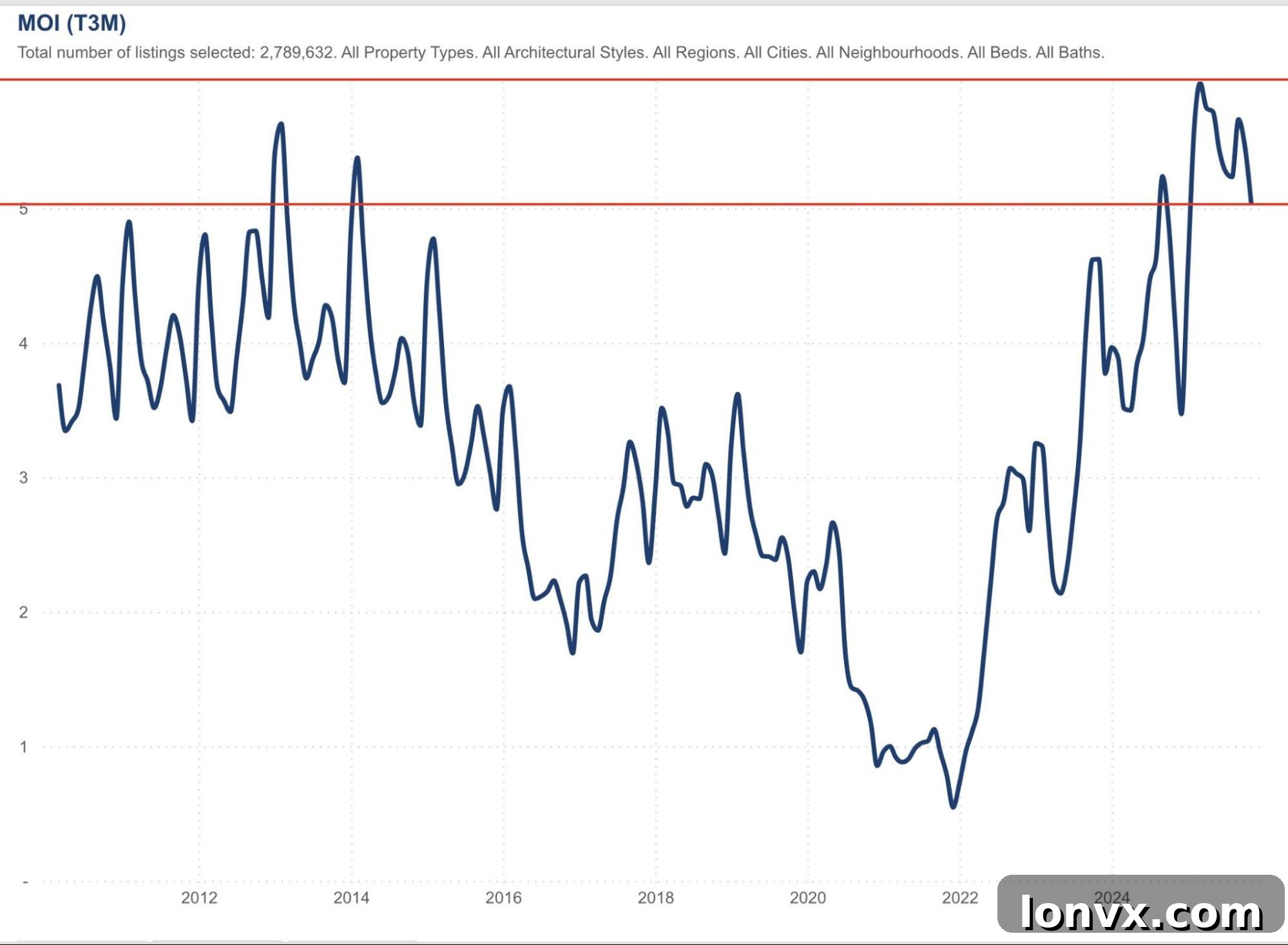
Adding another crucial dimension to market absorption is the “months of inventory” trend. The rolling three-month average for months of inventory continues to reside in a high channel. This metric indicates how long it would take to sell all currently available homes at the current rate of sales. A high channel suggests that a significant volume of listings remains unabsorbed, further validating the shift from a seller’s market to one favoring buyers. Even as the homes that do sell are moving at a pace consistent with long-term patterns, the overall inventory overhang signals persistent supply pressure, which is a key factor influencing price stability and future market direction.
(Source: TRREB)
The Road to 2026: Economic Context and Historical Parallels
The broader economic landscape influencing the housing market is a complex tapestry of caution and emerging optimism. Recent economic indicators provide a glimmer of hope: employment data for November surprised on the upside, showing unexpected strength in the labor market, and other economic growth indicators also exceeded forecasts. These positive signals are crucial, as housing demand is intimately tied to consumer confidence and job security. Many potential buyers, while eager to capitalize on softening home prices and the prospect of lower borrowing costs in the future, remain hesitant without a clearer outlook on their long-term employment prospects and overall economic stability. A robust job market can provide the foundational confidence needed to re-engage prospective homeowners.
Crucially, the current housing correction is increasingly mirroring the long cycles that have characterized previous major downturns. A comparative analysis of this cycle with those that began in 1989, 2007, and 2022 reveals undeniable similarities in progression. Housing corrections are rarely linear; they evolve through distinct stages. The GTA market is presently in a phase where inventory accumulates, sales activity slows, and different property types carve out divergent paths. The 1989 correction, driven by oversupply and rising interest rates, saw a prolonged period of price declines. The 2007-2008 downturn, while shallower in Canada than in the US, still featured a temporary freeze in lending and buyer activity. The 2022 correction, triggered by aggressive interest rate hikes, marked an abrupt end to the pandemic-driven boom. By studying these historical blueprints, we can better understand the current rhythm—a market grappling with affordability, adjusting to higher borrowing costs, and re-evaluating long-term value propositions across different segments. This understanding suggests that while the specifics of each cycle differ, the underlying dynamics of adjustment, consolidation, and eventual recovery tend to follow familiar patterns.
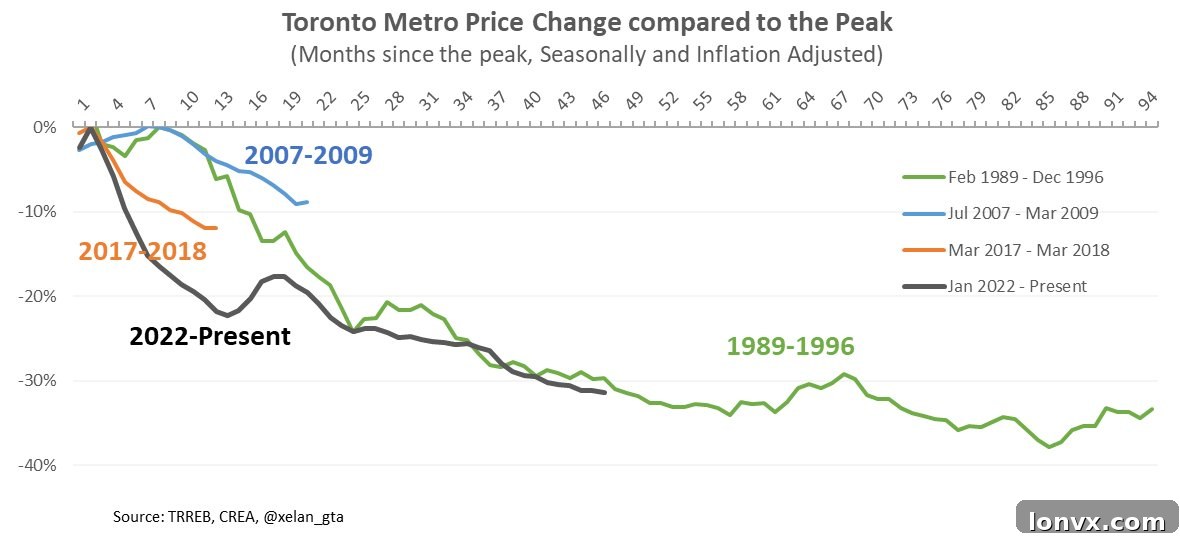
(Source: @xelan_gta on X)
Strategic Implications for the Evolving Market
Buyers
For prospective buyers, especially those eyeing detached homes, the current market presents an unparalleled window of opportunity not seen since before the pandemic. The surge in inventory means more choice and less competition, allowing for deeper value exploration and stronger negotiating conditions. With properties spending more days on the market, buyers have ample time for due diligence, securing financing, and making well-informed decisions without the pressure of bidding wars. This is a moment to prioritize long-term value and negotiate favorable terms, potentially locking in a property that aligns with future lifestyle and financial goals.
Sellers
Sellers in today’s market must adopt a strategy characterized by realistic pricing discipline and patience. The era of rapid appreciation and multiple offers has subsided, replaced by a market rhythm that more closely aligns with historical norms. Properties must be priced acutely to current market conditions, not aspirational peaks. Effective marketing, professional staging, and transparent communication with potential buyers are more critical than ever. Understanding that sales may take longer is key; patience, coupled with a willingness to adjust strategies based on market feedback, will ultimately lead to successful transactions. Collaborating with an experienced real estate professional who can accurately assess evolving market nuances is paramount.
Investors
For real estate investors, the downtown rental market, particularly for condos, continues to demonstrate its resilience and importance. The sustained stability in core condo prices, coupled with robust rental demand, underscores the strength of the urban rental engine. Early recovery signals in past cycles often originate in locations where employment centers and efficient transit intersect—precisely the characteristics of Toronto’s downtown core. Investors should focus on properties in these strategic, transit-accessible urban hubs, recognizing that rental income can provide a stable cash flow even during periods of slower capital appreciation. This market segment offers an opportunity for long-term growth driven by enduring urban appeal and demographic shifts.
Final Thought: Navigating the New Equilibrium
The November data unequivocally marks a deeper and more revealing stage of the ongoing GTA housing correction. The market is not merely slowing down; it is actively moving through a familiar rhythm, one that has shaped previous downturns and subsequent recoveries. While the specific details and catalysts of this cycle may differ from its predecessors, the underlying dynamics—the search for balance between supply and demand, affordability, and evolving buyer sentiment—are profoundly familiar. The signals hidden within the data, from the surprising resilience of downtown condos to the structural influence of estate listings, point towards where this new equilibrium may eventually emerge. For all participants, informed decision-making, adaptation, and a keen understanding of these evolving market forces will be essential in navigating the path ahead and capitalizing on the opportunities that arise as the market recalibrates towards its next chapter.