
The dream of homeownership remains a powerful aspiration for many Canadians, and recent data suggests this commitment is stronger than ever. A comprehensive
survey by Wahi
has revealed a notable increase in Canadians’ resolve to purchase a home this year, surpassing intentions observed in 2024. This heightened determination comes amidst evolving economic conditions and a perpetually challenging housing market, underscoring the resilience and proactive stance of prospective buyers across the nation.
“The message from many Canadians is clear—they’re going to do what it takes to step onto the property ladder,” stated Benjy Katchen, CEO of Wahi, in a recent press release. He further emphasized that while factors such as potentially lower interest rates and revised mortgage rules have offered some degree of improved housing affordability, a significant segment of Canadian homebuyers are adopting a more hands-on and strategic approach to achieve their property goals. This proactive attitude reflects not just a desire but a strategic commitment to navigate the complexities of the current real estate landscape.
Unpacking Canadian Homebuyer Intentions: Key Survey Findings
The second-annual Homebuyer Intentions Survey, conducted among members of the Angus Reid Forum, offers critical insights into the evolving mindset of Canadian real estate consumers. The findings highlight a robust and growing interest in securing a home, signaling a strong underlying demand that continues to shape the market.
Who’s Buying? A Generational Breakdown of Intent to Purchase
The survey data indicates that nearly 17 percent of Canadians plan to purchase a home this year. This intent is not evenly distributed across age groups, with younger generations leading the charge. Millennials, often considered the backbone of the first-time buyer market, showed the strongest inclination, with 23 percent expressing plans to buy. They are closely followed by Gen Z at 20 percent, demonstrating that even the youngest adults are setting their sights on property ownership early. Gen X, typically in their prime earning years, also showed significant interest at 18 percent, while Baby Boomers, many of whom might be considering downsizing or investment properties, registered 10 percent. This generational disparity underscores different life stages, financial capacities, and long-term investment strategies influencing homebuying decisions across Canada. The consistent drive from younger demographics particularly highlights the enduring appeal of real estate as a foundational investment and a cornerstone of personal stability.
The Financial Readiness: Sacrifices and Strategic Shifts
To achieve their homeownership dreams, Canadians are demonstrating a remarkable willingness to adjust their financial habits and strategies. The survey revealed a significant trend towards increased fiscal discipline and adaptability:
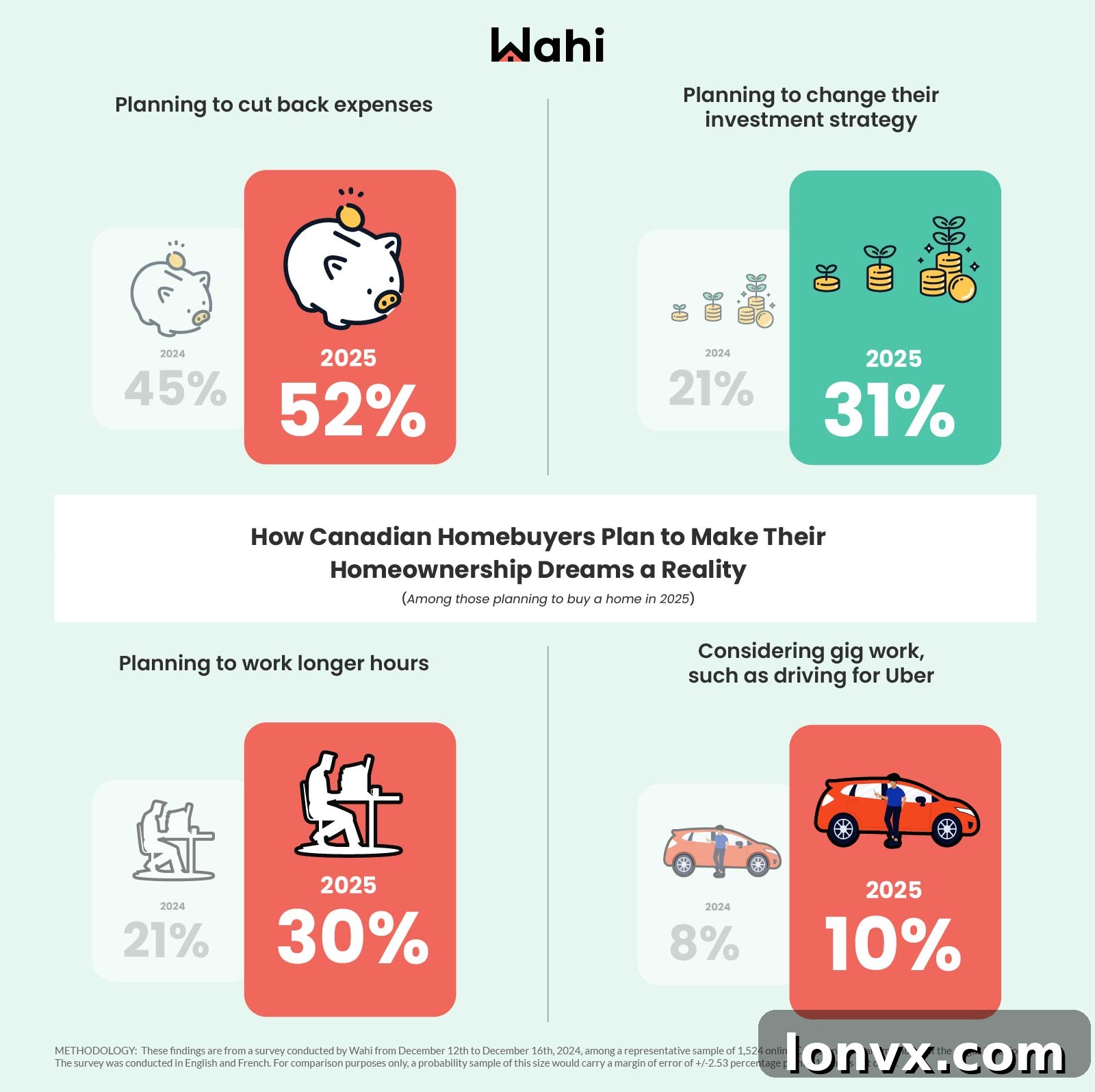
- Cutting Back on Spending: A striking 52 percent of prospective buyers are planning to reduce their overall spending, marking a substantial 7.0 percent increase compared to 2024. This suggests a widespread commitment to saving for a down payment or managing mortgage costs, often at the expense of discretionary purchases or lifestyle luxuries. Canadians are prioritizing their long-term financial goals over immediate gratification, signaling a deep-seated determination to enter or re-enter the housing market. This could involve anything from fewer dining out experiences to delaying major purchases like new cars or vacations, all to consolidate funds for real estate.
- Rethinking Investment Strategies: Beyond cutting expenses, a notable 31 percent of respondents intend to modify their investment portfolios, a significant jump from 21 percent in the previous year. This shift indicates that many are re-evaluating where their money is best allocated, potentially moving funds from less liquid assets or lower-return investments into savings vehicles designed for a down payment. Some might be shifting from stock market investments to more conservative, accessible savings accounts or GICs to ensure funds are readily available for a home purchase, reflecting a more cautious yet determined financial approach.
- Working Longer and Diversifying Income: The pursuit of homeownership is also prompting changes in work habits. 30 percent of respondents indicated they would work longer hours to boost their income, an increase from 21 percent in 2024. Furthermore, 10 percent are considering taking on gig work or side jobs, up from 8.0 percent last year. This trend highlights the extra mile many Canadians are willing to go, embracing additional employment opportunities to augment their earnings and accelerate their savings. The gig economy, with its flexible work arrangements, offers a viable pathway for many to supplement their primary income, making the dream of homeownership more attainable in a high-cost environment.
These statistics paint a vivid picture of a Canadian populace deeply committed to homeownership, prepared to make substantial sacrifices and strategic financial adjustments to achieve their goals. This collective resolve is a testament to the perceived value and security that owning property represents in the Canadian psyche.
First-Time Homebuyers vs. Experienced Buyers: A Tale of Two Approaches
The journey to homeownership often differs significantly between those embarking on it for the first time and those who have previous experience. The Wahi survey meticulously compared these two groups, revealing distinct patterns in their willingness to make concessions. First-time homebuyers, typically facing higher barriers to entry such as a lack of existing equity, demonstrated a greater degree of flexibility and determination.
- Spending Reductions: A remarkable 59 percent of first-time homebuyers were prepared to reduce their spending habits to afford a home. This contrasts sharply with 47 percent of non-first-time homebuyers, suggesting that the initial leap onto the property ladder demands more stringent financial discipline. For first-timers, every dollar saved is a step closer to their down payment, making austerity a necessary and accepted part of their strategy.
- Investment Strategy Changes: When it came to altering investment strategies, 37 percent of first-time buyers indicated they would make adjustments, compared to 27 percent of non-first-time buyers. This higher percentage among first-timers illustrates a more aggressive approach to accumulating capital. They might be more inclined to liquidate other assets or redirect savings from less urgent financial goals to prioritize their home purchase. Experienced buyers, on the other hand, might have more established portfolios or less immediate pressure to reallocate funds, relying more on existing equity or less drastic financial shifts.
- Working Longer Hours: The willingness to increase work hours also saw a significant disparity. 37 percent of first-time buyers were open to working longer to secure a home, whereas only 24 percent of non-first-time buyers expressed the same willingness. This highlights the intense effort first-time buyers are prepared to expend, often juggling multiple jobs or extending their workdays to meet the financial demands of entering the housing market. For many, working more is a direct route to boosting savings and qualifying for a mortgage, a hurdle that often feels more formidable for those without prior home equity.
These findings underscore the unique challenges and motivations of first-time homebuyers in Canada. Their heightened flexibility and willingness to make significant personal and financial sacrifices reflect the higher stakes involved in making their initial property acquisition. For experienced buyers, the approach is often more nuanced, perhaps leveraging existing assets or facing different financial constraints.
Flexibility Beyond Finance: The Willingness to Relocate and Adapt
Beyond financial adjustments, Canadian homebuyers are also showing considerable flexibility in terms of location and property type, recognizing that the ideal home might not always be in the ideal spot or fit all pre-conceived notions. This adaptability is a crucial factor in navigating competitive markets and achieving affordability.
- Exploring New Neighbourhoods: The survey revealed that a vast majority, 73 percent of all prospective buyers, would consider different neighbourhoods than their initially preferred ones. This openness to exploring new communities, suburbs, or even entirely different cities underscores a pragmatic approach to home search. It suggests that buyers are prioritizing affordability and availability over strict geographical preferences, understanding that expanding their search radius can unlock more opportunities. This trend could contribute to the growth of secondary markets and exurban areas as buyers seek value further afield from traditional urban centers.
- Adapting Home Style and Type: Over half of all prospective buyers, 57 percent, indicated they would consider a different style or type of home. This flexibility means buyers are not strictly confined to detached houses, but are open to townhouses, condominiums, or semi-detached properties that might better fit their budget or immediate needs. This pragmatic shift reflects a market where buyers are willing to compromise on certain aesthetic or size preferences to secure a property, recognizing that entry into the market is often more important than the exact type of dwelling.
- Living Farther from Amenities: Furthermore, 55 percent of respondents were comfortable with the idea of living farther from essential amenities such such as schools and stores. This willingness to trade proximity for affordability highlights a significant adjustment in lifestyle expectations. While convenient access to services is often highly valued, many buyers are clearly prepared to accept longer commutes or reduced local access if it means achieving homeownership. This particular trend has broader implications for urban planning and the development of infrastructure in peripheral areas, as more residents move further out to find attainable housing options.
The collective data from Wahi’s survey paints a picture of Canadian homebuyers who are not just committed but also remarkably resilient and adaptable. They are prepared to make significant financial sacrifices and extend their search parameters, both geographically and in terms of property type, to realize their homeownership aspirations. This proactive and flexible mindset is a defining characteristic of the current Canadian real estate market, driving demand and shaping future trends amidst ongoing economic shifts. For anyone looking to enter the Canadian housing market, understanding these widespread intentions and adaptations can provide a valuable roadmap for success.
Enjoying this article?
Get the latest REM articles in your inbox 3x week so you stay up to date on the latest in the Canadian real estate industry