
Navigating Canada’s Housing Market: The Shift Towards Affordable Cities
Canada’s major urban centers, while vibrant and diverse, often present a significant challenge for aspiring homeowners: affordability. In a landscape characterized by rising property values and increasing interest rates, many Canadians are re-evaluating their housing strategies. A recent Royal LePage survey sheds light on this growing trend, revealing that a substantial portion of residents in the Greater Toronto, Montreal, and Vancouver regions are actively considering a move to more economically viable cities across the country. This shift is largely enabled by the expanding opportunities for remote work and the pursuit of an enhanced quality of life, painting a dynamic picture of Canada’s evolving real estate market.
The Quest for Affordability: A National Trend
The survey’s findings highlight a compelling narrative: half of the respondents from Canada’s most expensive urban areas would contemplate purchasing a property in a more affordable city, provided they could secure employment or continue working remotely. This sentiment is particularly strong among renters, with 60 percent indicating a willingness to relocate, compared to 45 percent of current homeowners in these bustling locales. This disparity underscores the unique flexibility renters often possess, unburdened by the complexities of selling an existing property, making them more agile in their pursuit of homeownership.
Karen Yolevski, COO of Royal LePage Real Estate Services Ltd., emphasizes this significant migration trend: “Many aspiring homeowners in the country’s largest and priciest urban centres are seriously considering relocating to less expensive cities in order to get a foot on the property ladder.” This desire to enter the housing market is a powerful motivator, especially as high borrowing costs and the escalating price of everyday goods continue to squeeze household budgets. The permanence of remote work, a legacy of the post-pandemic era, further empowers individuals to seek out housing options that align with their financial realities, decoupling residential choices from traditional office proximity.
Discovering Canada’s Most Budget-Friendly Urban Centers
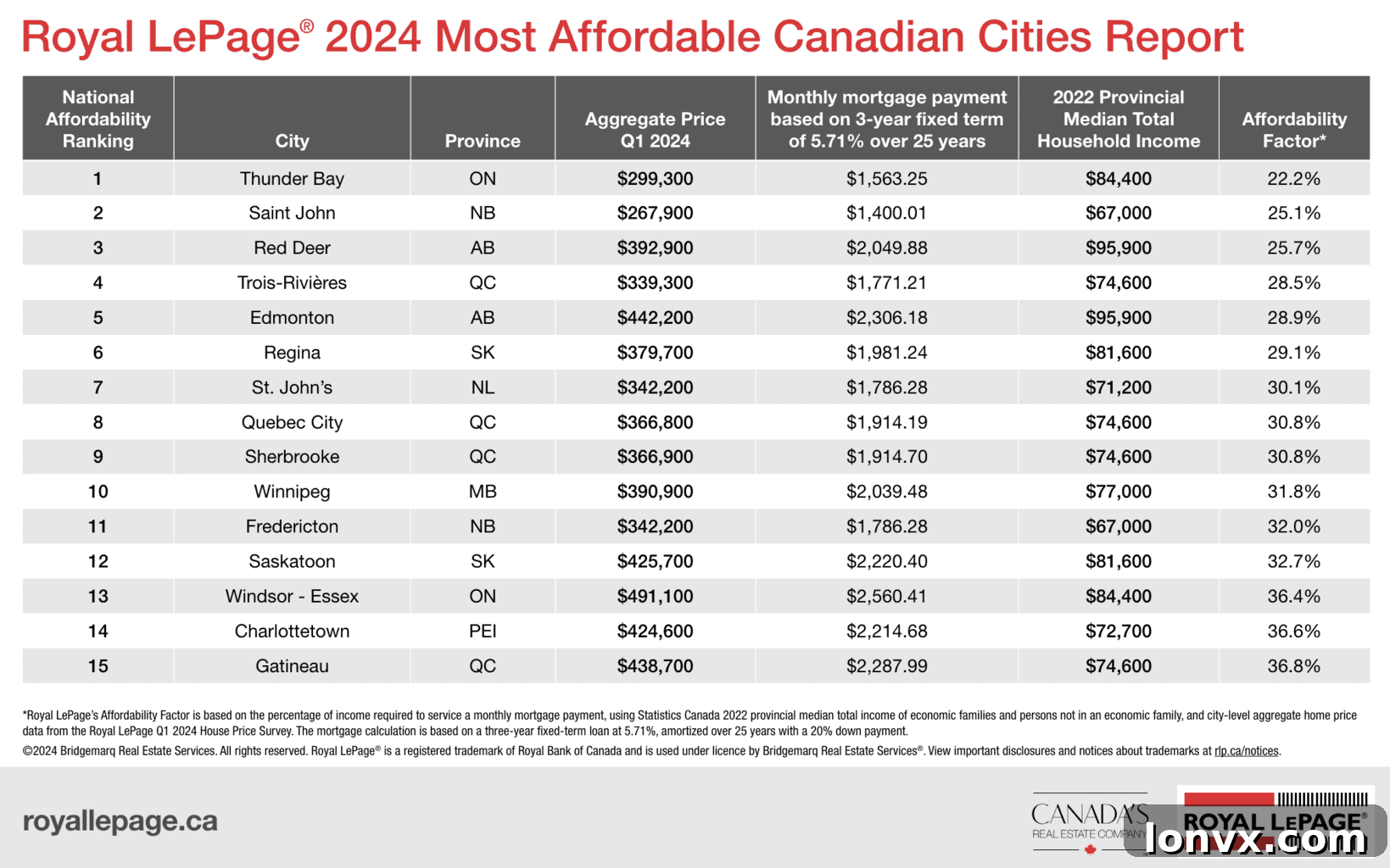
The Royal LePage survey also identified Canada’s leading affordable cities, offering a clear roadmap for those looking to maximize their purchasing power. Topping this list is Thunder Bay, Ontario, where a mere 22.2 percent of a household’s monthly income is typically required to service a mortgage payment. This remarkably low percentage makes it an attractive destination for those seeking substantial financial relief.
Following Thunder Bay, the top five most affordable cities include Saint John, New Brunswick; Red Deer, Alberta; Trois-Rivières, Quebec; and Edmonton, Alberta. In these vibrant communities, the proportion of a household’s monthly income allocated to mortgage payments ranges from 25.1 to 28.9 percent. These figures stand in stark contrast to the significantly higher percentages often seen in cities like Toronto, Vancouver, and Montreal, where housing costs can consume a much larger share of income. These affordable cities not only offer lower entry points into homeownership but also present opportunities for a different pace of life, often closer to nature and with strong community ties, appealing to a broader spectrum of Canadian homebuyers.
Remote Work: The Catalyst for Relocation
The rise and normalization of remote work have undeniably reshaped the Canadian real estate landscape, acting as a powerful catalyst for relocation. What was once a niche work arrangement has now become a mainstream option for a significant portion of the workforce, particularly in sectors where digital connectivity is paramount. This newfound flexibility allows individuals and families to reconsider where they live, moving beyond the traditional constraints of commuting distance to a physical office. For many, this means the ability to pursue homeownership in regions previously considered too far from major employment hubs.
Yolevski further highlights this transformative impact: “This flexibility is supported by the post-pandemic permanence of remote work opportunities, which continues to allow workers in many sectors to seek out housing that is within their budget, without worrying about proximity to their office.” This freedom empowers homebuyers to prioritize affordability and lifestyle preferences, making previously inaccessible markets viable options. It’s a fundamental shift that has democratized access to various Canadian communities, fostering growth and bringing new residents to areas that might otherwise have seen slower development.
Beyond Price: Lifestyle and Community Drives Relocation Choices
While financial considerations are paramount, the decision to relocate to a more affordable city extends far beyond just lower home prices. The Royal LePage survey reveals that lifestyle factors play a crucial role in these significant life choices. A substantial 57 percent of respondents considering a move cited a lower overall cost of living as a primary incentive. This encompasses everything from groceries and utilities to transportation and entertainment, promising a greater sense of financial freedom and less daily strain.
Moreover, 41 percent expressed a desire to be closer to nature and reside in less populated areas, seeking tranquility and access to outdoor activities. Another 40 percent yearned for a more relaxed pace of life, a stark contrast to the relentless hustle and bustle of major urban centers. As Yolevski points out, “It’s clear that lifestyle is an important factor in Canadians’ decisions about where to buy a home.” This trend, which began even before the pandemic, significantly accelerated during the real estate boom of 2020 and 2021. During this period, many homebuyers sought out smaller communities where they could enjoy greater privacy, more living space, and enhanced access to the outdoors, all while maintaining social distancing. This profound shift indicates a collective aspiration for a better work-life balance and a deeper connection to their immediate environment.
Popular Relocation Destinations: A Regional Snapshot
The survey also identified specific cities that stand out as popular relocation destinations among residents of Canada’s most expensive markets. For those in the Greater Montreal Area, Quebec City emerged as the top choice, with 29 percent of respondents indicating they would consider buying a home there if job or remote work opportunities were available. Its rich history, European charm, and relatively lower cost of living compared to Montreal make it an appealing prospect.
Meanwhile, Edmonton captured the highest interest from residents in both the Greater Toronto Area (GTA) and Greater Vancouver, with 19 percent in each city choosing it as their preferred relocation spot. Edmonton, a vibrant capital city in Alberta, offers robust employment opportunities, a diverse economy, and significantly more affordable housing compared to the country’s coastal and central hubs. Its blend of urban amenities and access to natural beauty, coupled with its affordability, makes it an attractive option for those seeking a fresh start.
The Enduring Appeal of Major Urban Hubs: Why Some Choose to Stay
Despite the growing trend towards relocation, it’s crucial to acknowledge that Canada’s largest urban centers retain an undeniable allure for a significant portion of the population. The Royal LePage survey found that 40 percent of respondents from Toronto, Montreal, and Vancouver would not consider moving to a more affordable city. This group includes a notable 47 percent of current homeowners and 30 percent of renters, highlighting diverse preferences and priorities within the market.
As Karen Yolevski explains, “Canada’s largest cities have much to offer, from diverse employment opportunities to endless entertainment options and amenities. Around the world, people continue to gravitate to major cities and the lifestyle they provide.” These bustling metropolises serve as economic engines, cultural melting pots, and centers of innovation. They offer unparalleled access to higher education, specialized healthcare, international cuisine, arts, and networking opportunities that are often difficult to replicate in smaller communities. For many, the benefits of urban living – career growth, cultural richness, and vibrant social scenes – outweigh the challenges of higher living costs. Regardless of how many residents choose to relocate elsewhere, there will always be a strong and consistent demand for housing in cities like Toronto, Montreal, and Vancouver, attracting both local residents and new arrivals to Canada.
Addressing Canada’s Housing Supply Challenge
While the trends of relocation and sustained urban demand paint a complex picture of Canada’s housing market, a critical underlying issue persists: the imbalance of supply and demand. Yolevski points out that this fundamental challenge makes it incredibly difficult for many to access the housing market, particularly in high-demand areas. This structural issue “underscores the crucial need to build more homes faster in markets of all sizes.”
Increasing housing supply is not merely a matter of alleviating pressure in the largest cities; it’s about fostering healthy, accessible housing markets nationwide. This requires collaborative efforts from all levels of government, developers, and communities to streamline zoning, reduce bureaucratic hurdles, and incentivize construction. Addressing this supply deficit is vital to ensuring that all Canadians, whether they choose urban centers or more affordable communities, have the opportunity to find a home that meets their needs and budget, supporting long-term economic stability and social well-being.
Conclusion
The Canadian housing market is currently experiencing a fascinating dual dynamic. On one hand, a significant segment of the population, empowered by remote work and driven by affordability concerns, is actively seeking new beginnings in Canada’s more budget-friendly cities. These individuals are prioritizing a lower cost of living, a closer connection to nature, and a more relaxed lifestyle. On the other hand, the enduring appeal of major urban centers continues to attract those who value diverse employment opportunities, rich cultural experiences, and extensive amenities, ensuring a sustained demand in these vibrant hubs. This ongoing recalibration reflects a broader societal shift in values and priorities. As Canada continues to evolve, addressing the fundamental challenge of housing supply across all market sizes will be paramount to ensuring sustainable growth and equitable access to homeownership for all its citizens.
Review the full report here.