Revolutionizing Affordable Housing: The Transformative Power of Passive House Design
In an era grappling with urgent housing shortages and the escalating climate crisis, a remarkable solution is gaining prominence: the Passive House standard. This innovative approach to building design and construction is not merely a fleeting trend; it represents a fundamental shift towards truly sustainable, affordable, and resilient living spaces. Far from being a niche concept, Passive House is emerging as a beacon of hope for communities striving to provide high-quality housing that is both economically viable and environmentally responsible.
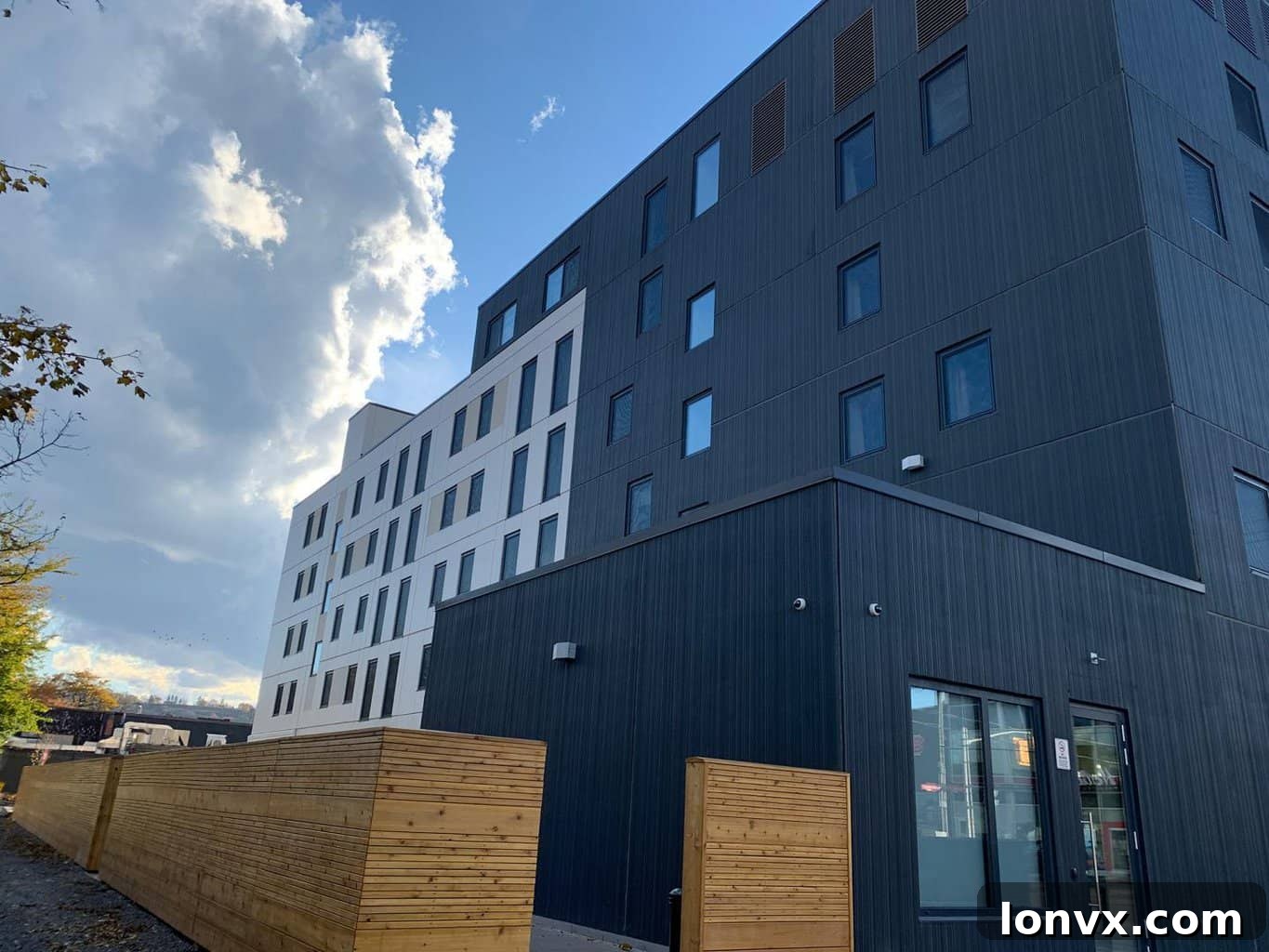
At the forefront of this movement is the Putman Family YWCA in Hamilton, Canada – a pioneering project that stands as a testament to what is possible when visionary design meets profound community need. More than just a building, it embodies a deep commitment to dignity, safety, and well-being for its residents. This groundbreaking development showcases how Passive House principles can deliver exceptional living environments that are remarkably energy-efficient, inherently comfortable, and truly future-proof.
The Putman Family YWCA: A Vision for Sustainable Community Living
The Putman Family YWCA in Hamilton, Ontario, stands as a shining example of how Passive House principles can be seamlessly integrated into a community-focused development. Medora Uppal, Director of Operations at YWCA Hamilton, aptly describes the certified Passive House as “the simplest, lowest-cost environmental solution to affordable housing.” Her insights underscore the practicality and profound impact of this building standard in addressing critical societal challenges.
This ambitious project was not merely about constructing 50 housing units; it was the culmination of a deeply collaborative nine-year journey of intensive community consultation. The overarching goal was to create a vibrant, inclusive space where youth, seniors, and families could feel genuinely welcome, supported, and secure. Beyond providing much-needed residences, the Putman Family YWCA thoughtfully incorporates an innovation center, crucial opportunities for upskilling, and versatile public meeting spaces. For survivors of violence, the building’s design fosters an immediate sense of safety and tranquility upon entering its doors, reflecting a holistic and compassionate approach to well-being.
Jonathan Kearns, the lead architect from Kearns Mancini Architects (KMAI), is credited with simplifying what might otherwise be a complex endeavor. Unlike the often-prohibitive costs associated with advanced technologies in net-zero homes or the extensive documentation required for LEED-designated buildings – both of which can be prohibitively expensive for non-profit organizations – Passive House offered a more accessible and sustainable path. Uppal emphasizes, “There is no complicated advanced technology as in a net-zero house. There is no expensive documentation as in a LEED-designated building, both of which are very expensive to build. Unaffordable for a non-profit. It is simply a high-quality building that is meant to last and uses about 90 per cent less energy than a conventional building.”
The financial rationale for choosing Passive House was undeniably compelling. While the Putman Family YWCA incurred a modest cost premium of only two percent above standard code construction, this initial investment is strategically projected to be recouped through significantly lower operating costs in less than two years. This demonstrates that Passive House is not just an environmental choice but “simply good business,” offering long-term economic advantages. The project’s excellence in sustainable design and its profound community impact were recognized with a prestigious Clean 50 2022 Top Project award, highlighting its role as a benchmark for future developments seeking both ecological integrity and social benefit.
In a nation grappling with a persistent and complex housing crisis, innovative buildings like the Putman Family YWCA offer a compelling blueprint for progress. Their inherent resilience against both accelerating climate challenges and potential public health crises makes them an indispensable part of the solution for creating healthier, more stable, and more equitable communities across Canada and beyond.
Understanding Passive House: A Deep Dive into Sustainable Design Principles
Interestingly, when Kearns Mancini Architects (KMAI), widely recognized as Ontario’s leading Passive House architects, first engaged with YWCA Hamilton, they didn’t initially propose the Passive House option. It was the YWCA itself that introduced the concept, driven by a desire for truly sustainable, cost-effective, and future-proof solutions. This proactive approach from the client side underscores the growing recognition and demand for buildings that go significantly beyond conventional standards, prioritizing occupant well-being and environmental performance.
Core Principles: Unmatched Insulation, Airtightness, and Continuous Fresh Air
At its heart, the Passive House standard is predicated on creating an exceptionally highly insulated and remarkably airtight building envelope. This fundamental design strategy dramatically minimizes unwanted heat loss in winter and unwanted heat gain in summer, rendering massive, conventional heating and cooling systems largely unnecessary. Instead, these buildings harness an innovative energy recovery ventilation (ERV) system that continuously extracts and recycles heat generated by the occupants’ bodies and their daily activities, such as cooking and showering.
Jonathan Kearns famously illustrates this unparalleled efficiency with a vivid analogy: “A hair dryer can heat a Passive House.” This powerful statement highlights the minimal energy input required to maintain a consistently comfortable internal temperature, showcasing the unparalleled thermal performance achieved through meticulous design and precision construction. The building effectively acts as its own climate control system, greatly reducing reliance on external energy sources.
Beyond Energy Savings: A Revolution in Health and Comfort
A common misconception is that airtight buildings equate to stale, unhealthy air. On the contrary, a Passive House is an incredibly active, breathable structure. The integrated energy recovery system provides dedicated, finely filtered fresh air ventilation to every single room, ensuring a constant supply of clean, oxygen-rich air without compromising thermal performance or experiencing heat loss. This sophisticated system allows for optimal indoor humidity levels, typically maintained between a healthy 40 to 50 percent range, which is crucial for human health and comfort.
This precisely controlled indoor environment offers significant, demonstrable health benefits. In more humid air, aerosolized particles – including viruses and allergens – do not remain suspended for long periods; instead, they quickly drop to the ground, significantly reducing the risk of airborne transmission. Furthermore, maintaining a healthy humidity range helps preserve the body’s natural mucosa layer, offering residents enhanced protection against airborne pathogens and respiratory irritants. This makes Passive House an inherently pandemic-resilient environment, particularly well-suited for multi-unit dwellings such as long-term care homes, where infection prevention and control are paramount considerations.
Compelling evidence supports this claim. A Passive House long-term care home in Spain, rigorously tracked since the onset of the pandemic, has reported zero cases of COVID-19 to date. While anecdotal, this remarkable outcome speaks volumes about the efficacy of efficient air control, the elimination of uncontrolled air leaks, and the consistent flow of clean, fresh air maintained at ideal relative humidity levels within these structures. Medora Uppal’s personal experience echoes this profound difference: “You feel it immediately when you walk into the Putnam Y,” she shares. “The air feels clean and refreshing. And it is silent, so quiet even on busy Ottawa Street.” This pervasive tranquility, combined with superior air quality, profoundly enhances the overall living experience for all occupants.
Architectural Vision and Construction Innovation: Building for the Future
The resounding success of the Putman Family YWCA project owes much to the unparalleled Passive House expertise embedded within Kearns Mancini Architects (KMAI). Deborah Byrne, COO of KMAI and Director of Passive House design, powerfully emphasizes the unique collaborative demands of such a project: “To build Passive House, the design team has to be truly integrated. You cannot design the building and then pass it on to a consultant to make it work. Every wire, every duct, every detail must be accounted for at the beginning of the design and every step of the way, or you will simply not meet the International Passive House standard.” This integrated, highly meticulous approach ensures absolute precision and unwavering adherence to the rigorous certification requirements from initial concept to final completion.
Aesthetic Excellence: Designing the Soul of the Building
Beyond the impressive technical specifications, Jonathan Kearns, KMAI’s principal in charge, champions the indispensable role of aesthetics in Passive House design. “If there is no art in it, there’s no point,” he states, articulating KMAI’s philosophy of designing spaces that not only function flawlessly but also delight and transform. The firm prides itself on creating environments where beauty is not an afterthought but an integral component of the user experience, deeply impacting well-being. “There has to be a delight to the eye that sneaks into the heart of the user; we are always looking for the soul of the building,” Kearns adds, highlighting their profound commitment to crafting spaces that resonate emotionally and functionally.
Denise Christopherson, CEO of YWCA Hamilton, enthusiastically affirms this visionary approach: “The building is beautiful. The views through the big windows on the sixth floor overlook the treed Niagara Escarpment. People will be proud to live in this building. Pride and dignity. That’s what we wanted for the Putnam Y.” This sentiment encapsulates the project’s success in providing not just shelter, but homes that foster a profound sense of self-worth, belonging, and aspiration among residents.
The design ethos extends thoughtfully to every aspect of the residents’ experience, featuring expansive floor-to-ceiling windows that flood units with an abundance of natural light, vibrant color palettes, and the use of high-quality, durable materials throughout. These carefully considered elements distinctly differentiate the Putman from typical affordable housing designs, elevating it to a standard where it creates residences that exude a universal appeal and “would suit anyone.” The YWCA Hamilton, having proudly occupied its Ottawa Street location for nearly a century, sought a building that would not only endure but whose design would remain “fresh over the next 100 years,” a powerful testament to their long-term vision and profound investment in the Hamilton community.
Pioneering Innovation in Construction: The First Precast Passive House
The Putman Family YWCA also broke significant new ground in construction methodology, venturing into uncharted territory. The YWCA Hamilton specifically requested a concrete building and boldly challenged Kearns Mancini to collaborate with a local precast manufacturer, Coreslab Structures. This presented a truly unique engineering and construction challenge, as a precast Passive House of this scale had never been successfully built before, requiring innovative solutions and close collaboration.
Rick Sealey, KMAI’s vigilant on-site project manager, elaborates on the ingenious solution developed: “Coreslab has an insulated panel, so we worked with them to double their R-value. We used a European phenolic resin that hadn’t been used in Canada before, sandwiched between two slabs of concrete.” This bespoke, high-performance approach drastically enhanced the thermal performance of the precast panels, a critical factor for achieving the stringent insulation requirements of Passive House standards in a robust concrete structure.
The meticulous erection of 243 massive precast panels was an undertaking that demanded extraordinary precision and attention to detail. Achieving the stringent airtightness requirements of Passive House involved precision work akin to “taping drywall,” as every single panel connection had to be meticulously taped and sealed into place to prevent any air leakage. The installation of the massive triple-pane windows, weighing between 600 to an impressive 1,000 pounds each, further exemplified this demand for precision, sometimes requiring specialized robots to maneuver them into position and meet the exacting tolerances. Traditional Canadian construction expertise also played a vital and adaptable role, as contractors highly skilled in building hockey rinks readily adapted their knowledge to pour insulated floor slabs, simply increasing the R-value to meet the rigorous International Passive House standards.
Sealey’s constant and careful attention to every detail throughout the construction process paid off handsomely. The Putman Family YWCA was deservedly recognized with an Ontario Concrete Award for its groundbreaking innovation and exceptional execution. More importantly, Deborah Byrne confirmed that the building’s performance results were well below the required limits, securing its international Passive House certification – a hard-won validation of the entire team’s pioneering efforts and collaborative spirit.
Deborah Byrne, recently honored as one of the Clean 16, 2022 in the esteemed Building: Design, Development & Management category, powerfully summarizes the philosophy that drives Passive House construction: “In most buildings, you design the shell, then you add the machinery. In Passive House, the building is the machine. It’s a puzzle, like playing with Lego to solve a Rubik’s cube.” She passionately advocates against sacrificing quality for expediency, especially during a housing crisis. “Just because we’re having a housing crisis does not mean we need to sacrifice quality in the name of urgency. We need to build for the next century. And we need to build for the health and comfort of the residents.” This vision encapsulates a commitment to long-term sustainability and occupant well-being.
The Enduring Impact and Future of Passive House
Kearns Mancini Architects stands as a truly unique firm within the architectural landscape, distinguished by its invaluable in-house expertise in Passive House design. Unlike many other firms that often outsource this specialized and complex work to external consultants, KMAI integrates it seamlessly into their core workflow, leveraging their deep experience and refined processes to achieve consistently exceptional results. Jonathan Kearns eloquently captures the transformative nature of this specialized knowledge: “Once you learn Passive House, you just can’t unlearn it. It becomes the way you see every project, even if you are not seeking Passive House certification. You do everything you can to save energy and reduce the carbon footprint.” This pervasive philosophy ensures that every design choice, every material selection, and every construction detail is optimized for maximum sustainability and unparalleled performance.
The ultimate measure of the Putman Family YWCA’s profound success, however, lies in the tangible, lived experience of its residents. Stepping into the building, one is immediately struck by an undeniable sense of well-being and tranquility. The abundance of natural light streaming through the large windows, the invigorating freshness of the continuously filtered air, and the thoughtfully curated colors collectively brighten one’s mood, fostering an atmosphere where “everything feels possible.” This is the tangible and deeply human outcome of a design philosophy that prioritizes occupant comfort and dignity alongside robust environmental responsibility.
The Putman Family YWCA serves as an indisputably compelling case study for the immense, untapped potential of Passive House construction. It unequivocally demonstrates that this advanced building standard delivers not only structures that are inherently pandemic and climate-resilient but also aesthetically pleasing, highly functional, and genuinely affordable living spaces that enhance quality of life. By substantially reducing energy consumption and significantly lowering long-term operational costs, Passive House offers a pragmatic, powerful, and scalable solution to the multifaceted challenges of the global housing crisis. It represents a paradigm shift, proving conclusively that we can build for the future without compromising on quality, occupant health, or comfort.
In essence, Passive House is more than just a construction method; it’s a profound commitment to creating environments that uplift, sustain, and inspire. It is, quite simply, a better place to live, offering a clear and actionable blueprint for a more equitable, resilient, and sustainable built environment for current and future generations.