Unpacking Canada’s Diverse Holiday Landscape: From National Observances to Local Legacies
Canada, a nation celebrated for its vast landscapes and rich cultural tapestry, also boasts a unique and varied approach to public holidays. While a handful of dates are recognized nationwide, a deeper dive reveals a fascinating mosaic of regional observances, reflecting the country’s profound diversity and distinct provincial histories. This intricate system of holidays not only provides opportunities for rest and celebration but also serves as a mirror to Canada’s identity, evolving traditions, and ongoing historical dialogues.
Canada’s Core: The Five Statutory Holidays
Across the length and breadth of Canada, five statutory holidays stand as pillars of national observance. These are New Year’s Day, Good Friday, Canada Day, Labour Day, and Christmas Day. These dates offer a cohesive framework for national remembrance and celebration, uniting Canadians in shared periods of reflection and festivity. They represent key moments in the calendar, from the start of a new year to the commemoration of Canada’s confederation, the recognition of workers’ contributions, and the festive close of the year.
Beyond these five, the landscape of holidays becomes more nuanced. Thanksgiving and Victoria Day, for instance, hold a statutory status in most provinces but remain optional in the Atlantic Provinces, highlighting regional autonomy in holiday scheduling. Similarly, Remembrance Day, a solemn occasion to honor veterans, is a designated holiday in the Atlantic Provinces, but not in Ontario and Quebec, where it is often observed with moments of silence and ceremonies without being a full public holiday. This variability underscores the importance of provincial and territorial governments in shaping their own calendars, often to reflect local historical significance or cultural practices.
A Tapestry of Regional Celebrations
The beauty of Canada’s holiday system truly shines in its regional distinctions. Each province and territory often supplements the national holidays with unique local observances that speak to their distinct heritage and traditions. Quebec, for example, passionately celebrates Fête de la Saint-Jean-Baptiste (or National Holiday) in June, a vibrant reflection of its francophone culture and history. Prince Edward Island enjoys the Gold Cup Parade Day, a lively event tied to its agricultural roots and horse racing traditions. These regional holidays are more than just days off; they are vibrant expressions of local identity, history, and community spirit, adding depth and color to the Canadian experience. They serve as a powerful reminder that while Canadians share a national identity, they also cherish and celebrate their specific provincial and territorial stories.
This rich mix of national and regional observances is, in essence, a testament to Canada’s commitment to multiculturalism and regional autonomy. It acknowledges that the vastness of the country is matched by the diversity of its people and their histories, fostering an environment where multiple narratives and celebrations can coexist and thrive. It truly exemplifies how Canada embraces its identity as a mosaic, where different pieces come together to form a beautiful, cohesive whole, each retaining its unique charm and significance.
The Enigmatic August Civic Holiday: A Celebration of Local Identity
As summer reaches its peak in August, most Canadians outside of Quebec, Yukon, and Newfoundland and Labrador look forward to another public holiday – the Civic Holiday. This particular observance is perhaps the most illustrative example of Canada’s decentralized approach to holidays. It is aptly named “civic” because its recognition, specific date, and even its name are largely determined by individual municipalities and provincial governments. Unlike the nationally consistent statutory holidays, the August Civic Holiday is a Monday holiday that allows local jurisdictions to imbue it with their own historical significance, resulting in a fascinating array of names and celebrations across the country.
The variation is remarkable. In British Columbia, it is proudly celebrated as British Columbia Day, honoring the province’s founding. Alberta marks it as Heritage Day, a day dedicated to celebrating the province’s diverse cultural heritage. Moving eastward, Saskatchewan observes Saskatchewan Day, and Manitoba recognizes Terry Fox Day, paying tribute to the legendary Canadian humanitarian and cancer research activist. New Brunswick celebrates New Brunswick Day, Nova Scotia honors Natal Day, and in Nunavut, the Northwest Territories, and Prince Edward Island, it is simply known as Civic Holiday. This patchwork of names underscores the holiday’s adaptive nature, allowing each region to highlight figures, events, or aspects of their identity that resonate most deeply with their local communities. While largely observed across most of Canada, it’s notably not a designated holiday in Newfoundland and Labrador, the Yukon, or Quebec, further emphasizing its regional rather than national scope.
Ontario’s Complex Commemorations: The Case of John Graves Simcoe
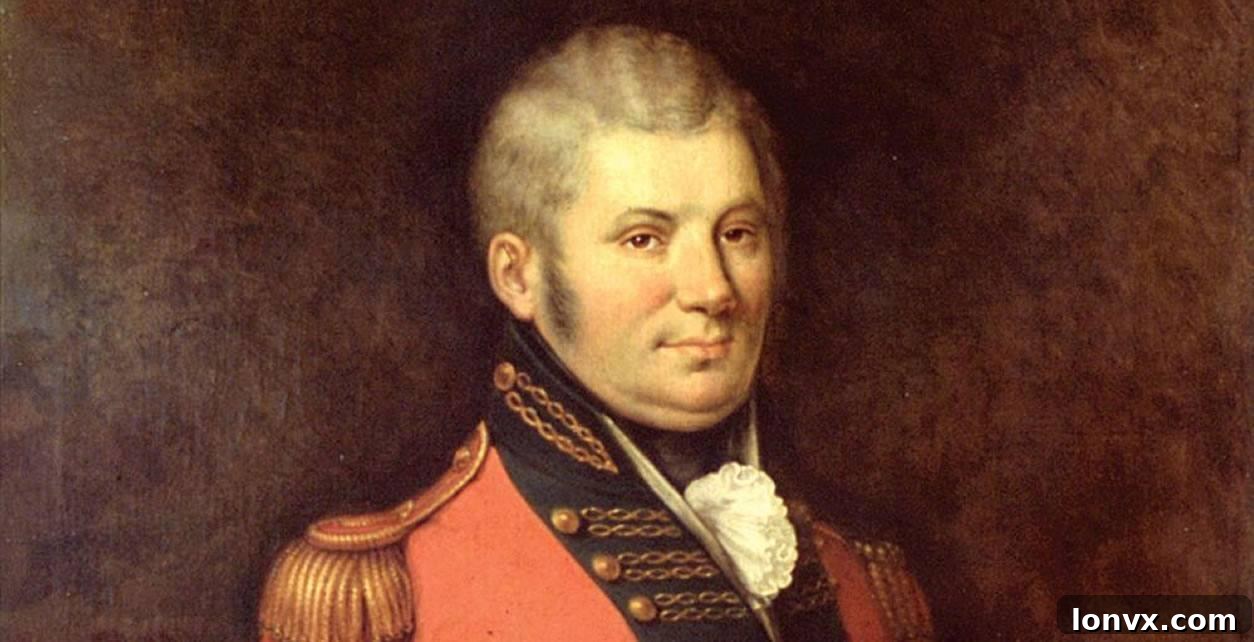
Nowhere is the localized nature of the August Civic Holiday more evident than in Ontario, where the day is known by a plethora of names, each reflecting local history or a significant figure. While many towns and cities choose to honor their founders or local heroes – such as Colonel By Day in Ottawa, Joseph Brant Day in Burlington, John Galt Day in Guelph, and George Hamilton Day in Hamilton – the provincial capital of Toronto and its surrounding areas observe Simcoe Day. This commemoration, dedicated to John Graves Simcoe, Ontario’s first Lieutenant Governor, presents a more complex narrative, inviting us to critically examine the figures we choose to celebrate and the historical legacies they leave behind.
John Graves Simcoe was undoubtedly a pivotal figure in the early development of Upper Canada (now Ontario). Appointed as the province’s first Lieutenant Governor in 1791, he arrived with a clear vision for the nascent colony. One of his immediate priorities was to establish a defensible capital, leading him to move the provincial seat from Niagara-on-the-Lake (then Newark) to a new settlement he named York, strategically located on the shores of Lake Ontario, which would eventually grow into modern-day Toronto. His foresight in establishing a strategic port and an administrative center played a crucial role in shaping the region’s future.
Simcoe’s Visionary Infrastructure Projects and Their Controversies
Simcoe’s ambition extended to developing critical infrastructure for Upper Canada. He recognized the necessity of major roads to connect the vast wilderness, facilitate trade, and aid in defense. His vision led to the initiation of two monumental projects: Yonge Street, stretching north from York to Lake Simcoe, and Danforth Road, intended to link York with Kingston to the east. These roads were not merely pathways; they were arteries designed to pump life into the new colony, encouraging settlement and economic activity. However, the execution of these projects and Simcoe’s alleged dealings with the laborers have become a point of historical contention.
For Yonge Street, Simcoe struck a deal with a group of German settlers led by William Berczy, promising land in exchange for the arduous and back-breaking labor of clearing and building the road. Berczy’s group completed significant portions of the road and contributed to the early construction of homes in Toronto, including the Queen Street East bridge over the Don River. Yet, historical accounts suggest that Simcoe failed to uphold his end of the bargain regarding payment and land grants, leaving Berczy and his settlers in dire financial straits. Berczy, a significant figure in Toronto’s early development, reportedly left the city financially ruined.
A similar narrative surrounds Asa Danforth, who was contracted to build the road eastward to Kingston. Danforth and his crew were also promised land for their labor. Upon completion of the road, Danforth too allegedly found himself without the promised compensation, leading to his bankruptcy and imprisonment in a debtor’s prison. These accounts suggest a pattern of Simcoe prioritizing his strategic objectives over the welfare and contractual obligations to those who helped build the very foundations of his vision. Critics suggest that Simcoe’s actions demonstrated a callous disregard for the welfare of the settlers and laborers who contributed significantly to the province’s early development.
Slavery, Land Deals, and Simcoe’s Complex Legacy
Beyond his road-building controversies, Simcoe’s legacy is further complicated by his stance on slavery and allegations of corrupt land speculation. While it is often claimed that Simcoe abolished slavery in Ontario, historical records paint a more nuanced picture. Simcoe, to his credit, was personally abhorrent of slavery and made efforts to limit its practice. In 1793, he pushed for and passed the Act to Limit Slavery in Upper Canada, which prohibited the importation of new enslaved people into the province and mandated that children born to enslaved mothers would be freed upon reaching the age of 25. While a significant step, it did not immediately abolish slavery; it was a gradual process that spanned decades. This progressive, yet incomplete, action highlights the complexities of his moral compass within the societal norms of his era.
Furthermore, Simcoe faced accusations of granting large tracts of prime land to his friends and political allies. These individuals, in turn, were able to sell their properties for immense profits in the rapidly developing capital of York. Such alleged practices laid the groundwork for a system where proximity to power could translate into significant personal wealth, leading to suggestions that the early economic development of Toronto and parts of Southern Ontario was rooted in real estate speculation and potentially corrupt land dealings. These historical allegations cast a long shadow, prompting questions about the ethical foundations upon which one of Canada’s largest and most vibrant cities was built.
Reflecting on Historical Figures and Their Commemoration
The decision to name a public holiday after a historical figure like John Graves Simcoe, whose legacy is intertwined with both undeniable contributions and serious ethical allegations, compels us to engage in critical reflection. As Canadians, particularly in a diverse and evolving nation, we are continually tasked with examining our history, acknowledging its complexities, and understanding the full spectrum of individuals who shaped it. Commemorating figures with controversial pasts is not about erasing history but about fostering a deeper, more informed understanding of it. It invites a dialogue about who we choose to honor, the values we wish to uphold, and how we interpret the foundations of our society.
Canada’s holiday landscape, from its five statutory observances to its multitude of regional and civic celebrations, is a dynamic reflection of its people and history. It showcases a nation that balances unity with diversity, national identity with local pride, and historical celebration with ongoing critical examination. As we observe these holidays, whether they are nationally recognized or locally celebrated, we are reminded of the rich, multifaceted narrative that continues to define Canada, a country that stands together, embracing its varied past and looking forward to its shared future.