
[et_pb_section fb_built=”1″ _builder_version=”4.16″ global_colors_info=”{}”][et_pb_row _builder_version=”4.16″ background_size=”initial” background_position=”top_left” background_repeat=”repeat” global_colors_info=”{}”][et_pb_column type=”4_4″ _builder_version=”4.16″ custom_padding=”|||” global_colors_info=”{}” custom_padding__hover=”|||”][et_pb_text _builder_version=”4.22.2″ background_size=”initial” background_position=”top_left” background_repeat=”repeat” global_colors_info=”{}”]
Canadian Housing Market: Navigating the Surge in Inventory and Price Dynamics
In the dynamic landscape of the Canadian housing market, a noticeable shift is underway, prompting a reevaluation of market conditions by both investors and prospective homeowners. The age-old adage, “you can have too much of a good thing,” appears to be strikingly relevant as various Canadian markets are experiencing an unprecedented surge in housing inventory. This robust influx of new homes, coupled with a slower pace of existing home sales, is creating a unique environment that signals potential changes in home prices and overall market equilibrium in the coming months.
Recent data from the Canada Mortgage and Housing Corporation (CMHC) highlights a significant increase in new housing starts across the nation. While this expansion in supply is a welcome development for addressing long-term housing affordability challenges and providing more options for owner-occupiers, it presents a complex scenario for real estate investors. The current inventory levels are among the highest seen in decades, raising concerns about potential downward pressure on home prices. This trend is particularly pronounced if the inventory of existing homes continues its upward trajectory, contributing to a buyer’s market in key urban centres.
An Unprecedented Inventory Boom: New Starts and Existing Listings Converge
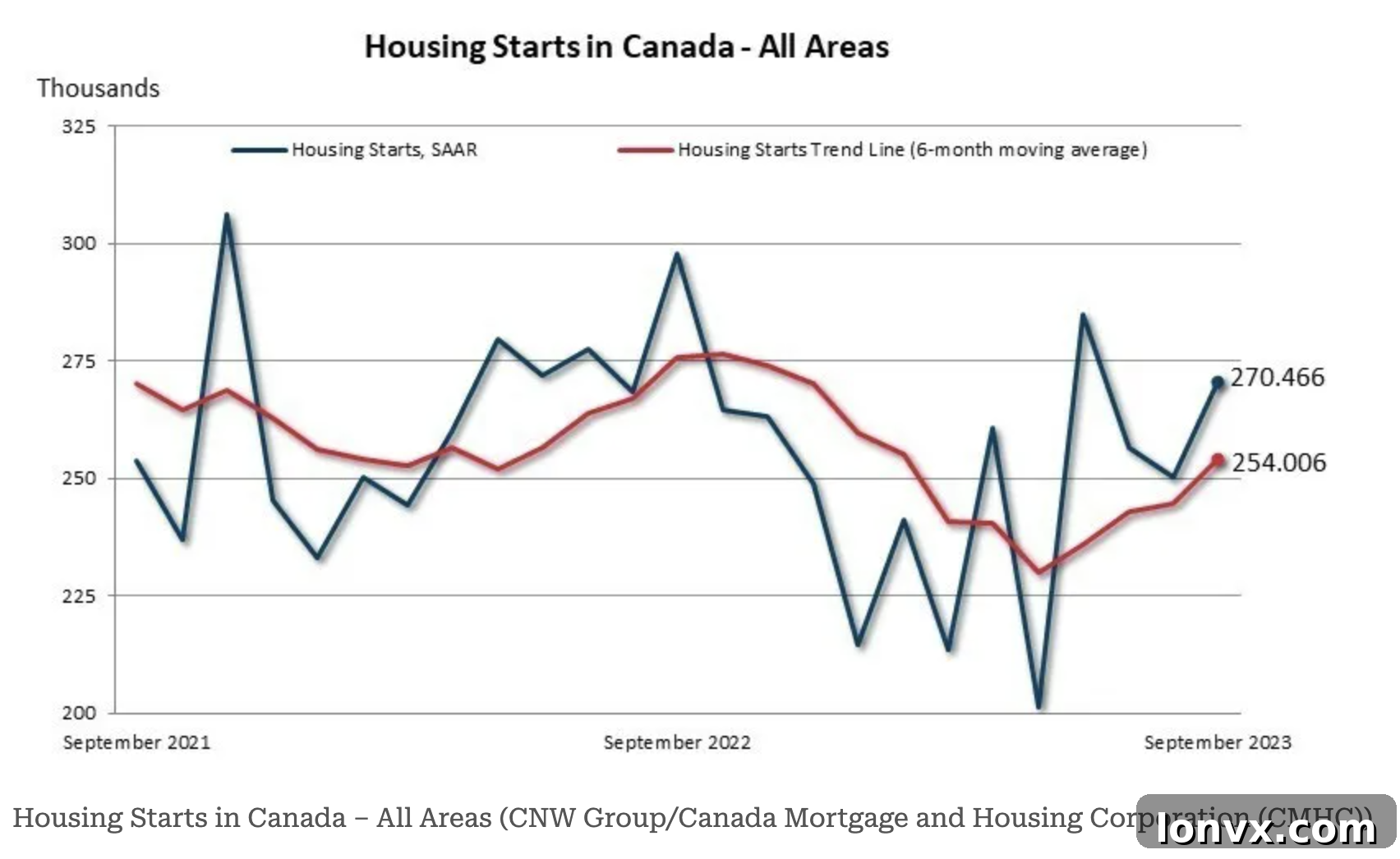
The latest figures underscore a nationwide push in new construction, with the monthly seasonally adjusted annual rate (SAAR) for new units climbing to an impressive 270,500 last month, marking an 8 percent increase. This growth is predominantly fueled by the multi-unit segment, which saw a significant 10 percent rise, reaching a SAAR of 207,700 units monthly. Multi-unit developments, including condos and townhouses, are crucial for increasing housing density and offering more affordable entry points into the market, especially in rapidly growing urban areas.
While multi-unit construction leads the charge, single-family units also demonstrated a commendable improvement, albeit at a slower pace. The monthly SAAR for single-family homes increased by 3 percent, reaching 43,000 units. This dual growth in both multi-unit and single-family sectors reflects a broad effort to alleviate Canada’s persistent housing supply shortages. However, the timing of this supply surge coincides with a period of tempered buyer demand, largely influenced by higher interest rates and economic uncertainties, leading to the accumulation of inventory.
The increase in new housing starts, while positive for the long-term health of the Canadian housing market, has immediate implications for current market dynamics. As more newly constructed homes become available alongside a growing pool of existing listings, the balance of power begins to shift from sellers to buyers. This equilibrium adjustment is particularly pertinent in major metropolitan areas where housing demand has historically outstripped supply, leading to rapid price appreciation. The current scenario suggests that the pendulum might be swinging in the opposite direction, offering prospective buyers more choice and potentially more negotiation leverage.
Major Markets Brace for Impact: Supply Surge and Price Adjustments
The effects of this burgeoning supply are becoming increasingly evident in Canada’s most competitive real estate markets. While Canada has witnessed significant population growth, which typically underpins housing demand, the sheer volume of new and existing inventory is exerting considerable downward pressure on home prices. September proved to be a pivotal month for key urban centers, showcasing dramatic increases in housing stock.
Toronto, a perennial hotbed of real estate activity, experienced a substantial 20 percent growth in its housing stock. This expansion provides much-needed relief to a market that has long struggled with insufficient inventory. Montreal, often seen as a more stable market, recorded an astonishing 98 percent increase in its housing inventory, signaling a profound shift in its supply-demand dynamics. This nearly doubling of available homes could lead to significant rebalancing within the Montreal market, offering buyers unprecedented options.
Vancouver, another high-cost market, also saw its inventory climb by 37 percent compared to the same period in 2022. Despite this considerable increase in available homes, Vancouver’s market reacted sharply, with prices dropping by 17 percent in September alone. This indicates a more immediate and pronounced impact of increased supply and possibly cooling demand in one of Canada’s most expensive cities. Such sharp price corrections highlight the sensitivity of these markets to changes in supply and buyer sentiment.
Compared to pre-pandemic periods, construction activity across Canada is significantly higher, reflecting policy efforts and builder responses to past housing shortages. However, the current influx of resale inventories has tempered the market, leading to discernible price reductions in major metropolitan areas. Toronto saw a 1.3 percent fall in prices, Montreal experienced a 0.6 percent decline, and Vancouver recorded a 0.4 percent drop. These figures, while seemingly modest, signal a broader trend of market normalization following years of rapid appreciation. For many, these adjustments represent a critical step towards restoring a more sustainable and accessible housing market.
Shifting Dynamics: The Investor’s Challenge vs. The End-User’s Opportunity
The current market trajectory, marked by rising new housing starts and increasing existing home inventories across Canada, creates a distinct divergence in outcomes for different market participants. For investor-owners, particularly those who entered the market during periods of low interest rates and anticipated continuous capital appreciation, the landscape is becoming more challenging. The decline in home prices and the substantial increase in supply are weakening demand from other investors, potentially compressing rental yields and diminishing prospects for quick equity gains. As existing home inventories swell and new construction projects reach completion, the competitive environment for landlords may intensify, potentially leading to slower rent growth or even slight adjustments in rental prices in certain sub-markets.
Conversely, this supply influx presents a significant advantage for end-user homeowners – individuals and families looking to purchase a home for personal occupancy. The growing selection of properties, both new and resale, means more choice and potentially more favorable pricing. For years, end-users have faced stiff competition, bidding wars, and rapidly escalating prices. The current market conditions, characterized by increased supply, are helping to close the gap between current market prices and what end-users can realistically afford. This trend is crucial for improving housing accessibility and fostering a healthier, more balanced housing market where affordability is not solely a dream but a tangible possibility for a broader segment of the population.
The interplay of higher interest rates, increased supply, and a recalibration of buyer expectations is redefining the Canadian real estate narrative. While the market may experience a period of adjustment, particularly for those heavily leveraged investors, the long-term benefits for a more balanced and accessible housing market are considerable. As the market continues to evolve, stakeholders will need to adapt to these new dynamics, prioritizing sustainable growth and broad-based affordability.
This period of significant inventory growth is not merely a statistical anomaly but a crucial phase that will shape the future trajectory of the Canadian housing market. It underscores the importance of continued monitoring, thoughtful policy implementation, and adaptability from all participants as the market seeks a new equilibrium. The implications extend beyond mere price points, touching upon the very fabric of housing accessibility, community development, and economic stability across the nation.
[/et_pb_text]
Enjoying this article?
Get the latest REM articles in your inbox 3x week so you stay up to date on the latest in the Canadian real estate industry
[/et_pb_column][/et_pb_row][/et_pb_section]