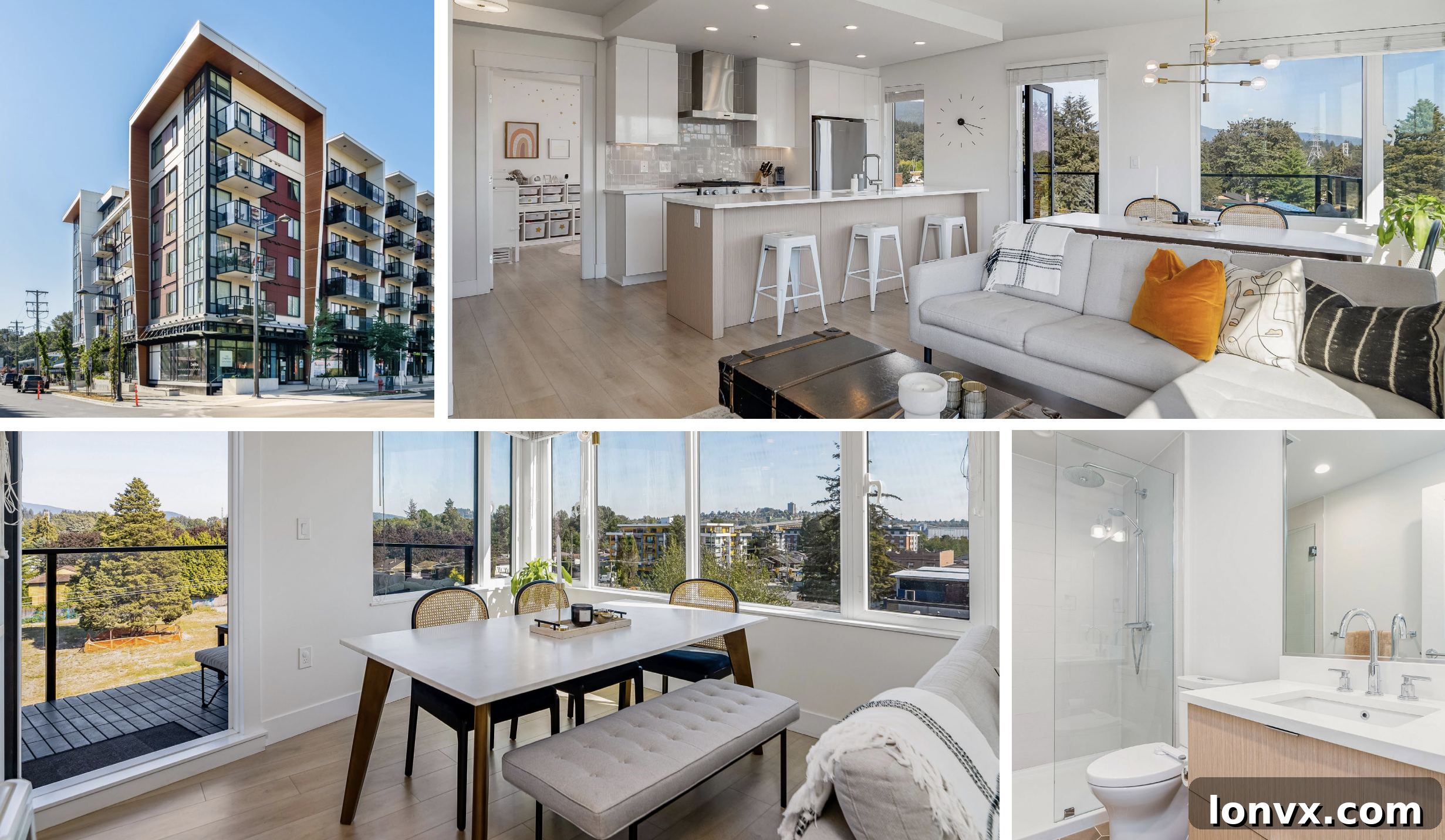
Decoding the $1 Million Home: An In-Depth Look at Canada’s Evolving Housing Market Affordability
The Canadian housing market has long been a subject of intense discussion, reflecting both the aspirations of prospective homeowners and the complex realities of economic shifts. A recent comprehensive report by Royal LePage offers invaluable insights into the purchasing power of a substantial budget – specifically, around $1 million – across Canada’s most significant housing markets. This detailed analysis sheds critical light on the dynamic landscape of real estate affordability, revealing both surprising consistencies and stark regional discrepancies.
For many Canadians, the concept of a $1 million home conjures images of spacious properties, prime locations, and a comfortable lifestyle. However, as this report meticulously demonstrates, what a seven-figure budget can actually secure varies dramatically depending on geographical location, market conditions, and property type. Understanding these nuances is crucial for anyone navigating Canada’s competitive real estate environment, whether they are first-time buyers, seasoned investors, or existing homeowners looking to upgrade.
Key Insights into Canada’s $1 Million Housing Segment
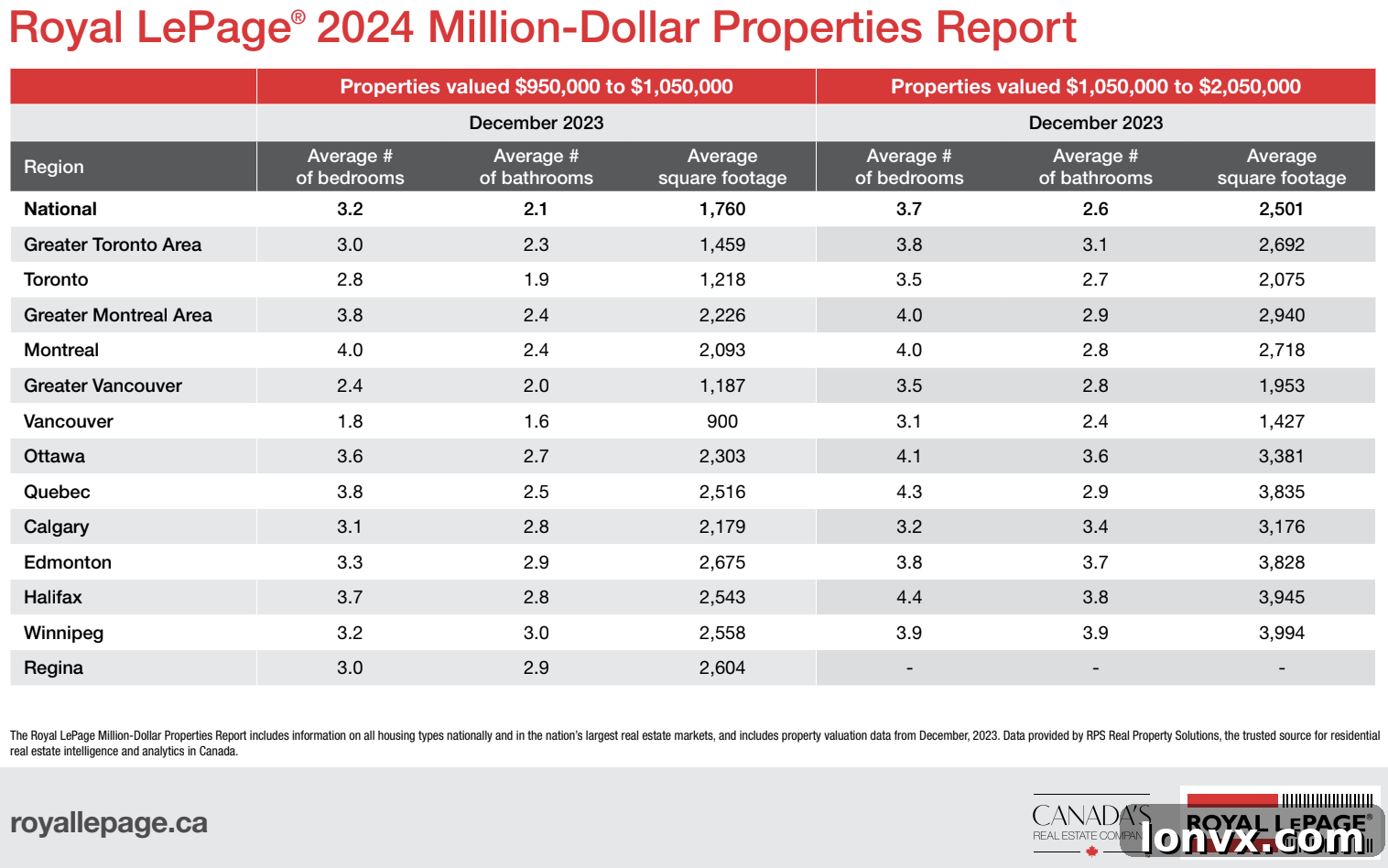
Royal LePage’s findings paint a clear picture of what $1 million generally buys in the current Canadian market. As of December 2023, the average home valued between $950,000 and $1,050,000, encompassing all property types nationwide, offered prospective buyers approximately 3.2 bedrooms, 2.1 bathrooms, and a comfortable 1,760 square feet of living space. This benchmark provides a national average against which regional variations can be effectively measured.
Interestingly, national trends suggest a degree of stability in the purchasing power of $1 million year-over-year. This relative consistency is primarily attributed to a period of subdued market activity and more modest price growth compared to the preceding boom years. While this might offer a semblance of predictability, it masks deeper complexities and significant variations that exist at the local level.
Regional Disparities: Where Your Million Goes Further
The most striking revelation from the report is the profound difference in what a $1 million budget signifies from one city to another. Karen Yolevski, COO of Royal LePage Real Estate Services Ltd., articulates this perfectly: “Depending on the market that you are shopping in, a $1-million home can mean something very different. In Calgary, a budget of $1 million is considered the move-up price point for existing homeowners. In Vancouver, the same amount is often the starting point for entry-level buyers.”
This statement underscores the vast economic and demographic differences across Canada. In rapidly appreciating markets like Vancouver and Toronto, $1 million may barely scratch the surface of homeownership, often limiting buyers to smaller condominiums or properties requiring significant compromises on location or size. Conversely, in more accessible markets like Calgary or various cities in Quebec and Atlantic Canada, the same budget can unlock a much larger, more luxurious detached home or a property in a highly desirable neighborhood. Years ago, a $1-million budget could indeed command a generous amount of square footage and access to sought-after neighbourhoods in almost any market. However, over time, the purchasing power of $1 million has diverged dramatically between cities, reflecting unique local demand, supply dynamics, and economic drivers.
Scaling Up: What $2 Million Offers
To further contextualize the market, the report also examines properties valued in the $2 million range. Homes across all property types valued between $1,950,000 and $2,050,000 in December 2023 typically presented buyers with 3.7 bedrooms, 2.6 bathrooms, and a more expansive 2,501 square feet of living space. This comparison highlights the significant jump in property attributes that a higher budget can afford, yet it also implicitly emphasizes the increasing challenge for many Canadians to reach even the initial $1 million threshold.
The image below provides a visual representation of some of the property types and sizes that fall within these price ranges across different regions, illustrating the diversity of options available and the regional specificities.
Navigating the Obstacles: Significant Challenges for Canadian Homebuyers
Despite the relative stability in national purchasing power, Canadian homebuyers face a gauntlet of significant challenges that continue to reshape their strategies and aspirations. The dream of homeownership, particularly for first-time buyers, remains elusive for many, hampered by a confluence of economic factors and market dynamics.
Interest Rates and Mortgage Hurdles
One of the foremost hurdles buyers must contend with is the persistent impact of rising interest rates. Over the past few years, the Bank of Canada’s aggressive rate hikes, aimed at curbing inflation, have directly translated into higher monthly carrying costs for mortgages. Even as property prices have experienced a plateau in some markets due to an underlying housing supply shortage, the increased cost of borrowing has profoundly affected affordability. Stricter mortgage qualification standards, including the stress test, further limit the borrowing capacity of potential buyers, particularly those with less financial flexibility.
The Down Payment Dilemma
Beyond interest rates, the initial down payment required for a home represents a substantial barrier. For properties priced over $1 million, mortgage lenders typically mandate a minimum 20 per cent down payment, which translates to at least $200,000. This formidable sum is a significant entry barrier for many, especially first-time homebuyers who may not have accumulated such substantial savings. Karen Yolevski notes, “The greatest barrier to entry when buying a home is often the down payment. For first-time homebuyers living in communities where entry-level homes start at $1 million or close to it, getting a foot on the property ladder can be a considerable challenge.”
This challenge has led to a growing trend: increased reliance on financial assistance from parents and other family members. While intergenerational wealth transfer can bridge the gap for some, it also highlights the systemic issues preventing many from independently achieving homeownership. Higher qualification thresholds, exacerbated by elevated interest rates, have further limited the amount banks are willing to lend, intensifying the down payment struggle in high-priced markets.
The Persistent Housing Supply Shortage
Adding another layer of complexity is Canada’s ongoing housing supply shortage. This fundamental imbalance between demand and available properties has been a persistent driver of price appreciation and, more recently, a factor preventing significant price corrections even amidst higher interest rates. The lack of adequate housing inventory across many major urban centers means that even when buyer demand cools slightly, property values remain stubbornly high, making it difficult for new supply to meet the market’s needs and alleviate affordability pressures.
Public Perception Versus Market Reality
The Royal LePage survey accompanying the report uncovered an interesting disconnect between public perception and market reality regarding housing affordability. A significant 64 per cent of Canadians surveyed believe that a $1 million budget for a home is sufficient to meet their housing needs. While this sentiment might hold true in certain regions, the report clearly illustrates a vast discrepancy in what that amount will actually buy across different parts of the country.
Buyers in Canada’s largest urban areas are often forced to make significantly more compromises than those in smaller locations to secure a home within their budget. For example, residents in British Columbia and Ontario, home to some of the nation’s most expensive real estate markets, are considerably more likely to feel that $1 million is inadequate for their housing needs. This contrasts sharply with perceptions in Alberta and Quebec, where the same budget generally offers greater choice and more substantial properties. These regional differences are not merely anecdotal; they reflect decades of varied economic development, population growth, land-use policies, and housing supply strategies.
Affordability: The New Relocation Driver
A profound shift in relocation drivers is emerging across Canada, primarily spurred by the relentless pursuit of affordable housing. Traditionally, finding gainful employment has been the primary catalyst for Canadians moving to new regions, especially outside major urban centers. However, as housing affordability continues to dominate household budgets and financial planning, this dynamic is changing.
Karen Yolevski observes, “Now, as housing affordability remains front and centre for many, we are seeing families move to new locations specifically to find a home within their budget, and prioritizing employment second.” This represents a significant paradigm shift, where the decision to relocate is increasingly dictated by the housing market rather than the job market. This phenomenon has been significantly enabled by the increased flexibility afforded by the remote work movement.
The mass adoption of remote working, accelerated during the height of the pandemic, empowered many Canadians to migrate across the country without having to sacrifice their careers. This newfound freedom allows individuals and families to seek out communities where their housing budget stretches further, often leading them to exurban areas or smaller cities where property values are more accessible. While this trend offers some relief to those able to move, it also poses new challenges for these burgeoning communities in terms of infrastructure, services, and local economies.
Future Outlook: Navigating an Uncertain Path
Looking ahead, the Canadian housing market faces an intricate future. While there is an expectation that interest rates will decrease in the coming period, this potential relief could inadvertently exacerbate existing affordability challenges. Lower interest rates are likely to stimulate increased buyer activity, driving up demand and consequently pushing property prices higher. This cyclical effect could undermine any perceived gains in affordability from reduced borrowing costs, especially without a corresponding increase in housing supply.
Yolevski cautions, “Without a significant increase in supply, especially in cities like Toronto and Vancouver, the standard for a $1-million property will continue to evolve away from large homes.” This highlights the critical need for robust housing development and policy interventions aimed at boosting inventory across all property types and price points. The ongoing evolution of what a $1 million property represents underscores the necessity for both homebuyers and policymakers to remain adaptable and proactive in addressing Canada’s complex housing landscape.
The Royal LePage report serves as a vital compass for understanding the multifaceted nature of Canada’s housing market. It confirms that while $1 million remains a substantial budget, its actual purchasing power is highly variable and constantly evolving. As market dynamics continue to shift, staying informed and adapting strategies will be paramount for anyone engaging with real estate in Canada.
For a deeper dive into regional summaries and specific property insights, you can review the full report by Royal LePage here.
Enjoying this article?
Get the latest real estate insights and articles directly in your inbox 3x a week, so you stay up to date on the Canadian real estate industry.