
Bank of Canada’s Rate Cut: Unlocking Savings and Reshaping the Canadian Housing Market
The Bank of Canada (BoC) recently made a significant move by dropping its key overnight lending rate by 25 basis points, bringing it down to 4.75 per cent. This long-anticipated decision has sparked widespread discussion across Canada, raising crucial questions about the potential for further rate reductions and, more importantly, the financial relief this could bring to the average five-year variable mortgage holder. A comprehensive report by Zoocasa delves into these immediate and future implications, offering a detailed analysis of what homeowners and prospective buyers can expect.
Understanding the Bank of Canada’s Decision and its Broader Implications
The BoC’s decision to cut interest rates marks a pivotal moment after a prolonged period of aggressive rate hikes aimed at curbing inflation. This initial reduction signals a shift in the central bank’s monetary policy, reflecting growing confidence that inflation is moving sustainably towards its target. While the immediate focus is often on mortgages, a rate cut has far-reaching effects on the broader Canadian economy. It typically reduces borrowing costs for consumers and businesses alike, potentially stimulating economic activity, encouraging investment, and bolstering consumer spending. For the housing market, in particular, this move is a strong indicator of an improving environment for affordability and accessibility.
Rate Fluctuations: Significant Savings for 5-Year Variable Mortgage Holders Across Canada
The most direct beneficiaries of the BoC’s rate cut are those holding variable-rate mortgages. These mortgages are directly tied to the prime rate, which typically adjusts in lockstep with the BoC’s overnight rate. A 25-basis-point drop, therefore, translates almost immediately into lower monthly payments for these homeowners. The Zoocasa report highlights the tangible savings in major Canadian cities, painting a clear picture of the financial relief at hand.
For instance, homeowners in Toronto, one of Canada’s most expensive real estate markets, can anticipate a monthly payment decrease of approximately $155. Over the course of a year, this accumulates to substantial savings of about $1,860. In Vancouver, another high-cost metropolitan area, the average monthly payment adjustment due to interest rate changes is even more pronounced at $166.20, leading to an impressive annual saving of over $1,994. These figures represent considerable breathing room for households grappling with the high cost of living.
Even in more affordable cities, the impact is significant. Regina, identified as the most affordable city in the report, shows an average monthly change of $75.60 between different interest rates, resulting in an annual saving of $907. While smaller in absolute terms compared to Toronto or Vancouver, this saving is still meaningful for budgets in any city. These examples underscore the widespread positive financial impact of the rate cut, offering tangible relief to thousands of Canadian homeowners.
The variations in savings across cities are primarily influenced by the average mortgage sizes, which are directly correlated with average home prices. Cities with higher property values and, consequently, larger mortgages will naturally see larger dollar-value reductions in monthly payments for a given basis point change. This highlights the disproportionate yet universally beneficial nature of the rate cut across the Canadian real estate landscape.
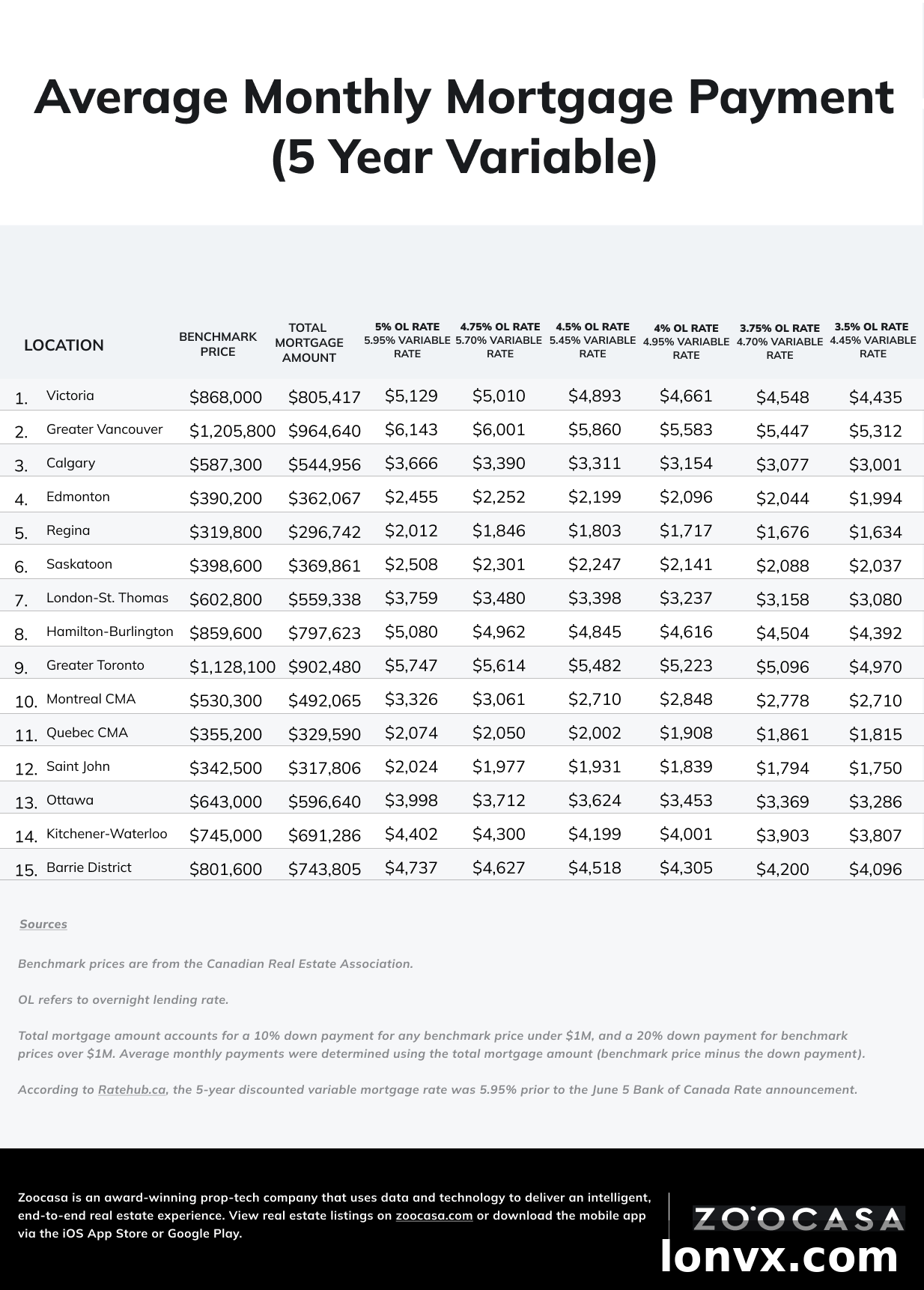
Looking ahead, the potential for even greater savings exists should the Bank of Canada implement further rate cuts in the future. The BoC’s next highly anticipated announcement is scheduled for July 24, 2024. Market analysts and homeowners alike will be closely watching for signs of continued easing in monetary policy, which could further alleviate financial pressures and inject more liquidity into the housing market.
Catalyzing Demand: ‘With Lower Lending Rates, Prospective Buyers Will Be Motivated to Get Off the Sidelines’
The economic landscape of high borrowing costs has been a formidable barrier for both existing homeowners and especially for prospective buyers. A 2024 Zoocasa survey, encompassing 1,577 individuals across Canada and the United States, starkly revealed that over half of non-homeowners cited high prices as the primary impediment to purchasing a home, despite a strong desire to enter the market. This sentiment has led to a significant number of potential buyers adopting a “wait and see” approach, deferring their homeownership dreams.
However, the recent rate cut is poised to shift this dynamic. Carrie Lysenko, CEO of Zoocasa, articulates this shift perfectly: “With lower lending rates, prospective buyers will be motivated to get off the sidelines, ultimately leading to more sales activity and the potential for an increase in prices.” This perspective is critical. A reduction in the cost of borrowing directly enhances purchasing power, making homeownership more attainable for a broader segment of the population. Even a modest decrease in interest rates can significantly impact monthly mortgage payments, pushing more properties into an affordable range for first-time buyers and those looking to upgrade.
The renewed buyer confidence could unlock pent-up demand that has been accumulating during the high-interest-rate environment. Increased sales activity could lead to a more vibrant and competitive market, potentially influencing housing inventory levels and property values. While a surge in prices is a possibility, the initial rate cut aims to bring a healthier balance to the market, facilitating transactions that were previously out of reach.
The psychological impact of the first rate cut after a series of increases cannot be overstated. It signals to the market that the peak of interest rates may be behind us and that a period of easing is on the horizon. This perception alone can embolden buyers who have been hesitant, encouraging them to act rather than wait indefinitely for the ‘perfect’ market conditions.
Navigating the Future: Economic Outlook and What to Expect Next
The Bank of Canada’s path forward will be dictated by a careful evaluation of economic indicators, particularly inflation, employment figures, and GDP growth. While the first rate cut is a positive signal, the central bank is likely to remain cautious, adopting a data-dependent approach to future policy decisions. Analysts widely anticipate a gradual easing cycle rather than aggressive cuts, ensuring that inflationary pressures do not resurface.
For homeowners, this environment presents an opportunity to reassess their financial strategies. Those with variable mortgages will enjoy immediate relief, potentially using the savings to pay down principal faster, bolster emergency funds, or reduce other forms of debt. Fixed-rate mortgage holders, while not immediately affected, should closely monitor rates as their terms approach renewal, as they might find more favorable options than those available during the peak rate period.
Prospective buyers, on the other hand, should view this as a potential window of opportunity. While increased demand could lead to some price appreciation, improved affordability through lower interest rates could still make market entry more feasible. It’s crucial for these buyers to get pre-approved, understand their budget, and work with experienced real estate professionals to navigate the evolving market conditions.
The upcoming BoC announcement on July 24th will be critical in shaping market expectations for the latter half of the year. Any further cuts would solidify the trend of easing rates, further boosting confidence and potentially accelerating activity in the real estate sector. Conversely, a pause could indicate the BoC’s desire to assess the full impact of the first cut before making further moves.
Financial Planning in a Shifting Rate Environment
In this dynamic interest rate environment, robust financial planning becomes paramount. Homeowners should consider stress-testing their budgets against various interest rate scenarios, ensuring they can comfortably manage payments even if rates fluctuate. Exploring options like increasing payment frequency or making lump-sum payments when possible can significantly reduce total interest paid over the life of a mortgage.
For those contemplating homeownership, meticulous budgeting, saving for a substantial down payment, and understanding all associated costs beyond the mortgage payment (e.g., property taxes, insurance, maintenance) are essential steps. Leveraging government programs for first-time buyers and seeking professional financial advice can also provide a significant advantage.
Ultimately, the Bank of Canada’s initial rate cut is more than just a reduction in borrowing costs; it’s a signal of economic adjustment and a catalyst for change in the Canadian housing market. While challenges remain, the shift towards lower rates offers renewed optimism for both existing homeowners and those aspiring to join their ranks.
For a detailed analysis and more insights, you can read the full report from Zoocasa here.
Enjoying this article?
Get the latest REM articles in your inbox 3x week so you stay up to date on the latest in the Canadian real estate industry