
Bank of Canada’s Landmark Rate Cut: Unpacking the Rippling Effects on Mortgages, Housing, and the Canadian Economy
In a move that sent ripples through financial markets, the Bank of Canada (BoC) recently announced a significant 50 basis point (bps) reduction in its benchmark interest rate, bringing it down from 4.25 per cent to 3.75 per cent. This unexpected decision has left homeowners, prospective buyers, and businesses alike scrutinizing its immediate and long-term implications. The primary questions on everyone’s minds revolve around how this adjustment will reshape the landscape of mortgages, influence real estate trends, affect persistent inflation, and ultimately steer the broader Canadian economy. Understanding this complex interplay is crucial for anyone navigating Canada’s financial future.
This comprehensive analysis aims to decode the multifaceted impact of the BoC’s rate cut, with a keen focus on the dynamic housing market, the crucial upcoming waves of mortgage renewals, and the wider financial panorama that defines Canada’s economic health.
Beyond the Headlines: Why a Rate Cut Isn’t Always a Beacon of Good News
On the surface, a reduction in the benchmark interest rate might appear to be unequivocally positive news for borrowers. Lower rates typically translate to cheaper borrowing costs, a welcome relief for prospective homeowners dreaming of affordability and for businesses looking to expand. However, a deeper dive into the macroeconomic context often reveals a more nuanced reality. Such a substantial rate cut from a central bank is rarely a standalone act of generosity; instead, it often serves as a signal—a cautious indicator of anticipated economic headwinds.
When central banks, like the BoC, opt for significant rate reductions, it is frequently because they foresee or are reacting to looming economic challenges. In Canada’s current scenario, this rate cut could signify growing concerns within the central bank about a potential economic slowdown or even the risk of a recession. A recessionary environment, characterized by reduced economic activity, could lead to deflationary pressures in certain sectors of the Canadian economy. The fear here is that if consumers anticipate falling prices, they may postpone discretionary spending, waiting for better deals. This “wait-and-see” consumer behaviour can further dampen demand and perpetuate a cycle of economic contraction, a risk particularly pronounced in sectors outside the red-hot housing market.
Paradoxically, within the housing market itself, shelter inflation remains a stubborn component of Canada’s overall inflation picture. According to the BoC’s latest Monetary Policy Report, released concurrently with today’s interest rate decision, the rising costs associated with rent and mortgage interest payments continue to exert upward pressure on the Consumer Price Index (CPI). Analyzing the CPI component breakdown further illustrates this divergence. Notably, “House price related services,” which include commissions for realtors, have remained notably subdued for nearly two years. This cooling in housing-related services might be interpreted by the BoC as a sign that the housing market, despite recent activity, is unlikely to dangerously overheat in response to current rate cuts, providing a narrow window for easing monetary policy without rekindling excessive housing demand.
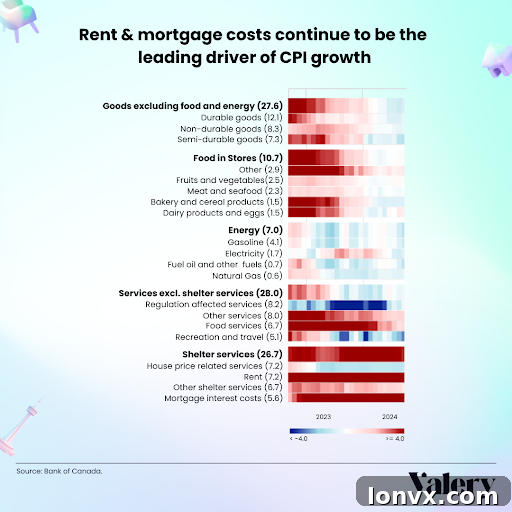
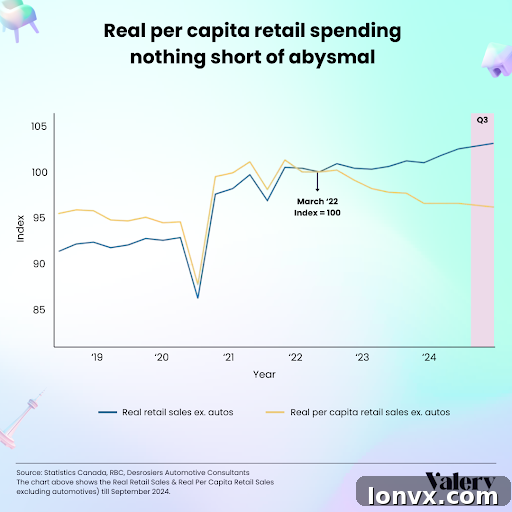
While the immediate effect of lower rates is a reduction in borrowing costs, the underlying message is that the BoC is actively attempting to stimulate a flagging economy. Therefore, any relief homeowners might experience in their monthly mortgage payments could be overshadowed by broader economic anxieties, such as rising unemployment rates or a general weakening of economic activity if a significant downturn materializes. This stark reality was underscored by RBC in a recent economic brief, where they characterized Canadian retail spending as “abysmal,” pointing to a clear deceleration in consumer activity and confidence, signaling a broader malaise that extends beyond housing affordability.
The Looming Mortgage Renewal Wave: A Persistent Factor in Canada’s Inflation Story
Despite the BoC’s recent interest rate cut, the specter of inflation continues to loom large over the Canadian economy. A significant and often overlooked contributor to this persistent inflationary pressure is the impending wave of mortgage renewals, particularly those at substantially higher rates than Canadians enjoyed just a few years ago. Tiff Macklem, the Governor of the Bank of Canada, has explicitly articulated the BoC’s dual concern: not only the risk of stubborn inflation but also the potential for deflationary pressures to take hold in certain sectors. However, without further, sustained rate reductions, the sheer volume of mortgages renewing at elevated rates could continue to exert upward pressure on Canada’s inflation figures well into 2025 and even 2026.
The period from mid-2020 to early 2022 was characterized by exceptionally low Canadian mortgage rates, a phenomenon that triggered an unprecedented surge in both new mortgage originations and refinances. Millions of Canadians locked into historically low fixed-rate terms or embraced the highly attractive variable rates of the time. Consequently, a substantial proportion—estimated at approximately 60 per cent—of these mortgages are now scheduled to renew over the next two critical years: 2025 and 2026. For homeowners who originally secured their mortgages during the era when the overnight rate hovered around an astonishingly low 0.25 per cent, renewing their loans with the current overnight rate at 3.75 per cent will translate into significantly higher monthly payments.
This dramatic shift in mortgage payments has profound, albeit indirect, implications for inflation. Increased monthly mortgage obligations directly reduce households’ disposable income—the money available for spending on other goods and services. Logically, this should lead to a slowdown in overall consumer spending, which in turn could help ease broader inflationary pressures. However, the “base effect” of moving from exceptionally low interest rates to the current elevated levels creates a unique financial strain for many Canadian households. Even with the BoC’s recent rate cut, the markedly higher rates applied to renewed mortgages will continue to contribute to inflationary pressure within the Canadian economy. This is primarily due to the classification of housing costs—including mortgage interest—as a significant component of the CPI, ensuring that increased shelter expenses remain a persistent and critical driver of headline inflation.
Fixed-Rate Mortgages: Why Bond Yields, Not Just the BoC, Hold the Key
A prevalent misconception among the public is that the Bank of Canada exercises direct and absolute control over all mortgage rates. While the BoC’s overnight rate undeniably influences variable mortgage rates, a large segment of Canadian homeowners, who predominantly opt for fixed-rate mortgages, are primarily affected by a different economic indicator: bond yields. Fixed-rate mortgages, a highly popular choice for their predictability and stability, are intricately tied to the performance of government bonds, particularly the five-year Government of Canada bond yield. This key benchmark has been on a noticeable declining trend since April 2024, signaling shifts in market sentiment and expectations.
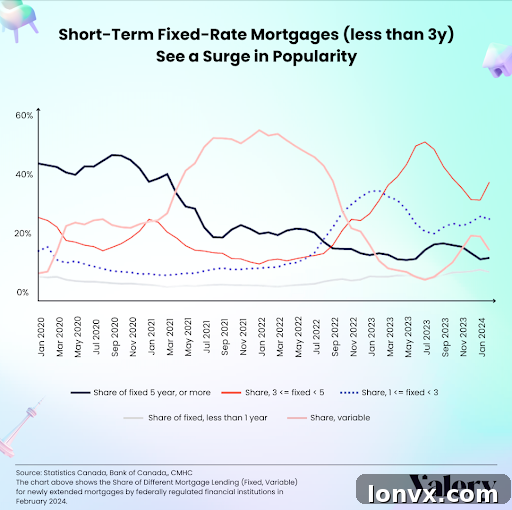
Currently, the bond market appears to be pricing in fewer future rate cuts than some might anticipate, a perspective that could be influenced by a degree of myopia related to the impending United States election. Financial markets often become cautious and less decisive during politically charged periods. There’s a widespread expectation that the U.S. Federal Reserve might refrain from taking any significant monetary policy actions prior to the election to avoid its decisions being politicized. Indeed, the Fed’s actions and potential political implications are already a subject of much debate.
This political dynamic in the U.S. implies that a clearer understanding of the future trajectory of bond yields and interest rates in 2025 may not emerge until after the U.S. election concludes. For the Bank of Canada, monitoring the actions and signals from the U.S. Federal Reserve is not merely a courtesy; it is a critical component of its monetary policy framework. The close economic ties between the two nations mean that diverging policies can have significant consequences for Canada’s currency and economic stability, underscoring the indirect yet powerful influence of bond markets and international economic policy on domestic mortgage rates.
The Shadow of the Federal Reserve: How U.S. Monetary Policy Shapes Canada’s Economy
The Bank of Canada’s recent 50 bps rate cut brings into sharp focus the critical interplay between Canadian and U.S. monetary policy. Given the deeply integrated nature of their economies, the U.S. Federal Reserve’s decisions are not merely observed by the BoC; they are meticulously factored into Canada’s policy deliberations. This is because a significant divergence in interest rates between the two countries carries substantial risks for Canada, primarily concerning the value of its currency and its domestic inflation outlook.
If the Bank of Canada were to continue aggressively cutting rates while the Federal Reserve maintained its rates or, conversely, decided to raise them, it would widen the interest rate differential between Canadian and U.S. assets. Such a scenario makes Canadian dollar-denominated assets less attractive to international investors seeking higher returns. This reduced attractiveness can trigger capital outflows from Canada and lead to a depreciation of the Canadian dollar (CAD) against the U.S. dollar (USD), as the Canadian currency would effectively offer a lower “return” when measured by its interest rate.
A weaker Canadian dollar has direct inflationary consequences for Canada. As Canada imports a significant portion of its goods, many of which are priced in U.S. dollars, a depreciated CAD makes these imports inherently more expensive. This “imported inflation” would drive up consumer prices across a wide array of goods and services within Canada, a risk the BoC is highly motivated to avoid, especially while domestic inflation remains a concern. Therefore, despite today’s bold rate cut, the BoC is expected to maintain a cautious stance, closely observing the Federal Reserve’s upcoming decisions. The Canadian central bank’s overarching goal is to strike a delicate balance: providing necessary domestic stimulus without inadvertently devaluing the Canadian dollar to a point where it fuels uncontrollable inflation through more expensive imports. While the BoC noted exports are increasingly contributing to Canadian GDP, a weaker CAD could theoretically support this. However, Canada currently lacks the robust export-based economic structure seen in past recessions, where a depreciating currency could be fully leveraged for growth.
Is a Mild Recession the Necessary Prescription to Tame Inflation?
While the notion of an economic recession might instinctively evoke fear and negativity, some economists argue that a mild, controlled downturn can, paradoxically, be an effective tool for keeping inflation within manageable limits. Economic slowdowns are characterized by a reduction in overall demand for goods and services. This decrease in demand naturally eases the upward pressure on prices, helping to bring inflation closer to a central bank’s target range. Prominent economists, such as CIBC’s Benjamin Tal, frequently articulate that recessions are often an unavoidable phase within the broader economic cycle and can serve a crucial role in re-establishing price stability. Tal’s well-known assertion is that when confronted with the stark choice between allowing unchecked inflation and engineering a recession, the Bank of Canada will invariably choose the latter.
The BoC might, therefore, be tacitly willing to permit or even induce a controlled recession if it proves necessary to steer inflation back towards its mandated target range, typically around two per cent. Although Governor Macklem expressed confidence in his press release question period about achieving a “soft landing”—a scenario where inflation is brought down without triggering a severe recession—time will ultimately reveal the feasibility of such a delicate balancing act. Historically, recessions, while causing short-term economic hardship and job losses, have often been necessary to restore equilibrium to an overheated economy and ensure long-term stability and sustainable growth. This is particularly true in economic environments where the risk of resurgent inflation is present. Macklem himself made it clear that he harbors as much concern about a potential return of inflationary pressures as he does about the risks of deflation or a more pronounced recession, underscoring the tightrope walk the central bank faces.
How Mortgage Holders and the Canadian Housing Market Will Be Affected
For the segment of Canadian homeowners currently holding variable-rate mortgages, the BoC’s 50 bps rate cut delivers immediate and tangible relief. These borrowers have endured a period of escalating monthly payments over the past year due to a series of aggressive rate hikes. With the overnight rate now reduced by 50 basis points, variable-rate mortgage holders can anticipate a noticeable decrease in their monthly payment obligations, offering some much-needed breathing room in their household budgets. Those with static-payment variable-rate mortgages will see a greater portion of their fixed monthly payment allocated to principal reduction, accelerating their equity build-up.
In this regard, the BoC’s monetary policy adjustments primarily influence the supply side of the housing market by alleviating financial pressure on existing mortgage holders. By reducing the burden of higher payments, the central bank aims to decrease the likelihood of forced property sales, which could otherwise flood the market and depress prices. It’s important to note, however, that because variable rates are generally priced higher than fixed rates in the current market, a reduction in variable rates doesn’t necessarily “add” significant new buying power to the market for *prospective* purchasers. If buyers were solely seeking lower rates to enhance their purchasing capacity, they would likely have already opted for the comparatively lower fixed rates available. Consequently, the bond market, through its influence on fixed-rate mortgage pricing, largely remains the primary driver of the demand curve in Canada’s housing sector.
Traditionally, lower interest rates act as a catalyst for increased housing market activity by making borrowing more affordable. Yet, with housing prices across many Canadian regions remaining at historically elevated levels, today’s rate cut alone may not be sufficient to ignite a substantial surge in new homeownership. Several factors continue to temper enthusiasm, including the persistence of the mortgage stress test, which rigorously assesses borrowers’ ability to handle higher rates, and the preference of most buyers for stable two-, three-, or five-year fixed-rate mortgages, which are more responsive to bond yields than the overnight rate.
Moreover, the broader economic uncertainty that often accompanies significant rate cuts can cause potential buyers to remain cautious. While the immediate cost of borrowing may decrease, lingering concerns about a slowing economy, potential job losses, or underlying market risks could temper enthusiasm for new home purchases in the short term. Many market participants, including both buyers and sellers, appear to be adopting a “wait and see” approach, choosing to observe how the economic landscape evolves, even if rates continue to fall, before making significant commitments. This cautious stance aims to better understand if there are hidden risks beneath the surface that could impact their financial decisions.
Navigating Canada’s Evolving Economic Landscape: What Lies Ahead
The Bank of Canada’s decisive action to cut interest rates by 50 basis points, setting the overnight rate at 3.75 per cent, undeniably presents a complex tapestry of both opportunities and challenges for Canadians. While homeowners with variable-rate mortgages will experience immediate financial relief, those entering the market or renewing with fixed-rate mortgages may not reap the same level of early benefit, given the distinct drivers of fixed versus variable rates.
The broader economic implications—including the palpable risk of a potential recession and the persistent, though shifting, concerns about inflation—suggest that this interest rate cut is not a universally positive development. Rather, it serves as a critical indicator of the BoC’s assessment of Canada’s economic health and its proactive measures to guide it. Realtors, current homeowners, and prospective buyers alike are thus urged to carefully consider this intricate broader economic context as they formulate their financial strategies and plan for their futures. The path ahead requires continued vigilance and adaptability in a rapidly evolving economic landscape.
Enjoying this article?
Get the latest insights and analysis on the Canadian real estate industry delivered directly to your inbox three times a week.