
Canada’s Rental Market Shift: Decoding the Impact of Slowing Population Growth and Non-Permanent Resident Exodus
Canada, a nation long celebrated for its robust and seemingly unstoppable population growth, is now experiencing a significant deceleration. This pivotal shift is sending ripple effects across its economy, most notably disrupting the dynamics of the country’s rental markets. A confluence of factors, including a strategic recalibration of immigration policies and an unprecedented exodus of non-permanent residents (NPRs), is reshaping the landscape of Canadian housing demand and affordability from coast to coast.
Recent data indicates a profound change: Canada has recorded the highest outflow of non-permanent residents since the Canada Mortgage and Housing Corporation (CMHC) began meticulously tracking this demographic in 2021. This substantial departure coincides directly with a noticeable softening of rental rates across a multitude of Canadian urban centers. The clear correlation between these two trends signals a direct and powerful relationship, promising a new era for renters, landlords, and policymakers alike.
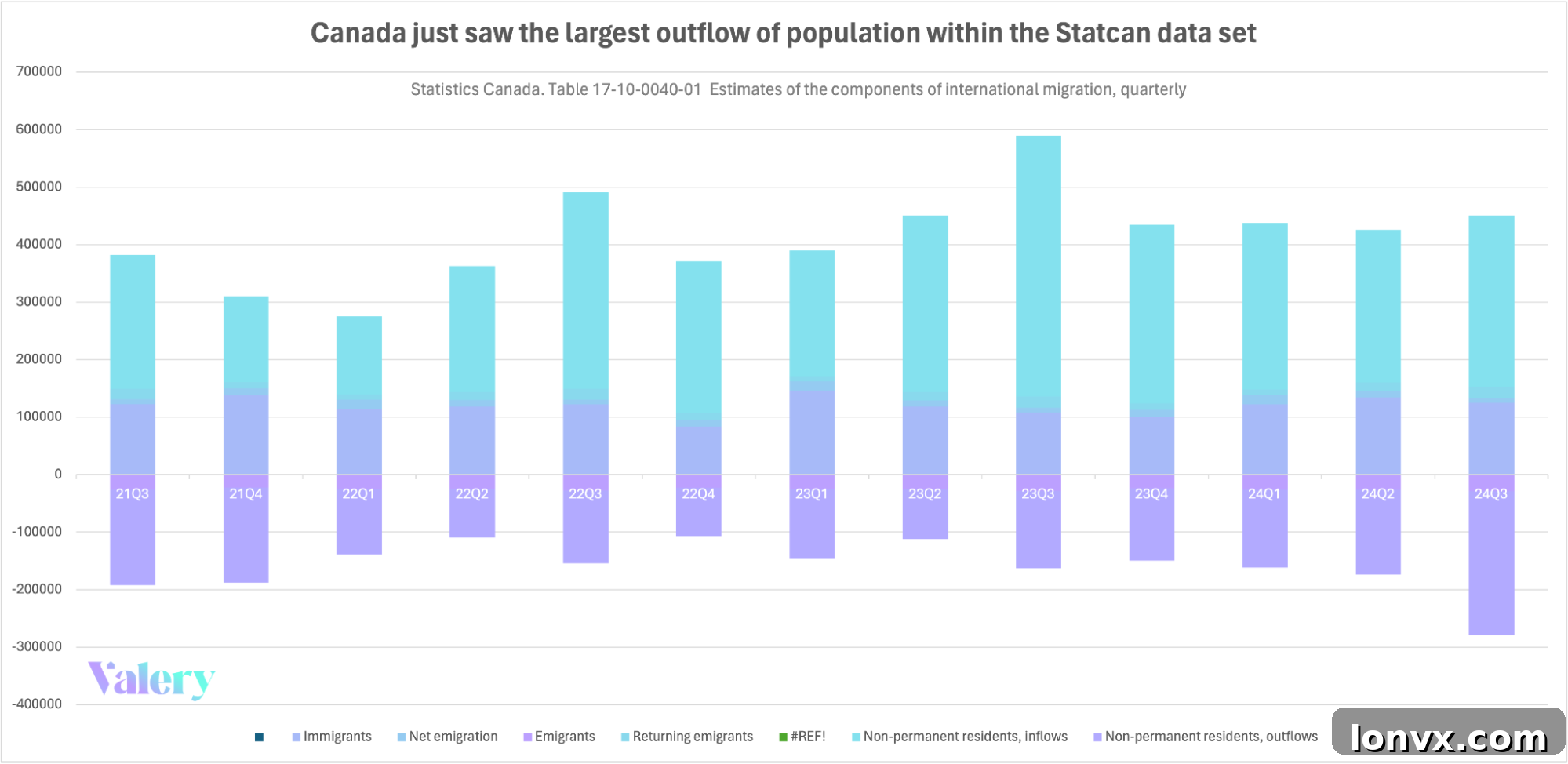
While the federal government has recently articulated its commitment to curb population growth, available metrics suggest that this deceleration was already underway, even prior to official policy announcements. A comprehensive report published on Valery.ca previously highlighted the predictive power of rental inflation, demonstrating how it could forecast population growth trends months in advance. This foresight underscores the deep interconnectedness between demographic shifts and housing market indicators, emphasizing that changes in one often foreshadow shifts in the other.
This evolving scenario represents a fundamental departure from Canada’s previous growth-centric model. The government’s new approach includes its first-ever comprehensive strategy designed to manage not only permanent residents but also to exert more control over the influx and duration of temporary residents. This holistic framework aims to create a more balanced and sustainable demographic trajectory for the nation, with direct and far-reaching implications for housing supply, demand, and overall economic stability.
Strategic Recalibration: Canada’s Immigration Targets in Focus
At the heart of Canada’s new population management framework is a deliberate scaling back of immigration targets. The government plans a gradual reduction in permanent resident admissions, moving from an ambitious 500,000 target in 2024 down to 395,000 in 2025. This downward trend is set to continue, with targets further declining to 380,000 in 2026 and eventually settling at 365,000 by 2027. This controlled reduction is a direct response to the intense pressure high immigration levels have placed on social infrastructure, particularly the housing sector and public services.
The impact of these revised targets is expected to be most pronounced in the rental housing segment, which has borne the brunt of surging demand in recent years. By reducing the overall number of new permanent residents, the government aims to alleviate some of this pressure, allowing housing supply to potentially catch up with demand. This strategic pivot is a recognition that unchecked growth, while economically beneficial in some respects, has created significant affordability challenges and infrastructure strains for many Canadians, particularly those in younger demographics and lower-income brackets.
Managing Temporary Residents: A New Frontier for Population Policy
Beyond permanent residents, temporary residents—encompassing international students, foreign workers, and other non-permanent visa holders—are also critical contributors to housing demand. Historically, this group has seen rapid growth with less direct governmental oversight on their total numbers. While precise, publicly disclosed targets for temporary residents remain pending, their explicit inclusion in the government’s new planning signals a more controlled and integrated approach to overall population management, acknowledging their substantial contribution to the country’s demographic profile and housing needs.
Temporary residents often gravitate towards major urban centers such as Toronto, Vancouver, and Montréal, where they compete with established residents for a finite supply of rental housing. Their significant presence has undeniably contributed to upward pressure on rents and a tightening of vacancy rates in these densely populated areas. Consequently, the recent record-breaking departures of NPRs are now manifesting as a profound cooling effect on these once-overheated rental markets, offering a glimmer of relief to renters who have faced unprecedented competition and spiraling costs in recent years.
The Dynamic Interplay: Population Growth and Rent Inflation in Canada
For years, the Bank of Canada has consistently underscored the direct relationship between robust population growth and escalating rent inflation. The economic principle is straightforward: a rapidly expanding population inherently amplifies housing demand, inevitably leading to higher rents, particularly concentrated in vibrant urban centers where job opportunities and amenities are abundant. However, recent data points to a significant divergence from this established pattern, marking a crucial turning point for Canada’s housing narrative and broader economic outlook.
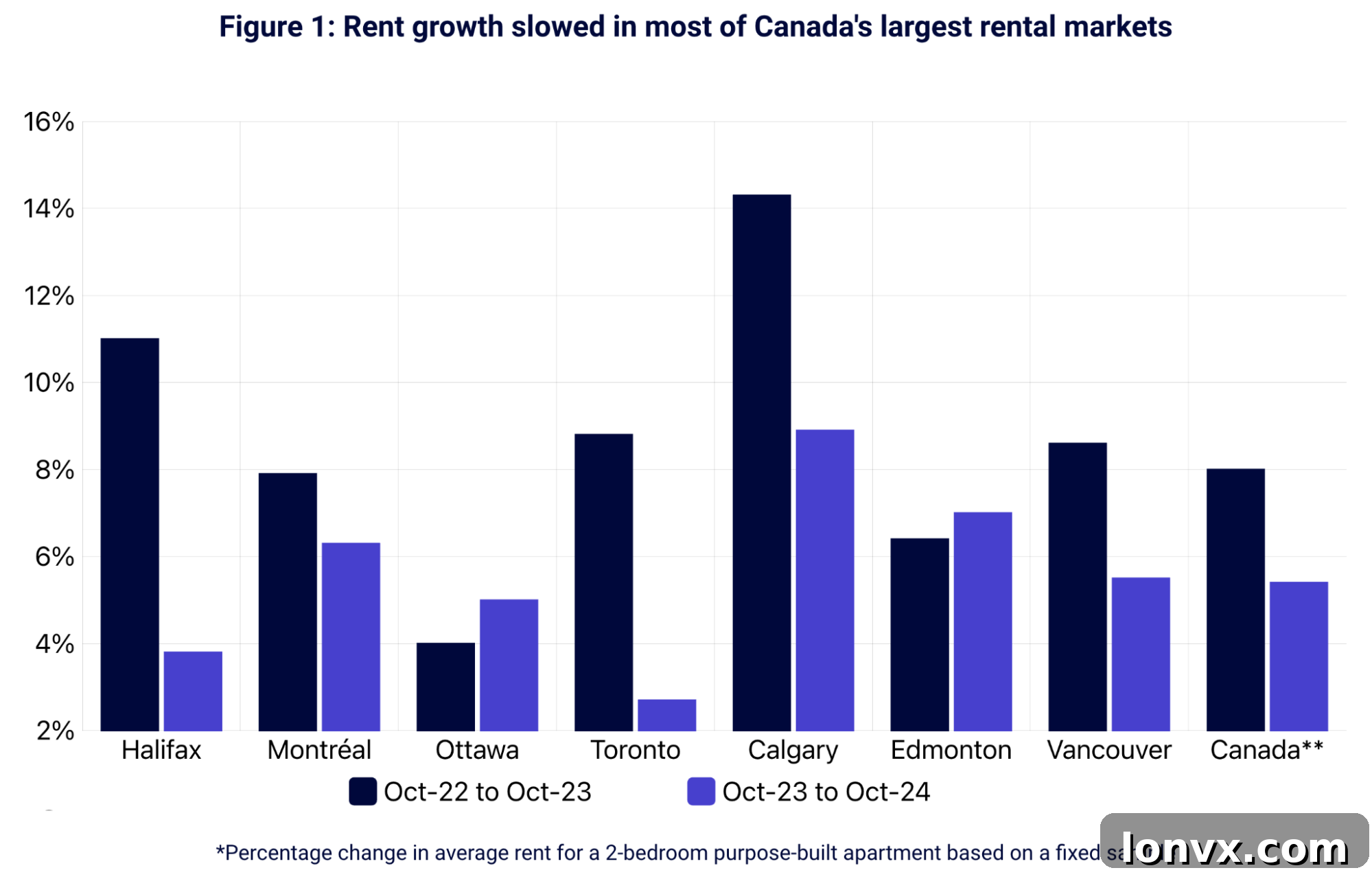
As we advance into 2025, a growing chorus of reports from reputable sources, including The Habistat and Rentals.ca, confirms a distinct deceleration in rent inflation. This noticeable stabilization is primarily attributed to a powerful combination of two key factors: a tangible slowdown in overall population growth and a concurrent increase in the rental housing supply across various markets. This dual dynamic represents a stark contrast to the preceding years, where double-digit rent hikes were a common and concerning reality in most major Canadian cities, placing immense strain on household budgets.
The CMHC’s Q4 report provides compelling evidence of this emerging trend. Toronto, historically one of Canada’s most expensive and competitive rental markets, experienced the lowest rent growth among major regions in 2024, registering a modest 2.7 percent increase. This figure marks a dramatic decline from the substantial 8.8 percent growth observed in 2023, signaling a significant shift in market dynamics and offering much-needed relief to tenants in the Greater Toronto Area who have long struggled with affordability.
Nuances in Rental Market Data: Beyond the Headline Figures
It is crucial to acknowledge that not all experts universally agree on the precise extent or uniform nature of this cooling trend across all rental segments. Ben Myers of Bullpen Research & Consulting, a respected authority in Canadian real estate analytics, has observed nuanced patterns, particularly concerning specific unit sizes. Myers highlights that a significant portion of newly constructed condominium supply often comprises smaller units, such as studios and one-bedroom apartments, designed to cater to single individuals or couples without children.
The prevalence of these smaller units can, in some cases, skew average and median rent data downwards, creating a perception of a sharper overall rent decline than is truly occurring across the board. While headline figures might suggest a substantial drop in rents, Myers’ analysis illustrates that rents on a per-square-foot basis may not be falling as dramatically as the aggregated data implies. This distinction is vital for understanding the market’s true health and for prospective renters and investors making informed decisions, as it suggests demand for larger, family-sized units might still be robust and experiencing less price moderation due to limited supply.
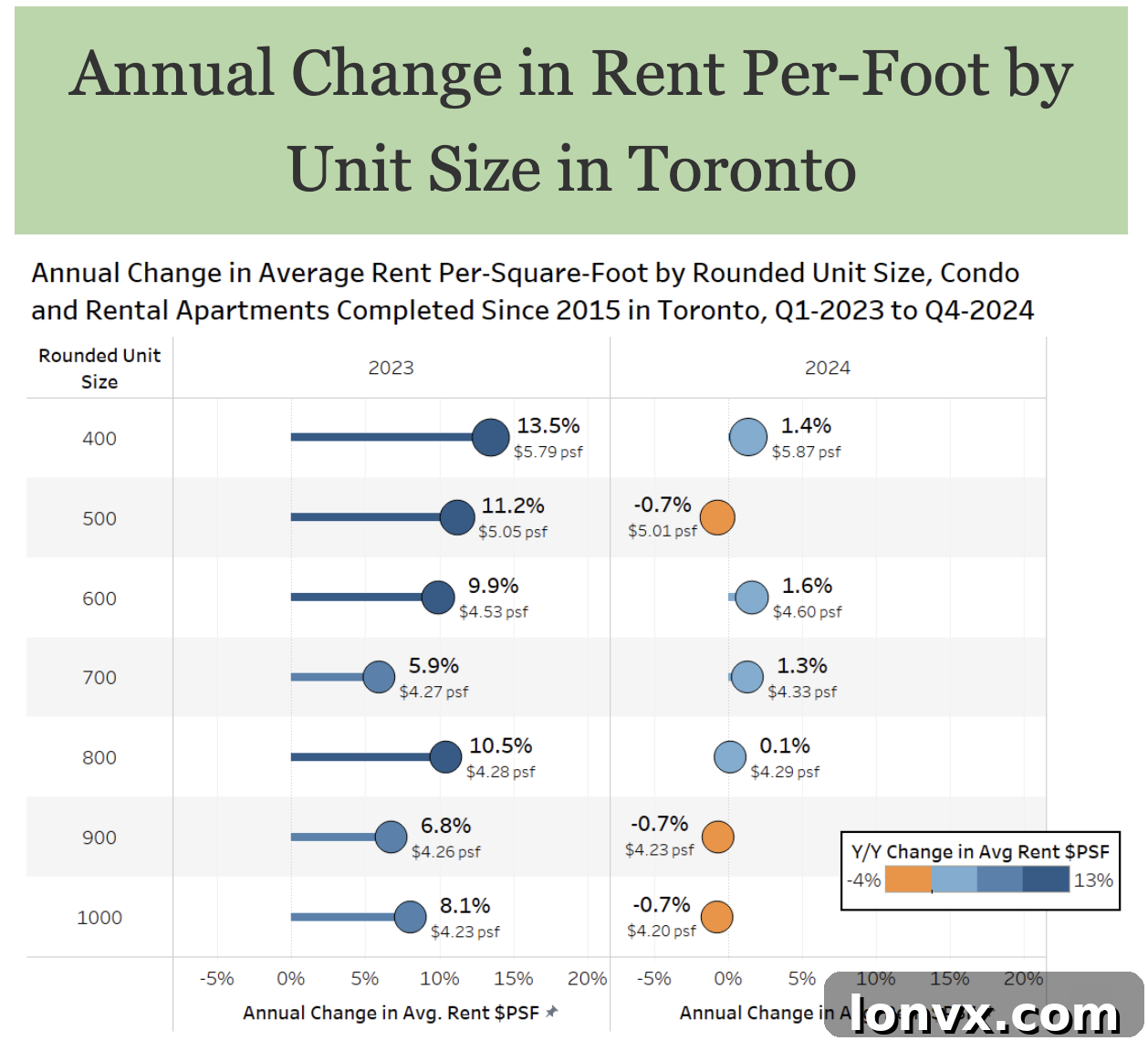
Source: Ben Myers, Bullpen Research & Consulting
The Unprecedented NPR Exodus and its Profound Impact on Cooling Rental Markets
For a considerable period, robust population growth was unequivocally hailed as the “eternal bull case” for Canadian real estate, a seemingly unwavering foundation for continuous market appreciation and investment. However, this long-held conviction is now facing an undeniable challenge as population growth appears to be decelerating significantly. In a surprising and somewhat populist policy reversal, the Liberal government, after years of defending its expansive population growth strategy as sustainable, has shifted its stance, acknowledging the mounting pressures on housing and infrastructure and the need for a more balanced approach.
One of the most compelling aspects of this unfolding narrative is the striking synchronicity between the record-breaking departure of non-permanent residents (NPRs) and the subsequent cooling of Canada’s rental markets. NPRs, a diverse demographic group that has historically contributed a substantial portion of demand for rental housing—especially in high-density urban areas and near educational institutions—are now leaving the country in unprecedented numbers. This reduction in a key demographic segment directly translates to a significant easing of upward pressure on rents, providing much-needed breathing room for tenants who have endured years of escalating costs.
However, this demographic shift, while offering immediate relief, also raises profound and critical questions regarding the long-term trajectory of Canada’s housing market. A sustained and significant decline in NPR numbers could potentially lead to a prolonged stagnation in rental demand, particularly impacting urban centers that have historically relied heavily on this demographic to absorb new rental supply. This situation is compounded in markets that are simultaneously experiencing record levels of new housing completions, creating a double whammy of reduced demand and increased supply that could lead to higher vacancy rates.
The implications extend beyond just renters. Landlords, who have recently grappled with escalating borrowing costs due to higher interest rates and, in many cases, reduced cash flow, could face intensified financial pressures. A softer rental market, characterized by lower rent growth or even declines and higher vacancies, might compel some landlords, especially those with smaller portfolios or higher leverage, to consider selling their investment properties or converting them into owner-occupied units. This could further reshape the rental landscape, potentially altering the composition of available housing stock and impacting rental unit availability and pricing in the coming years.
Navigating the Future: What Lies Ahead for Canada’s Housing Market?
As Canada embarks on this new era of evolving housing and immigration policy, striking a delicate balance between managing population growth and sustaining economic vitality will be paramount. The ongoing decline in certain demographic segments, particularly non-permanent residents, carries potential ripple effects far beyond the confines of the housing market. It could lead to a tangible slowdown in growth across vital economic sectors such as retail, hospitality, and education, which have significantly benefited from a larger consumer base and workforce provided by a rapidly growing population.
In recent years, Canada’s Gross Domestic Product (GDP) experienced substantial growth, largely driven by record-high population increases. However, this growth often came at the cost of a declining per capita GDP, indicating that while the economy expanded in absolute terms, the average Canadian’s economic well-being and productivity did not improve commensurately. Now, with population growth decelerating in the absence of a corresponding surge in economic productivity, the opposite impact is a distinct possibility. A slowdown in population could lead to a contraction in overall GDP, potentially pushing Canada into a recessionary environment in 2025 if other economic drivers do not pick up momentum.
Simultaneously, this period of transition presents a unique and valuable opportunity to fundamentally reassess Canada’s housing priorities. By strategically incentivizing the development of genuinely affordable housing, implementing robust support systems for renters, and expanding accessible homeownership opportunities, policymakers can proactively address the multifaceted challenges posed by a slower-growing population. This requires a concerted effort to shift from a reactive stance to a proactive and sustainable housing strategy that considers the long-term well-being of all Canadians.
Proactive adjustments to housing policy, thoughtfully paired with a measured and strategically informed approach to immigration, hold the potential to mitigate persistent affordability issues while simultaneously fostering sustainable urban and economic development. The unfortunate reality, however, is that while these solutions sound ideal in theory, the process of implementation and achieving tangible results is often protracted, complex, and challenging. It represents a “painful process” to reach a truly equitable and stable housing market, requiring difficult trade-offs and sustained political will.
Much like a large-scale construction project, one must undertake the necessary, albeit disruptive, demolition of an outdated or structurally unsound building before a new, resilient structure can be erected upon a solid foundation. The demolition phase, while essential for progress, is inherently messy, inconvenient, and not aesthetically pleasing. It is a period of dismantling and challenging existing structures, assumptions, and unsustainable practices.
This analogy perfectly describes the current phase Canada finds itself in regarding its housing and population policies. We are not yet in the rebuilding phase; rather, we are in the midst of realizing that the previous growth model and housing strategies were unsustainable and, in many aspects, dysfunctional. This recognition is leading to decisive action. The crucial policy decisions made today, regarding both immigration and housing, will unequivocally shape the future trajectory of Canada’s real estate market and its broader economic health for decades to come, laying the groundwork for a more sustainable and equitable nation.
Enjoying this article?
Get the latest REM articles in your inbox 3x a week so you stay up to date on the latest in the Canadian real estate industry.
We respect your privacy and will not share your email address.