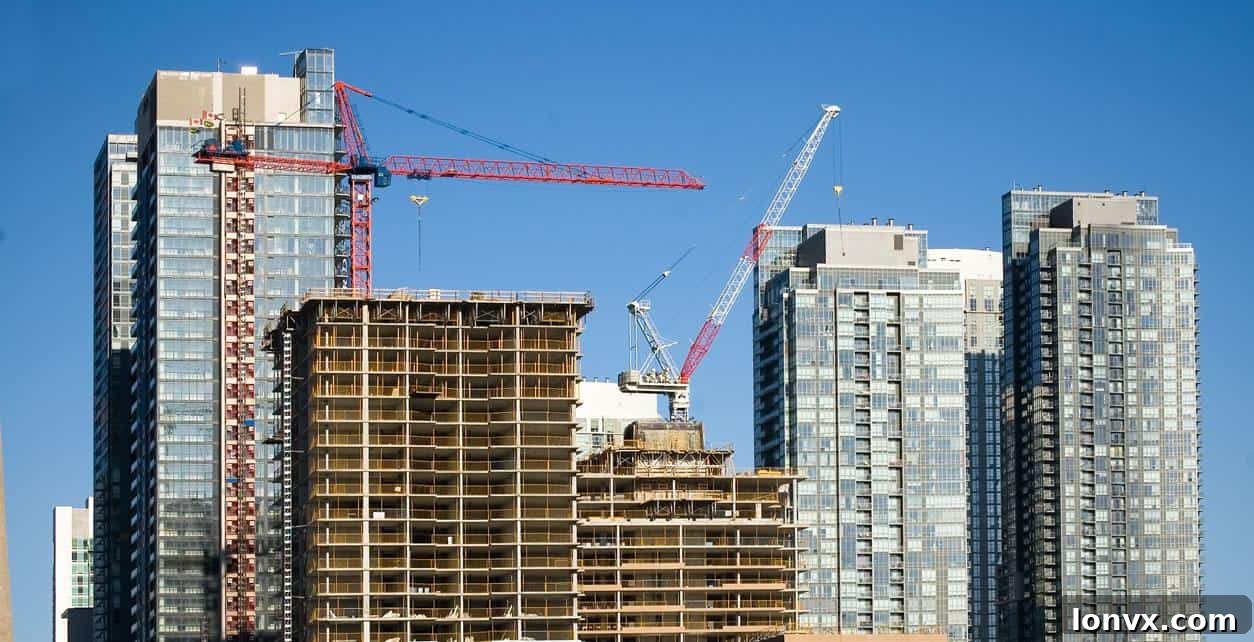
Unlocking Toronto’s Rental Potential: Infill Development as a Solution to the Housing Crisis
Toronto and the wider Greater Hamilton Area (GTHA) are grappling with a profound housing challenge, one that threatens the region’s long-term sustainability and affordability. A recent rental market study by Urbanation, prepared for the Federation of Rental-Housing Providers of Ontario (FRPO), projected a staggering shortage of up to 200,000 rental units within a decade. This looming crisis has consistently driven vacancy rates to historic lows and pushed rental prices sky-high, making it increasingly difficult for residents to find affordable and suitable housing.
However, the global pandemic temporarily altered this trajectory. With international travel restricted, immigration slowed, and student accommodations impacted, Toronto’s typically competitive rental market experienced a brief cooling period. Suddenly, landlords found themselves courting tenants with incentives. While this offered a momentary reprieve, experts like Urbanation anticipate a “return to base projections” by 2022. The long-term demand for rental housing remains robust, underscoring the urgent need for innovative solutions. One such solution, often hidden in plain sight, is infill development – a strategy poised to significantly meet the region’s crushing housing demand.
The Urgency of Toronto’s Rental Market Challenge
The Greater Toronto Area is one of North America’s fastest-growing metropolitan regions, attracting talent and residents from across Canada and around the world. This continuous population growth, coupled with evolving demographic trends such as smaller household sizes and a preference for urban living, creates immense pressure on the housing supply. The projected deficit of 200,000 rental units is not just a statistic; it represents a significant barrier to economic growth, social equity, and the overall quality of life for hundreds of thousands of individuals and families.
For years, Toronto’s rental market has been characterized by bidding wars, soaring rents, and limited options, pushing many to the outskirts of the city or forcing them to compromise on living standards. While the pandemic provided a temporary dip in demand, it did not solve the fundamental issue of insufficient supply. As economic recovery continues and immigration targets are reinstated, the underlying demand is expected to surge once more, making strategic interventions imperative.
Infill Development: A Promising Pathway to Greater Supply
The Urbanation report highlights infill development as a critical component in addressing the housing shortage. Across Toronto and the wider GTHA, up to an astonishing 176,000 new units could be added to existing rental sites. What makes this strategy particularly compelling is that these nearly 950 infill sites are not theoretical; they are already purchased and zoned, possessing the necessary land approvals for development. This means the infrastructure is largely in place, and the opportunity to add significantly more housing is ripe for the taking.
Infill development refers to the process of developing vacant or underutilized land within existing urban areas. Unlike urban sprawl, which expands outwards, infill builds inwards, leveraging existing roads, transit, and utilities. This approach is not only sustainable but also economically efficient, reducing the need for costly new infrastructure and promoting more compact, walkable communities. For a mature urban center like Toronto, infill represents a strategic way to maximize the potential of its current footprint.
Tony Irwin
Tony Irwin, President of FRPO, underscores the importance of this potential for two primary reasons. Firstly, he notes, “A lot of the sites are concentrated outside of the downtown core in relatively affordable markets.” This geographic distribution means infill development can help decentralize housing supply and provide more accessible options in areas that might traditionally be overlooked, easing pressure on the hyper-competitive downtown core. Secondly, and perhaps even more critically, “over 35 per cent of the potential units that we identify through this report are within 800 meters of a current or future transit station.”
Transit-Oriented Communities: Building for a Connected Future
The proximity of these infill sites to transit infrastructure is a game-changer. Slightly more than 60,000 new rental units could be built within a mere 10-minute walk of rapid transit. This aligns perfectly with the Ontario government’s commitment to building around transit to foster “healthy, connected communities” and support post-COVID-19 recovery efforts. Transit-oriented development (TOD) is a globally recognized strategy for sustainable urban growth.
By focusing development near transit hubs, the region can achieve multiple objectives: reduce reliance on private vehicles, decrease traffic congestion, lower carbon emissions, and enhance accessibility to employment centers, educational institutions, and essential services. This creates a virtuous cycle where efficient transit makes living in these areas more attractive, further supporting population density that sustains and justifies future transit investments. This integration of housing and transportation infrastructure is crucial for building a resilient and future-ready GTHA.
Brad Bradford
Toronto City Councillor Brad Bradford brings a dual perspective to this issue, having served as an urban planner for the city before entering municipal politics. Representing Ward 19 Beaches – East York, Bradford points to systemic hurdles, including outdated planning systems and pervasive NIMBYism (Not In My Backyard) attitudes, which have led Toronto to develop “a strong aversion to change.”
Bradford argues that unlocking the potential of these transit-oriented, rental-infill sites could have an “incredible impact” on the city’s housing affordability crisis overnight. He clarifies, “To be clear, I say this not because new supply would solve this problem instantly. We know that supply alone does not fix affordability. We also need the right kinds of supply in the right places – supply like ‘missing middle’ housing, which is more livable and more practical for families, for example.” Missing middle housing refers to a range of multi-unit housing types, such as duplexes, townhouses, and small apartment buildings, that bridge the gap between single-family homes and large apartment complexes, offering diverse options suitable for various household sizes and income levels.
Fortunately, Toronto is making strides to modernize its approach. The city is poised to implement inclusionary zoning policies, which would mandate that a certain percentage of units built around transit hubs be designated as affordable. The existing Open Door program already incentivizes and fast-tracks affordable rental development. Furthermore, the city is actively working to streamline and improve the broader development approval process, aiming to reduce bureaucratic hurdles and accelerate housing construction.
Expert Insights: Balancing Growth with Stability
While the need for increased supply is undeniable, experts offer nuanced perspectives on the scale and nature of development. Diana Petramala, a senior economist at Ryerson University’s Centre for Urban Policy and Land Development, suggests that the projected rental unit shortage might be slightly high, citing current construction activity and the long-term impacts of COVID-19. Petramala, who previously served as a housing and real estate expert and macro forecaster at TD Bank, has a deep understanding of market dynamics.
Housing completions in Ontario during boomer and millennial generations, scaled by population. Chart prepared by Diana Petramala using Statistics Canada and CMHC data.
Petramala highlights a critical demographic trend: “There is a lot less building in Ontario to meet millennial demand than when boomers were entering the labour market and housing market.” This imbalance underscores the need for a sustained and robust building effort to accommodate the current generation entering their prime working and family-formation years. Despite her more conservative estimates on the immediate shortfall, Petramala firmly agrees on the immense potential of existing sites for infill construction.
“I do agree that there’s a lot of potential for infill construction in the Toronto CMA, even the greater Golden Horseshoe, and it goes beyond the downtown areas that are already built,” she states. “There’s a lot of capacity to build along transit lines. I think that it’s enough potential, for my own estimates, to absorb all the population growth that is expected out to 2051.” This optimistic outlook suggests that strategic infill along transit corridors could indeed be the cornerstone of long-term housing stability.
However, Petramala also offers a crucial word of caution against building too much, too fast, particularly high-density condominiums. She points to the late-1980s homebuilding frenzy and the subsequent 1990 housing market crash as a stark reminder of the risks associated with unchecked development. That crash sent ripples through developers, banks, investors, and the economy at large. Instead, she advocates for mid-rise developments and ground-related housing, which includes semi-detached homes, townhouses, and stacked towns, as “safer and healthier” options for both markets and communities.
Petramala elaborates on the financial risks: “You get all kinds of financial risks associated with building too many condos and not enough ground-related housing.” She raises pertinent questions: “On the condo side, how sustainable are those investments? And then on the ground-related side, are people taking on too much debt to buy these units?” These questions highlight the need for a diversified housing supply that mitigates market volatility and ensures long-term financial health for both developers and homeowners/renters.
The Economics of Development: Navigating Costs and Community Needs
A significant conundrum in urban development lies in balancing financial feasibility for builders with the aesthetic and density preferences of communities. Builders often favor taller buildings to achieve economies of scale and make projects financially viable, while local communities frequently push for reduced heights to maintain neighborhood character and manage perceived impacts on infrastructure.
Tony Irwin from FRPO points out that rental providers are often constrained by these realities. His membership aims to build a variety of units, not solely luxury ones, but economic pressures often dictate outcomes. For example, a project might gain city approval only if its proposed height is significantly reduced – say, by 12 storeys. “The economics simply don’t support that,” Irwin explains. This tension between planning regulations and economic realities can stall or derail much-needed housing projects.
Irwin acknowledges the importance of community input: “I recognize that you have to be responsive to different points of view (of the community), but there has to be a way to … make projects realistic and approve projects that are economically feasible.” Striking this balance requires innovative policy frameworks, collaborative dialogue, and a willingness from all stakeholders to compromise for the greater good of housing affordability and supply.
The Indispensable Role of Purpose-Built Rentals
A critical aspect of a healthy housing market is the availability of purpose-built rental housing. These are buildings specifically designed and constructed to be rented out, managed by professional landlords, and typically offering greater stability for tenants compared to units owned by individual investors. Over the last two or three decades, Toronto has seen “very little purpose-built rental housing” constructed, as Irwin notes. This has led to an over-reliance on investor-owned condominiums to fill the rental gap.
While condominiums serve an important role in the housing market, investor-owned units can introduce instability for renters. A condo landlord might decide to sell their unit or move into it themselves, forcing tenants to re-enter a volatile rental market unexpectedly. “There’s nothing wrong with condominiums,” Irwin clarifies, “but we need a mixture of different housing types. And we need an environment that definitely encourages and supports purpose-built rentals.” Promoting purpose-built rentals ensures a steady and professionally managed supply of housing, crucial for long-term tenant security and market stability.
Government Policies and the Path Forward
Councillor Bradford acknowledges the complex “land economics” and financial challenges facing developers. He highlights the federal government’s proactive steps, such as offering low-interest capital for rental projects through its National Housing Strategy, as a positive incentive. However, he also points to areas where provincial action is needed, specifically mentioning “HST reforms that move the dial on rental viability” as something that would need to come from the province.
Ultimately, there is a consensus among experts, policymakers, and industry stakeholders: the region desperately needs more housing supply, particularly rental units. As Councillor Bradford aptly summarizes, “Over half of Toronto’s households are renters. The rental market is a key component of housing affordability and without new supply, our housing system gets stuck.” Unlocking the potential of infill development, strategically integrating it with transit, and fostering a supportive policy environment at all levels of government are not just options – they are essential steps towards building a more affordable, sustainable, and equitable future for Toronto and the GTHA.