
As a dedicated mortgage agent, staying abreast of the dynamic fluctuations and ever-evolving landscape of the real estate market is not just a professional duty but a personal passion. I recently tuned into a real estate panel discussion, a common habit of mine, where seasoned professionals repeatedly highlighted how current interest rates are significantly lower compared to the historical peaks witnessed in the 1980s and 1990s. This comparison, often presented to reassure homeowners and prospective buyers, initially strikes a comforting chord.
Indeed, hearing such sentiments can be reassuring, especially for those navigating the complexities of property ownership in today’s economic climate. However, a persistent question began to echo in my mind: is this historical comparison truly comprehensive? Does it omit crucial context that might paint a less “snuggly” picture of market realities? The true essence of market analytics, I suspected, might be a bit more intricate than a simple numerical comparison of interest rates across decades.
Conveniently, my mother, Sukhraj Atwal of HPA Financial Services Inc., a veteran with extensive mortgage experience, was right beside me. Upon sharing my nascent concerns, she immediately affirmed my intuition, indicating I was on the right analytical path. This familial confirmation solidified my resolve to delve deeper into the nuances of these comparisons, challenging the prevailing narrative to uncover a more complete understanding of today’s borrowing landscape.
Deconstructing the Narrative: Where the TV Real Estate Professionals Are Right (And Where They Miss the Mark)
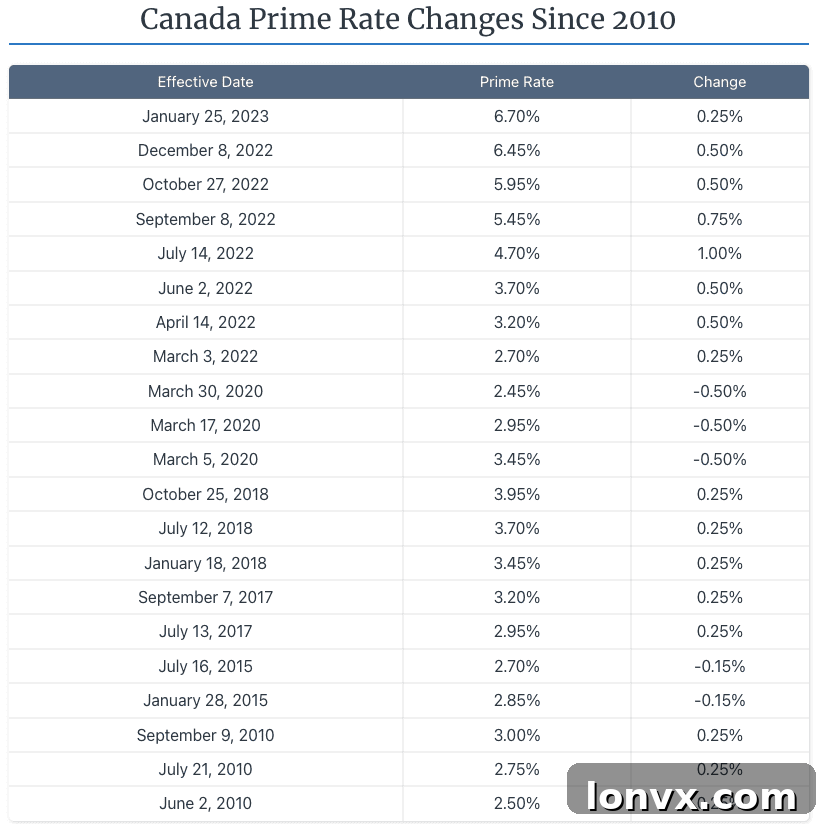
To begin, the assertion made by the TV real estate professionals holds technical accuracy. The stark contrast in nominal interest rates between then and now is undeniable. For instance, in 1981, the Bank of Canada’s (BoC) overnight interest rate soared to a staggering 21 percent. This pushed the prime rate—the benchmark rate offered by lending institutions to their most creditworthy clients—to an astonishing 22.75 percent. Fast forward to January 2023, and the BoC’s policy rate stood at 4.5 percent, translating to a prime rate of 6.7 percent. On the surface, this indeed represents a dramatic reduction in borrowing costs, numerically speaking.
However, this seemingly straightforward comparison begins to unravel when crucial economic variables are factored in, particularly the average home prices across these periods. In the 1980s, the average Canadian home price hovered around $75,000. Applying the then-prime rate of 22.75 percent to this figure would result in an annual interest payment of approximately $17,062.50. Contrast this with January 2023, when the average Canadian home price had surged to around $625,000. With a prime rate of 6.7 percent, the annual interest on such a property would amount to approximately $41,875.
This illustrates a critical point: while nominal interest rates are lower today, the actual cost of borrowing, which encompasses the principal amount of the loan, the accrued interest, and various mortgage-related fees, is substantially higher in contemporary terms. The sheer increase in property values means that even with lower percentage rates, the absolute dollar amount paid in interest has more than doubled. Of course, one might argue that the significant rise in average Canadian incomes—by roughly $40,000 to $50,000 since the 1980s—partially offsets these elevated borrowing costs. This income growth certainly helps absorb the increased expenses, not just for housing but also for other vital costs of living such as fuel and food. Yet, for many, especially those entering the market today, the gap remains formidable.
The Modern Dilemma: Housing Affordability for Millennials and Zoomers
The financial realities articulated above resonate deeply with younger generations. Millennials (individuals born after 1981, often referred to as Generation Y) and Zoomers (Generation Z, born after 1997) are likely to find these comparisons, and the current state of housing affordability, profoundly unsettling. While the long-term increase in average income over the past four decades is a valid economic point, it fails to fully explain the rapid escalation in the cost of borrowing experienced in a much shorter, more recent timeframe.
Consider the dramatic shift that occurred within a single year. In January 2022, the Bank of Canada’s interest rate was a remarkably low 0.25 percent, leading to a prime rate of 2.45 percent. At that time, the average Canadian home price stood at approximately $750,000, resulting in an annual interest payment of about $18,500 for such a property. However, the subsequent year witnessed an aggressive series of rate hikes designed to curb soaring inflation.
By January 2023, as the BoC’s interest rate climbed to 4.5 percent, housing prices experienced a modest dip of around $125,000, bringing the average home price to $625,000. Despite this reduction in property values, the concurrent 4.25 percent increase in interest rates from January 2022 to January 2023 led to an astonishing doubling of the annual cost of borrowing. The annual interest payment surged from $18,500 to approximately $42,000—an increase of roughly $23,500 in just twelve months. This rapid escalation in borrowing costs, even with a decline in home prices, underscores the immense pressure faced by prospective homeowners and those with variable-rate mortgages.
Against the backdrop of such a significant financial shock, it’s hardly surprising that Millennials and Zoomers are not exhibiting widespread cheer. For a considerable period between June 2010 and June 2022, the prime rate charged by lending institutions remained relatively stable, peaking at 3.95 percent. This long stretch of historically low rates had shaped expectations and financial planning for many. The current prime rate of 6.7 percent represents a substantial leap from those familiar levels, fundamentally altering the landscape of housing affordability. The accompanying chart, illustrating the historical trajectory of Canadian prime rates, visually reinforces this dramatic shift, highlighting why recent market entrants and existing homeowners with variable mortgages feel the acute impact of these changes.
Source: https://wowa.ca/banks/prime-rates-canada
Reasons for Optimism: Navigating Economic Headwinds with a Positive Outlook
While the immediate financial implications of rising interest rates can be daunting, there are indeed compelling reasons to adopt a more optimistic perspective. The primary objective behind the Bank of Canada’s aggressive rate hikes was to combat persistent inflation, which had reached multi-decade highs. Encouragingly, these monetary policy adjustments are yielding positive results, with the inflation rate already showing a downward trend. After peaking at a relative high of 8.1 percent in June 2022, the inflation rate has steadily decreased to 5.9 percent as of January 2023. This deceleration signifies that the economy is moving in the desired direction, gradually restoring purchasing power and economic stability.
Furthermore, it’s crucial to contextualize the current inflation rate. The 5.9 percent recorded in January 2023, while still elevated, is significantly lower than the staggering 12.47 percent inflation experienced in 1981, a period marked by severe economic instability. Another vital economic indicator offering comfort is the unemployment rate. Currently, at 5.0 percent, it presents a dramatically different picture compared to the 12 percent unemployment rate observed 40 years ago. A low unemployment rate suggests a robust labor market, providing a degree of economic resilience despite the challenges of inflation and higher borrowing costs.
Adding to this cautious optimism, the Bank of Canada demonstrated a pause in its rate hike cycle. After eight consecutive increases, the BoC held its overnight interest rate steady at 4.5 percent on March 8, 2023, and maintained this stance on April 12, 2023. This decision signaled a period of assessment, indicating that the central bank believes its previous actions are having the intended effect and is now monitoring the economy’s response. While future rate increases have not been entirely ruled out—as the BoC’s decisions remain contingent on further reductions in inflation and the overall economic performance—most economists anticipate that the BoC will maintain interest rates at 4.5 percent for the remainder of 2023, with hopeful projections for rate cuts beginning in 2024.
Ultimately, how one interprets these developments often boils down to individual perspective—whether one views the glass as half-empty or half-full. Pessimists might point to declining mortgage loan growth as evidence of weakening housing affordability and the potential for further interest rate hikes. Conversely, those with a more optimistic outlook will highlight the positive economic indicators, such as falling inflation and a low unemployment rate, as signs of a normalizing economy and a precursor to more favorable borrowing conditions. The truth often lies somewhere in between, but understanding these divergent perspectives is key to making informed decisions in a dynamic market.
Practical Implications for Borrowers: Crafting Strategic Mortgage Solutions
Irrespective of one’s natural inclination towards optimism or pessimism, the undeniable reality for borrowers today is that mortgage interest rates are elevated. In this environment, a pragmatic and strategic approach to mortgage planning becomes paramount. It appears judicious for borrowers to consider mortgage loans with shorter terms, perhaps one or two years. This strategy offers significant flexibility, allowing borrowers to navigate the current high-rate landscape with the intention of refinancing at potentially lower interest rates once market conditions normalize and stabilize. Such a short-term commitment can act as a bridge to more favorable future rates, mitigating the long-term impact of current high borrowing costs.
Beyond term selection, the choice of lender can also play a pivotal role, depending on the client’s specific needs and financial profile. While the “big five” banks dominate the Canadian mortgage market, exploring options outside these traditional institutions can be highly beneficial. For instance, if a borrower prioritizes higher prepayment privileges—the ability to pay down a larger portion of their mortgage principal ahead of schedule without penalty—they might find greater advantage with B-lenders. These alternative lenders typically offer more flexibility in this regard, often allowing borrowers to prepay up to 20 percent of the principal amount annually, a significant advantage for those looking to accelerate debt repayment.
However, navigating the B-lender segment also requires careful consideration. A client might, for example, need to accept a slightly higher interest rate from a B-lender if their Gross Debt Service (GDS) and Total Debt Service (TDS) ratios are closer to the 50 percent threshold. These ratios are critical metrics used by lenders to assess a borrower’s capacity to handle mortgage payments and other debt obligations relative to their income. A higher ratio indicates increased risk for the lender, which is often compensated for with a slightly higher interest rate. On the other hand, the location of a property can also influence lending decisions. A property situated in a rural or remote area might entirely deter some B-lenders from even considering the transaction due to the inherent increased risks associated with less liquid markets and more challenging appraisal processes.
Ultimately, the optimal mortgage solution is rarely one-size-fits-all. As a mortgage agent, my role involves conducting a meticulous, case-by-case analysis. This includes not only considering the borrower’s particular concerns, financial circumstances, and long-term goals but also performing a careful evaluation of the various features, terms, and conditions offered by a diverse range of mortgage products. While the current market analytics might indeed feel less comforting than some narratives suggest, thorough understanding of past and present trends, combined with strategic foresight, empowers us to identify creative and effective solutions that proactively anticipate and mitigate future challenges. Sound professional guidance is indispensable in transforming market complexities into tangible opportunities for borrowers.