The following is sponsored, promotional content. This content is not written by and does not necessarily reflect the views of REM.
The Evolving Landscape of Work: Embracing Flexibility and Innovation
The traditional paradigms of work have undergone a profound transformation, ushering in an era where agility, efficiency, and employee well-being are paramount. Driven by rapid technological advancements, evolving workforce expectations, and a globalized economy, the rigid structures of conventional office spaces are giving way to dynamic, adaptable alternatives. Fifty years ago, the concept of working anytime, from anywhere, existed largely in the realm of science fiction. Today, it’s not just a possibility but a widespread reality, empowering individuals and businesses alike to redefine their approach to productivity and collaboration. This monumental shift has led to an increasing demand for flexible working arrangements, and forward-thinking businesses are quickly recognizing the strategic advantages such models offer.
Flexible workspaces are more than just a trend; they are a fundamental evolution in how we conceive of professional environments. They unlock immense personal, financial, and strategic value for organizations of every scale, from burgeoning startups and innovative tech firms to established multinationals and individual professionals poised to become tomorrow’s industry leaders. By embracing flexibility, companies can harness a powerful new approach to boost productivity, enhance operational efficiency, foster unparalleled agility, and improve market proximity. This paradigm shift supports growth, resilience, and a healthier work-life integration for employees, marking a significant departure from outdated corporate models.
Unlocking Value: The Multifaceted Benefits of Flexible Workspaces
The transition to flexible working is not merely about providing options; it’s about strategically optimizing business operations and fostering a thriving workforce. The benefits extend across various dimensions, impacting a company’s bottom line, strategic positioning, and human capital.
Strategic Agility and Unmatched Scalability
In today’s fast-paced business environment, the ability to adapt quickly is a non-negotiable imperative. Flexible workspaces provide businesses with unparalleled agility, allowing them to scale operations up or down with remarkable ease and speed. Whether launching into new markets, accommodating project-based teams, or navigating periods of economic uncertainty, companies can adjust their footprint without the encumbrance of long-term leases or significant capital investment. This responsiveness means businesses can seize opportunities, respond to market shifts, and mitigate risks far more effectively than those bound by fixed, traditional real estate commitments. For many, agility is the competitive edge that allows them to innovate and stay ahead.
Optimized Efficiency and Significant Cost Savings
One of the most compelling advantages of flexible workspaces is their inherent ability to drive operational efficiency and deliver substantial cost savings. Traditional office leases come with a myriad of hidden and overt expenses: exorbitant rent, fit-out costs, ongoing utility bills, IT infrastructure setup and maintenance, security, cleaning, and administrative overheads. Flexible workspace providers consolidate these into transparent, predictable contracts, allowing businesses to control their overheads and reallocate precious capital towards core growth initiatives. This model eliminates the need for large upfront investments and reduces ongoing operational complexities, making financial planning simpler and more predictable. Businesses can instantly access best-in-class facilities and services without the associated management burden or capital expenditure.
Enhanced Productivity and Employee Well-being
The link between flexibility, employee satisfaction, and productivity is increasingly clear. When individuals have the autonomy to choose where, when, and how they work, their job satisfaction naturally increases. This empowerment fosters a greater sense of ownership and motivation, directly translating into higher output. A landmark study by economists at the University of Warwick highlighted that happier employees exhibit a significant 12% spike in productivity, alongside notable improvements in collaboration and leadership qualities. Flexible workspaces contribute to well-being by reducing stressful commutes, offering varied environments for different tasks, and supporting a healthier work-life balance. When employees feel supported and valued, they are more engaged, creative, and productive, creating a virtuous cycle that benefits both the individual and the organization.
Attracting and Retaining Top Talent
In the competitive global talent market, offering flexible working options is no longer a perk but an expectation. Professionals across all generations, particularly millennials and Gen Z, prioritize work-life integration and the freedom to work in environments that suit their individual needs. Businesses that embrace flexible work models position themselves as modern, progressive employers, significantly enhancing their ability to attract and retain top-tier talent. Providing access to a network of professional, well-equipped workspaces demonstrates a commitment to employee experience and trust, making a company a more desirable place to work. This talent advantage is crucial for sustained growth and innovation, as the best minds are drawn to companies that understand and support their evolving professional lives.
Regus: Your Partner in the Flexible Workspace Revolution
At Regus, we stand at the forefront of the flexible workspace industry, partnering with property owners, brokers, and business leaders worldwide. Our mission is to empower organizations to tap into the immense success and transformative potential of flexible working. We understand that every business is unique, with distinct needs and aspirations, which is why we serve the entire spectrum of the professional world, offering fully-serviced workspaces designed for maximum utility and convenience.
Comprehensive, Fully-Serviced Solutions
Our commitment to simplicity and efficiency is reflected in our fully-serviced workspaces and transparent contracts. These agreements encompass all the essential elements required for seamless operations, eliminating unexpected costs and administrative burdens. From high-speed internet and robust IT support to utility costs, cleaning services, and professional reception staff, every detail is meticulously managed. This allows businesses to move in and begin working immediately, without the time-consuming and often costly process of setting up infrastructure. Our clients gain instant access to a professional environment, equipped with everything they need to thrive, from modern office furniture to advanced telecommunications.
Tailored Infrastructure for Every Business Need
We pride ourselves on our sophisticated approach to planning and positioning office infrastructure. Our expert teams consider every variable, ensuring that the workspace perfectly aligns with diverse business types and their specific requirements. This includes meticulous attention to the optimal size of the space, critical power and data needs, and the anticipated duration of customer occupancy. Furthermore, we design our spaces with future adaptability in mind, ensuring that when one client moves on, the needs of the next occupant can be effortlessly accommodated within the same versatile environment. This foresight minimizes downtime and maximizes resource utilization, contributing to both sustainability and efficiency.
Transparent Contracts, Predictable Costs
Unlike traditional leases which often hide additional fees and complexities, Regus offers straightforward, transparent contracts. This clarity allows businesses to accurately budget and manage their expenditures without unpleasant surprises. Our all-inclusive model covers what you need, ensuring cost predictability and freeing up financial resources that would otherwise be tied up in managing office overheads. This simplicity is particularly appealing to companies looking for stability and control over their operational expenses, allowing them to focus entirely on their core business activities and strategic growth.
Empowering Businesses of All Sizes
The universal appeal of flexible workspaces lies in their capacity to provide bespoke solutions that cater to the unique challenges and opportunities faced by businesses, regardless of their size or sector. From nascent startups to established multinational corporations, the advantages are clear and compelling.
Fueling Startup Growth and Professional Image
For early-stage tech startups, creative industries, and ambitious entrepreneurs, the primary focus is invariably on growth and innovation, not on the complexities and financial drain of real estate management. Flexible workspaces offer an immediate, professional base that provides all the essential elements expected of a modern business: best-in-class IT infrastructure, robust security protocols, and sophisticated telecommunications capabilities. This means even a fledgling business can project a highly professional image from day one, hosting employees, potential customers, and partners in an impressive environment without compromising their brand or incurring significant capital outlay. They gain access to premium amenities and a supportive community, accelerating their journey from concept to market leader.
Strategic Advantage for Large Corporations and Enterprises
The benefits of flexible workspaces for larger businesses are also increasingly recognized and integrated into corporate real estate strategies globally. Many of the world’s most innovative and successful corporations now employ a dedicated flexible workspace strategy. While large enterprises typically require a central headquarters, complementing this core with a network of flexible workspaces unlocks a multitude of advantages. Companies can swiftly deploy teams into new markets, test opportunities, and retract quickly if needed, all without the commitment of long-term leases or the exorbitant costs associated with traditional relocation. This strategy allows them to position their people closer to key suppliers, clients, or specialized talent pools, fostering hyper-local engagement and responsiveness. It also supports hub-and-spoke models, allowing employees to work closer to home and reducing the carbon footprint of daily commutes, contributing to corporate social responsibility goals.
The Human Element: Elevating Employee Experience and Performance
Beyond the logistical and financial benefits, flexible workspaces fundamentally enhance the human experience of work, leading to happier, healthier, and more productive individuals.
Autonomy, Satisfaction, and Peak Performance
Regus is dedicated to empowering professionals to work precisely how, where, and when they require, fostering an environment where personal choice directly translates into improved productivity. This autonomy allows individuals to tailor their workday to their personal rhythms and preferences, whether that means using a fully-equipped meeting room for an hour, accessing a private office for focused work, or collaborating in a vibrant coworking space. The ability to operate anywhere in the world and benefit from greater market proximity isn’t just a convenience; it’s a powerful driver of job satisfaction and overall well-being. This sense of control over one’s work environment almost certainly leads to higher engagement and a deeper connection to their professional contributions.
Fostering Collaboration and Creativity Through Intentional Design
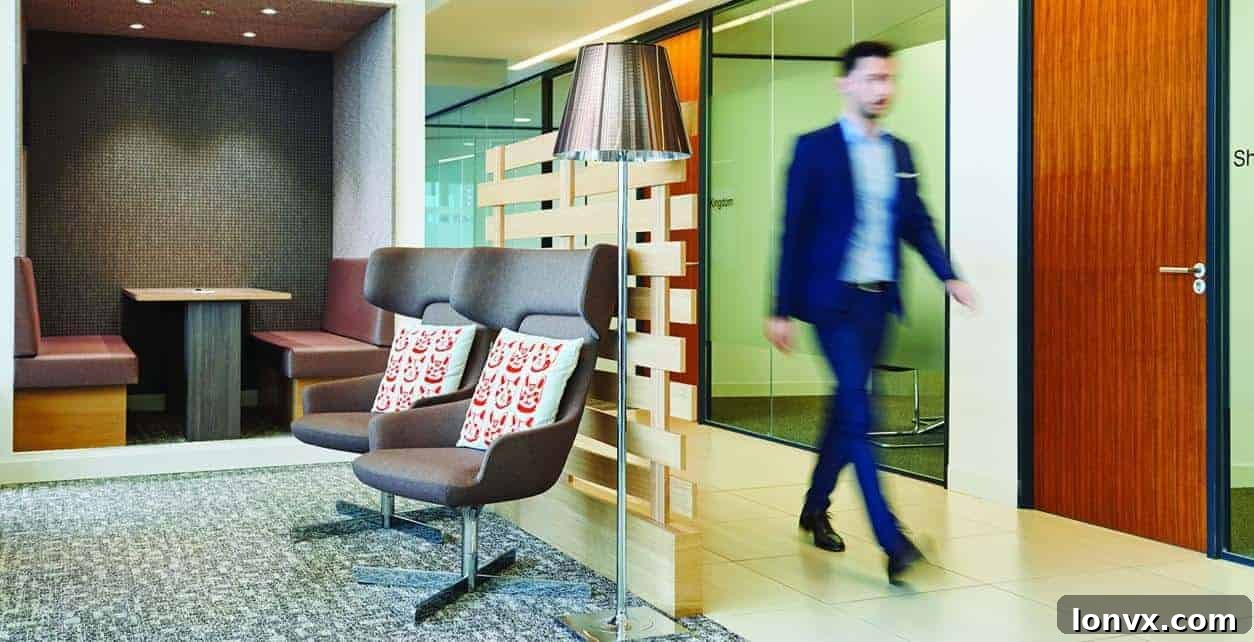
The ideal workspace is a dynamic ecosystem that intelligently responds to the varied ways people work, actively fostering productivity, creativity, and seamless collaboration. This is true for workers of all generations, who are increasingly discovering the immense benefits of flexible and co-working environments, embracing greater mobility and diverse work settings. Modern offices must transcend mere desk arrangements; they must be designed as vibrant hubs that inspire interaction and innovation. Regus addresses this critical requirement through the thoughtful design of its global centers. While adhering to consistent quality guidelines and maintaining high standards, each center incorporates locally sourced products and design elements, ensuring a distinct identity that feels both professional and rooted in its community. This approach creates spaces that are far from uniform, offering unique experiences while upholding a universal promise of excellence.
A key aspect of our design philosophy prioritizes social interactions. We understand that spontaneous encounters – often referred to as ‘creative collisions’ – are powerful catalysts for innovation and boost overall productivity. To facilitate these valuable interactions, we strategically place cafes and communal areas right at the entrance of our centers, creating natural gathering points as workers arrive. These welcoming entrances serve as vibrant links to all other areas of the workspace, encouraging individuals to connect, exchange ideas, and foster a greater sense of belonging and community from the moment they step through the door.
Building a Global Community for Professional Growth
Regus has cultivated a vast and thriving global community, connecting over 2.5 million like-minded professionals. This expansive network enables members to join local networks, participate in knowledge-sharing events, and forge valuable connections that can accelerate their professional growth. Our intuitive, easy-to-use apps provide members with the ability to instantly find, manage, and book workspaces and services, seamlessly supporting all their diverse business needs. This integrated ecosystem ensures that professionals always have access to the resources and community they need, wherever their work takes them.
The Future is Flexible: A New Paradigm for Work
We firmly believe that the business world stands at a critical tipping point. The flexible workspace industry is not just experiencing growth; it is set for an unprecedented boom in the coming years as an increasing number of businesses fully awaken to its undeniable benefits. This isn’t a passing fad; it’s the inevitable evolution of how work is done. Indeed, the day is fast approaching when ‘flexible working’ will simply be known as ‘working’ – the standard, expected mode of operation for any progressive organization. The advantages in terms of cost efficiency, agility, talent attraction, and employee well-being are too significant to ignore.
Smart businesses are not waiting for this future to arrive; they are actively planning for it now. They are integrating flexible workspace strategies into their core operations, realizing that adaptability is the ultimate competitive advantage. By embracing this flexible future, companies can build more resilient, innovative, and human-centric organizations prepared to thrive in an ever-changing global landscape. The shift has begun, and the businesses that adapt proactively will be the ones that lead the way into the next era of work.